On This Page
Description
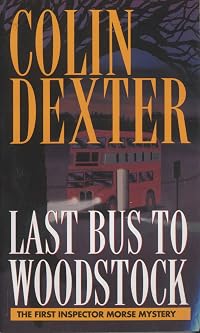
The first intriguing case that began Colin Dexter's phenomenally successful Inspector Morse series. 'Do you think I'm wasting your time, Lewis?' Lewis was nobody's fool and was a man of some honesty and integrity. 'Yes, sir.' An engaging smile crept across Morse's mouth. He thought they could get on well The death of Sylvia Kaye figured dramatically in Thursday afternoon's edition of the Oxford Mail. By Friday evening, Inspector Morse had informed the nation that the police were looking for show more a dangerous man. But as the obvious leads fade into twilight and darkness, Morse becomes more and more convinced that passion holds the. show lessTags
Recommendations






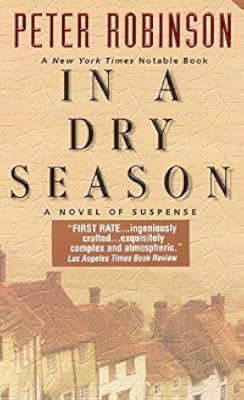
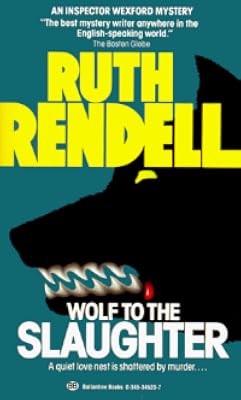
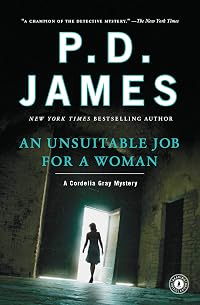
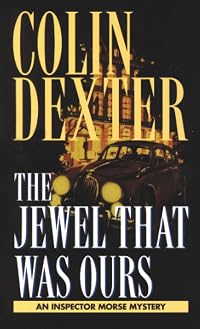
Member Reviews
This is the first in the Inspector Morse series. I enjoyed these books for not only the mystery, but for Morse himself and his relationship with his colleague, Lewis. Morse is a snob who drinks too much, loves opera, and is very protective of his Jaguar. Poor Lewis, his long-suffering sergeant, admires Morse's talents for solving the cases, but recognizes that Morse has serious flaws. There's often an undertone of classism as suspects stereotype Morse as working class and Morse returns their disdain. Meanwhile Lewis is a reminder that "regular folk" are more than regular.
The first book in the series that brought us the great television series starring John Thaw as the irascible yet brilliant Inspector Morse, a spin-off with Inspector Lewis and a prequel series, Endeavour, leaves me, well, underwhelmed. As a police procedural it is okay but not something that will remain long in my memory. To its credit, the plot was sufficiently complex to keep me guessing, incorrectly, until the very end.
I expected Morse to be quirky yet brilliant. I guess he was that but there were times when I was tempted to replace the word quirky with something more along the lines of unhinged.
What struck me, and other readers that I talked to, most about the book is that Dexter's treatment of gender issues is far from show more enlightened. Granted, it was written in the 1970s but I came of age back then and I don't remember the people I encountered being quite so -neanderthal - as the characters in this book are. Their thoughts about rape are frightening and the old idea that women who act or dress in a certain manner deserve what they get is, if not said outright, at least inferred more than once. One can make certain allowances for when a book was written but there are limits.
And if all that isn't enough, Morse doesn't even drive his signature burgundy Jaguar! He drives a beat-up old Lancia, whatever the heck that is.
I'm not sure at this point if I will read more Morse books. If I do, I will probably skip forward to a point where Collins writing, and Morse's character, are better developed.
My thanks to M.L. and the The Mystery, Crime, and Thriller Group at Goodreads for creating the opportunity to read and discuss this book with other readers. show less
I expected Morse to be quirky yet brilliant. I guess he was that but there were times when I was tempted to replace the word quirky with something more along the lines of unhinged.
What struck me, and other readers that I talked to, most about the book is that Dexter's treatment of gender issues is far from show more enlightened. Granted, it was written in the 1970s but I came of age back then and I don't remember the people I encountered being quite so -neanderthal - as the characters in this book are. Their thoughts about rape are frightening and the old idea that women who act or dress in a certain manner deserve what they get is, if not said outright, at least inferred more than once. One can make certain allowances for when a book was written but there are limits.
And if all that isn't enough, Morse doesn't even drive his signature burgundy Jaguar! He drives a beat-up old Lancia, whatever the heck that is.
I'm not sure at this point if I will read more Morse books. If I do, I will probably skip forward to a point where Collins writing, and Morse's character, are better developed.
My thanks to M.L. and the The Mystery, Crime, and Thriller Group at Goodreads for creating the opportunity to read and discuss this book with other readers. show less
Mamma mio come mi è piaciuto! E' il primo libro che leggo di questa serie e penso proprio che andrò avanti.
Morse un po' scorbutico, un po' sfortunato, un po' bizzarro con la sua fissa per l'ortografia mi è proprio simpatico, Lewis che sopporta le sue bizze pure. L'ambientazione negli anni '70 mi ha fatto riscoprire il gusto per un poliziesco in cui quello che conta sono gli umani: buoni cattivi intelligenti o stupidi, investigatori vittime colpevoli, sono gli uomini e le donne che costruiscono vite e storie, e sono gli uomini Morse e Lewis risolvono il caso.
Bello, lo consiglio vivamente.
Morse un po' scorbutico, un po' sfortunato, un po' bizzarro con la sua fissa per l'ortografia mi è proprio simpatico, Lewis che sopporta le sue bizze pure. L'ambientazione negli anni '70 mi ha fatto riscoprire il gusto per un poliziesco in cui quello che conta sono gli umani: buoni cattivi intelligenti o stupidi, investigatori vittime colpevoli, sono gli uomini e le donne che costruiscono vite e storie, e sono gli uomini Morse e Lewis risolvono il caso.
Bello, lo consiglio vivamente.
After watching all thirty-three episodes of Inspector Morse and now two seasons into Endeavour, I became curious about how this Oxford detective was introduced to the world. Last Bus to Woodstock was his debut, so I started there. It soon became apparent that there were differences. I learned that Morse had dark, thinning hair that he carefully combed to hide a bald spot in the back. He didn’t drive a Jaguar, but a Lancia. In addition to his addictions to crosswords and alcohol, the book Morse bets on the horses and smokes. Sergeant Lewis is older than he.
The book is set in the early seventies, earlier than the TV series (that later setting allowed the producers to set Endeavour in the mid-sixties). In his early forties, Morse show more implausibly has a beautiful twenty-three year-old fall in love with him at first sight.
I conclude there are not one but three Morses. There is the irascible yet avuncular, snowy-haired TV Morse portrayed by John Thaw, the slim, sandy-haired young man somewhere on the autism spectrum, played by Shaun Evans, and this one in the book. There is some overlap, of course. In addition to the embarrassing given name and a love of the music of Wagner, they share a predilection for imagining wrong scenarios before finally solving a crime. While less quick to spot codes and other patterns than his TV counterparts, the Morse of the book eventually does make the connections. Like them, he resists accepting the simplest solutions.
To leave the TV incarnations aside and focus on this book: Dexter has a weakness for timeworn turns of phrase. But I liked how he constructed the plot, setting multiple possibilities and keeping them open, narrating some lines of inquiry while indicating only sparingly others. The set-up for the reveal of the culprit is well-orchestrated. I will probably read a few more of the series. show less
The book is set in the early seventies, earlier than the TV series (that later setting allowed the producers to set Endeavour in the mid-sixties). In his early forties, Morse show more implausibly has a beautiful twenty-three year-old fall in love with him at first sight.
I conclude there are not one but three Morses. There is the irascible yet avuncular, snowy-haired TV Morse portrayed by John Thaw, the slim, sandy-haired young man somewhere on the autism spectrum, played by Shaun Evans, and this one in the book. There is some overlap, of course. In addition to the embarrassing given name and a love of the music of Wagner, they share a predilection for imagining wrong scenarios before finally solving a crime. While less quick to spot codes and other patterns than his TV counterparts, the Morse of the book eventually does make the connections. Like them, he resists accepting the simplest solutions.
To leave the TV incarnations aside and focus on this book: Dexter has a weakness for timeworn turns of phrase. But I liked how he constructed the plot, setting multiple possibilities and keeping them open, narrating some lines of inquiry while indicating only sparingly others. The set-up for the reveal of the culprit is well-orchestrated. I will probably read a few more of the series. show less
The first Inspector Morse book, and the central character is established already. Here Morse is a younger version of the hard drinking, rather anti-social, grammatically pedantic policeman that we know from the later books. "Woodstock" here is a small town near Oxford, not a music festival reference.
But man, is it ever dated! 1975 was another world. The oddities of post and phones and secretaries and typewriters are fine, and it's amusing to realise how utterly impossible the plot would be, if only the characters could have just texted each other. But the sexism is very jarring. Rape is not a joke. Grown women are not girls. Three cheers for "women's lib"! I shall rush off and burn a bra in tribute.
But man, is it ever dated! 1975 was another world. The oddities of post and phones and secretaries and typewriters are fine, and it's amusing to realise how utterly impossible the plot would be, if only the characters could have just texted each other. But the sexism is very jarring. Rape is not a joke. Grown women are not girls. Three cheers for "women's lib"! I shall rush off and burn a bra in tribute.
Inspector Morse takes on the case of a young woman found raped and murdered in a pub parking lot. The list of suspects gets longer as Morse and Sergeant Lewis, working together for the first time, discover that the victim was far from innocent.
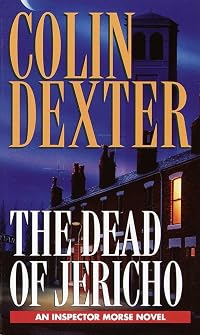
This is the first of the Inspector Morse series, and the second that I've read (The Dead of Jericho a few months ago). The mystery here is done really well and is hard to figure out. The cons:the romance between Morse and a suspect's roommate is sudden and melodramatic, and the attitude towards rape victims is so outdated that it's jarring and reminds the reader that this was written in 1975. If it weren't for those flaws, this would read like a modern book set in those pre-DNA days. I enjoyed it.
This is the first of the Inspector Morse series, and the second that I've read (The Dead of Jericho a few months ago). The mystery here is done really well and is hard to figure out. The cons:the romance between Morse and a suspect's roommate is sudden and melodramatic, and the attitude towards rape victims is so outdated that it's jarring and reminds the reader that this was written in 1975. If it weren't for those flaws, this would read like a modern book set in those pre-DNA days. I enjoyed it.
It's summer. I'm reading mysteries - and this was grand! As I reflected a day later, though, on the characters, I thought of how every single man, despite his flaws, was an engaging character of some sympathy, even the young man addicted to porn. (His mother loved him, remember?) But the women, without exception, were protrayed in a negative light. None of them seemed lovable. I checked the publication date: 1975. Depressing. How much of this did we absorb as young women?
The other factor which makes the mystery, despite its excellent plotting and engaging male characters, difficult to recommend was the constant drinking. Every third page someone ordered a pint, offered a whiskey, or poured himself a stiff drink. I got to hankering after show more one myself. Was that the point? show less
The other factor which makes the mystery, despite its excellent plotting and engaging male characters, difficult to recommend was the constant drinking. Every third page someone ordered a pint, offered a whiskey, or poured himself a stiff drink. I got to hankering after show more one myself. Was that the point? show less
Members
- Recently Added By
Lists

Detective Stories
343 works; 5 members

Books Read in 2014
2,344 works; 86 members

Global Mysteries
90 works; 6 members

Books Read in 2022
5,226 works; 115 members

Books Read in 2012
816 works; 34 members
Talk Discussions
Past Discussions
Chat in Book Discussion : Last Bus to Woodstock by Colin Dexter (April 2017)
Author Information

126+ Works 18,889 Members
Norman Colin Dexter was born in Stamford, Lincolnshire, England on September 29, 1930. He received a bachelor's degree in classics in 1953 and a master's degree in 1958 at from Christ's College, Cambridge University. He taught classics for many years, but growing deafness forced him to retire in 1966. For the next two decades, he was the senior show more assistant secretary at the Oxford Delegacy of Local Examinations. He retired in 1988 to become a full-time writer. He was best known for creating the character Chief Inspector Morse. The Inspector Morse series began in 1975 with Last Bus to Woodstock and ended in 1999 with The Remorseful Day. The books were adapted into the television series Inspector Morse, which ran from 1987 to 2000. Dexter won the British Crime Writers' Gold Dagger Award for The Wench is Dead in 1989 and again in 1992 for The Way Through the Woods. He received the organization's lifetime achievement award, the Diamond Dagger, in 1997. He also wrote Cracking Cryptic Crosswords: A Guide to Solving Cryptic Crosswords in 2010. He died on March 21, 2017 at the age of 86. (Bowker Author Biography) show less
Some Editions
Awards and Honors
Series

Belongs to Publisher Series
Work Relationships
Is contained in
Has the adaptation
Common Knowledge
- Canonical title*
- Siste buss til Woodstock
- Original title
- Last Bus to Woodstock
- Original publication date
- 1975
- People/Characters
- Inspector Morse; Sergeant Lewis
- Important places
- Oxford, Oxfordshire, England, UK; Oxfordshire, England, UK
- Related movies
- Inspector Morse: Last Bus to Woodstock (1988 | IMDb)
- First words
- "Let's wait just a bit longer, please," said the girl in dark-blue trousers and the light summer coat.
- Last words
- (Click to show. Warning: May contain spoilers.)He drove on to his home in Oxford.
- Original language
- English
- Canonical DDC/MDS
- 823.914
- Canonical LCC
- PR6054.E96
*Some information comes from Common Knowledge in other languages. Click "Edit" for more information.
Classifications
Statistics
- Members
- 1,669
- Popularity
- 13,466
- Reviews
- 46
- Rating
- (3.59)
- Languages
- 14 — Danish, Dutch, English, Estonian, Finnish, French, German, Italian, Lithuanian, Norwegian (Bokmål), Norwegian, Slovenian, Spanish, Swedish
- Media
- Paper, Audiobook, Ebook
- ISBNs
- 66
- ASINs
- 15