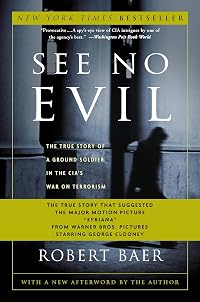
See No Evil: The True Story of a Ground Soldier in the CIA's War on Terrorism
by Robert Baer
On This Page
Description
The author discusses his twenty-year career as a CIA operative in the Middle East and examines how the agency's abandonment of its original mission resulted in a failure to acknowledge the growing threat of militant Islamic terrorist groups.Tags
Recommendations









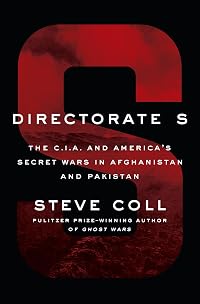
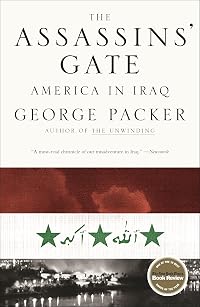
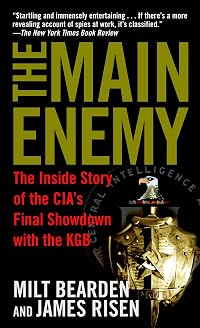
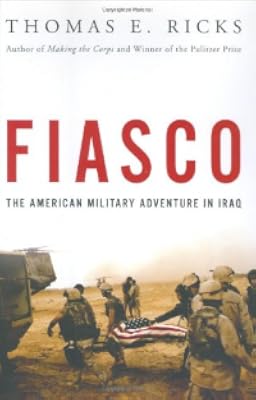


Member Reviews
I have seen and enjoyed Baer as a talking head on cable news. That got my interest and I came to see him as really not in the stereotypical spy mold when I read The Company We Keep: A Husband-and-Wife True-Life Spy Story. Here he really has a screed against the CIA and a leadership and gov't (NSC, especially) cowed by big business putting profit above national security. Incompetence is a real prominent thread: "...a headquarters staffed with officers [who] so badly misidentified the Chinese embassy in Belgrade that we sent a missile into it."
Baer's behind the scenes story on a failed Kurdish coup in Iraq and lack of CIA interest in Bin Laden linkages to Iran paint an intriguing back story to the Beirut embassy bombing that one of the show more first salvos in the war with Islamic jihad. Along with Clinton admin influence peddling, this edition is updated with post-9/11 observations by the veteran spy.
Among the most interesting things to me here, though is all the fits and starts and details to the beginning of his career - what it's like to be a spy noob - and similarly learning to recruit agents and then have to pass them on as a veteran to another new-hire. show less
Baer's behind the scenes story on a failed Kurdish coup in Iraq and lack of CIA interest in Bin Laden linkages to Iran paint an intriguing back story to the Beirut embassy bombing that one of the show more first salvos in the war with Islamic jihad. Along with Clinton admin influence peddling, this edition is updated with post-9/11 observations by the veteran spy.
Among the most interesting things to me here, though is all the fits and starts and details to the beginning of his career - what it's like to be a spy noob - and similarly learning to recruit agents and then have to pass them on as a veteran to another new-hire. show less
Baer's account of his time in the CIA is an exercise in disillusionment. You too will begin to see how things really work - not just at the CIA, but in Washington, too. You'll find there is no conspiracy but the one to keep up the illusion that the government is acting in our best interest. If you ever needed proof that politicians (okay, well, most of them) are in it for themselves, you need read no further than this book. The people who do care and have the smarts to change things either don't have enough power or the political savvy to survive in a world (politics) that has become increasingly incompetent and self-absorbed. It's a sad story, but one that needed to be told.
This book was tough to stay with because it bogs down with too many chronological references that don't really move the story along. Readers will gain a valuable insight into the sausage-making process for a CIA field officer: how to run agents and not get caught. Slightly self-absorbed writing style, but the glaring weakness is in the poor editing. Too many misspellings, grammar breakdowns, capitalization problems, etc, for a NY Times bestseller book.
The book "See No Evil" by Robert Baer is a thrilling adventure story about the experiences of a young CIA case officer in Asia and the Middle East. It is written with energy and a touch of humor, making it a captivating read for those interested in espionage procedurals. The second half of the book reveals a different side of Baer, as he becomes burnt out and in need of rest. This is marked by a re-call to headquarters and an investigation into his involvement in a murder for hire plot. As Baer continues to operate on his own in the field, he becomes increasingly isolated and out of control, leading to his eventual return to headquarters in Washington D.C. There, he struggles to navigate the unfamiliar and seemingly unfathomable world show more of Washington politics. Despite these challenges, Baer is a talented writer and deserves a loyal audience for this and his other books. show less
If anything, the book is even more chillingly convincing than the movie it inspired: Syriana.
You may not believe the full extent to which oil can so blatantly pervert the course of politics and corporate behaviour, but where there's smoke, there must be fire, right? This book delivers plently of smoking guns.
Note to self: Syriana Babel Lord of War = top 3 geopolitical thrillers of recent times
You may not believe the full extent to which oil can so blatantly pervert the course of politics and corporate behaviour, but where there's smoke, there must be fire, right? This book delivers plently of smoking guns.
Note to self: Syriana Babel Lord of War = top 3 geopolitical thrillers of recent times
If anything, the book is even more chillingly convincing than the movie it inspired: Syriana.
You may not believe the full extent to which oil can so blatantly pervert the course of politics and corporate behaviour, but where there's smoke, there must be fire, right? This book delivers plently of smoking guns.
Note to self: Syriana Babel Lord of War = top 3 geopolitical thrillers of recent times
You may not believe the full extent to which oil can so blatantly pervert the course of politics and corporate behaviour, but where there's smoke, there must be fire, right? This book delivers plently of smoking guns.
Note to self: Syriana Babel Lord of War = top 3 geopolitical thrillers of recent times
No one should expect Baer to be as eloquent as Shakespeare, but he does paint a vivid picture of how things were for CIA agents on the ground during the eighties and nineties. Things began to change in the late nineties, with CIA agents looking more to forward their careers than gather intelligence, a detriment for the United States, which depended on agents with a knowledge of the complexities and outright contradictions that make up the Middle East. In short, it's a portrait of how 9/11 was allowed to happen.
Members
- Recently Added By
Author Information

13 Works 2,760 Members
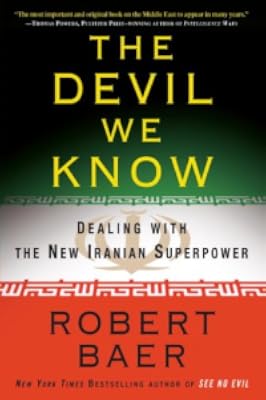
Robert Baer was born in Los Angeles, California on July 1, 1952. He graduated from the Georgetown University School of Foreign Service and in 1976, decided to join the CIA's Directorate of Operations. He worked for the CIA for 20 years as a case officer assigned to the Middle East. He has written several books including Sleeping with the Devil: show more How Washington Sold Our Soul for Saudi Crude, The Devil We Know: Dealing with the New Iranian Superpower, and The Company We Keep: A Husband-and-Wife True-Life Spy Story. His book See No Evil: The True Story of a Ground Soldier in the CIA's War on Terrorism was the basis for the acclaimed film Syriana. He writes regularly for Time.com and has contributed to Vanity Fair, the Wall Street Journal, and the Washington Post. (Bowker Author Biography) show less
Some Editions
Awards and Honors
Distinctions
Series
Belongs to Publisher Series
Common Knowledge
- Canonical title*
- La chute de la CIA. Les mémoires d'un guerrier de l'ombre sur les fronts de l'islamisme
- Original title
- See No Evil
- Original publication date
- 2002
- Important places
- Beirut, Lebanon
- Related movies
- Syriana (2005 | IMDb)
- Original language*
- Anglais (Etats-Unis) (Etats-Unis)
*Some information comes from Common Knowledge in other languages. Click "Edit" for more information.
Classifications
- Genres
- Nonfiction, General Nonfiction, History, Biography & Memoir, Politics and Government
- DDC/MDS
- 327.12730092 — Society, government, & culture Political science International Relations: Spies Foreign policy and specific topics in international relations Espionage and subversion North America United States
- LCC
- JK468 .I6 .B34 — Political Science Political institutions and public administration (United States) Political institutions and public administration United States Government. Public administration
- BISAC
Statistics
- Members
- 1,234
- Popularity
- 20,051
- Reviews
- 21
- Rating
- (3.74)
- Languages
- 5 — English, French, German, Italian, Spanish
- Media
- Paper, Audiobook, Ebook
- ISBNs
- 25
- ASINs
- 4