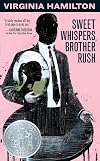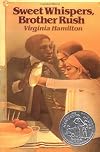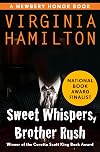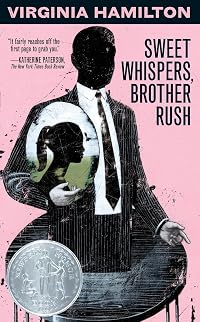
Sweet Whispers, Brother Rush
by Virginia Hamilton
On This Page
Description
Fourteen-year-old Tree, resentful of her working mother who leaves her in charge of a retarded brother, encounters the ghost of her dead uncle and comes to a deeper understanding of her family's problems.Tags
Recommendations
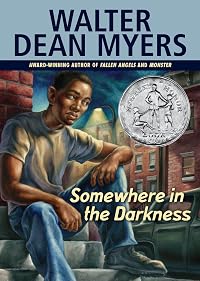
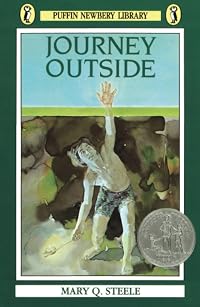
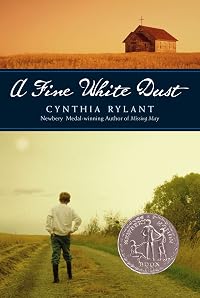
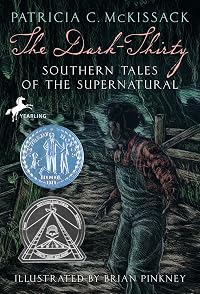




















Member Recommendations
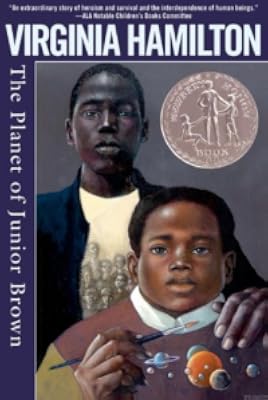
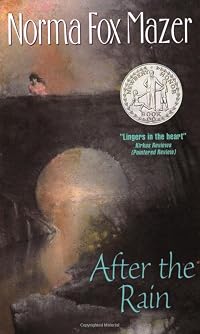
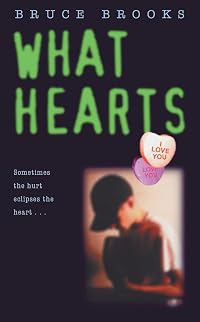
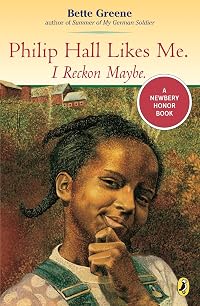
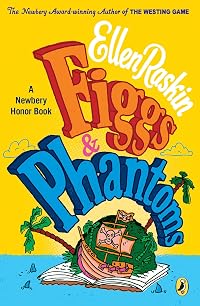
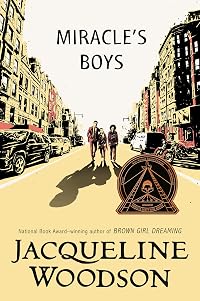
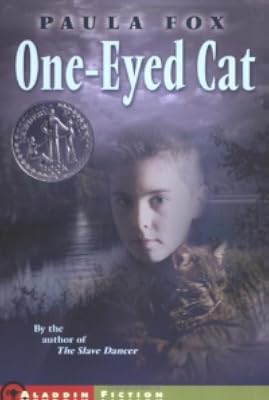
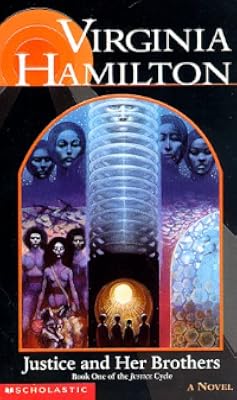
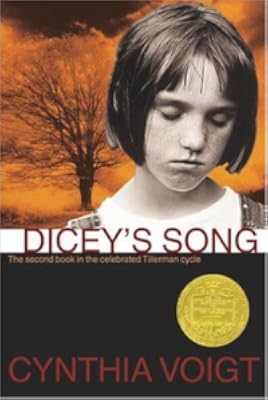
kaledrina Similar relationships of main character to mother.
Member Reviews
[Review written by my younger self]
I turned the last page, expecting more and yet finding only the short bio on Virginia Hamilton. I felt like nothing had really been resolved. Hamilton's adolescent novel, Sweet Whispers, Brother Rush, left me very disappointed by the ending. However, in looking back I realize now how powerful and effective a writer Hamilton is, and that I was wrong in initially accusing her of the deus ex machina. A lot of my initial disappointment came from my lack of insight into the text. On second read, though, I find that the precise and all-inclusive details give much insight into the issues behind this story of a brother and sister, their deadbeat mother, and the mystery behind their dead uncle, Brother Rush. show more The issues of disease (specifically porphyria), family, and the "poor man's reality" is evident in all scenes presented between Hamilton's vivid characters.
The surreal existence of Brother Rush is comparable to the mystery surrounding the title character in Morrison's Beloved. Lovers of Morrison's story will highly benefit in their read should they continue the idea of the mystical versus the tangible in this tale. A seasoned professor at my university, in fact, refers to Hamilton as the adolescent's version of Morrison.
Readers of Hamilton's novel will benefit from reading it with more than just a shallow glimpse into the story itself. Even young readers can appreciate the many social ramifications the novel carries throughout its pages. While Hamilton does ilicit a happy ending, it is tainted with a deliberate cynicism and a thought-provoking aura that characterizes Hamilton's writing. show less
I turned the last page, expecting more and yet finding only the short bio on Virginia Hamilton. I felt like nothing had really been resolved. Hamilton's adolescent novel, Sweet Whispers, Brother Rush, left me very disappointed by the ending. However, in looking back I realize now how powerful and effective a writer Hamilton is, and that I was wrong in initially accusing her of the deus ex machina. A lot of my initial disappointment came from my lack of insight into the text. On second read, though, I find that the precise and all-inclusive details give much insight into the issues behind this story of a brother and sister, their deadbeat mother, and the mystery behind their dead uncle, Brother Rush. show more The issues of disease (specifically porphyria), family, and the "poor man's reality" is evident in all scenes presented between Hamilton's vivid characters.
The surreal existence of Brother Rush is comparable to the mystery surrounding the title character in Morrison's Beloved. Lovers of Morrison's story will highly benefit in their read should they continue the idea of the mystical versus the tangible in this tale. A seasoned professor at my university, in fact, refers to Hamilton as the adolescent's version of Morrison.
Readers of Hamilton's novel will benefit from reading it with more than just a shallow glimpse into the story itself. Even young readers can appreciate the many social ramifications the novel carries throughout its pages. While Hamilton does ilicit a happy ending, it is tainted with a deliberate cynicism and a thought-provoking aura that characterizes Hamilton's writing. show less
Kind of a weird tale this one. Tree (14) is technically under the care of her mother (M'Vy) but she only drops in once a week or so to leave food and say hello, otherwise, she is absent, leaving Tree to care for her mentally handicapped slightly older brother (Dab) alone. As the book opens, Tree starts seeing a ghost. The ghost is M'Vy's long dead brother, Brother Rush. He visits Tree in a small room in their apartment. He doesn't talk to her, but shows her visions of the past, when she was a small child.
Dab, meanwhile, is getting more and more sick with a mysterious illness that makes him hurt all over his body, and be unable to keep any food down. M'Vy eventually has to take charge and actually DO something to take care of her show more handicapped son, who she has always blamed for his own mental state.
Told in third person, but with all focus on Tree's thoughts and actions, it is a deeply introspective, but terribly slow moving book. The transitions from real-world to ghost-visions are sometimes a little confusing. It took a while to get into the book, but it never fully grabbed me. I don't regret reading it, but I wouldn't recommend it to anyone else particularly. show less
Dab, meanwhile, is getting more and more sick with a mysterious illness that makes him hurt all over his body, and be unable to keep any food down. M'Vy eventually has to take charge and actually DO something to take care of her show more handicapped son, who she has always blamed for his own mental state.
Told in third person, but with all focus on Tree's thoughts and actions, it is a deeply introspective, but terribly slow moving book. The transitions from real-world to ghost-visions are sometimes a little confusing. It took a while to get into the book, but it never fully grabbed me. I don't regret reading it, but I wouldn't recommend it to anyone else particularly. show less
Teenaged Tree and her brother, Dab, live together, and alone, in a shabby apartment while their mother lives and works elsewhere (it's not entirely clear where and at what) and occasionally visits to fill the fridge and cupboards for them. It's far from a perfect situation, but Tree loves her brother and seems to have contented herself with all the hard work that goes into caring for the two of them. But then she starts seeing the vision of a young man standing in the middle of the table in a back room of the apartment, and gradually comes to realize that he is the ghost of her mother's brother. He tacitly takes her through his memories, back to when she was little more than a baby, and she learns some disturbing things about her show more family. Her uncle has, it seems, come to her as a harbinger of soon-to-be events which will change her small family forever.
I'm not sure what to say about this one, mostly because I'm still not sure how I feel about it. It's a strange little story, disturbing in parts, both in its actual plot content and in its disjointed structure. Tree's mother is troubling on many levels, not least of which is that I can't tell if Hamilton means for the reader to be as angered at her actions as I was. It's certainly an interesting story, and definitely different than a lot of offerings in this genre, and Tree's character is well drawn and instantly one for whom you want to root. show less
I'm not sure what to say about this one, mostly because I'm still not sure how I feel about it. It's a strange little story, disturbing in parts, both in its actual plot content and in its disjointed structure. Tree's mother is troubling on many levels, not least of which is that I can't tell if Hamilton means for the reader to be as angered at her actions as I was. It's certainly an interesting story, and definitely different than a lot of offerings in this genre, and Tree's character is well drawn and instantly one for whom you want to root. show less
Omg if someone had warned me about the child abuse I would have avoided this as triggering... fortunately I'm not falling apart right now (about 1/2) and I do hope to finish it... one reviewer described it as "sweet" which, well, huh?... most complain about the dialect which does not bother me at all.... if you want to sell it to youth, try selling it as a ghost story... but don't make it required reading or you will have to fight parents.
---
Ok done. Yeah, pretty intense. But, because Hamilton is brilliant, and knows that life doesn't obey the rules of a story, all the bad stuff has context. And the context makes it easier to read about. Still, it's certainly not something I would have liked to read when I was, say, 13.
"The few hours of show more having M'Vy with them on her short weekends at home were precious. They would let M'Vy give them all she had to give, and they let her talk about what she cared to talk about. Thee and Dab never had time to find out about the past; they had so little of the present."
"... It don't matter what the Man do or say to you, the Grandpaw and Grandmaw's got all the love inna world for the boy. Grandpa Custiss just yessir the Man to death, it don't matter a-tall because they keeping the boy, Richard, close. Then the enemies gone and kill the grandpa for nothin."
"Girls who took shop said Mr. Sawallow was respectful and kind, showing the dudes something."
"Tree thought, Sweet, whispers Brother Rush. Naw, that ain't it. It, Sweet whispers, Brother Rush. Brother Rush!"
(Actually, I prefer the interpretation of how I read the title before I knew that Teresa, aka Tree, was also aka Sweet. I had assumed that Brother Rush's whispers were sweet. Well, he doesn't talk or whisper, so I guess not. Unless, of course, we decide that this book is the kind of work of art that the reader can interpret however preferred. In which case, maybe all three ways are 'right' enough.) show less
---
Ok done. Yeah, pretty intense. But, because Hamilton is brilliant, and knows that life doesn't obey the rules of a story, all the bad stuff has context. And the context makes it easier to read about. Still, it's certainly not something I would have liked to read when I was, say, 13.
"The few hours of show more having M'Vy with them on her short weekends at home were precious. They would let M'Vy give them all she had to give, and they let her talk about what she cared to talk about. Thee and Dab never had time to find out about the past; they had so little of the present."
"... It don't matter what the Man do or say to you, the Grandpaw and Grandmaw's got all the love inna world for the boy. Grandpa Custiss just yessir the Man to death, it don't matter a-tall because they keeping the boy, Richard, close. Then the enemies gone and kill the grandpa for nothin."
"Girls who took shop said Mr. Sawallow was respectful and kind, showing the dudes something."
"Tree thought, Sweet, whispers Brother Rush. Naw, that ain't it. It, Sweet whispers, Brother Rush. Brother Rush!"
(Actually, I prefer the interpretation of how I read the title before I knew that Teresa, aka Tree, was also aka Sweet. I had assumed that Brother Rush's whispers were sweet. Well, he doesn't talk or whisper, so I guess not. Unless, of course, we decide that this book is the kind of work of art that the reader can interpret however preferred. In which case, maybe all three ways are 'right' enough.) show less
This book makes me think of how we do the best we can at a given time. As a reader it can be easy to judge a character for his/her choices and actions. This is another tale that over the course of a story, my feeling towards a character can change and become empathetic. I feel for the main character, Tree, and the responsibilities she takes on out of unconditional love for her older brother Dab. The story starts with attention to clothing and light. Tree meets a ghost, Brother Rush, at the beginning of the book. He is wearing the finest suit she ever did see. I could tell from the beginning that this young ghost died at an early age and is wearing his funeral clothes. Virginia Hamilton also focuses on the joy the sun brings as it show more radiates from their skin. Brother Rush brings Tree back in time to learn about the earlier years and the life of her mother, uncle (Brother Rush) and herself. Through these time warps, Tree finds the truth of how they were treated and of her uncle’s death. In current time, Tree takes care of her Dab, as if she were older and is more responsible. Dab is sick and Tree didn’t know why. Her absent mother Vy did not face the severity of his disease until it was too late. Like Vy’s brothers, Dab has porphyria, and takes him to the hospital where he barely had a chance of survival. This is an inherited disease that is painful and sensitive to the sun. While Dab was in the hospital, Tree made “Welcome Home” signs and decorated the house for his arrival. The night before he died, Tree dreamt that she fell off the bridge and Dab stayed on. She soon realized that he stayed on to live in the afterlife. He has joined Brother Rush where they can be in the sun and no longer suffer from porphyria. As a reader and along with Tree, I tried to understand her mother’s approach of preventing the disease that killed her brothers and her own son. Death leaves us with many choices including funeral clothes and how to live on. show less
I turned the last page, expecting more and yet finding only the short bio on Virginia Hamilton. I felt like nothing had really been resolved. Hamilton's adolescent novel, Sweet Whispers, Brother Rush, left me very disappointed by the ending. However, in looking back I realize now how powerful and effective a writer Hamilton is, and that I was wrong in initially accusing her of the deus ex machina. A lot of my initial disappointment came from my lack of insight into the text. On second read, though, I find that the precise and all-inclusive details give much insight into the issues behind this story of a brother and sister, their deadbeat mother, and the mystery behind their dead uncle, Brother Rush. The issues of disease (specifically show more porphyria), family, and the "poor man's reality" is evident in all scenes presented between Hamilton's vivid characters. The surreal existence of Brother Rush is comparable to the mystery surrounding the title character in Morrison's Beloved. Lovers of Morrison's story will highly benefit in their read should they continue the idea of the mystical versus the tangible in this tale. A seasoned professor at my university, in fact, refers to Hamilton as the adolescent's version of Morrison.Readers of Hamilton's novel will benefit from reading it with more than just a shallow glimpse into the story itself. Even young readers can appreciate the many social ramifications the novel carries throughout its pages. While Hamilton does ilicit a happy ending, it is tainted with a deliberate cynicism and a thought-provoking aura that characterizes Hamilton's writing. show less
From the back cover, I expected this to be a romance, but the main focus is the ghost story, revealing a world of family secrets. Tree is almost 15, but she spends more time looking after the older brother than being a child. Her mother is absent for long periods of time, and her beloved brother Dub, while sometimes able to go out on his own, other times requires hand feeding and constant supervision. Tree and Dub see a ghost who brings them visions of their own past, letting Tree see the circumstances of her own babyhood through mature eyes.
The dialect is challenging, but it also gives the story a dreamy quality that suits the subject. I found it hard to put down.
I also really liked the way Tree responded to her mother's friend, her show more happiness and ager at various times felt veyr real to me.
I'd give this to someone who enjoyed family gothic stories, like Flowers in the Attic, Also, to someone looking for a strong female YA character, so a strong African American character. show less
The dialect is challenging, but it also gives the story a dreamy quality that suits the subject. I found it hard to put down.
I also really liked the way Tree responded to her mother's friend, her show more happiness and ager at various times felt veyr real to me.
I'd give this to someone who enjoyed family gothic stories, like Flowers in the Attic, Also, to someone looking for a strong female YA character, so a strong African American character. show less
Members
- Recently Added By
Lists

Newbery Honor Books By year - II - 1981-2035
143 works; 4 members

Before Austen Comes Aesop
318 works; 9 members

Books Read in 2024
4,727 works; 128 members

EGBERTINA's List of Newbery books that I hated or found unnecessary
58 works; 3 members
Author Information

49+ Works 16,346 Members
Some Editions
Awards and Honors
Awards
Distinctions
Work Relationships
Is contained in
Common Knowledge
- Original publication date
- 1982
- Dedication
- For my family
- First words
- The first time Teresa saw Brother was the way she would think of him ever after.
- Last words
- (Click to show. Warning: May contain spoilers.)She gave Tree one of her toothless grins. And did a little dance in her slippers.
Classifications
- Genres
- Fiction and Literature, Tween, Children's Books, Teen, Young Adult
- DDC/MDS
- 813.54 — Literature & rhetoric American literature in English American fiction in English 1900-1999 1945-1999
- LCC
- PZ7 .S — Language and Literature Fiction and juvenile belles lettres Fiction and juvenile belles lettres Juvenile belles lettres
- BISAC
Statistics
- Members
- 390
- Popularity
- 80,338
- Reviews
- 10
- Rating
- (3.50)
- Languages
- English, Swedish
- Media
- Paper, Audiobook, Ebook
- ISBNs
- 17
- ASINs
- 8