On This Page
Description
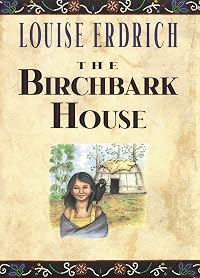
Omakayas, a seven-year-old Native American girl of the Ojibwa tribe, lives through the joys of summer and the perils of winter on an island in Lake Superior in 1847.Tags
Recommendations
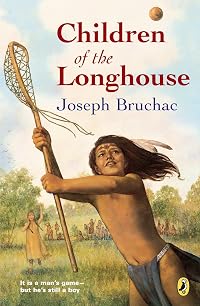

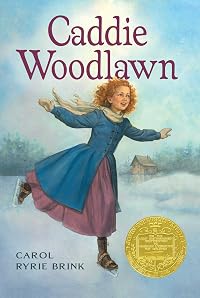
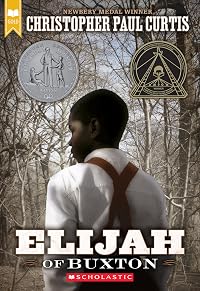
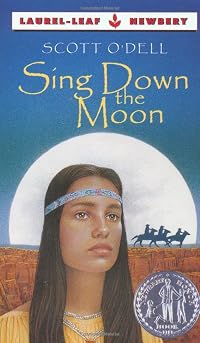
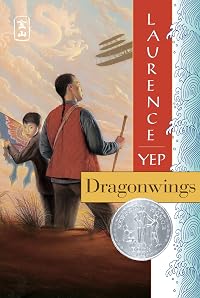
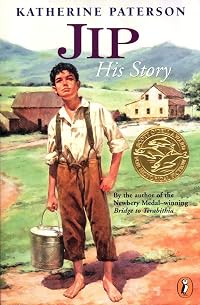
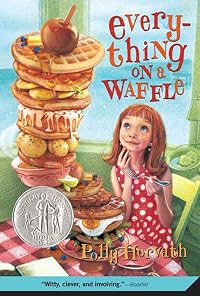
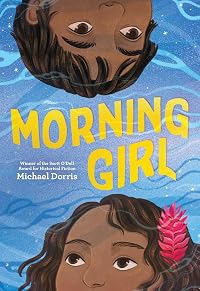
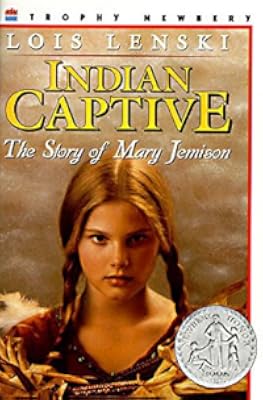
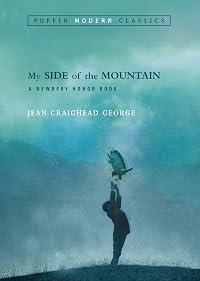
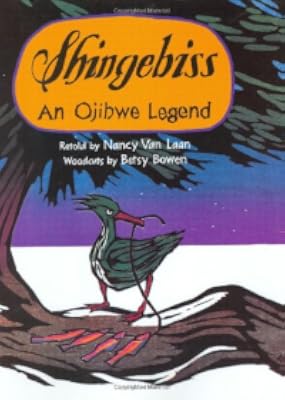
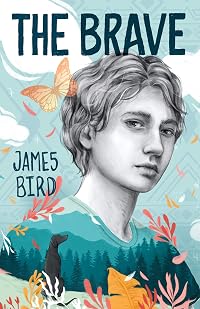
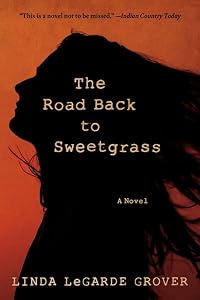
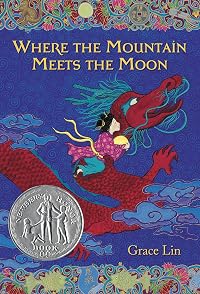
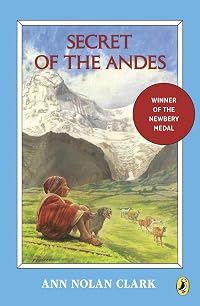
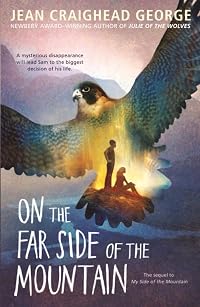

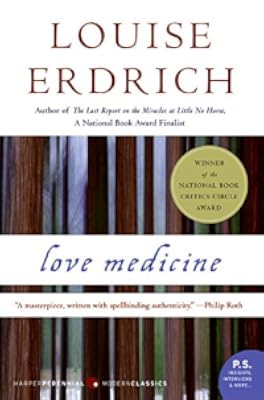

Member Recommendations
Member Reviews
I originally read The Birchbark House - Anishinaabe (Ojibwa) author Louise Erdrich's first foray into the world of children's fiction - when it was just published in 1999, but had been meaning to reread it for some time, in order to move on to the sequels (The Game of Silence and The Porcupine Year), when it was chosen as our September selection over in the Children's Fiction Club to which I belong. How glad I am that it was, as I enjoyed this reading just as much as the first!
The story of Omakayas (meaning "little frog"), a young Ojibwa girl growing up on an island in Lake Superior during the nineteenth century, it feels utterly authentic, offering a convincing portrait of Ojibwa life at that time and place. The central importance of show more food gathering, in the lives of Omakayas and her family, the seasonal move between their house in the settlement (used during winter) and their birchbark house (in summer), the growing pressure of incoming white settlers, forcing the Ojibwa ever further west, are all apparent. So too, tragically, is another consequence of white encroachment: the spread of disease to native populations, whose lack of immunity proved so disastrous. This last theme is particularly important, both in setting up Omakayas' story, and in providing one of the central challenges she faces: how to cope with the terrible loss of a loved one.
The Birchbark House isn't just a convincing work of historical fiction, however, but an engaging tale of a girl whose feelings and experiences - though tied in to specific time, place and culture - can be appreciated by readers of all kinds. Any child with a sibling will empathize with Omakayas' frustration with her younger brother, Pinch, or her simultaneous admiration and resentment of her beautiful older sister, Angeline. Similarly, many readers will identify with her searching after meaning and purpose, which eventually leads her - via some very satisfying scenes with some bears - to the realization that she is called to be a healer.
Erdrich's prose draws me in, as do her lovely illustrations (I hadn't even realized, before reading this, that she was an artist, as well as an author!), and the complete experience of The Birchbark House is one of intellectual engagement and emotional satisfaction. I loved the characters, both human and animal (particularly Omakayas' crow, Andeg), and found the story immensely involving. The conclusion, in which Omakayas finds some resolution of her grief, was very moving. Highly recommended, to young readers who enjoy historical fiction, or to Erdrich fans in general. show less
The story of Omakayas (meaning "little frog"), a young Ojibwa girl growing up on an island in Lake Superior during the nineteenth century, it feels utterly authentic, offering a convincing portrait of Ojibwa life at that time and place. The central importance of show more food gathering, in the lives of Omakayas and her family, the seasonal move between their house in the settlement (used during winter) and their birchbark house (in summer), the growing pressure of incoming white settlers, forcing the Ojibwa ever further west, are all apparent. So too, tragically, is another consequence of white encroachment: the spread of disease to native populations, whose lack of immunity proved so disastrous. This last theme is particularly important, both in setting up Omakayas' story, and in providing one of the central challenges she faces: how to cope with the terrible loss of a loved one.
The Birchbark House isn't just a convincing work of historical fiction, however, but an engaging tale of a girl whose feelings and experiences - though tied in to specific time, place and culture - can be appreciated by readers of all kinds. Any child with a sibling will empathize with Omakayas' frustration with her younger brother, Pinch, or her simultaneous admiration and resentment of her beautiful older sister, Angeline. Similarly, many readers will identify with her searching after meaning and purpose, which eventually leads her - via some very satisfying scenes with some bears - to the realization that she is called to be a healer.
Erdrich's prose draws me in, as do her lovely illustrations (I hadn't even realized, before reading this, that she was an artist, as well as an author!), and the complete experience of The Birchbark House is one of intellectual engagement and emotional satisfaction. I loved the characters, both human and animal (particularly Omakayas' crow, Andeg), and found the story immensely involving. The conclusion, in which Omakayas finds some resolution of her grief, was very moving. Highly recommended, to young readers who enjoy historical fiction, or to Erdrich fans in general. show less
Omakayas' story begins in spring, as her family moves from their cedar cabin to their birchbark home, on the island in Lake Superior. Omakayas looks up to and envies her older sister Angeline, is annoyed by her younger brother Pinch, and adores her baby brother, who she calls "chickadee." Close third person narration follows an eventful year in Omakayas' life, during which the family's work, dwelling, daily life, and diet changes with the seasons. Omakayas encounters bear cubs, makes friends with a crow (Andeg), and helps with chores. A white visitor to a village dance, however, brings an invisible, unwelcome guest: smallpox. The disease sweeps through the village, and despite precautions, several people die, and Omakayas grieves - and show more slowly returns to life, and discovers her purpose as a healer.
Omakayas is a close observer, and there are beautiful descriptions of the natural world throughout - plants, animals, weather, water. Her life is entirely normal to her, making the unfamiliar accessible to the reader; a few overheard conversations about the westward expansion of the whites and peeks of the missionary school hint at the fate of the Ojibwe, but Omakayas is, for now, shielded from that knowledge.
Back matter includes Author's Note on the Ojibwa Language, Glossary and Pronunciation Guide of Ojibwa Terms
See also: Little House on the Prairie by Laura Ingalls Wilder, Prairie Lotus by Linda Sue Park, Where the World Ends by Geraldine McCaughrean
Quotes
"We have to stop somewhere, someday. West is where the spirits of the dead walk. If the whites keep chasing us west, we'll end up in the land of the spirits."
"I have dreamed that's where they want us to go, anyway. That will please them."
"They are like greedy children. Nothing will ever please them for long."
"Not until they have it all...
Before they were born, before they came into this world, the [white people] must have starved as ghosts. They are infinitely hungry." (Fishtail, Albert, and Deydey, 79-80)
"Anishaa. We're very small, just human." (Nokomis' prayer, 101)
"Take their ways if you need them, but don't forget your own. You are Anishinabe." (Grandma to Angeline, 110)
...she couldn't help being just who she was. Omakayas, in this skin, in this place, in this time. Nobody else. No matter what, she wouldn't ever be another person or really know the thoughts of anyone but her own self. (220) show less
Omakayas is a close observer, and there are beautiful descriptions of the natural world throughout - plants, animals, weather, water. Her life is entirely normal to her, making the unfamiliar accessible to the reader; a few overheard conversations about the westward expansion of the whites and peeks of the missionary school hint at the fate of the Ojibwe, but Omakayas is, for now, shielded from that knowledge.
Back matter includes Author's Note on the Ojibwa Language, Glossary and Pronunciation Guide of Ojibwa Terms
See also: Little House on the Prairie by Laura Ingalls Wilder, Prairie Lotus by Linda Sue Park, Where the World Ends by Geraldine McCaughrean
Quotes
"We have to stop somewhere, someday. West is where the spirits of the dead walk. If the whites keep chasing us west, we'll end up in the land of the spirits."
"I have dreamed that's where they want us to go, anyway. That will please them."
"They are like greedy children. Nothing will ever please them for long."
"Not until they have it all...
Before they were born, before they came into this world, the [white people] must have starved as ghosts. They are infinitely hungry." (Fishtail, Albert, and Deydey, 79-80)
"Anishaa. We're very small, just human." (Nokomis' prayer, 101)
"Take their ways if you need them, but don't forget your own. You are Anishinabe." (Grandma to Angeline, 110)
...she couldn't help being just who she was. Omakayas, in this skin, in this place, in this time. Nobody else. No matter what, she wouldn't ever be another person or really know the thoughts of anyone but her own self. (220) show less
The Birchbark House is a beautifully written story about seven-year old Omakaya and her family, living within their Anishinaabeg (Ojibwe) tribe in the 1800s. I had meant to read this for a long time, and I'm so glad I finally did. Omakaya is a realistic character who looks up to her sister, adores her baby brother, and can't stand her middle brother. We follow Omakaya through her day-to-day life in the tribe through the entire turning of the year, including the harsh winter. The book doesn't shy away from death, hardship, and grief. While this is a middle-grade book, I'd recommend it for children on the older end of the range (10-12). Towards the end of the book, Omakaya learns about her abilities and her past, setting the reader up for show more adventure and discovery in the rest of the books in the series. show less
Reading The Birchbark House was a wonderful experience. Following Omakayas, a young Ojibwe girl, made me feel as if I was part of her world. The book vividly portrays her family, their traditions, and their deep connection to nature. I watched Omakayas grow from a curious child into someone who faces the difficult realities of her life, and I felt her struggles deeply.
The writing is beautiful and flows naturally. Each chapter, which focuses on a different season, highlights Omakayas's growth while mirroring the changing nature around her. I appreciated how the story captures both the joys and challenges of Native American life, prompting me to think about resilience, family, and hope. By the end, I felt like I had shared in Omakayas's show more journey, leaving me with a greater respect for her and her people. show less
The writing is beautiful and flows naturally. Each chapter, which focuses on a different season, highlights Omakayas's growth while mirroring the changing nature around her. I appreciated how the story captures both the joys and challenges of Native American life, prompting me to think about resilience, family, and hope. By the end, I felt like I had shared in Omakayas's show more journey, leaving me with a greater respect for her and her people. show less
Omakayas is a young Native American girl who lives with her family on an island on Lake Superior. Though the story is set in the 1840s, contemporary readers will empathize with Omakayas' struggles with her siblings, her desire to be treated as a more mature girl rather than a child, and her thoughts about the purpose of her life. These strands weave together so that the mostly episodic plot has a nice cohesion. I think this book serves as a nice counterpoint to the Little House series, which is excellent in many ways but does tend to vilify the Native Americans that appear in that story.
I listened to the audiobook of this story, and found it enjoyable. I think listening to this book on audio was a particularly good decision for me, show more since there are many unfamiliar words and names that I would have stumbled over if I were just reading. show less
I listened to the audiobook of this story, and found it enjoyable. I think listening to this book on audio was a particularly good decision for me, show more since there are many unfamiliar words and names that I would have stumbled over if I were just reading. show less
Wonderful book, beautifully-written, and featuring history of the Native American populations in northern Minnesota (specifically, on Moningwanaykaning, Island of the Golden-Breasted Woodpecker, or as most European-Americans call it, Madeline Island).
I have been to Madeline Island several times, and it was a thrill to recognize place names and features of the island. The book paints such vibrant pictures of life for our heroine, Omakayas (Little Frog), a young girl living through the seasons on the island, in the middle of the 19th century. Some very adult themes are broached carefully and gently (this is a Juvenile book).
I just loved this book, and I can't wait for the next in the Birchbark House series, The Game of Silence.
Here's show more one example of the beautiful writing:
...the only sound to disturb their dreams was the pine trees sifting wind in a lulling roar.
Lovely! show less
I have been to Madeline Island several times, and it was a thrill to recognize place names and features of the island. The book paints such vibrant pictures of life for our heroine, Omakayas (Little Frog), a young girl living through the seasons on the island, in the middle of the 19th century. Some very adult themes are broached carefully and gently (this is a Juvenile book).
I just loved this book, and I can't wait for the next in the Birchbark House series, The Game of Silence.
Here's show more one example of the beautiful writing:
...the only sound to disturb their dreams was the pine trees sifting wind in a lulling roar.
Lovely! show less
This year’s library challenge included a category for a YA or middle grades book. This book is written for 8-12 year olds: it is the first in a 5-book series. If you have young children or grandchildren, this might be a good choice to introduce them to themes of family, indigenous culture and history. I had never read one of LE’s children’s books; I appreciate her talent and wanted to see how she would handle this challenge. There is a little too much saccharine for me so I won’t continue the series but it might well appeal to a younger reader.
Members
- Recently Added By
Lists

NPRs Ultimate Backseat Bookshelf: 100 Must-Reads for kids 9-14
222 works; 30 members

Top 100 books by Indigenous Masters
134 works; 7 members

Satori Smiles Children's Book List
262 works; 7 members

Female Protagonist
1,056 works; 57 members
Books for An American Girl Readers
58 works; 1 member

Childhood: Books for or about children in different cultures around the wor
345 works; 17 members

4th Grade Books
312 works; 5 members

Authors from the United States
245 works; 3 members

Historical Fiction
889 works; 91 members

SYES Library Wishlist
1,080 works; 4 members

Which house?
423 works; 16 members

Torchlight & Build Your Library Level 2
30 works; 1 member

Build Your Library Level 5
27 works; 1 member
Author Information

70+ Works 45,337 Members
Karen Louise Erdrich was born on June 7, 1954 in Little Falls, Minnesota. Erdrich grew up in Wahpeton, North Dakota, where both of her parents were employed by the Bureau of Indian Affairs. She is a member of the Turtle Mountain Band of Chippewa. Erdrich graduated from Dartmouth College in 1976 with an AB degree, and she received a Master of Arts show more in creative writing from Johns Hopkins University in 1979. Erdrich published a number of poems and short stories from 1978 to 1982. In 1981 she married author and anthropologist Michael Dorris, and together they published The World's Greatest Fisherman, which won the Nelson Algren Award in 1982. In 1984 she won the National Book Critics Circle Award for Love Medicine, which is an expansion of a story that she had co-written with Dorris. Love Medicine was also awarded the Virginia McCormick Scully Prize (1984), the Sue Kaufman Prize (1985) and the Los Angeles Times Award for best novel (1985). In addition to her prose, Erdrich has written several volumes of poetry, a textbook, children's books, and short stories and essays for popular magazines. She has been the recipient of numerous awards for professional excellence, including the National Magazine Fiction Award in 1983 and a first-prize O. Henry Award in 1987. Erdrich has also received the Pushcart Prize in Poetry, the Western Literacy Association Award, the 1999 World Fantasy Award, and the Scott O'Dell Award for Historical Fiction in 2006. In 2007 she refused to accept an honorary doctorate from the University of North Dakota in protest of its use of the "Fighting Sioux" name and logo. Erdrich's novel The Round House made the New York Times bestseller list in 2013. Her other New York Times bestsellers include Future Home of the Living God (2017). (Bowker Author Biography) show less
Some Editions
Awards and Honors
Awards
Distinctions
Notable Lists
Series

Common Knowledge
- Canonical title
- The Birchbark House
- Original publication date
- 1999-07-21
- People/Characters
- Omakayas; Nokomis; Angeline; Pinch; Yellow Kettle
- Important places
- Lake Superior; Moningwanaykaning (Madeline Island)
- Dedication
- To Persia, whose song heals
- First words
- "The only person left alive on the island was a baby girl."
- Quotations
- It was a fancy pipe, made of a piece of sumac wood marked with a sweet grain. Bands along the stem were carefully beaded in black and yellow. Fishtail took extremely good care of his pipe, cleaned it often, prayed with it eve... (show all)ry sunrise. To him, it was a living thing. The bowl was red pipestone in the shape of an otter's head, his clan. Dark blue pony beads hung down a swatch of fringe, and Fishtail touched them carefully and lovingly as her stepped quietly along. (p. 75)
All of the Ojibwa would be safe on their own land farther west, Albert was saying. No one would bother them. Yes, there were hazards on the way - Dakota war parties, hunger, the threat of winter's dire weather. He'd rather no... (show all)t go. Still, said jolly Albert, he had moved before when the waves of white people "lapped his feet." (p. 79)
"Before they were born, before they came into this world, the chimookoman must have starved as ghosts. They are 'infinitely hungry.'" [Fishtail] (p. 80)
In the deep light of the fading afternoon, Grandma raised her arms, the way she did at sunrise near the water. Everything grew very quiet around her. Even Pinch stopped shuffling his feet and rubbing his nose. Outside, the bi... (show all)rds hushed. The sky bent to listen. The wind died down. Golden leaves hung balanced in the air. It was as though, Omakayas thought, all of creation was interested in Nokomis's words. Even her own heart beat quieter, and that excited, jumpy feeling in her calmed. Whenever Grandma prayed, she made the world around her feel protected, safe, eternal. (p. 101)
Pinch brought laughter back to life. He brought their souls back into their bodies. The harder they laughed the more they knew, now, they would survive. (p. 186)
There in the yard, looking into the heart of the fire, Omakayas suddenly experienced a strange awareness. Like Andeg, she couldn't help being just who she was. Omakayas, in this skin, in this place, in this time. Nobody else.... (show all) No matter what, she wouldn't ever be another person or really know the thoughts of anyone but her own self. She closed her eyes. For a moment, she felt as though she were falling from a great height, plunging through air and blackness, tumbling down with nothing to catch at. With a start of fear, she opened her eyes and felt herself gently touch down right where she was, in her own body, here. (p. 220) - Last words
- (Click to show. Warning: May contain spoilers.)Omakayas tucked her hands behind her head, lay back, closed her eyes, and smiled as the song of the white-throated sparrow sank again and again through the air like a shining needle, and sewed up her broken heart.
- Original language
- English
Classifications
- Genres
- Kids, Children's Books, Fiction and Literature
- DDC/MDS
- 813.54 — Literature & rhetoric American literature in English American fiction in English 1900-1999 1945-1999
- LCC
- PZ7 .E72554 .B — Language and Literature Fiction and juvenile belles lettres Fiction and juvenile belles lettres Juvenile belles lettres
- BISAC
Statistics
- Members
- 3,381
- Popularity
- 4,968
- Reviews
- 110
- Rating
- (3.96)
- Languages
- 5 — Dutch, English, French, German, Italian
- Media
- Paper, Audiobook, Ebook
- ISBNs
- 41
- UPCs
- 1
- ASINs
- 14