On This Page
Description
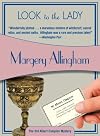
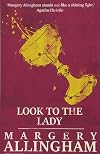
"Wonderfully plotted . . . A marvelous mixture of witchcraft, sacred relics and ancient oaths. {Allingham was a} rare and precious talent." -The Washington Post Estranged from his father, young Percival St. John Wykes Gyrth wanders the streets of London, penniless and homeless, until he's lured to the house of gentleman sleuth Albert Campion. An underground ring of the most powerful and wealthy art collectors in the world have turned their attention to the Gyrth Chalice, a state treasure show more guarded by the family for centuries. To stop its theft, Campion and Val head back to the family seat in Suffolk, where folklore and ancient superstitions abound-and where, in its supposedly haunted woods, Val's aunt is found literally scared to death. With Val's coming-of-age ritual approaching-in which he is initiated into the secret of the Chalice-Campion must sort through new religion followers, landed gentry, suspicious villagers, and a cast of London's ne'er-do-wells for suspects, all while putting his own life on the line. Praise for Margery Allingham "Margery Allingham stands out like a shining light." -Agatha Christie "The best of mystery writers." -The New Yorker "Don't start reading these books unless you are confident that you can handle addiction." -The Independent "One of the finest Golden-Age crime novelists." -The Sunday Telegraph "Spending an evening with Campion is one of life's pure pleasures." -The Sunday Times. show lessTags
Recommendations
















Member Reviews
This is an incredibly well written book, but it has dated badly. It is possible one could fill a bingo card on the instances of racism alone (across multiple different groups), with added misogyny, classism, and ableism. I found it more so than Agatha Christie, but to some extent this is because Allingham has done a much better job of including a wide range of well formed characters in the story, giving them more scope to include derogatory details.
For example, there are a group of Romani who feature heavily in the story, who are important characters, and mostly not represented in stereotypes. But that mostly is doing a lot of heavy lifting, and every reference to the group uses the common slur. Similarly, there is a singular Jewish show more character, who isn't presented negatively, but whose Jewishness is used as a shorthand to imply things about them.
In terms of the story, I found it somewhat over the top and implausible, especially the early sections. There were details later that appeared to contradict earlier events, particularly with respect to what had gone on with Gyrth the younger. Some truly bizarre bits of world building, which might just be a result of nearly 100 years of change and my very limited understanding of the English aristocracy.
It was fascinating to work out part way through that the character I was most suspicious of was in fact the one the series is named for, and thus the author was letting the assumed familiarity of the audience with that character do some of the work in making them important to the story, and trustworthy to the reader. I hadn't, prior to looking the book up online, been aware that it was part of a series.
I'm glad I've read it, I think that it was a very good example of its genre and era, and--like most of Christie's work (and, possibly, most other mystery writers of the era, although I struggle to think of others)--I don't really feel that I can recommend it to a modern audience. show less
For example, there are a group of Romani who feature heavily in the story, who are important characters, and mostly not represented in stereotypes. But that mostly is doing a lot of heavy lifting, and every reference to the group uses the common slur. Similarly, there is a singular Jewish show more character, who isn't presented negatively, but whose Jewishness is used as a shorthand to imply things about them.
In terms of the story, I found it somewhat over the top and implausible, especially the early sections. There were details later that appeared to contradict earlier events, particularly with respect to what had gone on with Gyrth the younger. Some truly bizarre bits of world building, which might just be a result of nearly 100 years of change and my very limited understanding of the English aristocracy.
It was fascinating to work out part way through that the character I was most suspicious of was in fact the one the series is named for, and thus the author was letting the assumed familiarity of the audience with that character do some of the work in making them important to the story, and trustworthy to the reader. I hadn't, prior to looking the book up online, been aware that it was part of a series.
I'm glad I've read it, I think that it was a very good example of its genre and era, and--like most of Christie's work (and, possibly, most other mystery writers of the era, although I struggle to think of others)--I don't really feel that I can recommend it to a modern audience. show less
Three cheers for Margery Allingham! With each book, her creation, the bespectacled, deceptively foolish Albert Campion, becomes better and better. Look to the Lady, the third novel in this Golden Age series, is the best I’ve read yet.
Campion, the pseudonym for a disinherited younger son and self-proclaimed “junior adventurer,” reunites an estranged father and son — and just in time. The pair are the caretakers of a priceless Chalice they’re holding for the Crown, and Campion’s gotten wind that a theft ring has its eye on the Chalice. While such a plot would be pretty cliché in the hands of some novelists, Allingham breathes new life into it, and I finished the novel in a single day. Allingham introduces quite a few twists show more and adds on a most satisfactory ending. Lovers of Dame Agatha or Dorothy L. Sayers will not regret making Campion’s acquaintance. show less
Campion, the pseudonym for a disinherited younger son and self-proclaimed “junior adventurer,” reunites an estranged father and son — and just in time. The pair are the caretakers of a priceless Chalice they’re holding for the Crown, and Campion’s gotten wind that a theft ring has its eye on the Chalice. While such a plot would be pretty cliché in the hands of some novelists, Allingham breathes new life into it, and I finished the novel in a single day. Allingham introduces quite a few twists show more and adds on a most satisfactory ending. Lovers of Dame Agatha or Dorothy L. Sayers will not regret making Campion’s acquaintance. show less
The third Campion adventure is an interesting development in that for the first time, Allingham is obviously paying a lot of attention to the ins and outs of the plot. The previous novel, Mystery Mile, is a very characterful thriller, filled with larger-than-life personalities, sudden twists, and genuine surprises. It reads more like a serial adventure, keeping you wanting to turn the page to the next installment.
Look to the Lady - or, as it was published in the United States, the more pragmatic The Gyrth Chalice Mystery - shows Allingham maturing as a writer of novels. This is, solidly, a book, not an extra-long newspaper serial, and she is careful to pace things accordingly. What that means is a little less shock and surprise along show more the way than there was in Mystery Mile or The Crime at Black Dudley, but ultimately, the resolution of the plot is more satisfying. Allingham takes the time to seed the elements of her conclusion early; perhaps some of them are a bit expected, but the sense of anti-climax which hovers over the previous two books - that element of "Wait, did I miss something?" - has also been eliminated. Allingham may not be a master yet, but she's growing.
The weakest area of the book, perhaps unsurprisingly, is the characters. After a lovely introduction at his flat, Albert Campion seems strangely muted through most of the story; his friend, Professor Cairey, has most of the joie de vivre usually associated with the detective. Even his manservant, Lugg, has more of a personality. And after three books, Allingham's kindly, supportive, but ultimately useless young women are starting to frustrate; every novel, they seem to need rescuing, and every novel, there comes a time when Allingham discards them to focus on the "men's work." Generations later, it does feel a little unnecessary to use them as little more than props (and fortunately, Allingham will start responding to that criticism within a couple of books); worse, though, the antagonist character of "Mrs. Dick" here verges on the worst kind of "mannish" stereotype, vicious and black-hearted merely because she is unfeminine.
It's worth noting that Allingham wrote the first four Campion novels in the space of three years. Any shortcomings they have, therefore, have to be attributed - at least in part - to the sheer speed of their composition. Still, the groundwork has been laid for an ultimately successful and long-running series. Hopefully, before too long, Campion will feature in a book possessed of both a strong plot and the vivid, memorable characters for which Allingham is rightly remembered. show less
Look to the Lady - or, as it was published in the United States, the more pragmatic The Gyrth Chalice Mystery - shows Allingham maturing as a writer of novels. This is, solidly, a book, not an extra-long newspaper serial, and she is careful to pace things accordingly. What that means is a little less shock and surprise along show more the way than there was in Mystery Mile or The Crime at Black Dudley, but ultimately, the resolution of the plot is more satisfying. Allingham takes the time to seed the elements of her conclusion early; perhaps some of them are a bit expected, but the sense of anti-climax which hovers over the previous two books - that element of "Wait, did I miss something?" - has also been eliminated. Allingham may not be a master yet, but she's growing.
The weakest area of the book, perhaps unsurprisingly, is the characters. After a lovely introduction at his flat, Albert Campion seems strangely muted through most of the story; his friend, Professor Cairey, has most of the joie de vivre usually associated with the detective. Even his manservant, Lugg, has more of a personality. And after three books, Allingham's kindly, supportive, but ultimately useless young women are starting to frustrate; every novel, they seem to need rescuing, and every novel, there comes a time when Allingham discards them to focus on the "men's work." Generations later, it does feel a little unnecessary to use them as little more than props (and fortunately, Allingham will start responding to that criticism within a couple of books); worse, though, the antagonist character of "Mrs. Dick" here verges on the worst kind of "mannish" stereotype, vicious and black-hearted merely because she is unfeminine.
It's worth noting that Allingham wrote the first four Campion novels in the space of three years. Any shortcomings they have, therefore, have to be attributed - at least in part - to the sheer speed of their composition. Still, the groundwork has been laid for an ultimately successful and long-running series. Hopefully, before too long, Campion will feature in a book possessed of both a strong plot and the vivid, memorable characters for which Allingham is rightly remembered. show less
Summary: Albert Campion assists the Gyrth family in protecting a priceless chalice in the family for hundreds of years against an international theft ring focused on creating private collections of priceless treasures.
The male heir of a landed family, the Gyrths, is estranged from his father and wandering London’s streets when Campion finds him. Campion is on an urgent mission. For generations, the Gyrths have guarded a silver chalice. Their grant of the land depends on keeping the chalice secure. Campion has learned that an international group of thieves is seeking the chalice. This group has a peculiar set of rules by which they play. They steal for one another’s private art collections. And if the particular thief tasked with show more stealing a treasure is caught or dies, they cease their efforts in stealing that object.
Campion and the young man, Val Gyrth return to his father’s estate, close on his 25th birthday, when he is to engage in the ritual of the secret room. Meanwhile, his Aunt Di has been acting as the Keeper of the Chalice and has been showing it to a pack of guests. Then she turns up dead in a nearby forest, looking frightened out of her wits. Curiously, her body is laid out as if for burial, yet the death is ruled as due to a bad heart. Through Campion’s foresight, he protects the chalice that had been left unguarded in Aunt Di’s cottage.
Allingham creates a delightfully twisty plot involving a monster roaming the forest, an old witch and her mentally impaired son, a band of gypsies, a chase with Val’s sister Penny, Val and Campion trying to elude thieves seeking the chalice, a brash and rude woman who owns a nearby stable, and an American professor interested in the lore of the chalice, and his daughter Beth, who becomes Val’s romantic interest.
I won’t trace all those twists, but all these characters, and a few other minor ones as well as the faithful Lugg play a part leading up to a climactic scene at the secret room on Val’s 25th birthday. Campion’s eccentricities cover a shrewd schemer, yet as the climactic scene approaches, we find ourselves wondering if he has been too clever for his own good, and in fact he is saved only by help from an unexpected quarter. All in all, this was a delightful and diverting story, even though it pressed the limits of plausibility at points. show less
The male heir of a landed family, the Gyrths, is estranged from his father and wandering London’s streets when Campion finds him. Campion is on an urgent mission. For generations, the Gyrths have guarded a silver chalice. Their grant of the land depends on keeping the chalice secure. Campion has learned that an international group of thieves is seeking the chalice. This group has a peculiar set of rules by which they play. They steal for one another’s private art collections. And if the particular thief tasked with show more stealing a treasure is caught or dies, they cease their efforts in stealing that object.
Campion and the young man, Val Gyrth return to his father’s estate, close on his 25th birthday, when he is to engage in the ritual of the secret room. Meanwhile, his Aunt Di has been acting as the Keeper of the Chalice and has been showing it to a pack of guests. Then she turns up dead in a nearby forest, looking frightened out of her wits. Curiously, her body is laid out as if for burial, yet the death is ruled as due to a bad heart. Through Campion’s foresight, he protects the chalice that had been left unguarded in Aunt Di’s cottage.
Allingham creates a delightfully twisty plot involving a monster roaming the forest, an old witch and her mentally impaired son, a band of gypsies, a chase with Val’s sister Penny, Val and Campion trying to elude thieves seeking the chalice, a brash and rude woman who owns a nearby stable, and an American professor interested in the lore of the chalice, and his daughter Beth, who becomes Val’s romantic interest.
I won’t trace all those twists, but all these characters, and a few other minor ones as well as the faithful Lugg play a part leading up to a climactic scene at the secret room on Val’s 25th birthday. Campion’s eccentricities cover a shrewd schemer, yet as the climactic scene approaches, we find ourselves wondering if he has been too clever for his own good, and in fact he is saved only by help from an unexpected quarter. All in all, this was a delightful and diverting story, even though it pressed the limits of plausibility at points. show less
Look To The Lady by Margery Allingham is the third book in the Albert Campion series which, for me, is getting better and better with each book. This one has many of the standard ingredients of a classic 1930’s British mystery, a rural village setting, a mysterious tower with a secret room, a family treasure that is the target of a nasty ring of international art thieves and, aided by a clever plot and the deft writing of the author, Look to the Lady was a most enjoyable read.
Albert Campion is a most intriguing character. Very little of his background has been revealed to the readers but it is implicated that he is highly placed, well connected and works on very sensitive matters for the government. His outward appearance is bland and show more his manner can be rather vague, but his dialogue is razor sharp and a joy to read. He is aided in his investigations by Magersfontein Lugg, his valet who appears to have a rather chequered past.
I find these books a joy to read and look forward to continuing on with this series. show less
Albert Campion is a most intriguing character. Very little of his background has been revealed to the readers but it is implicated that he is highly placed, well connected and works on very sensitive matters for the government. His outward appearance is bland and show more his manner can be rather vague, but his dialogue is razor sharp and a joy to read. He is aided in his investigations by Magersfontein Lugg, his valet who appears to have a rather chequered past.
I find these books a joy to read and look forward to continuing on with this series. show less
Hardly qualifies as a mystery; it's more of a Quest - a Quest for the Grail, if you will. Overtly the plot is simple: Campion must prevent a criminal gang from obtaining a priceless antique cup from its location at an English country house. The gyrations of the plot and machinations of both the gang and of Campion make the reader dizzy trying to keep up, but it's well worth the trouble of reading to the end. Oddly, what's handled with the most expertise is the mystical part of the story. The ancient guardian of the Chalice; the old witch in the village; the monster in the woods; all handled with a deft touch that leave you wondering: did something magical really happen? Or was it all just a coincidence?
There are enough characters that show more they are glossed over rather quickly rather than brought out in any detail, but the written-out Suffolk accents are fun to read. Allingham starts us off expecting a murder mystery and finishes us off with a quest; yet the reader feels no disappointment. Quite an accomplishment. show less
There are enough characters that show more they are glossed over rather quickly rather than brought out in any detail, but the written-out Suffolk accents are fun to read. Allingham starts us off expecting a murder mystery and finishes us off with a quest; yet the reader feels no disappointment. Quite an accomplishment. show less
Although an improvement on Allingham’s first two Campion books this outing still suffers from many of the flaws so obvious in its predecessors. Campion himself is shown to do little actual detecting or deducing. He just “knows” things -- often because of an immense circle of informants who, for no particularly obvious reason, have warm feelings towards him. The reader does not follow Campion in his various investigations and quests for information and is often kept ignorant of information in what appears to be an attempt to make Campion seem to be all knowing.
As is often the case in British “mysteries” of this time, there are secret (and yet well known to all the senior members of police and government) organizations whose show more exploits cannot be thwarted by the standard representatives of authority. This invulnerability is not well justified in the text of the book and appears to have no purpose other than to give a reason for the protagonist to break a variety of rules without fear of arrest or other form of punishment.
In this and the two previous Campion books are set in corners and byways of England that are backward even by the standards of popular English fiction of the time. It is a constant irritation to this reader that poor education, poor health, and bad hygiene are presented as colourful, picturesque and entertaining. The aristocracy seems almost to have a glow about them, the gentry are to be sympathized with if they actually have to work for a living and the rural folk and poor are caricatures more reminiscent of Dickens than of any realistic portrait of England at the time.
Finally, this reader found the ending of the book to be very disappointing for a number of reasons. Campion does not solve anything himself, he does not personally thwart the crime he was hired to prevent and the reader is left to suspect that some mysterious supernatural force intervened at the last minute. Logic dictates that if some unseen and mysterious force was able to prevent the crime then Campion need never have been involved and the whole adventure was an exercise in futility. If that thought occurred to this reader then it should have crossed the mind of at least one of the characters we visit at the end of the book. show less
As is often the case in British “mysteries” of this time, there are secret (and yet well known to all the senior members of police and government) organizations whose show more exploits cannot be thwarted by the standard representatives of authority. This invulnerability is not well justified in the text of the book and appears to have no purpose other than to give a reason for the protagonist to break a variety of rules without fear of arrest or other form of punishment.
In this and the two previous Campion books are set in corners and byways of England that are backward even by the standards of popular English fiction of the time. It is a constant irritation to this reader that poor education, poor health, and bad hygiene are presented as colourful, picturesque and entertaining. The aristocracy seems almost to have a glow about them, the gentry are to be sympathized with if they actually have to work for a living and the rural folk and poor are caricatures more reminiscent of Dickens than of any realistic portrait of England at the time.
Finally, this reader found the ending of the book to be very disappointing for a number of reasons. Campion does not solve anything himself, he does not personally thwart the crime he was hired to prevent and the reader is left to suspect that some mysterious supernatural force intervened at the last minute. Logic dictates that if some unseen and mysterious force was able to prevent the crime then Campion need never have been involved and the whole adventure was an exercise in futility. If that thought occurred to this reader then it should have crossed the mind of at least one of the characters we visit at the end of the book. show less
Members
- Recently Added By
Lists

Female Author
1,234 works; 65 members

#ReadingBingo2021
25 works; 1 member

Books I Want to Read
36 works; 1 member

Books Read in 2019
4,052 works; 110 members

#JustTheFacts2021Gold
60 works; 1 member
#MysteryBingo2021Gold(Original)
36 works; 1 member
#MysteryBingo2021Gold(Revised)
36 works; 1 member

Books Read in 2025
4,128 works; 98 members
Author Information

131+ Works 20,389 Members
Margery Allingham, one of England's leading mystery writers, was born on May 20, 1904, in Ealing, a western suburb of London, but grew up in a remote village in Essex. Both of her parents were writers, and Margery carried on that tradition when she sold her first short story as an eight-year-old. At the Regent Street Polytechnic, she continued show more writing and studied drama and speech. While there, she wrote a verse play, Dido and Aeneas, in which she had a starring role during performances in London. At age 19, Allington published her first novel, Blackkerchief Dick. She wrote another novel, The White Cottage Mystery, before creating her most famous character, Albert Campion, in The Black Dudley Murder (published in England as The Crime at Black Dudley) in 1929. Allington went on to create twenty-eight more Campion mysteries, including several collections. She wrote more than 10 other novels, some under the pseudonym Maxwell March, as well as four novellas and sixty-four short stories. During World War II, Allingham served as First Aid Commandant for her district, organized the billeting and care of evacuees from London, and allowed her house to be turned into a temporary military base for eight officers and two hundred men of the Cameronians. The war greatly deepened Allingham's passion for her country, as evidenced in her later works. Allingham died of cancer on June 30, 1966. (Bowker Author Biography) show less
Some Editions
Series

Belongs to Publisher Series
Work Relationships
Is contained in
Has the adaptation
Is abridged in
Common Knowledge
- Canonical title*
- Der Hüter des Kelchs
- Original title
- Look to the Lady
- Alternate titles
- The Gyrth Chalice Mystery
- Original publication date
- 1931-01
- People/Characters
- Albert Campion (Rudolf K, Orlando, Christopher Twelvetrees); Roger Branch (number 705); Beth Cairey; Mrs. Cairey; Professor Cairey; Penny Gyrth (show all 12); Colonel Sir Percival Gyrth; Val Gyrth; Magersfontein Lugg; Stanislaus Oates; Mrs. Sara; Mrs. Dick Shannon
- Important places
- London, England, UK; Sanctuary, Suffolk, England, UK
- Related movies
- "Campion" Look to the Lady: Part 1 (1989 | IMDb); "Campion" Look to the Lady: Part 2 (1989 | IMDb)
- Dedication
- To Orlando
- First words
- "If you'll accept this, sir," said the policeman, pressing a shilling into the down-and-out's hand, "you'll have visible means of support and I shan't have to take you along."
- Quotations
- "Twice armed is he who speeds with an excuse, but thrice is he whose car is full of juice," he remarked absently.
- Last words
- (Click to show. Warning: May contain spoilers.)The gentle clangour of the gong in the hall below broke in upon the silence.
- Original language
- English
- Disambiguation notice
- In the US, this book was published under the title "The Gyrth Chalice Mystery."
*Some information comes from Common Knowledge in other languages. Click "Edit" for more information.
Classifications
Statistics
- Members
- 831
- Popularity
- 33,101
- Reviews
- 27
- Rating
- (3.69)
- Languages
- 7 — Czech, Danish, English, French, German, Italian, Swedish
- Media
- Paper, Audiobook, Ebook
- ISBNs
- 27
- ASINs
- 30