On This Page
Description
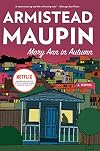
After suffering personal calamities in New York, Mary Ann Singleton moves back to San Francisco after being gone for twenty years and begins to slowly rebuild her life, only to confront fresh terrors when her past comes back to haunt her.Tags
Recommendations





















Member Reviews
My race through the original six books that make up TALES OF THE CITY can only be described as a reading orgy. I think I went through them all in a week. Then, some years ago I read book #7 before losing track of Armistead Maupin. When I discovered he had written two more books in the series, I decided to save them for a vacation treat.
I went through Mary Ann in Autumn during the first day of vacation, once again enchanted by the characters of Mary Ann, Mouse, and Anna Madrigal. There was Maupin's same easy, conversational style and humor and the same knack for capturing precisely what makes the baby boomer generation (including me) both distinctive and ridiculous.
Now well into middle age, Mary Ann is facing multiple crises -- both show more personal and health-- when she once again turns to her good friend Michael (aka Mouse) for support. There are some new characters, representing the continuum of sexual identity, all of whom wind up being strangely interconnected in the small town of San Francisco. If you're a baby boomer, this is a MUST read. show less
I went through Mary Ann in Autumn during the first day of vacation, once again enchanted by the characters of Mary Ann, Mouse, and Anna Madrigal. There was Maupin's same easy, conversational style and humor and the same knack for capturing precisely what makes the baby boomer generation (including me) both distinctive and ridiculous.
Now well into middle age, Mary Ann is facing multiple crises -- both show more personal and health-- when she once again turns to her good friend Michael (aka Mouse) for support. There are some new characters, representing the continuum of sexual identity, all of whom wind up being strangely interconnected in the small town of San Francisco. If you're a baby boomer, this is a MUST read. show less
The Book Report: At fifty-seven, Mary Ann Singleton Hawkins Caruthers has blown up her life again and come running back to the loving, welcoming arms of Mouse Tolliver, her first friend in San Francisco. The catch is, Mouse is now happily married to thirtysomething bear-daddy fancier Ben, who is less than enthralled with Mrs. Caruthers. Considering the dual crises buffeting Mary Ann, she feels entitled to come on in and set a spell anyway, and thus the plot starts moving. Mary Ann's crises, one real and the other simply her drama queen self coming to the fore, cause some tensions in San Francisco; she doesn't have to deal with her ex-husband, but pretty much all the other Barbary Lane survivors show up and interact with her, though less show more so with each other. A bomb from the past shows up. A BIG bomb. The resolution of that dangling storyline from book 2 (More Tales of the City), I believe, is as messy as the original ending was tidy...though both were very *purses lips* tidy-tidy in their own ways. A fitting end to this book, though, clearing the decks for Mary Ann to return to the fold. And so set us up for another book.
My Review: Maupin's trademark suds; if you like it (and I do), you'll like this latest entry in the "Tales" saga. I wondered as I wandered if some of these plots were strictly speaking *necessary*, but honestly I felt so smoothly engulfed and solicitously engaged by the mother-henning of Maupin's consistently high quality writing about these dear and familiar and aging, even becoming elderly and frail, characters that, well, I checked my coincidence-flensing knife at the door. I missed it a few times, but at the door it stayed.
I'm growing older. I find that fact reasonably agreeable most of the time, except that every once in a way I feel left out of the storytelling that makes younger people sit up and take notice. Usually it's because I've been there and done that and even have the copyright-1975 book to prove that this NEW! NOW! HAPPENIN! trope is recycled. But even the Bible is new to someone who's never read it before. And the fact is, sometimes old familiar faces are more fun to spend time with. So novelty palls, failing to be novel anymore. But the solid, tried-and-true tropes of a series of books about a group of people who remind me of me learning and groping for meaning and relevance in a world that disconcertingly looks a lot like mine but is very *un*like it in some key ways strikes a welcome chord in me.
And, like my own life, Maupin injects new people into his characters' ambits, most all of them younger, most all of them groping and seeking in ways that we *think* we'll outgrow. Reading this book, I'm soothed to realize I'm not the only one who hasn't stopped groping and seeking...and that not only is that okay, but it's a large part of the reason new friendships are possible. A worhty take-away from this warm, cozy fireplace read of a book. show less
My Review: Maupin's trademark suds; if you like it (and I do), you'll like this latest entry in the "Tales" saga. I wondered as I wandered if some of these plots were strictly speaking *necessary*, but honestly I felt so smoothly engulfed and solicitously engaged by the mother-henning of Maupin's consistently high quality writing about these dear and familiar and aging, even becoming elderly and frail, characters that, well, I checked my coincidence-flensing knife at the door. I missed it a few times, but at the door it stayed.
I'm growing older. I find that fact reasonably agreeable most of the time, except that every once in a way I feel left out of the storytelling that makes younger people sit up and take notice. Usually it's because I've been there and done that and even have the copyright-1975 book to prove that this NEW! NOW! HAPPENIN! trope is recycled. But even the Bible is new to someone who's never read it before. And the fact is, sometimes old familiar faces are more fun to spend time with. So novelty palls, failing to be novel anymore. But the solid, tried-and-true tropes of a series of books about a group of people who remind me of me learning and groping for meaning and relevance in a world that disconcertingly looks a lot like mine but is very *un*like it in some key ways strikes a welcome chord in me.
And, like my own life, Maupin injects new people into his characters' ambits, most all of them younger, most all of them groping and seeking in ways that we *think* we'll outgrow. Reading this book, I'm soothed to realize I'm not the only one who hasn't stopped groping and seeking...and that not only is that okay, but it's a large part of the reason new friendships are possible. A worhty take-away from this warm, cozy fireplace read of a book. show less
My race through the original six books that make up TALES OF THE CITY can only be described as a reading orgy. I think I went through them all in a week. Then, some years ago I read book #7 before losing track of Armistead Maupin. When I discovered he had written two more books in the series, I decided to save them for a vacation treat.
I went through Mary Ann in Autumn during the first day of vacation, once again enchanted by the characters of Mary Ann, Mouse, and Anna Madrigal. There was Maupin's same easy, conversational style and humor and the same knack for capturing precisely what makes the baby boomer generation (including me) both distinctive and ridiculous.
Now well into middle age, Mary Ann is facing multiple crises -- both show more personal and health-- when she once again turns to her good friend Michael (aka Mouse) for support. There are some new characters, representing the continuum of sexual identity, all of whom wind up being strangely interconnected in the small town of San Francisco. If you're a baby boomer, this is a MUST read. show less
I went through Mary Ann in Autumn during the first day of vacation, once again enchanted by the characters of Mary Ann, Mouse, and Anna Madrigal. There was Maupin's same easy, conversational style and humor and the same knack for capturing precisely what makes the baby boomer generation (including me) both distinctive and ridiculous.
Now well into middle age, Mary Ann is facing multiple crises -- both show more personal and health-- when she once again turns to her good friend Michael (aka Mouse) for support. There are some new characters, representing the continuum of sexual identity, all of whom wind up being strangely interconnected in the small town of San Francisco. If you're a baby boomer, this is a MUST read. show less
I find this was a darker and more intense Maupin. It's been years since I read the first tales, but they definitely had a lighter spin. With cancer at its core, I had the sense that the author was ready to grapple with aging, disease, death. The Norman episode was downright terrifying.
I guess therein lies Maupin's genious, despite this darkness, despite the doubts that plague Mary Ann and Jake, despite Michael's age and creaking bones, there is still an ability to laugh at life, to revel in the quiet moments of togetherness and to live with dignity and wisdom.
The story structure is fantastic: it kept me on the edge of my seat - perhaps a bit too complex, but masterfully executed.
I guess therein lies Maupin's genious, despite this darkness, despite the doubts that plague Mary Ann and Jake, despite Michael's age and creaking bones, there is still an ability to laugh at life, to revel in the quiet moments of togetherness and to live with dignity and wisdom.
The story structure is fantastic: it kept me on the edge of my seat - perhaps a bit too complex, but masterfully executed.
Sigh. (That was a sigh of contentment). Picking up this Tale of the City was like bumping into an old friend I forgot I ever had. I fell in love with this series by Armistead Maupin over 20 years ago, and it was delicious to be reunited with some beloved characters after many years apart. The beauty of this tale is its naturalness-- the characters have all moved into middle age (which I also approach, slowly but surely), and for the most part they are settled, but somehow they always manage to have a little drama, just like all of us. In this case, both fortunately and unfortunately, the ultimate climax was more dramatic than anyone could hope to deal with in our everyday lives, and in fact it was the culmination of a story that started show more decades ago. I think there is still one (last?) book in the series I haven't yet read, and I look forward to it eagerly and a little wistfully, knowing I might be saying goodbye to that old friend forever. I guess that's the beauty of fiction, though: we can always go back and start over from the beginning. show less
I didn't feel right at home when I began Mary Ann in Autumn. I thought I would. I expected to. I always have before. Each new addition to the Tales of the City books felt like bumping into a bunch of old friends I hadn't seen in a while. All of us grabbing a cup of coffee together so we could have a chance to catch up. (Since we all know each other from San Francisco none of us actually drinks coffee. Lattes, mochas, cappacinos, a chai maybe, but never just coffee.)
Mr. Maupin abandoned Mary Ann Singleton several books back. She left San Francisco, her "husband" and their adopted daughter and headed off to New York City hoping to make it big in television. She didn't, but she married well and settled down to the life of a Connecticut show more housewife. That's tantamount to treason for someone from San Francisco.
It's clear in the first few pages that this will be Mary Ann's farewell book. She begins by going back to the old homestead, 28 Barbary Lane, where we first met the main cast of characters living with the magical Mrs. Madrigal in the 1970's when we read Tales of the City in the San Francisco Chronicle. Mary Ann is looking for a past that's gone. Someone else lives there. They've fixed the place up. Most of her old haunts have changed hands and changed names. In an echo of the first novel's opening line she considers going to the Buena Vista for an Irish coffee. She's not wearing a mood ring this time around, but if she were it's color would be misty blue. (You can look it up here.)
My problem is that Mr. Maupin has been saying farewell to these characters for the past three or four novels. We've been saying goodbye to 28 Barbary Lane every couple of years since Significant Others (book 4) came out.
Then, some 60 pages into the book or so, Mary Ann gets a phone call from a stranger who asks if she remembers someone long dead and a mystery is a-foot. I'd forgotten that Mary Ann's story lines always involved some sort of mystery, something like a high camp Hitchcock. A child pornographer who wears clip-on ties, a homeless mystic who might be the Rev. Jim Jones, a secret cult engaging in cannibalistic communion high in the rafters of Grace Cathedral. Absurd plots that Mary Ann stumbles into while looking for Mr. Right.
And I felt at home again. show less
Mr. Maupin abandoned Mary Ann Singleton several books back. She left San Francisco, her "husband" and their adopted daughter and headed off to New York City hoping to make it big in television. She didn't, but she married well and settled down to the life of a Connecticut show more housewife. That's tantamount to treason for someone from San Francisco.
It's clear in the first few pages that this will be Mary Ann's farewell book. She begins by going back to the old homestead, 28 Barbary Lane, where we first met the main cast of characters living with the magical Mrs. Madrigal in the 1970's when we read Tales of the City in the San Francisco Chronicle. Mary Ann is looking for a past that's gone. Someone else lives there. They've fixed the place up. Most of her old haunts have changed hands and changed names. In an echo of the first novel's opening line she considers going to the Buena Vista for an Irish coffee. She's not wearing a mood ring this time around, but if she were it's color would be misty blue. (You can look it up here.)
My problem is that Mr. Maupin has been saying farewell to these characters for the past three or four novels. We've been saying goodbye to 28 Barbary Lane every couple of years since Significant Others (book 4) came out.
Then, some 60 pages into the book or so, Mary Ann gets a phone call from a stranger who asks if she remembers someone long dead and a mystery is a-foot. I'd forgotten that Mary Ann's story lines always involved some sort of mystery, something like a high camp Hitchcock. A child pornographer who wears clip-on ties, a homeless mystic who might be the Rev. Jim Jones, a secret cult engaging in cannibalistic communion high in the rafters of Grace Cathedral. Absurd plots that Mary Ann stumbles into while looking for Mr. Right.
And I felt at home again. show less
Before there was Sex and the City, there were Tales of the City. Granted, it was a different city...and some different sex in that city. Armistead Maupin’s stories of singles and couples - gay, straight, and either/or - navigating their way through San Francisco over the course during a decade that went from the disco dazzle of the mid-70s to the AIDS crisis in Reagan’s America were originally serialized in the San Francisco Chronicle and collected into six novels. I read and re-read the series every couple of years throughout the 1990s - they’re probably the books I’ve read most as an adult. The plots were often outlandish - Episcopal cannibal cults! - and sometimes very specific to a certain time period - escapees from the show more Jonestown massacre! - but I grew to love the characters, and I got most of my education in gay culture from Maupin’s Tales.
After almost two decades away from the City’s characters, Maupin revisited some of them in 2007’s Michael Tolliver Lives, and now he’s back with them again, effectively coming full circle. The original Tales of the City opened when twentysomething secretary Mary Ann Singleton decided, on the last day of her San Francisco vacation, that she wasn’t going back home to Cleveland. And she never did, although twelve years later she did leave the city - and her husband, adopted daughter, and AIDS-infected best friend - for an East Coast career opportunity. That fizzled, but Mary Ann stayed on, marrying a wealthy businessman and becoming stepmother to his young son, while life went on without her in the City by the Bay. The aforementioned Michael benefited from breakthroughs in AIDS treatments and eventually found a much younger husband; ex-husband Brian raised daughter Shawna on his own and, once she was on her own, took off by himself to explore the USA in an RV; and Shawna became “Grrrl on the Loose,” a high-profile sex blogger. But having reconnected with them all a few years earlier, Mary Ann doesn’t think twice about flying back to San Francisco in the wake of two major personal crises.
All of the preceding plot discussion is meant to set the scene for this novel...but since, like the preceding Tales, Mary Ann in Autumn is strongly driven by plot, I won’t say more. Maupin continues to be tuned in to contemporary culture; as mentioned, Shawna is a blogger, and Michael’s husband Ben introduces Mary Ann to Facebook. That introduction leads to a mysterious connection that becomes an unwelcome reminder of a thirty-year-old loose end - something Mary Ann does NOT need to deal with on top of the marital and health crises that sent her back to San Francisco in the first place.
While Maupin has brought some newer, younger characters into the fold, it’s my familiar favorites that keep me reading. I do consider the Tales books to be plot-driven, but the plot wouldn’t drive me if I didn’t care about the characters - and I do love these folks. Mary Ann and Michael are well into middle age now, facing - and talking about - the changes that come with it as they draw on their long history together. There are three major plot threads in the novel. One essentially stands on its own, but the other two begin to overlap and integrate as the novel progresses - and as they do, they pull in that thirty-year-old loose end and circle back to the very first Tales. Having said that, I don’t think it’s necessary to have read the earlier books in the series before picking up this one. But if you have, you’ll make some connections that a newbie wouldn’t, and that will enhance your enjoyment of the story. And if you haven’t, you’ll probably want to go read them all anyway, just to fill in the backstory.
I had thought that Sure of You (1990) would be the last of the Tales of the City, but now I’m glad it wasn’t. If Mary Ann in Autumn turns out to be where the story ends, I’m quite satisfied with where Armistead Maupin is leaving it. show less
After almost two decades away from the City’s characters, Maupin revisited some of them in 2007’s Michael Tolliver Lives, and now he’s back with them again, effectively coming full circle. The original Tales of the City opened when twentysomething secretary Mary Ann Singleton decided, on the last day of her San Francisco vacation, that she wasn’t going back home to Cleveland. And she never did, although twelve years later she did leave the city - and her husband, adopted daughter, and AIDS-infected best friend - for an East Coast career opportunity. That fizzled, but Mary Ann stayed on, marrying a wealthy businessman and becoming stepmother to his young son, while life went on without her in the City by the Bay. The aforementioned Michael benefited from breakthroughs in AIDS treatments and eventually found a much younger husband; ex-husband Brian raised daughter Shawna on his own and, once she was on her own, took off by himself to explore the USA in an RV; and Shawna became “Grrrl on the Loose,” a high-profile sex blogger. But having reconnected with them all a few years earlier, Mary Ann doesn’t think twice about flying back to San Francisco in the wake of two major personal crises.
All of the preceding plot discussion is meant to set the scene for this novel...but since, like the preceding Tales, Mary Ann in Autumn is strongly driven by plot, I won’t say more. Maupin continues to be tuned in to contemporary culture; as mentioned, Shawna is a blogger, and Michael’s husband Ben introduces Mary Ann to Facebook. That introduction leads to a mysterious connection that becomes an unwelcome reminder of a thirty-year-old loose end - something Mary Ann does NOT need to deal with on top of the marital and health crises that sent her back to San Francisco in the first place.
While Maupin has brought some newer, younger characters into the fold, it’s my familiar favorites that keep me reading. I do consider the Tales books to be plot-driven, but the plot wouldn’t drive me if I didn’t care about the characters - and I do love these folks. Mary Ann and Michael are well into middle age now, facing - and talking about - the changes that come with it as they draw on their long history together. There are three major plot threads in the novel. One essentially stands on its own, but the other two begin to overlap and integrate as the novel progresses - and as they do, they pull in that thirty-year-old loose end and circle back to the very first Tales. Having said that, I don’t think it’s necessary to have read the earlier books in the series before picking up this one. But if you have, you’ll make some connections that a newbie wouldn’t, and that will enhance your enjoyment of the story. And if you haven’t, you’ll probably want to go read them all anyway, just to fill in the backstory.
I had thought that Sure of You (1990) would be the last of the Tales of the City, but now I’m glad it wasn’t. If Mary Ann in Autumn turns out to be where the story ends, I’m quite satisfied with where Armistead Maupin is leaving it. show less
Members
- Recently Added By
Lists

Books Read in 2013
1,629 works; 51 members

Books Read in 2024
4,623 works; 126 members
Author Information

40+ Works 24,030 Members
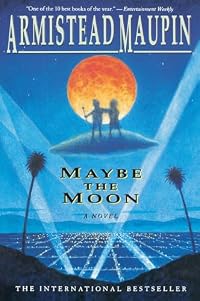
Armistead Maupin was born in Washington D.C. on May 13, 1944. He received a B.A. from the University of North Carolina at Chapel Hill. He served as a naval officer in the Mediterranean and with the River Patrol Force in Vietnam. He worked as a reporter for a newspaper in Charleston, South Carolina, before being assigned to the San Francisco bureau show more of the Associated Press in 1971. In 1976, he launched his groundbreaking Tales of the City serial in the San Francisco Chronicle. The series describes a group of characters that live together in a boarding house in San Francisco. Eventually, these Tales were collected into a series of six novels. In 1993, the British Broadcasting Company adapted them for a television series that aired on PBS in 1994. His other works include Maybe the Moon, Michael Tolliver Lives, and The Days of Anna Madrigal. The Night Listener was adapted into a movie starring Robin Williams and Toni Collette. (Bowker Author Biography) show less
Some Editions
Awards and Honors
Notable Lists
Series

Common Knowledge
- Canonical title
- Mary Ann in Autumn
- Original title
- Mary Ann in Autumn
- Original publication date
- 2010
- People/Characters*
- Mary Ann Singleton; Michael Tolliver; Ben McKenna; Jake Greenleaf; Anna Madrigal; Shawna "Puppy" Hawkins (show all 16); Otto; Jonah Flake; DeDe Halcyon Wilson; D'orothea "D'or" Halcyon Wilson; Alexandra "Lexy" Lemke; Leila (Alexandra Lemke); Mark; Ray; Cliff "Fogbound One"; Normal Neal Williams
- Important places
- USA; California, USA; San Francisco, California, USA
- Epigraph
- We shall not cease from exploration
And the end of all our exploring
Will be to arrive where we started
And know the place for the first time.
--T. S. Eliot - Dedication
- For Laura Linney
- First words
- There should be a rabbit hole was what she was thinking.
- Last words*
- (Click to show. Warning: May contain spoilers.)Blossom gobbled it up with gusto.
*Some information comes from Common Knowledge in other languages. Click "Edit" for more information.
Classifications
Statistics
- Members
- 930
- Popularity
- 28,547
- Reviews
- 60
- Rating
- (3.94)
- Languages
- English, French, German
- Media
- Paper, Audiobook, Ebook
- ISBNs
- 20
- ASINs
- 9