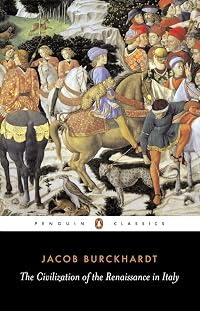
The Civilization of the Renaissance in Italy
by Jacob Burckhardt
On This Page
Description
Dive into the rich tapestry that was the Italian Renaissance with this masterwork from Swiss historian Jacob Burckhardt. Considered to be a seminal example of historiography of the era, The Civilization of the Renaissance in Italy plunges readers into an immersive experience of a uniquely significant period..
Tags
Recommendations





















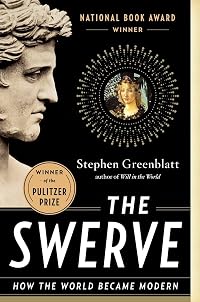
Member Recommendations
Muscogulus Why did a German-speaking historian give a French name to an Italian historical epoch? Gossman's study illuminates the time and place that shaped Jacob Burckhardt and his scholarship. Basel emerges as a cultural symbol, the antipode of Berlin.
20
cshalizi The similarity of titles is no accident; Hale's book is a modern attempt at a synthetic history, but on a wider scope.


Member Reviews
This is not a book to read if you are looking for a straight forward account of political events and movements in renaissance Italy: Burckhardt’s book is much more ambitious than that. He is intent, no less, on examining why there was a rebirth (renaissance) in Italy in the 14th and 15th centuries and how it differed so very much from the straight jacket of medieval culture and society.
The Civilisation of Renaissance Italy was published in 1860 and Jacob Burckhardt was one of the first historians who wished to provide more than just a series of events with an explanation of their cause and effect. His idea was to get under the skin of the culture of the period; to define the character of the society so that the reader is able to show more understand why people behaved the way they did. In short he wanted to provide as complete a picture as possible and in many ways he is successful. He is strong on the cultural history particularly literature, but also takes into account painting sculpture and architecture. He is also very good on religion, social institutions, society and daily life. What emerges is a real feel for the period and a presentation of the underlying circumstances that led to such rapid changes to the society in that small part of the world.
His approach has been labelled as unsystematic, but I would not agree. There are six parts to the book and each part introduces another subject that builds on what has gone before. He could be criticised for not drawing all the strands together at the end, but this is missing the point as there is plenty of guidance along the way and it is up to us to form our own conclusions. What we should keep in mind is that this is a Victorian perspective and so his central premise that it was the individuality of the Italian character and its unique place in history that was responsible for the renaissance would be challenged to some extent by modern historians.
Part 1 is a sort of gallop through the various political states that made up what we now know as modern Italy. Emphasis is on the individuality of these states and how they differed in character from the kingdoms prevalent in the rest of Europe. They were city states where it was said that “even a servant could become king”. There is a more detailed examination of Venice and Florence, two powerful states with completely different characteristics.
Part 2 starts to examine the character of the people within these states concluding that the absence of feudalism and the political culture led to the rise of the individual. Fame could be achieved in the arts as well as in politics, people began to revel in their own uniqueness, they could educate themselves, there was more freedom than in the more clerically dominated middle ages.
Part 3 discusses the huge importance of the rediscovery of antiquity. Particularly relevant to Italians as many of the Latin texts were felt to be their very heritage. This new found humanism was pagan in nature, which led to a discovery of a whole new approach to the world; one that did not involve such a close relationship with Christianity. Humanism and Christianity were viewed by some, as parallel viewpoints
Part 4 covers the outward bound Italians, emissaries to other states, explorers and adventurers and a more ready acceptance of the Muslim world with whom there was trade and cultural exchanges. This part also covers the great strides made in literature and the first hesitant steps in dealing with the inner man, there is also much here on daily life gleaned from poetry and novels.
Part 5 is entitled Society and festivals. Burckhardt is again at pains to point out how much this differed from life in the middle ages he says:
“Middle ages had courtly, aristocratic manners and etiquette differing very little in various countries in Europe….. Social life in the renaissance offers the sharpest contrast to medievalism, social intercourse now ignored all distractions of caste and was based largely on the existence of an educated class as we now understand the word”
Nobles and burghers dwelt together within the city walls. The church too was not to be used as a means of providing for the younger sons of noble families. Burckhardt claims that women stood on an equal footing with men and also examines costume and fashion, music and the cult of the festivals.
Part 6 delves into Morality and Religion and Burkhardt is at his best in this final section. The corruption within the church, the rediscovery of antiquity and the individuality of character all pointed towards men and women being able to think for themselves. Their religion; whatever form it took came from within rather than being hammered home by the clerical establishment. The old faith of paganism mixed with magic and mysticism also feature along with astrology. Immorality and the lawlessness that abounded in the city states is featured throughout the book but in this final chapter some explanation of this phenomena is given. Burckhardt indulges us with some of the more scandalous stories and I get the feeling that he is a little uncomfortable with some of these.
The book is free to download from The Gutenberg Project and although there are a few errors in the text, it is still very readable. Buckhardt writes well and the book seems to get stronger as it goes along with the authors portrayal of renaissance Italy coming together chapter by chapter and leaving the reader with a fine depiction of the period. A must read for anybody interested in the renaissance with the proviso that this is a somewhat outdated view, but then again there is so much here that feels exactly right to me. show less
The Civilisation of Renaissance Italy was published in 1860 and Jacob Burckhardt was one of the first historians who wished to provide more than just a series of events with an explanation of their cause and effect. His idea was to get under the skin of the culture of the period; to define the character of the society so that the reader is able to show more understand why people behaved the way they did. In short he wanted to provide as complete a picture as possible and in many ways he is successful. He is strong on the cultural history particularly literature, but also takes into account painting sculpture and architecture. He is also very good on religion, social institutions, society and daily life. What emerges is a real feel for the period and a presentation of the underlying circumstances that led to such rapid changes to the society in that small part of the world.
His approach has been labelled as unsystematic, but I would not agree. There are six parts to the book and each part introduces another subject that builds on what has gone before. He could be criticised for not drawing all the strands together at the end, but this is missing the point as there is plenty of guidance along the way and it is up to us to form our own conclusions. What we should keep in mind is that this is a Victorian perspective and so his central premise that it was the individuality of the Italian character and its unique place in history that was responsible for the renaissance would be challenged to some extent by modern historians.
Part 1 is a sort of gallop through the various political states that made up what we now know as modern Italy. Emphasis is on the individuality of these states and how they differed in character from the kingdoms prevalent in the rest of Europe. They were city states where it was said that “even a servant could become king”. There is a more detailed examination of Venice and Florence, two powerful states with completely different characteristics.
Part 2 starts to examine the character of the people within these states concluding that the absence of feudalism and the political culture led to the rise of the individual. Fame could be achieved in the arts as well as in politics, people began to revel in their own uniqueness, they could educate themselves, there was more freedom than in the more clerically dominated middle ages.
Part 3 discusses the huge importance of the rediscovery of antiquity. Particularly relevant to Italians as many of the Latin texts were felt to be their very heritage. This new found humanism was pagan in nature, which led to a discovery of a whole new approach to the world; one that did not involve such a close relationship with Christianity. Humanism and Christianity were viewed by some, as parallel viewpoints
Part 4 covers the outward bound Italians, emissaries to other states, explorers and adventurers and a more ready acceptance of the Muslim world with whom there was trade and cultural exchanges. This part also covers the great strides made in literature and the first hesitant steps in dealing with the inner man, there is also much here on daily life gleaned from poetry and novels.
Part 5 is entitled Society and festivals. Burckhardt is again at pains to point out how much this differed from life in the middle ages he says:
“Middle ages had courtly, aristocratic manners and etiquette differing very little in various countries in Europe….. Social life in the renaissance offers the sharpest contrast to medievalism, social intercourse now ignored all distractions of caste and was based largely on the existence of an educated class as we now understand the word”
Nobles and burghers dwelt together within the city walls. The church too was not to be used as a means of providing for the younger sons of noble families. Burckhardt claims that women stood on an equal footing with men and also examines costume and fashion, music and the cult of the festivals.
Part 6 delves into Morality and Religion and Burkhardt is at his best in this final section. The corruption within the church, the rediscovery of antiquity and the individuality of character all pointed towards men and women being able to think for themselves. Their religion; whatever form it took came from within rather than being hammered home by the clerical establishment. The old faith of paganism mixed with magic and mysticism also feature along with astrology. Immorality and the lawlessness that abounded in the city states is featured throughout the book but in this final chapter some explanation of this phenomena is given. Burckhardt indulges us with some of the more scandalous stories and I get the feeling that he is a little uncomfortable with some of these.
The book is free to download from The Gutenberg Project and although there are a few errors in the text, it is still very readable. Buckhardt writes well and the book seems to get stronger as it goes along with the authors portrayal of renaissance Italy coming together chapter by chapter and leaving the reader with a fine depiction of the period. A must read for anybody interested in the renaissance with the proviso that this is a somewhat outdated view, but then again there is so much here that feels exactly right to me. show less
Burckhardt's 1860 study was revolutionary, but it is also full of Romantic conceits that haven't held up well. On the other hand, how many other histories from the 1800s are still read after 2000? My copy was accidentally immersed in water, then baked to try to return it to a legible state — and it still holds a place on my shelf.
I'm still not convinced that the Renaissance is a real event, but there's no denying that interesting stuff was going on in Italy from the 1300s to the 1600s. Burckhardt was not the first to notice — the Italians had not exactly been shy about pointing out their own greatness — but he was the first to periodize it and give it a memorable name, "Renaissance."
Why did Burckhardt give a French name to this show more Italian phenomenon? I believe it's a marker of Burckhardt's identity as an elite citizen of Basel, Switzerland. Basel is an independent-minded German-speaking city that shares a border with France, and the city's polyglot ruling class have traditionally dotted their German speech with French grace notes. Lionel Gossman's book, Basel in the Age of Burckhardt, documents this habit in everything from business letters to the Église Française where all the "best" families worshipped God. So it's little wonder that Burckhardt never seriously considered naming what he considered a glorious historical epoch with any language but French. show less
I'm still not convinced that the Renaissance is a real event, but there's no denying that interesting stuff was going on in Italy from the 1300s to the 1600s. Burckhardt was not the first to notice — the Italians had not exactly been shy about pointing out their own greatness — but he was the first to periodize it and give it a memorable name, "Renaissance."
Why did Burckhardt give a French name to this show more Italian phenomenon? I believe it's a marker of Burckhardt's identity as an elite citizen of Basel, Switzerland. Basel is an independent-minded German-speaking city that shares a border with France, and the city's polyglot ruling class have traditionally dotted their German speech with French grace notes. Lionel Gossman's book, Basel in the Age of Burckhardt, documents this habit in everything from business letters to the Église Française where all the "best" families worshipped God. So it's little wonder that Burckhardt never seriously considered naming what he considered a glorious historical epoch with any language but French. show less
Well, I guess that's what old history is like. Burckhardt piles up his anecdotes and, true to his word, gives you his own picture of the Italian Renaissance. Don't go looking for a narrative of events, or precise information. It's all allusion and generalities. That's not necessarily a bad thing, but I think I would've had a better time if I'd known that at the beginning.
The problem with this book is so obvious that it's almost silly to point it out: Burckhardt's picture of the Renaissance is, shall we say, a little partial. Everything the Italians did in the fifteenth century was wonderful and lovely; everything the 'Northerners' did before that was barabarous; everything the Spanish did after that - and boy, do the Spanish come in show more for a beating - was equally barbarous. The Muslims were okay, although they were a bit grasping and oppressive. In short, only in Italy in the fifteenth century was life lived properly.
So it's pretty amusing when he says, at the start of his final chapter on morality, "A tribunal there is for each one of us, whose voice is our conscience; but let us have done with these generalities about nations." He has to say this, though, so that we won't judge the Italians' morality too harshly All those murders, all that violence, the horrors? Just a consequence of the 'individualism' of the times. Can't be helped. Better that than a world in which men don't go around f'ing and killing whoever they want to. Don't judge the whole nation of Italians. Judge only all the other nations.
This is all nit-picky, of course. It's nicely written, and I'm sure everyone who's interested will find bits that appeal to them one way or the other. At least he doesn't try to theorize everything. But be aware that this book is basically a book about how the writers in the Renaissance saw themselves, and not, as the title implies, about the civilization itself. The middle ages weren't all that bad, and the Renaissance wasn't all that good. show less
The problem with this book is so obvious that it's almost silly to point it out: Burckhardt's picture of the Renaissance is, shall we say, a little partial. Everything the Italians did in the fifteenth century was wonderful and lovely; everything the 'Northerners' did before that was barabarous; everything the Spanish did after that - and boy, do the Spanish come in show more for a beating - was equally barbarous. The Muslims were okay, although they were a bit grasping and oppressive. In short, only in Italy in the fifteenth century was life lived properly.
So it's pretty amusing when he says, at the start of his final chapter on morality, "A tribunal there is for each one of us, whose voice is our conscience; but let us have done with these generalities about nations." He has to say this, though, so that we won't judge the Italians' morality too harshly All those murders, all that violence, the horrors? Just a consequence of the 'individualism' of the times. Can't be helped. Better that than a world in which men don't go around f'ing and killing whoever they want to. Don't judge the whole nation of Italians. Judge only all the other nations.
This is all nit-picky, of course. It's nicely written, and I'm sure everyone who's interested will find bits that appeal to them one way or the other. At least he doesn't try to theorize everything. But be aware that this book is basically a book about how the writers in the Renaissance saw themselves, and not, as the title implies, about the civilization itself. The middle ages weren't all that bad, and the Renaissance wasn't all that good. show less
I found this hard sledding most of the time. A layered look of the different elements that contributed to the Renaissance in Florence and elsewhere in Italy. Like describing a beautiful painting in prose, while factually true, it is probably better to just look at it. On the other Mr. Burckhardt gives a comprehensive look at Italy is this era. A period of tremendous discord and violence and also beauty.
Burckhardt, in this massive tome, gives an overview of the major political, societal, and religious themes that occurred during the Renaissance. He starts off with the State as a work of out, then moves into a more individualistic perspective, and closes with the influence of (pagan) antiquity and morality. He clearly wants to cover all important aspects of Italian society during this time period, but his writing style prevents him from completing this task successfully. He shifts and flits around from subject to subject, never spending too much time on any one, which makes it intensely hard to follow while reading, even while within the same chapter. The book almost seems to have been written in a "stream-of-consciousness" format.
The show more other big issue, although one it's not really fair to criticize Burckhardt for, is that the book is FULL of biases, and they show through very easily. He never really touches upon the fall of Constantinople which was the impetus for the true flowering of the Renaissance, and he's very skeptical of the contributions of the Arabs to the renaissance. However, he was writing in the mid-19th century, so his point of view is understandable in historical context
Overall, not a great book about the Renaissance, but certainly an impressive one. I'd like to read more in depth about each of the things he touches on, with more background, but for an overview, it isn't awful. show less
The show more other big issue, although one it's not really fair to criticize Burckhardt for, is that the book is FULL of biases, and they show through very easily. He never really touches upon the fall of Constantinople which was the impetus for the true flowering of the Renaissance, and he's very skeptical of the contributions of the Arabs to the renaissance. However, he was writing in the mid-19th century, so his point of view is understandable in historical context
Overall, not a great book about the Renaissance, but certainly an impressive one. I'd like to read more in depth about each of the things he touches on, with more background, but for an overview, it isn't awful. show less
Published in 1860, Burckhardt's great work redefined our sense of the European past, wholly reinterpreting what has since been known simply as the Italian Renaissance. With unsurpassed erudition, Burckhardt illuminates a world of artistic and cultural ferment, innovation, and discovery; of revived humanism; of fierce tensions between church and empire; and of the birth of both the modern state and the modern individual. The Civilization of the Renaissance in Italy remains the single most important and influential account of this crucial moment in the history of the West.
Yes, 150 years of scholarship have passed this by. Yes, the Middle Ages were more subtle than Burckhardt claims. Yes, he made a number of dubious generalizations about the Italian character, but remember this is an essay. As such, it is a good place to start for a study of the Renaissance. Will probably only read once.
Members
- Recently Added By
Lists

501 Must-Read Books
529 works; 72 members

Renacimiento
24 works; 1 member

Well-Educated Mind
150 works; 3 members

Mustich's 1000 Books to Read Before You Die: A Life Changing List
1,001 works; 19 members

My List
302 works; 1 member

The Well-Educated Mind, Susan Wise Bauer, 2016
179 works; 3 members

Books Cited in Digging Up the Dead by Michael Kammen
183 works; 1 member

Books in the Bibliography of The History of Hell by Alice K. Turner
155 works; 1 member

You Couldn't Pay Me to Read That (Take 2)
203 works; 86 members
Author Information

111+ Works 4,926 Members
Jacob Burckhardt was born in Basel, Switzerland on May 25, 1818. He received a degree in theology in 1839 and then attended the University of Berlin to study history. He taught at the University of Basel from 1843 to 1855, then at ETH, the engineering school in Zurich. In 1858, he returned to Basel to assume the professorship he held until his show more 1893 retirement. He was a historian of art and culture, and is considered one of the founding fathers of art history and one of the original creators of cultural history. His first book, Die Kunstwerke der belgischen Städte, was published in 1842. His best known works are The Civilization of the Renaissance in Italy and The History of the Renaissance in Italy. His other works include The Age of Constantine the Great, Judgments on History and Historians, and The Greeks and Greek Civilization. He died on August 8, 1897. (Bowker Author Biography) show less
Some Editions
Awards and Honors
Series
Belongs to Publisher Series
Work Relationships
Is contained in
Contains
Common Knowledge
- Canonical title
- The Civilization of the Renaissance in Italy
- Original title
- Die Kultur der Renaissance in Italien
- Original publication date
- 1860
- People/Characters
- Niccolò de' Niccoli
- Important places
- Italy
- Epigraph*
- Der Geist ist die Kraft, jedes Zeitalter ideal aufzufassen. (Jacob Burckhardt)
- First words*
- Burckhardt hat von dem ersten großen, in neuem Geist geschriebenen Geschichtswerk, von Machiavellis Florentinischen Geschichten, gesagt, es könne gegen jede Zeile irgend etwas einzuwenden sein, und ihr hoher, ja einziger We... (show all)rt im Ganzen bleibe dennoch bestehen.
- Last words*
- (Click to show. Warning: May contain spoilers.)Così si veniva maturando il miglior frutto di quella conoscenza del mondo esteriore e dell'uomo, che è sufficiente da sola a collocare il Rinascimento italiano ala testa di tutta la civiltà moderna.
- Original language
- German
*Some information comes from Common Knowledge in other languages. Click "Edit" for more information.
Classifications
- Genres
- History, Nonfiction, Art & Design, General Nonfiction
- DDC/MDS
- 945.05 — History & geography History of Europe Italy Italy Renaissance 1300-1494
- LCC
- DG533 .B85 — History of Europe, Asia, Africa and Oceania City History of Italy Medieval and modern Italy, 476- History By period Medieval, 476-1492 1268-1492 Renaissance
- BISAC
Statistics
- Members
- 2,750
- Popularity
- 6,701
- Reviews
- 17
- Rating
- (3.88)
- Languages
- 18 — Bosnian, Chinese, Czech, Dutch, English, Estonian, Finnish, French, German, Hungarian, Italian, Korean, Polish, Portuguese, Russian, Spanish, Swedish, Turkish
- Media
- Paper, Audiobook, Ebook
- ISBNs
- 131
- UPCs
- 2
- ASINs
- 96