Tiger Hills
by Sarita Mandanna
On This Page
Description
A Suitable Boy meets Gone with the Wind in this sweeping, romantic debut novel set on a coffee plantation in southern India at the turn of the twentieth century.As the first girl born to the Nachimada family in over sixty years, the beautiful Devi is adored by her entire family. Strong-willed and confident, she befriends the shy Devanna, a young boy whose mother has died under tragic circumstances. The two quickly become inseparable, until Devi meets Machu the tiger killer, a hunter of show more great repute and a man of much honor and pride. Soon, they fall deeply in love, an attraction that drives a wedge between Devi and Devanna. It is this tangled relationship between the three that leads to a devastating tragedy—an event that changes their fates forever and has unforeseen and far-reaching consequences for generations to come.
. Literature. Fiction. show less
Tags
Recommendations



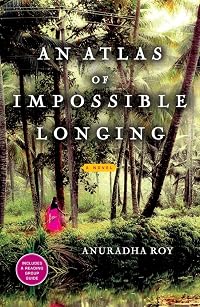
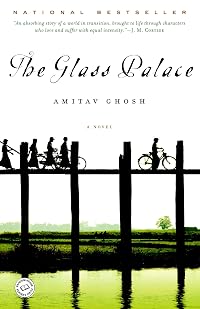
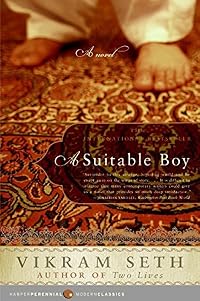




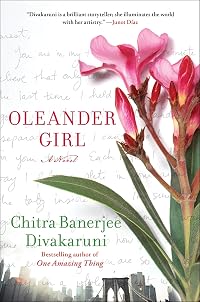

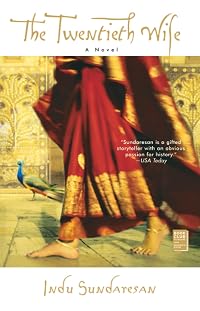

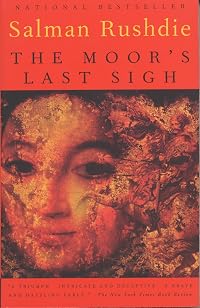










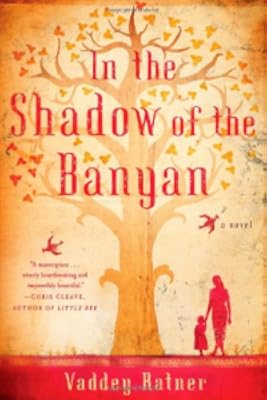
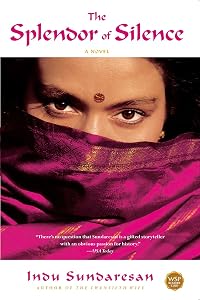


















Member Recommendations

Limelite Half a world apart but in part the same story -- Christian missionaries arrive with their bag of mixed "blessings" and visit them on the native people with plenty of negative results.
Member Reviews
Tiger Hills by Sarita Mandanna is a story of India based on a love triangle between the beautiful, spirited Devi, the intelligent, quiet Devanna, and the manly tiger killer, Manchu. The story is set in and around the author’s own birthplace in South West India, the district of Coorg.
Devi and Devanna were close childhood friends, but at the age of 10 Devi met Devanna’s cousin, a young man being hailed as a hero for killing a tiger. Devi declared that this young man would be her future husband and she never wavered from that idea. Devanna on the other hand was desperately in love with Devi and in the heat of betrayal and disappointment he forces the issue and thus condemns all three of them to a bitter and disappointing life.
While the show more bulk of the story line deals with the passions and failures of love, there is a lot more to this book. The district of Coorg is described with it’s jungles, mountains and coffee plantations along with the age-old customs of the clans and relations with European settlers. The book covers six decades and many historical events, but it is the heartbreak and regret of the three tortured people at the heart of the book that sets the tone.
Tiger Hills was an ambitious saga and although at times it seemed to verge into melodrama, this multi-generational story held my attention with it’s vivid cultural details, exotic setting and interesting characters. show less
Devi and Devanna were close childhood friends, but at the age of 10 Devi met Devanna’s cousin, a young man being hailed as a hero for killing a tiger. Devi declared that this young man would be her future husband and she never wavered from that idea. Devanna on the other hand was desperately in love with Devi and in the heat of betrayal and disappointment he forces the issue and thus condemns all three of them to a bitter and disappointing life.
While the show more bulk of the story line deals with the passions and failures of love, there is a lot more to this book. The district of Coorg is described with it’s jungles, mountains and coffee plantations along with the age-old customs of the clans and relations with European settlers. The book covers six decades and many historical events, but it is the heartbreak and regret of the three tortured people at the heart of the book that sets the tone.
Tiger Hills was an ambitious saga and although at times it seemed to verge into melodrama, this multi-generational story held my attention with it’s vivid cultural details, exotic setting and interesting characters. show less
Disclaimer: I received a copy of this book from the publisher in a Goodreads giveaway.
It's hard to write a review when there's nothing wrong with the writing, but you hate the main character. The writing flows nicely, and the author has a talent for describing people's personalities with nice turns of phrase. I just can't completely love a book when I intensely dislike the main character (Devi).
There's not one redeeming characteristic in this woman. Did a terrible thing happen to her? Yes, definitely. Was she spoiled and self-obsessed both before and after the terrible event? Unfortunately, yes. Having a bad thing happen to you doesn't give you the right to treat everyone else like garbage for the rest of your life. If the point of the show more book is "Don't be like this person!", it succeeds brilliantly.
I'll certainly keep an eye out for future books by Sarita Mandanna, hopefully with more likeable characters. show less
It's hard to write a review when there's nothing wrong with the writing, but you hate the main character. The writing flows nicely, and the author has a talent for describing people's personalities with nice turns of phrase. I just can't completely love a book when I intensely dislike the main character (Devi).
There's not one redeeming characteristic in this woman. Did a terrible thing happen to her? Yes, definitely. Was she spoiled and self-obsessed both before and after the terrible event? Unfortunately, yes. Having a bad thing happen to you doesn't give you the right to treat everyone else like garbage for the rest of your life. If the point of the show more book is "Don't be like this person!", it succeeds brilliantly.
I'll certainly keep an eye out for future books by Sarita Mandanna, hopefully with more likeable characters. show less
This historical novel is an Indian "Gone with the Wind." Set between 1878 and 1936, it is a multi-generational saga about a love triangle.
This love triangle, involving Devi, Devanna and Machu, serves as a catalyst for a long sequence of tragedies. Devi, the female lead who connects all the main characters, makes choices with far-reaching consequences for the men who love her. Devanna is her childhood sweetheart until Devi meets Machu, the tiger killer.
Devi, spoilt, self-centred and stubborn, is not a likeable character. Some empathy is felt for her at the beginning but it wanes as her words and actions hurt those who love her the most. For example, she usurps another woman's child and then favours him while treating her own son with show more indifference. She repeatedly ignores her grandmother's warnings and becomes hard and brittle.
None of the characters are flawless (and that's a positive aspect of the book), but some suffer a great deal more than they deserve; however, the epilogue, where the author reverses a key plot development seemingly to end the novel on a happier note, should have been omitted.
The descriptions of Coorg (Kodagu), known as "the Scotland of India," are wonderful. The reader also learns a great deal about the culture of this region of India.
The suffering that passion can bring, the necessity of forgiveness and the consequences of choices are some of the themes developed in the novel.
This book would make a wonderful Merchant-Ivory production. show less
This love triangle, involving Devi, Devanna and Machu, serves as a catalyst for a long sequence of tragedies. Devi, the female lead who connects all the main characters, makes choices with far-reaching consequences for the men who love her. Devanna is her childhood sweetheart until Devi meets Machu, the tiger killer.
Devi, spoilt, self-centred and stubborn, is not a likeable character. Some empathy is felt for her at the beginning but it wanes as her words and actions hurt those who love her the most. For example, she usurps another woman's child and then favours him while treating her own son with show more indifference. She repeatedly ignores her grandmother's warnings and becomes hard and brittle.
None of the characters are flawless (and that's a positive aspect of the book), but some suffer a great deal more than they deserve; however, the epilogue, where the author reverses a key plot development seemingly to end the novel on a happier note, should have been omitted.
The descriptions of Coorg (Kodagu), known as "the Scotland of India," are wonderful. The reader also learns a great deal about the culture of this region of India.
The suffering that passion can bring, the necessity of forgiveness and the consequences of choices are some of the themes developed in the novel.
This book would make a wonderful Merchant-Ivory production. show less
A love triangle, fate vs. choice, traditional vs. modern and a mother's love … these are the major struggles and tensions which make up Tiger Hills. It is a very engaging story. The characters and setting are well balanced and integrated. I have read in another review that the book is similar to “Gone with the Wind” and “The Thorn Birds” in the way the story is tied so firmly to the land. I agree.
The narrative is very detailed during the first part of the book and spirals out to encompass more characters, more settings.. it looses focus a bit. I’m not sure what was gained by including Nazi youth? Overall I really enjoyed the read! … and loved the ending.
The narrative is very detailed during the first part of the book and spirals out to encompass more characters, more settings.. it looses focus a bit. I’m not sure what was gained by including Nazi youth? Overall I really enjoyed the read! … and loved the ending.
 This review was written for LibraryThing Early Reviewers.
This grindingly linear tale set in the mountainous Coorg region of India follows Devi and Devanna across more than 60 years from 1878 to 1939. It begins as a star-crossed romance which, at times, is grafted clumsily onto an historical novel. And perhaps inevitably it takes on the trappings of the family saga. There are moments of high tension, sporadic passion, anger and remorse. But they are like fits of pique that dwindle almost immediately so that the overall emotional coherence is lost. It’s all rather unfortunate, since the first chapter or two might lead you to suspect you have found an author with, at the very least, some descriptive abilities. However, when the first suicide is trotted out as a device to move the plot along, show more your heart will start to sink. By the third or fourth such clunky intrusion you will lose all hope. The only thing that may drive you on to the end is the thought that for some obscure reason your book club has selected this as the book for this month. Failing that you will surely set it aside long before reaching the half-way mark. As I rather wish I had. show less
Disclaimer: I received a copy of this book from the publisher in a Goodreads giveaway.
It's hard to write a review when there's nothing wrong with the writing, but you hate the main character. The writing flows nicely, and the author has a talent for describing people's personalities with nice turns of phrase. I just can't completely love a book when I intensely dislike the main character (Devi).
There's not one redeeming characteristic in this woman. Did a terrible thing happen to her? Yes, definitely. Was she spoiled and self-obsessed both before and after the terrible event? Unfortunately, yes. Having a bad thing happen to you doesn't give you the right to treat everyone else like garbage for the rest of your life. If the point of the show more book is "Don't be like this person!", it succeeds brilliantly.
I'll certainly keep an eye out for future books by Sarita Mandanna, hopefully with more likeable characters. show less
It's hard to write a review when there's nothing wrong with the writing, but you hate the main character. The writing flows nicely, and the author has a talent for describing people's personalities with nice turns of phrase. I just can't completely love a book when I intensely dislike the main character (Devi).
There's not one redeeming characteristic in this woman. Did a terrible thing happen to her? Yes, definitely. Was she spoiled and self-obsessed both before and after the terrible event? Unfortunately, yes. Having a bad thing happen to you doesn't give you the right to treat everyone else like garbage for the rest of your life. If the point of the show more book is "Don't be like this person!", it succeeds brilliantly.
I'll certainly keep an eye out for future books by Sarita Mandanna, hopefully with more likeable characters. show less
Tiger Hills is an epic novel that spans most of Devi’s lifetime. Devi, Devanna, and Machu are all layered, multi-dimensional characters. They are flawed but heartbreakingly sympathetic, each in their own way. Ms. Mandanna even spends quite a bit of time building out the secondary characters like Nanju and Appu as well. Even if I didn’t agree with an action one of the characters took, I knew exactly why they would do such a thing because the author paid so much attention to each character’s development. (I don’t want to get into specifics and spoil the story!) I especially loved Devi and her strength in a time period when it was hard for women in India to do much of anything on their own.
I also loved reading about the traditions show more of the time and region. I love reading Victorian novels with all of the strict etiquette that characters must operate within. I enjoyed this book for the same reason – life was very ritualized; it was just a different set of rules. Since Tiger Hills spans such a lengthy period of time, society evolves and changes. The author does a nice job of bringing in the real-life historical events that were happening and showing the reader how these events affected the families in this book and India as a whole.
I loved this book – it’s hard to believe that it’s Sarita’s Mandanna’s first novel. It was longlisted for the 2010 Man Asian Literary Prize, which is not hard to believe. I can’t wait to see what Mandanna comes out with next. show less
I also loved reading about the traditions show more of the time and region. I love reading Victorian novels with all of the strict etiquette that characters must operate within. I enjoyed this book for the same reason – life was very ritualized; it was just a different set of rules. Since Tiger Hills spans such a lengthy period of time, society evolves and changes. The author does a nice job of bringing in the real-life historical events that were happening and showing the reader how these events affected the families in this book and India as a whole.
I loved this book – it’s hard to believe that it’s Sarita’s Mandanna’s first novel. It was longlisted for the 2010 Man Asian Literary Prize, which is not hard to believe. I can’t wait to see what Mandanna comes out with next. show less
Members
- Recently Added By
Author Information

4 Works 295 Members
Awards and Honors
Awards
Common Knowledge
- Canonical title*
- De dans van de tijger
- Original title
- Tiger Hills
- Original publication date
- 2010
- People/Characters*
- Nachimanda Devi; Devanna; Machu; Nanju; Appu; Baby
- Important places*
- Kodagu, Madikeri, India
- Important events*
- Eerste Wereldoorlog (1914-1918)
- Epigraph*
- In alle tijden, zoet of zwart, ziet niets zo scherp als het blinde hart - spreekwoord uit Kodagu
- Dedication*
- Voor mijn grootouders Kambeyanda Dechi & Muddayya en Charimanda Seetha & Biddappa.
- First words*
- Als op de dag van de geboorte, de dag van de reigers, wist Muthavva dat haar zevende kind bijzonder was.
- Last words*
- (Click to show. Warning: May contain spoilers.)Over rijen glanzende koffiestruiken vlogen ze, door bomen en over het wachtende huis.
*Some information comes from Common Knowledge in other languages. Click "Edit" for more information.
Classifications
Statistics
- Members
- 287
- Popularity
- 112,706
- Reviews
- 35
- Rating
- (3.57)
- Languages
- 7 — Catalan, Chinese, Dutch, English, French, Norwegian (Bokmål), Spanish
- Media
- Paper, Audiobook, Ebook
- ISBNs
- 33
- UPCs
- 1
- ASINs
- 6