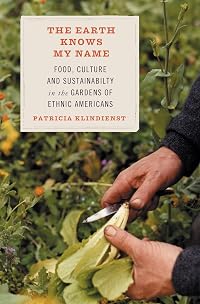
The Earth Knows My Name: Food, Culture, and Sustainability in the Gardens of Ethnic Americans
by Patricia Klindienst
On This Page
Description
We are a democracy of gardeners yet, with few exceptions, the garden is presented as the province of the privileged. Garden writing tends to exclude the stories of the ethnic peoples who have shaped our landscape for centuries--the idea of the garden has been stripped of its cultural weight. Gardener and writing teacher Klindienst speaks directly to this gap in our understanding, exploring the deeper implications of what it means to cultivate a garden and to grow one's own food. The fifteen show more gardens she presents have all been fashioned by people usually thought of as other Americans: Native Americans, immigrants, and ethnic peoples who were here long before our national boundaries were drawn. All of these gardeners straddle two cultures--mainstream America and their culture of origin. Their stewardship of the land is an expression of the desire to preserve their heritage against all that threatens it.--From publisher description. show lessTags
Recommendations









Member Reviews
Gardens are about taking care. Of land, of plants, and of ourselves in the end. This "radical" notion pervades the stories of the ethnic gardeners covered in this book . Through the act of tending gardens, these ethnic gardeners find their place in the world. It's a joy to read about each gardener's favorite crops or the family history embedded in gardening traditions. It's often heartbreaking to hear the suffering or indignities they have endured in their homeland or in America.
A theme touched on again and again is the connection between food, place, and people. When we lose the intimate connection to our food, grown ourselves or by those around us, we lose the connection to the earth and each other. I thus find it inspiring to see so show more many examples of people becoming empowered or finding solace through the simple act of growing food and caring for the land. And I wonder about how gardening has changed me these last several years, and how I will grow through the continued experience of planting and tending gardens in the future... show less
A theme touched on again and again is the connection between food, place, and people. When we lose the intimate connection to our food, grown ourselves or by those around us, we lose the connection to the earth and each other. I thus find it inspiring to see so show more many examples of people becoming empowered or finding solace through the simple act of growing food and caring for the land. And I wonder about how gardening has changed me these last several years, and how I will grow through the continued experience of planting and tending gardens in the future... show less
People have been talking about food justice for years. They're also been talking about local food. From a completely different angle, this book happens to unite the two [way back in 2006]. Food justice doesn't just compliment local food in a practical way; food is culture. Everyone in the US came here at some point in history, and brought some form of culture with them [even the Native Americans, although we don't know what their culture was like before they were native]. And these cultures all still give meaning and purpose to the lives of these people today. Often times, the only way left for them to preserve their heritage–after the loss of their land, their language, their clothing, their communities–is by growing and eating the show more food of their ancestors.
And our author Klindienst doesn't sidestep the brutality and violence with which "immigrants" or "foreigners" [many of whom have lived here for generations] are perpetually oppressed.
This book is both beautiful and eye-opening, even for someone who's been thinking a lot about food, cultivation, culture, and privilege for some time now. show less
And our author Klindienst doesn't sidestep the brutality and violence with which "immigrants" or "foreigners" [many of whom have lived here for generations] are perpetually oppressed.
This book is both beautiful and eye-opening, even for someone who's been thinking a lot about food, cultivation, culture, and privilege for some time now. show less
"Klindienst" means "small work or service" in German, but he Earth Knows My Name: Food, Culture, and Sustainability in the Gardens of Ethnic America is anything but. It's an amazing work that packs a lot into 246 pages.
Klindienst travelled across the country interviewing families about their relationship with farming/gardening and the land, and how this is affected by their family histories or culture. There are native American and Chichano families in the Southwest, Italians, Cambodians and Puerto Ricans in Massachussets, Poles and Japanese in Washington State, and Punjabis in California. The last chapter is the interesting story of an old Connecticut Yankee family and their relationship with the Algonquian peoples whose corn they show more grow.
The book attempts to document how we connect to our families and our culture through what we grow. She was inspired by a quote by Bartolomeo Vanzetti about his garden from a letter that he wrote to a supporter while waiting on death row. Gardens are something that connect us with our history. The seeds we sow and the foods we eat tie us in many ways directly to our past. This is a point that Klindienst's subjects bring up again and again.
I went to college in the Pioneer Valley, so several of the locations mentioned were familiar to me. For example, I've driven past the Nuestras Raices mural in Holyoke dozens of times without knowing what it was. But you don't need that kind of physical connection to enjoy the book.
Recommended for anyone with an interest in food and growing it, or with an interest in how immigrants maintain their culture despite American assimilation. It's an inspiring book that's made me impatient for Spring. show less
Klindienst travelled across the country interviewing families about their relationship with farming/gardening and the land, and how this is affected by their family histories or culture. There are native American and Chichano families in the Southwest, Italians, Cambodians and Puerto Ricans in Massachussets, Poles and Japanese in Washington State, and Punjabis in California. The last chapter is the interesting story of an old Connecticut Yankee family and their relationship with the Algonquian peoples whose corn they show more grow.
The book attempts to document how we connect to our families and our culture through what we grow. She was inspired by a quote by Bartolomeo Vanzetti about his garden from a letter that he wrote to a supporter while waiting on death row. Gardens are something that connect us with our history. The seeds we sow and the foods we eat tie us in many ways directly to our past. This is a point that Klindienst's subjects bring up again and again.
I went to college in the Pioneer Valley, so several of the locations mentioned were familiar to me. For example, I've driven past the Nuestras Raices mural in Holyoke dozens of times without knowing what it was. But you don't need that kind of physical connection to enjoy the book.
Recommended for anyone with an interest in food and growing it, or with an interest in how immigrants maintain their culture despite American assimilation. It's an inspiring book that's made me impatient for Spring. show less
Fascinating look at sustainable gardening and the ways gardening can create and affirm a sense of ethnic identity. Several chapters deal with the Pioneer Valley.
Ratings
Members
- Recently Added By
Lists

Food Memoirs
97 works; 9 members
Author Information
2 Works 129 Members
Awards and Honors
Awards
Common Knowledge
- Original publication date
- 2006
- People/Characters
- Patricia Klindienst
- Important places
- Amherst, Massachusetts, USA
Classifications
Statistics
- Members
- 126
- Popularity
- 255,615
- Reviews
- 4
- Rating
- (4.39)
- Languages
- English
- Media
- Paper, Ebook
- ISBNs
- 3
- UPCs
- 2
- ASINs
- 1