You Lost Me There
by Rosecrans Baldwin
On This Page
Description
By turns funny, charming, and tragic, Rosecrans Baldwin's debut novel takes us inside the heart and mind of Dr. Victor Aaron, a leading Alzheimer's researcher at the Soborg Institute on Mount Desert Island in Maine. Victor spends his days alternating between long hours in the sterile lab and running through memories of his late wife, Sara. He has preserved their marriage as a sort of perfect, if tumultuous, duet between two opposite but precisely compatible souls.But one day, in the midst of show more organizing his already hyperorganized life, Victor discovers a series of index cards covered in Sara's handwriting. They chronicle the major "changes in direction" of their marriage, written as part of a brief fling with couples counseling. Sara's version of their great love story is markedly different from his own, which, for the eminent memory specialist, is a startling revelation. Victor is forced to reevaluate and relive each moment of their marriage, never knowing if the revisions will hurt or hearten. Meanwhile, as Victor's faith in memory itself unravels, so too does his precisely balanced support network, a group of strong women-from his lab assistant to Aunt Betsy, doddering doyenne of the island-that had, so far, allowed him to avoid grieving.Baldwin shows himself here to be a young writer bursting with talent and imagination who deftly handles this aching love story with sensitivity and unexpected maturity. You Lost Me There is a treasure of a book filled with beautiful, intelligent prose, a book that wears its smarts lightly and probes its emotions deeply. show lessTags
Recommendations







Member Recommendations
Member Reviews
Rosecrans Baldwin has crafted a story of loss and coping and memory and mis-remembering. He tells the story of Victor Aarons, a researcher who is seeking clues to a cure for Alzheimer's disease. His wife, Sara, died in an auto accident several years ago yet Victor is still not able to effectively deal with either the loss or his life. He buttresses his days with people who are equally fractured - a girlfriend who is a researcher but also tries her hand at both poetry and burlesque fantasies, a crotchety aunt-in-law, a god-daughter with a ivy-league education who can't figure out what to do and plays at being a chef.
It took a while for me to develop an appreciation for this story. I wanted to know more about Sara but Victor's memories show more of their marriage do not have fidelity with notes that she wrote as part of a counseling exercise. So he is an unreliable narrator. I wanted to know more about Victor's relationships but he is blinded to the subtleties of interaction and conversational clues. So his interactions with coworker Lucy, his girlfriend Regina, and his goddaughter Cornelia often are near-misses and truncated.
However, as more of Victor's backstory is filled in, partly by those notes from his wife and partly by his dogged efforts to dredge up some accurate memories, it becomes more apparent that he is struggling to simply make it through each day. While he fills the time with long work hours, wine, Ambien and long swims, none of this can assuage his grief. And he is neither willing nor able to confront his feelings directly.
I am not sure why the various women in his life tolerate him. He was unable to recognize, much less express, his feelings for either Sara or Regina. He is not supportive to Lucy and he is only slightly nicer to Aunt Betsy than her bitter, estranged son. At times he is downright creepy with Cornelia, his goddaughter.
In summary, this is an interesting read that is redeemed by the beginning of closure that Victor eventually achieves. However I do wonder if his life after the final page will be much of an improvement or if he will revert to coasting on the surface, never diving deep. show less
It took a while for me to develop an appreciation for this story. I wanted to know more about Sara but Victor's memories show more of their marriage do not have fidelity with notes that she wrote as part of a counseling exercise. So he is an unreliable narrator. I wanted to know more about Victor's relationships but he is blinded to the subtleties of interaction and conversational clues. So his interactions with coworker Lucy, his girlfriend Regina, and his goddaughter Cornelia often are near-misses and truncated.
However, as more of Victor's backstory is filled in, partly by those notes from his wife and partly by his dogged efforts to dredge up some accurate memories, it becomes more apparent that he is struggling to simply make it through each day. While he fills the time with long work hours, wine, Ambien and long swims, none of this can assuage his grief. And he is neither willing nor able to confront his feelings directly.
I am not sure why the various women in his life tolerate him. He was unable to recognize, much less express, his feelings for either Sara or Regina. He is not supportive to Lucy and he is only slightly nicer to Aunt Betsy than her bitter, estranged son. At times he is downright creepy with Cornelia, his goddaughter.
In summary, this is an interesting read that is redeemed by the beginning of closure that Victor eventually achieves. However I do wonder if his life after the final page will be much of an improvement or if he will revert to coasting on the surface, never diving deep. show less
I definitely wanted to like it more than I did. The written dialogue is frequently clunky, almost as if rather than holding a conversation the characters are just throwing words at each other. Maybe that's reflective of Victor's malaise and difficulty relating to other people but it made for a sometimes irksome reading experience.
Cornelia, the young dreadlocked liberated vegan hippy and live-in goddaughter, I thought was a largely unnecessary and weak character. Her provacative presence in his house seems meant to be the impulsive spark that finally, years after his wife's death, helps drive Victor to his emotional breakthrough/breakdown, but besides the character being annoying, I found this dynamic and relationship unconvincing. In show more addition it forced the inclusion of scenes featuring her father, sadly another annoying pest of a character who even Victor, his childhood best friend, can't wait to be rid of. Better to have struck this part of the novel out and found another means of propelling Victor out of his emotionally deadened rut.
Yet Baldwin clearly has talent and parts of the novel do shine, enough to keep me reading to the end. As others note, the note cards left behind by Sara that provide her view of her and Victor's marriage are particularly strong. Anyway, as a debut novelist Baldwin is certainly entitled to not yet be at the top of his game. I'll not hesitate to read his second novel.
And if you're looking for an excellent novel about a man dealing with the loss of his wife, consider taking a look at A Happy Marriage by Rafael Yglesias... show less
Cornelia, the young dreadlocked liberated vegan hippy and live-in goddaughter, I thought was a largely unnecessary and weak character. Her provacative presence in his house seems meant to be the impulsive spark that finally, years after his wife's death, helps drive Victor to his emotional breakthrough/breakdown, but besides the character being annoying, I found this dynamic and relationship unconvincing. In show more addition it forced the inclusion of scenes featuring her father, sadly another annoying pest of a character who even Victor, his childhood best friend, can't wait to be rid of. Better to have struck this part of the novel out and found another means of propelling Victor out of his emotionally deadened rut.
Yet Baldwin clearly has talent and parts of the novel do shine, enough to keep me reading to the end. As others note, the note cards left behind by Sara that provide her view of her and Victor's marriage are particularly strong. Anyway, as a debut novelist Baldwin is certainly entitled to not yet be at the top of his game. I'll not hesitate to read his second novel.
And if you're looking for an excellent novel about a man dealing with the loss of his wife, consider taking a look at A Happy Marriage by Rafael Yglesias... show less
Victor, a prominent Alzheimer’s researcher is dealing with the aftermath of his wife Sara’s death in a tragic car accident. Sara, a screenwriter and author had been encouraged by her therapist to highlight five changes of direction in their marriage. She only finishes four before her accident, and Victor finds them years later. When he reads the note cards, he realizes that his memories are vastly different than those of his dead wife. The purpose being- for an Alzheimer’s researcher specializing in memory (or lack thereof) this must be devastating.
If this was the point of the book, it was buried. I didn’t feel the sense of a man devastated over losing his wife. He describes her nearly every time in a negative light- saying she show more caused arguments, that her memories are wrong, wondering if she had an affair, calling her success a fluke, calling her privileged, saying he never felt up to her standards… Instead, he replaces her with a multitude of women, all unlikeable. Regina (whom he speaks of loving and caring about much more adamantly than he ever does about his wife) a bratty, much younger burlesque dancer who comes off as annoying, aggressive, ignorant, and unsympathetic. Betsy, Sara’s aunt, an old gossip who desperately seeks attention at the expense of others. Lucy, his lab partner, who spends more time complaining about men and making mistakes in their research than caring about what she does. Lastly, Connie, his god daughter who is a spoiled, bratty, rude, mess of a girl who complains about everything in sight but does nothing about it. Sara herself is incredibly bright, witty, and likeable in her own writing, but the reader has been conditioned to dislike her because of Victor’s memories of her. Victor himself is boring, indecisive, and borderline obsessed with Regina. Wimpy describes him best. In the end, Victor himself comes to a number of conclusions- none of which are prominent in the book (Regina really DID love me- despite her other boyfriends, demure attitude, and general annoyance with me! I never grieved for my wife properly, which is why I’m so out of control- despite thinking she was self-centered, untalented, spoiled, and never caring to contact her during our separation, then falling in love with a much younger woman and speaking of her much more highly than my dead wife!)
Despite all of this, I actually still really liked the plot of the book. I thought it was interesting, and the book was undoubtedly well-written. I just wish he had some positive female characters, or featured Sara more. show less
If this was the point of the book, it was buried. I didn’t feel the sense of a man devastated over losing his wife. He describes her nearly every time in a negative light- saying she show more caused arguments, that her memories are wrong, wondering if she had an affair, calling her success a fluke, calling her privileged, saying he never felt up to her standards… Instead, he replaces her with a multitude of women, all unlikeable. Regina (whom he speaks of loving and caring about much more adamantly than he ever does about his wife) a bratty, much younger burlesque dancer who comes off as annoying, aggressive, ignorant, and unsympathetic. Betsy, Sara’s aunt, an old gossip who desperately seeks attention at the expense of others. Lucy, his lab partner, who spends more time complaining about men and making mistakes in their research than caring about what she does. Lastly, Connie, his god daughter who is a spoiled, bratty, rude, mess of a girl who complains about everything in sight but does nothing about it. Sara herself is incredibly bright, witty, and likeable in her own writing, but the reader has been conditioned to dislike her because of Victor’s memories of her. Victor himself is boring, indecisive, and borderline obsessed with Regina. Wimpy describes him best. In the end, Victor himself comes to a number of conclusions- none of which are prominent in the book (Regina really DID love me- despite her other boyfriends, demure attitude, and general annoyance with me! I never grieved for my wife properly, which is why I’m so out of control- despite thinking she was self-centered, untalented, spoiled, and never caring to contact her during our separation, then falling in love with a much younger woman and speaking of her much more highly than my dead wife!)
Despite all of this, I actually still really liked the plot of the book. I thought it was interesting, and the book was undoubtedly well-written. I just wish he had some positive female characters, or featured Sara more. show less
Intriguing charactera (except for the vegan/animal rights activist goddaughter), beautiful language, marvelous setting. But the ending? not so much. Updike-ish characters that Updike would have done a better job with.
I started to listen to this once before and gave up because it was uninteresting. I didn't find it a lot more interesting this time. Victor's process of coming to terms with his wife's death never seemed very real - he didn't seem real. The story was well written but I just never fell under the spell.
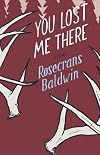
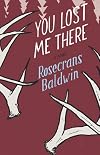
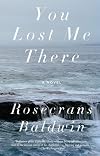
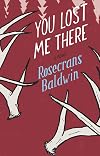
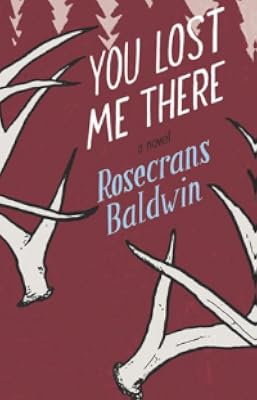
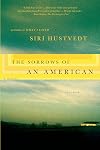
Liked the book, hate the cover. I don't know why I finally picked up the book but I'm glad I did. It takes place on Mount Desert Island and deals with Victor's unrecognized grief over the sudden loss of his wife, Sara. This grief is played out as Victor stumbles about trying to act normal in his job as an Alzheimer's researcher, in his relationship with a younger researcher and in his abiding friendship with Betsy, his wife's aunt, and others. He becomes more and more unhinged and finally comes unglued in a way that makes the police blotter. Beneath his antics is a decent and vulnerable man who is trying to piece together what happened in his marriage just before his wife died and how to go on. To me, the book rang true.
Bruce Willis. Die Hard. "Moonlighting"
How often do you run into Mr. Willis and his oeuvre in literary fiction? He may not appear frequently (maybe not at all) yet he fits in perfectly with this substantial and insightful novel about memor by Rosecrans Baldwin. You Lost Me There is a complicated story, with twists and surprises and feinted paths, as well as scientific details about disease and the research to fight it. Beyond the serious details, it is a fun novel as well, thus Bruce Willis references prevail throughout the story and with surprising relevancy.
“Years in the past, someone thought my wife was a knockout, one night long ago in a restaurant. A night I didn’t remember.”
So realizes Victor Aaron, a brilliant scientist who show more is now realizing just how ignorant he’s been. In the time since his wife’s fatal car accident, he’s been lost and unable to find his way, too young to retire but too old to feel any real enthusiasm for his life or work. As a scientist researching Alzheimer’s disease, he’s enthralled with the concept of memory and works to find a cure. His work gives him opportunities to study case histories on how the brain is wired, and the novel doesn’t hesitate to dip into scientific explanations. That the memory specialist is unable to recall much about his wife, anything accurate, is a puzzle he needs to solve.
He stumbles upon note cards that his wife had written, as suggested by a marriage counselor they had hired, in an effort to stall what appeared to be an inevitable divorce. Their marriage had become a quiet battle of pathos versus logos, with a bit of ethos thrown in by crazy Aunt Betsy. Aunt Betsy appears to be the voice of balance in the novel, even though she is described by Victor as “an amateur anthropologist… [who] studied misbehavior. She tracked her stories doggedly and did not hesitate to use them.”
Victor is most astonished by how his wife Sara describes him in her note cards: “He was so focused on research and making a name for himself that we were landlocked by his lab schedule, him at sea and me in the window.” She had a successful career, as did he, they were wealthy, and he didn’t see a problem in their marriage that couldn’t be fixed without him simply apologizing. That his apologies were vague and noncommittal didn’t occur to him, and as he continues to read her notes he realizes how differently he and she had interpreted significant events in their lives.
However, the story doesn’t limit itself to their marital discord, which would probably be a really sappy novel that would ultimately be a bore, and then a television movie. Instead, Baldwin goes deeper into what memories Victor has, from a childhood friend’s suicide to his closest friend’s obvious creepiness. It’s as if seeing his wife Sara’s version of himself has freed him to reexamine himself from other angles. Yet you can’t be lulled into thinking this is a fable that ends with everyone awakened to their flaws and eager to change. Can you change who you are if you can't remember what you've been?
“I didn’t want to remember that evening ever again. Wipe the synapses clean with some scotch and a hard sleep.”
Baldwin creates a thriller-like pace, and he weaves in details such as the “We Will Never Forget” bumper stickers of 9/11, and how in placing them on cars, people are essentially admitting that they need to be reminded. Victor admits to not remembering the name of a movie that was the centerpiece of their first date, and Baldwin uses this to contrast how there are often so many little things we remember while the more important details slip away. Even more fascinating, though, is how Baldwin portrays different characters in the phases of wanting to remember or trying to forget.
Because this doesn’t attempt to sew up all the details neatly, it would probably be a great film. I’d bet the movie rights are already sold. The question is, is there a role for Bruce Willis? show less
How often do you run into Mr. Willis and his oeuvre in literary fiction? He may not appear frequently (maybe not at all) yet he fits in perfectly with this substantial and insightful novel about memor by Rosecrans Baldwin. You Lost Me There is a complicated story, with twists and surprises and feinted paths, as well as scientific details about disease and the research to fight it. Beyond the serious details, it is a fun novel as well, thus Bruce Willis references prevail throughout the story and with surprising relevancy.
“Years in the past, someone thought my wife was a knockout, one night long ago in a restaurant. A night I didn’t remember.”
So realizes Victor Aaron, a brilliant scientist who show more is now realizing just how ignorant he’s been. In the time since his wife’s fatal car accident, he’s been lost and unable to find his way, too young to retire but too old to feel any real enthusiasm for his life or work. As a scientist researching Alzheimer’s disease, he’s enthralled with the concept of memory and works to find a cure. His work gives him opportunities to study case histories on how the brain is wired, and the novel doesn’t hesitate to dip into scientific explanations. That the memory specialist is unable to recall much about his wife, anything accurate, is a puzzle he needs to solve.
He stumbles upon note cards that his wife had written, as suggested by a marriage counselor they had hired, in an effort to stall what appeared to be an inevitable divorce. Their marriage had become a quiet battle of pathos versus logos, with a bit of ethos thrown in by crazy Aunt Betsy. Aunt Betsy appears to be the voice of balance in the novel, even though she is described by Victor as “an amateur anthropologist… [who] studied misbehavior. She tracked her stories doggedly and did not hesitate to use them.”
Victor is most astonished by how his wife Sara describes him in her note cards: “He was so focused on research and making a name for himself that we were landlocked by his lab schedule, him at sea and me in the window.” She had a successful career, as did he, they were wealthy, and he didn’t see a problem in their marriage that couldn’t be fixed without him simply apologizing. That his apologies were vague and noncommittal didn’t occur to him, and as he continues to read her notes he realizes how differently he and she had interpreted significant events in their lives.
However, the story doesn’t limit itself to their marital discord, which would probably be a really sappy novel that would ultimately be a bore, and then a television movie. Instead, Baldwin goes deeper into what memories Victor has, from a childhood friend’s suicide to his closest friend’s obvious creepiness. It’s as if seeing his wife Sara’s version of himself has freed him to reexamine himself from other angles. Yet you can’t be lulled into thinking this is a fable that ends with everyone awakened to their flaws and eager to change. Can you change who you are if you can't remember what you've been?
“I didn’t want to remember that evening ever again. Wipe the synapses clean with some scotch and a hard sleep.”
Baldwin creates a thriller-like pace, and he weaves in details such as the “We Will Never Forget” bumper stickers of 9/11, and how in placing them on cars, people are essentially admitting that they need to be reminded. Victor admits to not remembering the name of a movie that was the centerpiece of their first date, and Baldwin uses this to contrast how there are often so many little things we remember while the more important details slip away. Even more fascinating, though, is how Baldwin portrays different characters in the phases of wanting to remember or trying to forget.
Because this doesn’t attempt to sew up all the details neatly, it would probably be a great film. I’d bet the movie rights are already sold. The question is, is there a role for Bruce Willis? show less
Members
- Recently Added By
Author Information

5+ Works 640 Members
Classifications
Statistics
- Members
- 286
- Popularity
- 112,697
- Reviews
- 16
- Rating
- (3.20)
- Languages
- English
- Media
- Paper, Audiobook, Ebook
- ISBNs
- 9
- ASINs
- 3