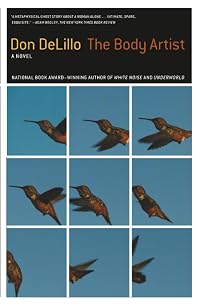
The Body Artist: A Novel
by Don DeLillo
On This Page
Description
"For thirty years, since the publication of his first novel Americana, Don DeLillo has lived in the skin of our times. He has found a voice for the forgotten souls who haunt the fringes of our culture and for its larger-than-life, real-life. figures. His language is defiantly, radiantly American." "Now, to a new century, he has brought The Body Artist. In this novel, he inhabits the muted world of Lauren Hartke, an artist whose work defies the limits of the body. Lauren is living on a lonely show more coast, in a rambling rented house, where she encounters a strange, ageless man, a man with uncanny knowledge of her own life. Together they begin a journey into the wilderness of time - time, love and human perception."--Jacket show lessTags
Recommendations








Member Reviews
A short and very odd book that manages to be about how explicit abstract thought can be. Most of the enjoyment of this book happens after one reads it. There is a delightful lack of many of the checkboxes in standard fiction: the protagonist has little backstory, nor does the relationship itself (Lauren, a body artist, is left alone after the death of her husband), there isn’t a plot, per se, and the reader is not invited to care about the characters. Instead, we are drawn into a spectral study on what it means to remain behind. Lauren uses (to our mind) random sights and sounds for her performance piece; don’t we all? Whether she is imagining and then reimagining snippets of conversations with her late husband or there is a show more physical ghost in the house is irrelevant — just as any of the sparse facts we are told about either Lauren or her husband seem (?) to be irrelevant. It is in the prose, in the descriptions and observations, even more so in the strange way the reader is left with a dual reaction of “no, this is meaningless / yes, this is how life is” that the book succeeds.
It reminded me of David Lowery’s film “A Ghost Story” in that the beginning was making me fidget and wonder where the story was going and even into the middle I suspected I wasn’t going to last; then it became beautiful. I didn’t underline a single sentence, despite all the praise for the book’s prose, and couldn’t repeat any of them to you. But they are weirdly there, in my brain, in the same chopped and collaged way many are written. I didn’t enjoy reading the book; I enjoyed having read it. show less
It reminded me of David Lowery’s film “A Ghost Story” in that the beginning was making me fidget and wonder where the story was going and even into the middle I suspected I wasn’t going to last; then it became beautiful. I didn’t underline a single sentence, despite all the praise for the book’s prose, and couldn’t repeat any of them to you. But they are weirdly there, in my brain, in the same chopped and collaged way many are written. I didn’t enjoy reading the book; I enjoyed having read it. show less
Suicide, or more to the point - the awful aftermath of suicide; the grief of the loved ones (in this case, the widow) left behind - would be a pretty tough sell for most works of fiction. Too depressing. Too damn real. But not in Don DeLillo's sage-like hands. He sells the devastation wrought by suicide beautifully and tenderly in The Body Artist: an existential study of time and our relationship to time as we travel through it, conveyed along for us in the imaginings (i.e., is the little miming man discovered in the third floor bedroom real or unreal?) of Lauren Hartke, and in her introspections; that is, in her deep loss and deeper longings, and ultimately in the transformative power of her body art sculpted from the raw pain and show more suffering she endures as a recent, bewildered widow.
I don't know how DeLillo does it. I feel ill-equipped describing his precise way with words. I've revised this section of the review at least ten times, knowing I'm not getting it right. I almost give up. And it's the cadence of Delillo's language too, not just the words, imbuing the words with deeper meaning. David Foster Wallace once wrote that Delillo's writing "just clicks". Expanding on that premise then, Delillo's like a metronome, hypnotic almost (but definitely not predictable despite the constant "clicking" and rhythm), and in The Body Artist, he's tapped into, and kept exquisite time with, the metaphysical. The Body Artist becomes therefore, as much a work of philosophy as it is a work of fiction.
What Delillo does with language evokes in me the same response I get when listening to a powerful piece of classical music: Goosebumps gallore, awe, wonder, inspiration and veneration. There's something sublime going on here in his writing that I can't quite name. So I'll just call it Art.
Yes, that's what I'm driving at: in The Body Artist, Delillo has managed to translate the secret languages of the Mysterious or Metaphysical; using the internal monologues and musings of Lauren Hartke as his mouthpiece, and making his philosophical abstractions as palpable as the pages his heady language is printed on.
That Delillo's prose is unplugged in The Body Artist, acoustic, if you will, set on a simple Starbuck's stage - a one act play with few characters - proves that he can stir the soul even when his aims aren't as huge-venued or symphonic as they were in his previous, vast novel, Underworld.
I'd say I enjoyed The Body Artist even more than Underworld, and even more, too, than his award winning, postmodern masterpiece, White Noise.
What is a 'body artist'? To reveal that here might destroy the subtle surprise, and it's a tiny book to begin with, a novella really, full of surprises. Before I read the book I lamely believed 'body artist' meant something regarding...tattoos. What-ever! In fact, I even tagged the book, when I first input it, with: 'tattoos,' since I've got me a tattoo or two and obviously like tattoos. I've since deleted that tag - 'tattoos' - from The Body Artist. I sure hope nobody noticed. Because body art and The Body Artist are definitely not necessarily synonymous. show less
I don't know how DeLillo does it. I feel ill-equipped describing his precise way with words. I've revised this section of the review at least ten times, knowing I'm not getting it right. I almost give up. And it's the cadence of Delillo's language too, not just the words, imbuing the words with deeper meaning. David Foster Wallace once wrote that Delillo's writing "just clicks". Expanding on that premise then, Delillo's like a metronome, hypnotic almost (but definitely not predictable despite the constant "clicking" and rhythm), and in The Body Artist, he's tapped into, and kept exquisite time with, the metaphysical. The Body Artist becomes therefore, as much a work of philosophy as it is a work of fiction.
What Delillo does with language evokes in me the same response I get when listening to a powerful piece of classical music: Goosebumps gallore, awe, wonder, inspiration and veneration. There's something sublime going on here in his writing that I can't quite name. So I'll just call it Art.
Yes, that's what I'm driving at: in The Body Artist, Delillo has managed to translate the secret languages of the Mysterious or Metaphysical; using the internal monologues and musings of Lauren Hartke as his mouthpiece, and making his philosophical abstractions as palpable as the pages his heady language is printed on.
That Delillo's prose is unplugged in The Body Artist, acoustic, if you will, set on a simple Starbuck's stage - a one act play with few characters - proves that he can stir the soul even when his aims aren't as huge-venued or symphonic as they were in his previous, vast novel, Underworld.
I'd say I enjoyed The Body Artist even more than Underworld, and even more, too, than his award winning, postmodern masterpiece, White Noise.
What is a 'body artist'? To reveal that here might destroy the subtle surprise, and it's a tiny book to begin with, a novella really, full of surprises. Before I read the book I lamely believed 'body artist' meant something regarding...tattoos. What-ever! In fact, I even tagged the book, when I first input it, with: 'tattoos,' since I've got me a tattoo or two and obviously like tattoos. I've since deleted that tag - 'tattoos' - from The Body Artist. I sure hope nobody noticed. Because body art and The Body Artist are definitely not necessarily synonymous. show less
I don't usually sit around wondering which authors will stand the test of time, or whether this or that writer is "great" instead of merely good. These are questions for future critics and readers to decide, and I'd much rather talk about books than the people who write them. Having said that, Don DeLillo's always been on my short list of overpraised, overrated authors whose fame is unlikely to outlast his lifetime. Heck, I'd bet ten bucks on his disappearance from our cultural memory. There are, perhaps, readers out there who are impressed by the sheer scope of "Underworld" or the shiny surfaces of "White Noise," but I went through my own DeLillo phase a long time ago. These days, I find his stuff gratingly artificial, unbearably show more self-important and, as Leslie Fiedler once said, "all surface." His books seem to embody an aesthetic better expressed by Talking Heads albums and Brian Eno album covers. Who needs it? Still, when I found this one while sorting through my library, I thought I'd give Mr. DeLillo a chance to redeem himself. Had I been hasty in dismissing him? If Don was going to waste my time, he certainly wasn't going to waste much of it; "The Body Artist" is all of one hundred and twenty-five pages long.
Well, I still don't think too much of DeLillo as a writer, but that doesn't mean that "The Body Artist" is completely without its good qualities. Its premise, which involves a performance artist's encounter with a mysterious man who seems to lack any definable qualities and to exist simultaneously in a number of temporal frames, is intriguing, and DeLillo, to his credit, doesn't exactly waste it. He balances dry, granular descriptions of his main character's everyday activities and surroundings with the emotional confusion she feels after her husband's suicide and her mysterious visitor's arrival. As the book progresses, DeLillo does a good job of demonstrating how the overarching ambiguity that this nameless figure represents threatens many of the continuities, like the regular flow of time or the integrity of the self, that most of us take for granted. Indeed, I rather admired DeLillo's attempt to embody uncertainty in a character without bringing in the supernatural, a challenge that many other writers might have shied away from. I suspect that the fact that I've read Beckett's "Trilogy" relatively recently might have made "The Body Artist" a bit more palatable to me. While DeLillo doesn't share Beckett's interest in the phenomenon of consciousness, he certainly seems eager to catalog the most far-reaching effects of uncertainty on the human psyche.
And yet, I don't know if I'd recommend "The Body Artist" to anyone but readers particularly interested in the very narrow philosophically-oriented topics that DeLillo addresses here. DeLillo's word sentences are often longer and more circuitous than they need to be, his word choices often seem jarring and awkward, and most of his dialogue is stilted and cardboard-stiff. It's sometimes difficult to determine whether he's reaching for some point about the nature of language or merely a subpar writer, and I'm still not convinced that DeLillo isn't some sort of literary con man masquerading as a postmodernist. This isn't, I assume, the sort of uncertainty that DeLillo was hoping to provoke in his readers. In any event, "The Body Artist" certainly isn't a beach read. While reading generally relaxes me, I felt markedly uncomfortable in this book's fictional universe, which is a spare and unwelcoming place. I'm not entirely sorry I revisited it, since it's good to challenge your preconceptions once in a while. Still, I'm still a long way from calling myself one of DeLillo's admirers. show less
Well, I still don't think too much of DeLillo as a writer, but that doesn't mean that "The Body Artist" is completely without its good qualities. Its premise, which involves a performance artist's encounter with a mysterious man who seems to lack any definable qualities and to exist simultaneously in a number of temporal frames, is intriguing, and DeLillo, to his credit, doesn't exactly waste it. He balances dry, granular descriptions of his main character's everyday activities and surroundings with the emotional confusion she feels after her husband's suicide and her mysterious visitor's arrival. As the book progresses, DeLillo does a good job of demonstrating how the overarching ambiguity that this nameless figure represents threatens many of the continuities, like the regular flow of time or the integrity of the self, that most of us take for granted. Indeed, I rather admired DeLillo's attempt to embody uncertainty in a character without bringing in the supernatural, a challenge that many other writers might have shied away from. I suspect that the fact that I've read Beckett's "Trilogy" relatively recently might have made "The Body Artist" a bit more palatable to me. While DeLillo doesn't share Beckett's interest in the phenomenon of consciousness, he certainly seems eager to catalog the most far-reaching effects of uncertainty on the human psyche.
And yet, I don't know if I'd recommend "The Body Artist" to anyone but readers particularly interested in the very narrow philosophically-oriented topics that DeLillo addresses here. DeLillo's word sentences are often longer and more circuitous than they need to be, his word choices often seem jarring and awkward, and most of his dialogue is stilted and cardboard-stiff. It's sometimes difficult to determine whether he's reaching for some point about the nature of language or merely a subpar writer, and I'm still not convinced that DeLillo isn't some sort of literary con man masquerading as a postmodernist. This isn't, I assume, the sort of uncertainty that DeLillo was hoping to provoke in his readers. In any event, "The Body Artist" certainly isn't a beach read. While reading generally relaxes me, I felt markedly uncomfortable in this book's fictional universe, which is a spare and unwelcoming place. I'm not entirely sorry I revisited it, since it's good to challenge your preconceptions once in a while. Still, I'm still a long way from calling myself one of DeLillo's admirers. show less
A strange, haunting book. A woman whose husband has committed suicide returns to her home to find a strange man in the house. The man may be mentally ill, he speaks in a strange, disconnected way. But the woman starts feeling that there is something strange about his words and mannerisms and occasionally he says phrases that were spoken in the house months ago, or will be spoken in the future.
The language does much to set the mood, at times stilted, cropped and even jarring and at other times incredibly poetic and evocative. I think this particular passage illuminates the language well:
"She knew it was foolish to examine so closely. She was making things up. But this was the effect he had, shadow-inching through a sentence, showing a show more word in its facets and aspects, words like moons in particular phases."
Words like moons in particular phases - wow! Or then there is this passage that also struck a chord, with the odd jarring note at the end:
"Over the days she worked her body hard. There were always states to reach that surpassed previous extremes.... I think you are making your own little totalitarian society, Rey told her once, where you are the dictator, absolutely, and also the oppressed people, he said, perhaps admiringly, one artist to another."
The structure of the plot is also slightly off-kilter, with sudden shifts and long passages of meditative, droning prose. Overall its a bizarre and oddly unresolved story. I liked it! show less
The language does much to set the mood, at times stilted, cropped and even jarring and at other times incredibly poetic and evocative. I think this particular passage illuminates the language well:
"She knew it was foolish to examine so closely. She was making things up. But this was the effect he had, shadow-inching through a sentence, showing a show more word in its facets and aspects, words like moons in particular phases."
Words like moons in particular phases - wow! Or then there is this passage that also struck a chord, with the odd jarring note at the end:
"Over the days she worked her body hard. There were always states to reach that surpassed previous extremes.... I think you are making your own little totalitarian society, Rey told her once, where you are the dictator, absolutely, and also the oppressed people, he said, perhaps admiringly, one artist to another."
The structure of the plot is also slightly off-kilter, with sudden shifts and long passages of meditative, droning prose. Overall its a bizarre and oddly unresolved story. I liked it! show less
A hauntingly beautiful novella that explores themes of time, language, grief and art. DeLillo's prose dissolves into pure poetry; his sentences are lush and sublime. You should read this novel slowly to take it all in. These sentences deserve a slow reading in the same way a great red wine deserves to be consciously sipped instead of chugged.
Some people won't get it. This is literary fiction that explores deep themes and plays with language. DeLillo makes you work a bit, and if that is not the fiction you enjoy, then do not read this book. But if you like literature-as-art, then by all means, delve into this little work of genius and raw subjectivity. You can read it in a couple of hours; preferably on a rainy winter day, next to a show more fireplace, drinking a glass of Merlot. show less
Some people won't get it. This is literary fiction that explores deep themes and plays with language. DeLillo makes you work a bit, and if that is not the fiction you enjoy, then do not read this book. But if you like literature-as-art, then by all means, delve into this little work of genius and raw subjectivity. You can read it in a couple of hours; preferably on a rainy winter day, next to a show more fireplace, drinking a glass of Merlot. show less
The language is so magical, the blending of realistic half finished sentences and actions, with a whispy existence in an empty or not so empty house, broken up by more terse and factual newspaper clippings moving the story forward, if only it wasn't ultimately such an empty experience, much like the house that may or may not have had a visitor, or like the body artist herself reshaping something into something else.
Beautiful writing exercise that ultimately serves little function. A pretty but generic landscape in a museum.
Beautiful writing exercise that ultimately serves little function. A pretty but generic landscape in a museum.
Es admirable la capacidad que tiene DeLillo para hacer vibrar el interior del lector. Con su prosa precisa, como si de un bisturí se tratase, nos muestra de manera clara algunas de las cosas de la vida diaria, de las que sabemos su existencia pero no sabemos explicar con palabras, y que él nos describe de forma deslumbrante. Sólo conozco a otro escritor capaz de hacer los mismo, y es David Foster Wallace.
No es que haya leído muchos libros de DeLillo, de hecho estoy empezando a conocerlo, y no acaba de convencerme todo lo que escribe. Tengo pendientes sus obras más importantes y espero que me gusten mucho más. Y es que con DeLillo tengo un problema, sus primeros capítulos son tan extraordinarios que después espero lo mismo de la show more parte central de la obra, y me llevo una desilusión al no encontrarlo. Eso sí, en el capítulo final siempre reencuentro la genialidad del principio. Y el desarrollo de la novela no es que sea malo, incluso te encuentras con momentos brillantes, pero lo encuentro demasiado embrollado, como un rompecabezas del que sólo él posee la muestra con la que guiarse, dejándote a ti, pobre lector, a ciegas. Es de esos autores de los que parece que te pierdas algo y no puedes disfrutarlos a fondo.
La historia de 'Body Art' empieza con una pareja, Lauren y Rey, llevando a cabo las típicas cosas que se hacen durante el desayuno. Y DeLillo nos lo cuenta de manera impresionante y minuciosa, casi de forma minimalista. Mientras ellos siguen con la parafernalia de cada mañana, mantienen una conversación en la que se deja entrever un misterio. Aunque más que conversación parece que cada uno esté pensando en sus asuntos, sin apenas atender al otro. Tras esta escena, nos enteramos de un hecho decisivo para la vida de Lauren. Posteriormente le sucederá algo que volverá a trastocar su mundo, y que te deja con la mosca detrás de la oreja sobre lo que realmente está sucediendo. Y precisamente aquí es donde más floja me parece la historia.
Pero esto no es óbice para no leer esta novela, llena de instantes y de significados brillantes. DeLillo siempre tiene algo que contar, y por eso me parece interesante. show less
No es que haya leído muchos libros de DeLillo, de hecho estoy empezando a conocerlo, y no acaba de convencerme todo lo que escribe. Tengo pendientes sus obras más importantes y espero que me gusten mucho más. Y es que con DeLillo tengo un problema, sus primeros capítulos son tan extraordinarios que después espero lo mismo de la show more parte central de la obra, y me llevo una desilusión al no encontrarlo. Eso sí, en el capítulo final siempre reencuentro la genialidad del principio. Y el desarrollo de la novela no es que sea malo, incluso te encuentras con momentos brillantes, pero lo encuentro demasiado embrollado, como un rompecabezas del que sólo él posee la muestra con la que guiarse, dejándote a ti, pobre lector, a ciegas. Es de esos autores de los que parece que te pierdas algo y no puedes disfrutarlos a fondo.
La historia de 'Body Art' empieza con una pareja, Lauren y Rey, llevando a cabo las típicas cosas que se hacen durante el desayuno. Y DeLillo nos lo cuenta de manera impresionante y minuciosa, casi de forma minimalista. Mientras ellos siguen con la parafernalia de cada mañana, mantienen una conversación en la que se deja entrever un misterio. Aunque más que conversación parece que cada uno esté pensando en sus asuntos, sin apenas atender al otro. Tras esta escena, nos enteramos de un hecho decisivo para la vida de Lauren. Posteriormente le sucederá algo que volverá a trastocar su mundo, y que te deja con la mosca detrás de la oreja sobre lo que realmente está sucediendo. Y precisamente aquí es donde más floja me parece la historia.
Pero esto no es óbice para no leer esta novela, llena de instantes y de significados brillantes. DeLillo siempre tiene algo que contar, y por eso me parece interesante. show less
Members
- Recently Added By
Published Reviews
ThingScore 25
DeLillo hat "die intimsten und elementarsten zwischenmenschlichen Regungen genau beobachtet", insoweit verspricht der Klappentext nicht zu viel. Nur eines leistet "Körperzeit" eben nicht: Es stellt diese Regungen nicht "unter die Haut gehend" dar. Reglos, unkörperlich bleibt seine Prosa, angestrengt intellektuell und dabei den Sinneseindrücken durch die aufgetürmten Metaphern die show more Unmittelbarkeit, die Tiefe nehmend. show less
added by Indy133
Mit dieser Studie über den Schock der Todeserfahrung hat sich DeLillo ganz nah an die Radikalität der Beckettschen Monologe herangeschrieben. Diese Prosa strebt auf einen, wie es in "Körperzeit" heißt, "imaginären Punkt" zu: "einen Nicht-Ort, wo sich die Sprache mit unserer Wahrnehmung von Zeit und Raum überschneidet." Dieser imaginäre Punkt, an dem die Sprache DeLillos ihre Wirkung show more entfaltet, ließe sich auch beschreiben als Kreuzpunkt von Innen- und Außenwelt im Medium der Sprache - auch wenn für dieses Mal von der Außenwelt kaum die Rede ist show less
added by Indy133
Lists

1001 Books You Must Read Before You Die
1,448 works; 1,135 members

Favourite Books
1,820 works; 316 members

Short and Sweet
246 works; 24 members

Blue Pyramid 1,276 Best Books of All Time
1,248 works; 32 members

Authors from the United States
245 works; 3 members

Don DeLillo books
19 works; 1 member
Author Information

54+ Works 49,073 Members
Don DeLillo was born in the Bronx, New York on November 20, 1936. He received a bachelor's degree in communication arts from Fordham University in 1958. After graduation, he was a copywriter for an advertising company and wrote short stories on the side. His first story, The River Jordan, was published two years later in Epoch, the literary show more magazine of Cornell University. His first novel, Americana, was published in 1971. His other works include Ratner's Star, The Names, Libra, Underworld, The Body Artist, Cosmopolis, Falling Man, Point Omega, and The Angel Esmeralda, a collection of short stories. He won several awards including the National Book Award for fiction in 1985 for White Noise, the PEN/Faulkner Award in 1992 for Mao II, the PEN/Saul Bellow Award for Achievement in American Fiction in 2010, and the inaugural Library of Congress Prize for American Fiction in 2013. (Bowker Author Biography) show less
Some Editions
Awards and Honors
Awards
Notable Lists
Series
Belongs to Publisher Series
Keltainen kirjasto (332)
Common Knowledge
- Canonical title*
- L'artista del cos
- Original title
- The Body Artist
- Original publication date
- 2001
- People/Characters
- Lauren Hartke; Rey Roble
- Important places
- USA
- First words
- Time seems to pass.
- Last words
- (Click to show. Warning: May contain spoilers.)She wanted to feel the sea tang on her face and the flow of time in her body, to tell her who she was.
- Blurbers
- Ondanatje, Michael
- Original language
- English
*Some information comes from Common Knowledge in other languages. Click "Edit" for more information.
Classifications
Statistics
- Members
- 2,630
- Popularity
- 7,164
- Reviews
- 53
- Rating
- (3.06)
- Languages
- 16 — Catalan, Danish, Dutch, English, Finnish, French, German, Greek, Italian, Norwegian (Bokmål), Polish, Portuguese, Romanian, Spanish, Swedish, Thai
- Media
- Paper, Audiobook, Ebook
- ISBNs
- 51
- ASINs
- 10