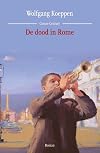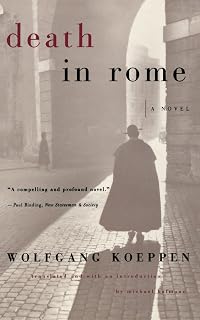
On This Page
Description
A former Nazi general, now training Arab terrorists, attends a family reunion in Rome, his son being a priest. The novel chronicles his disgust with a degenerate city which he knew as a conqueror and his attempt to get even with the Jews by seducing a barmaid, an attempt that backfires when she turns out to be a Catholic. By the author of Pigeons on the Grass.Tags
Recommendations
















Member Reviews
You won't enjoy this if you're looking for 'three dimensional characters,' and you won't enjoy it if you're looking for anything about Rome: someone is dying in Rome because it's like dying in Venice, except it's the seat of empire. If you're willing to tread the line between actual human beings and symbols of German history, on the other hand, this is a very moving novel, very well translated and rather insightful. The ex (sic)-Nazi Judejahn is too bad to be true, but, on the other hand, Nazism was too bad to be true; his family includes a priest (desperately trying to purify himself for his youth in Hitler's school); a composer (trying to flee his youth...); a politician (trying to cover up his Nazi past, but not too much, because show more really, they were mostly right...); a conformist (who wants Germany to be great and misses the old greatness but, on the other hand, really would like a well-paying job); and Judejahn's wife, surely one of the most appalling characters in all of modern fiction--more Nazi than Himmler, if you like. These character-symbols wander around Rome and struggle with their historical situation in various ways. There are a few pointless formal tricks (paragraphs that don't end in a full stop!!! WOW!!!!), but this is a serious, well-formed, discomforting book. show less
Wolfgang Koeppen is one of the least well-known literary giants of the twentieth century. While his output consists of only five novels, they all are at least minor masterpieces, and his final novel, Death in Rome, ranks as a major one. In this subtle and spare novel, Koeppen creates a vision of the German postwar experience that is at once bleak and devastating. The four main characters of the novel meet in Rome, and in small pieces of their thoughts and their lives, the anxiety and sordidness of their world are laid bare for the reader. The death motif is perhaps the strongest from the title through to the end of the book, but Koeppen also uses symbolism and unique metaphors, particularly animals and insects, to heighten the impact of show more his story. None of the characters are likable, but like a Kafka novel, I found myself fascinated with them and the world inside their heads.
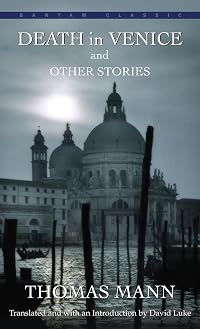
Of particular interest to me was the use of music and the representation of the composer, Siegfried Pfaffrath, as a modern serial composer in the mold of Schoenberg. His music is described as being like the "degenerate art" that the Nazis rejected, while in its modernism, it is not approved by the Catholic Church either. Some readers have made the comparison of the structure of the novel itself with a twelve-tone musical composition. Perhaps--but whether the comparison is apt, the novel certainly seems surrealistic, especially in the use of time in the movement and activities of the characters. I am impressed even more, as I reread it, with the way Koeppen uses every line and page to build the tension that explodes at the end of the novel. Death permeates this book in a way that few other novels rival. I think of Death in Venice, another twentieth-century masterpiece, but Mann's enterprise is more Nietzschean than Koeppen's. While Tolstoy comes to mind also, in The Death of Ivan Ilyich he seems a nineteenth-century precursor to the existentialism that would blossom a few decades later.
No, Koeppen is more at home in the post-war dilemma of Europe and Germany in particular. And the world he depicts is brutal and dark. It is as if, at least for some of the characters, the war has not ended. This is particularly true of Gottlieb "Gotz" Judejahn, who is at the center of the novel. Having disappeared, he is tried in absentia at Nuremberg and is effectively a ghost (as is his wife, Eva) who haunts Germany, not directly but from a distance - in Rome. The other haunting theme mentioned above is the 'new' music of Siegfried Pfaffrath--best described as a latecomer to the atonal style whose priest was Arnold Schoenberg. Late in the novel Siegfried meditates on the nature of music:
"Music was an enigmatic construction to which there was no longer any access, or just a narrow gate that admits only a few people. Whoever sat inside couldn't communicate to those on the outside, and yet they felt that this enigmatic, invisible construction, built by magic formulae, was important to them."
The structure of this novel and the thoughts of the characters, their communication or lack thereof, seem to mirror this image of music and its relation to those who hear and do not understand. Perhaps the only answer is to act out your lack of understanding--to end the dark, unbearable world with death.
Overall, the effect is impressive, with the result being a novel that challenges the reader with its taut presence. I found the challenge invigorating, and it encouraged further meditation on the ideas raised by the author. show less
Of particular interest to me was the use of music and the representation of the composer, Siegfried Pfaffrath, as a modern serial composer in the mold of Schoenberg. His music is described as being like the "degenerate art" that the Nazis rejected, while in its modernism, it is not approved by the Catholic Church either. Some readers have made the comparison of the structure of the novel itself with a twelve-tone musical composition. Perhaps--but whether the comparison is apt, the novel certainly seems surrealistic, especially in the use of time in the movement and activities of the characters. I am impressed even more, as I reread it, with the way Koeppen uses every line and page to build the tension that explodes at the end of the novel. Death permeates this book in a way that few other novels rival. I think of Death in Venice, another twentieth-century masterpiece, but Mann's enterprise is more Nietzschean than Koeppen's. While Tolstoy comes to mind also, in The Death of Ivan Ilyich he seems a nineteenth-century precursor to the existentialism that would blossom a few decades later.
No, Koeppen is more at home in the post-war dilemma of Europe and Germany in particular. And the world he depicts is brutal and dark. It is as if, at least for some of the characters, the war has not ended. This is particularly true of Gottlieb "Gotz" Judejahn, who is at the center of the novel. Having disappeared, he is tried in absentia at Nuremberg and is effectively a ghost (as is his wife, Eva) who haunts Germany, not directly but from a distance - in Rome. The other haunting theme mentioned above is the 'new' music of Siegfried Pfaffrath--best described as a latecomer to the atonal style whose priest was Arnold Schoenberg. Late in the novel Siegfried meditates on the nature of music:
"Music was an enigmatic construction to which there was no longer any access, or just a narrow gate that admits only a few people. Whoever sat inside couldn't communicate to those on the outside, and yet they felt that this enigmatic, invisible construction, built by magic formulae, was important to them."
The structure of this novel and the thoughts of the characters, their communication or lack thereof, seem to mirror this image of music and its relation to those who hear and do not understand. Perhaps the only answer is to act out your lack of understanding--to end the dark, unbearable world with death.
Overall, the effect is impressive, with the result being a novel that challenges the reader with its taut presence. I found the challenge invigorating, and it encouraged further meditation on the ideas raised by the author. show less
It is 1950s Rome, a city which has ties with Germany going back centuries. Four members of a German family are reunited there by chance: Siegfried, a young composer; his father Friedrich, a former local official during the Nazi regime who has now resumed his public role as a democratically elected burgomaster; Judejahn, Siegfried's uncle, an unrepentant former SS general; and Judejahn's son, Adolf, a Catholic seminarian.
The younger generation attempts a return to expressions of Germany's glorious past. Adolf, with his tortured soul, seeks redemption in the enduring rituals of the Church. For Siegfried, it was the grand tradition of the creation of music -- both acts of cleansing, a renewal, an upliftment of the soul. By these show more vocations, they might escape the evil shadow which they until very recently, simpy by virtue of who they were, helped cast. The older generation, complicit and guilty, deals with it in the here and now, brutish and extreme. Judejahn, now a renegade military adviser to an unnamed country in the north of Africa, is the central figure in this story, whose actions precipitate the disastrous events that take place within a few days of the crossing and crisscrossing of paths of the members of this family in the labyrinthian maze of the ancient streets and belowground -- a kind of macabre ballet where each meeting raises the temperature a notch higher, and the reader watches with an almost morbid fascination the tension that must soon give. Koeppen draws us into the workings of Judejahn's mind, crazed with hatred still, and obssessed with the fact that he was not able to exterminate them all, and deluded with the idea of his eventual return to Germany, through the graces of his brother-in-law, to resurrect the Reich believing that among his countrymen, many remain believers. Friedrich is the ultimate bureaucrat, loyal during the regime, accommodating, a broker of conveniences, useful to whomever is on top.
The novel is full of symbolisms, beginning with the major characters' names. The characters represent four areas of German achievement, or as Michael Hoffmann, the translator, describes it, the four quarters of the riven German soul: murder, bureaucracy, theology, and music. Koeppen's writing is powerful, compelling, and at a time when the 1950s Germany wanted disavowal, severance, Koeppen opts for confrontation. He was (and seems to be, until now) little forgiven for this.
In taut and searing prose and a plot that is both complex and elegant, Koeppen draws a portrait of the wrestling of immediate post-war Germany with its demons that many prefer to bury. Notes by Hoffmann explain that Koeppen's books, even in Germany, never had the acclaim they deserved, because they unsettled. His position never attained that of the returning exiles like Mann and Brecht. As the preferred form of literature was a clean slate -- an extension of collective amnesia, the nature of Koeppen's work exacerbated his position. He wrote of memory, of continuance, of criticism -- he was savaged for it by the press, which responded with "hostility, even revulsion and repugnance." The political content of his books embarrassed even those who praised them -- the conservatisim of the German public won out. Interestingly, though, he won the Buchner prize, Germany's most prestigious literary award, in 1962. show less
The younger generation attempts a return to expressions of Germany's glorious past. Adolf, with his tortured soul, seeks redemption in the enduring rituals of the Church. For Siegfried, it was the grand tradition of the creation of music -- both acts of cleansing, a renewal, an upliftment of the soul. By these show more vocations, they might escape the evil shadow which they until very recently, simpy by virtue of who they were, helped cast. The older generation, complicit and guilty, deals with it in the here and now, brutish and extreme. Judejahn, now a renegade military adviser to an unnamed country in the north of Africa, is the central figure in this story, whose actions precipitate the disastrous events that take place within a few days of the crossing and crisscrossing of paths of the members of this family in the labyrinthian maze of the ancient streets and belowground -- a kind of macabre ballet where each meeting raises the temperature a notch higher, and the reader watches with an almost morbid fascination the tension that must soon give. Koeppen draws us into the workings of Judejahn's mind, crazed with hatred still, and obssessed with the fact that he was not able to exterminate them all, and deluded with the idea of his eventual return to Germany, through the graces of his brother-in-law, to resurrect the Reich believing that among his countrymen, many remain believers. Friedrich is the ultimate bureaucrat, loyal during the regime, accommodating, a broker of conveniences, useful to whomever is on top.
The novel is full of symbolisms, beginning with the major characters' names. The characters represent four areas of German achievement, or as Michael Hoffmann, the translator, describes it, the four quarters of the riven German soul: murder, bureaucracy, theology, and music. Koeppen's writing is powerful, compelling, and at a time when the 1950s Germany wanted disavowal, severance, Koeppen opts for confrontation. He was (and seems to be, until now) little forgiven for this.
In taut and searing prose and a plot that is both complex and elegant, Koeppen draws a portrait of the wrestling of immediate post-war Germany with its demons that many prefer to bury. Notes by Hoffmann explain that Koeppen's books, even in Germany, never had the acclaim they deserved, because they unsettled. His position never attained that of the returning exiles like Mann and Brecht. As the preferred form of literature was a clean slate -- an extension of collective amnesia, the nature of Koeppen's work exacerbated his position. He wrote of memory, of continuance, of criticism -- he was savaged for it by the press, which responded with "hostility, even revulsion and repugnance." The political content of his books embarrassed even those who praised them -- the conservatisim of the German public won out. Interestingly, though, he won the Buchner prize, Germany's most prestigious literary award, in 1962. show less
I respect this more than I admire it. Written close to the event.
Cousins whom their Nazi fathers have named Adolf and Siegfried, who spent childhood in Nazi facilities for the young, we meet now as an unconvinced Roman Catholic priest and an irresolute composer of modernist music, in rejection of their fathers and mothers (the introduction, by the translator, says women are scarcely present, that this Nazi clan is a male thing. But Adolf's mother was so wedded to the Reich that she goes about as its widow, explicitly). Both deacon -- he's not a priest yet -- and composer give glimmerings of hope, of escape, of another past alternate to the Nazi narrative of culture. Merely glimmerings; both might be utter failures. This is book three show more of the Trilogy of Failure.
Siegfried's father works for the government, any government whatsoever, and is again installed in spite of his governmental crimes. Adolf's father was a murderer by trade and temperament, portrait of a Nazi driver, behind everything (as the introduction notes, he can't have been involved in every famous crime: it works as myth). He is the worst person in fiction, and although often seen from the inside, I agree with another reviewer who finds he verges on cartoon. Perhaps there is a point to that. Perhaps to make him human was impossible.
To upset the Nazi parents more, Siegfried is also homosexual, although once he seems to say this is in order to upset the Nazi parents more. It is not a healthy lifestyle for him. The novel has a lot of sexual content, none healthy: the man whose name is Judejahn -- Jew with 'madness' or 'to weed out', says the introduction -- is illicitly attracted to miscegenation; there is plenty of exploration of the idea that Nazi-types are sexually compelling, although ours turns out to have a disgusting effect in the act). The n word is scattered throughout, as with the Third Reich's failure Jews and blacks make a cultural comeback in Rome.
The only health is in two women, one Jewish, one suspected to be Jewish; Ilse who is a blessed rest in these pages (spoiler: you'll know not to get too attached), and Laura, bartend in a queer bar, whom the author writes down most of half the time but who emerges as a human portrait by the end.
Modernist in style, it was an odd read to interrupt Thomas Mann's Doctor Faustus with, as I did; Mann was blamed for being old-fashioned as a novelist, but I look forward to resumption of his more intellectual take on this subject. Interestingly, both use music to describe modernity and its discontents. Death in Rome riffs on Death in Venice, of course; I’d meant to brush up on Venice first to spot the bounce-off. show less
Cousins whom their Nazi fathers have named Adolf and Siegfried, who spent childhood in Nazi facilities for the young, we meet now as an unconvinced Roman Catholic priest and an irresolute composer of modernist music, in rejection of their fathers and mothers (the introduction, by the translator, says women are scarcely present, that this Nazi clan is a male thing. But Adolf's mother was so wedded to the Reich that she goes about as its widow, explicitly). Both deacon -- he's not a priest yet -- and composer give glimmerings of hope, of escape, of another past alternate to the Nazi narrative of culture. Merely glimmerings; both might be utter failures. This is book three show more of the Trilogy of Failure.
Siegfried's father works for the government, any government whatsoever, and is again installed in spite of his governmental crimes. Adolf's father was a murderer by trade and temperament, portrait of a Nazi driver, behind everything (as the introduction notes, he can't have been involved in every famous crime: it works as myth). He is the worst person in fiction, and although often seen from the inside, I agree with another reviewer who finds he verges on cartoon. Perhaps there is a point to that. Perhaps to make him human was impossible.
To upset the Nazi parents more, Siegfried is also homosexual, although once he seems to say this is in order to upset the Nazi parents more. It is not a healthy lifestyle for him. The novel has a lot of sexual content, none healthy: the man whose name is Judejahn -- Jew with 'madness' or 'to weed out', says the introduction -- is illicitly attracted to miscegenation; there is plenty of exploration of the idea that Nazi-types are sexually compelling, although ours turns out to have a disgusting effect in the act). The n word is scattered throughout, as with the Third Reich's failure Jews and blacks make a cultural comeback in Rome.
The only health is in two women, one Jewish, one suspected to be Jewish; Ilse who is a blessed rest in these pages (spoiler: you'll know not to get too attached), and Laura, bartend in a queer bar, whom the author writes down most of half the time but who emerges as a human portrait by the end.
Modernist in style, it was an odd read to interrupt Thomas Mann's Doctor Faustus with, as I did; Mann was blamed for being old-fashioned as a novelist, but I look forward to resumption of his more intellectual take on this subject. Interestingly, both use music to describe modernity and its discontents. Death in Rome riffs on Death in Venice, of course; I’d meant to brush up on Venice first to spot the bounce-off. show less
Deeply felt and wonderfully written novel of a German family and its post-war psychological wreckage. The pain in this account is unrelieved. I usually like depressing things, but this was somehow too much.
As a rule I attempt to distance my reviews from the personal. Certainly anecdotes thrive in this context. It is the more central experiences and principles which I make every effort to keep to myself. I'm afraid i can't do such this time. My friend J who I have worked with for 20 years died this past week. This has been one of the worst times of my adult life. I once went on a trip with J to Rome. It was around this time that I acquired this novel. For the life of me, I can't remember if it was before or after. My friend battled cancer twice in the last 20 years, this second time it was for keeps. This burning loss plagued my reading, tearing the book from hands after every ten or so pages. My wife has been wonderful throughout.
Death in show more Rome is exactly that. Koeppen penned a vast German family postwar dynamic and then enkindled such in 200 dense pages of shifting points of view and acerbic images. The fact that such unfolds in the Eternal City affords it relief, a perspective, a historical resonance. The family broods and rebels on issues of guilt and accomplishment: culture and the Camps. The novel succeeds with its focus on hotels, the concert hall and a smoky gay bar. Hopefully more will witness this remarkable novel, an unblinking snapshot of the odd time in (West?) Germany between 1945 and the Fassbinder expressionism of the late 60s and early 70s.
There are aspects here which anticipate Boll's masterful Billards at Half-Past Nine. show less
Death in show more Rome is exactly that. Koeppen penned a vast German family postwar dynamic and then enkindled such in 200 dense pages of shifting points of view and acerbic images. The fact that such unfolds in the Eternal City affords it relief, a perspective, a historical resonance. The family broods and rebels on issues of guilt and accomplishment: culture and the Camps. The novel succeeds with its focus on hotels, the concert hall and a smoky gay bar. Hopefully more will witness this remarkable novel, an unblinking snapshot of the odd time in (West?) Germany between 1945 and the Fassbinder expressionism of the late 60s and early 70s.
There are aspects here which anticipate Boll's masterful Billards at Half-Past Nine. show less
I found this novel difficult to grasp & get into, not just at first, but all the way through. About half way through I sorted out the characters, who was who etc. A boring first half & better second half (once I had grasped what was going on). The novel is about five characters who are surviving the post war period in different ways.
Members
- Recently Added By
Lists

1001 Books You Must Read Before You Die
1,448 works; 1,134 members

German Literature
518 works; 55 members

Books Read in 2021
5,361 works; 114 members
Canon de la narrativa universal del s. XX (cicutadry)
499 works; 3 members
Talk Discussions
Past Discussions
Group Read, January 2024: Death in Rome in 1001 Books to read before you die (January 2024)
Author Information

Wolfgang Koeppen was born in 1906 and died in 1996 in Munich.
Some Editions
Awards and Honors
Awards
Series

Belongs to Publisher Series
Bibliothek des 20. Jahrhunderts (Dt. Bücherbund) (Koeppen, Wolfgang)
suhrkamp taschenbuch (0241)
Work Relationships
Is contained in
Has as a commentary on the text
Has as a student's study guide
Common Knowledge
- Canonical title
- Death in Rome
- Original title
- Der Tod in Rom
- Alternate titles*
- De dood in Rome : roman
- Original publication date
- 1954 (original German) (original German); 1992 (English translation) (English translation)
- Original language
- German
*Some information comes from Common Knowledge in other languages. Click "Edit" for more information.
Classifications
- Genres
- General Fiction, Fiction and Literature
- DDC/MDS
- 833.912 — Literature & rhetoric German & related literatures German fiction 1900- 1900-1990 1900-1945
- LCC
- PT2621 .O46 .T613 — Language and Literature German, Dutch and Scandinavian literatures German literature Individual authors or works 1860/70-1960
- BISAC
Statistics
- Members
- 401
- Popularity
- 77,804
- Reviews
- 11
- Rating
- (3.83)
- Languages
- 14 — Catalan, Dutch, English, French, German, Greek, Hungarian, Italian, Norwegian (Nynorsk), Norwegian (Bokmål), Norwegian, Russian, Slovenian, Spanish
- Media
- Paper
- ISBNs
- 21
- ASINs
- 3