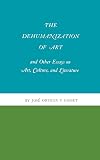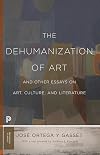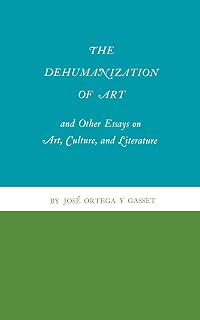
The Dehumanization of Art and Other Essays on Art, Culture, and Literature
by José Ortega y Gasset
On This Page
Description
A classic work on radical aesthetics by one of the great philosophers of the early twentieth century No work of philosopher and essayist José Ortega y Gasset has been more frequently cited, admired, or criticized than his response to modernism, "The Dehumanization of Art." The essay, originally published in Spanish in 1925, grappled with the newness of nonrepresentational art and sought to make it more understandable to the public. Many embraced the essay as a manifesto extolling the show more virtues of vanguard artists and promoting efforts to abandon the realism and the romanticism of the nineteenth century. Others took it as a denunciation of everything that was radical about the avant-garde. This Princeton Classics edition makes this essential work, along with four of Ortega's other critical essays, available in English. A new foreword by Anthony J. Cascardi considers how Ortega's philosophy remains relevant and significant in the twenty-first century. show lessTags
Recommendations











Member Recommendations
Member Reviews
Scritto nel 1925, parla di quella che allora era "arte nuova" e senza dubbio fa considerazioni che possono essere applicate anche all'arte contemporanea d'oggi. La posizione di Ortega è ambigua nella misura in cui da un lato afferma di non voler affermare la superiorità né dell'arte contemporanea né di quella precedente, dall'altro si tradisce quando descrive la separazione tra volgo ed élite intellettuale (l'unica in grado di capire l'arte contemporanea - e non è difficile credere che lui se ne senta parte). Ci sono senz'altro note corrette e del tutto precorritrici di quanto è poi accaduto, in particolare il carattere intrinsecamente ironico dell'arte contemporanea.
Ratings
Members
- Recently Added By
Lists

Writers In Public Domain 2026
90 works; 1 member
Author Information

433+ Works 6,855 Members
Essayist and philosopher, a thinker influential in and out of the Spanish world, Jose Ortega y Gasset was professor of metaphysics at the University of Madrid from 1910 until the outbreak of the Spanish Civil War in 1936. The Revolt of the Masses, his most famous work, owes much to post-Kantian schools of thought. Ortega's predominant thesis is show more the need of an intellectual aristocracy governing in a spirit of enlightened liberalism. Although Franco, after his victory in the civil war, offered to make Ortega Spain's "official philosopher" and to publish a deluxe edition of his works, with certain parts deleted, the philosopher refused. Instead, he chose the life of a voluntary exile in Argentina, and in 1941 he was appointed professor of philosophy at the University of San Marcos in Lima, Peru. He returned to Spain in 1945 and died in Madrid. Ortega's reformulation of the Cartesian cogito displays the fulcrum of his thought. While Rene Descartes declared "Cogito ergo sum" (I think, therefore I am), Ortega maintained "Cogito quia vivo" (I think because I live). He subordinated reason to life, to vitality. Reason becomes the tool of people existing biologically in a given time and place, rather than an overarching sovereign. Ortega's philosophy consequently discloses affinities in its metaphysics to both American pragmatism and European existentialism in spite of its elitism in social philosophy. (Bowker Author Biography) show less
Common Knowledge
- Original publication date
- 1925
- Epigraph
- "Npn creda donna Berta e ser Martino..." (DIVINA COMMEDIA, PARADISO, XIII)
- First words
- Along the many excellent, though inadequately developed, ideas of the eminent French philosopher J. M. Guyau we must count his intention to study art from a sociological point of view.
- Last words
- (Click to show. Warning: May contain spoilers.)To excel the past we must not allow ourselves to lose contact with it; on the contrary, we must feel it under our feet because we have raised ourselves upon it.
Classifications
Statistics
- Members
- 435
- Popularity
- 70,754
- Reviews
- 1
- Rating
- (3.92)
- Languages
- 10 — Danish, English, Finnish, French, German, Italian, Norwegian (Bokmål), Polish, Portuguese, Spanish
- Media
- Paper, Ebook
- ISBNs
- 24
- UPCs
- 1
- ASINs
- 7