On This Page
Description
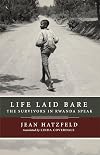
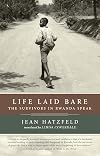
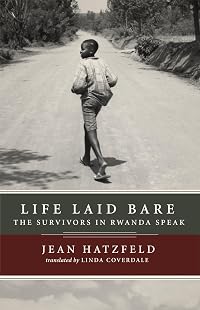
"To make the effort to understand what happened in Rwanda is a painful task that we have no right to shirk-it is part of being a moral adult." -Susan Sontag In the late 1990s, French author and journalist Jean Hatzfeld made several journeys into the hilly, marshy region of the Bugesera, one of the areas most devastated by the Rwandan genocide of April 1994, where an average of five out of six Tutsis were hacked to death with machete and spear by their Hutu neighbors and militiamen. In the show more villages of Nyamata and N'tarama, Hatzfeld interviewed fourteen survivors of the genocide, from orphan teenage farmers to the local social worker. For years the survivors had lived in a muteness as enigmatic as the silence of those who survived the Nazi concentration camps. In Life Laid Bare, they speak for those who are no longer alive to speak for themselves; they tell of the deaths of family and friends in the churches and marshes to which they fled, and they attempt to account for the reasons behind the Tutsi extermination. For many of the survivors "life has broken down," while for others, it has "stopped," and still others say that it "absolutely must go on." These horrific accounts of life at the very edge contrast with Hatzfeld's own sensitive and vivid descriptions of Rwanda's villages and countryside in peacetime. These voices of courage and resilience exemplify the indomitable human spirit, and they remind us of our own moral responsibility to bear witness to these atrocities and to never forget what can come to pass again. Winner of the Prix France Culture and the Prix Pierre Mille, Life Laid Bare allows us, in the author's own words, "to draw as close as we can get to the Rwandan genocide." show lessTags
Recommendations

Member Reviews
14 survivors of the Rwandan genocide provide first-hand, eyewitness accounts in Life Laid Bare, a heart-rending book by French journalist, Jean Hatzfeld.
French journalist and war correspondent, Jean Hatzfeld, brings a gut-wrenching work that is bound to leave you feeling disturbed. I spent many sleepless nights after reading this book. Unlike Philip Gourevitch’s We Wish To Inform You That Tomorrow We Will Be Killed With Our Families, this book is not about an examination of the genocide and will give you little context or history about what led to the events of 1994 in Rwanda. Life Laid Bare instead contains firsthand accounts of 14 survivors, told in their own voices.
Every survivor’s story is preceded by Hatzfeld’s vivid show more description of the place he is in – the quiet streets, the quaint shops, the silent people. In peacetime, the villages of Rwanda feel like any other countryside. But these are the places where, in 1994, over 100 days, an average of five out of six Tutsis were killed by their Hutu neighbours with machetes and other weapons. It was only when the Tutsi army, led by Paul Kagame (who was a rebel commander at the time and is today the President of Rwanda) liberated the country that the killings stopped and the survivors could come out from their hiding places.
Hatzfeld made several journeys through the area of Bugesera and talked to the people – from orphans to farmers to social workers. Their narratives are not easy to read. During those horrific weeks, there were men, women and children hiding in papyrus marshes, dealing with mosquitoes and snakes, but most of all, hoping that hidden between the fronds and covered with mud, they would remain disguised and live to see another day. Some ran to the safety of the churches, believing that the house of God would be immune from attacks and Western missionaries would intervene on their behalf. A few ran through the hills or became dependent on other’s charity hiding under beds or crossed international borders on foot. Families got separated as each member ran for his or her own life; new groups formed out of camaraderie to survive. Mothers clutched young ones to their breasts, were slowed down and cut down mercilessly. There was no safe haven – no home was spared, massacres took place in churches, and in the marshes killers came singing every morning, working till dusk, to slash anyone they could find – the infirm, the old, the newborn, it didn’t matter.
What the voices of these survivors show is the moral responsibility we as an international community bear to such atrocities. Every survivor’s story comes with their photograph – these black and white pictures will continue to haunt you long after you have finished reading their account. That’s how heart-breaking these stories are. show less
French journalist and war correspondent, Jean Hatzfeld, brings a gut-wrenching work that is bound to leave you feeling disturbed. I spent many sleepless nights after reading this book. Unlike Philip Gourevitch’s We Wish To Inform You That Tomorrow We Will Be Killed With Our Families, this book is not about an examination of the genocide and will give you little context or history about what led to the events of 1994 in Rwanda. Life Laid Bare instead contains firsthand accounts of 14 survivors, told in their own voices.
Every survivor’s story is preceded by Hatzfeld’s vivid show more description of the place he is in – the quiet streets, the quaint shops, the silent people. In peacetime, the villages of Rwanda feel like any other countryside. But these are the places where, in 1994, over 100 days, an average of five out of six Tutsis were killed by their Hutu neighbours with machetes and other weapons. It was only when the Tutsi army, led by Paul Kagame (who was a rebel commander at the time and is today the President of Rwanda) liberated the country that the killings stopped and the survivors could come out from their hiding places.
Hatzfeld made several journeys through the area of Bugesera and talked to the people – from orphans to farmers to social workers. Their narratives are not easy to read. During those horrific weeks, there were men, women and children hiding in papyrus marshes, dealing with mosquitoes and snakes, but most of all, hoping that hidden between the fronds and covered with mud, they would remain disguised and live to see another day. Some ran to the safety of the churches, believing that the house of God would be immune from attacks and Western missionaries would intervene on their behalf. A few ran through the hills or became dependent on other’s charity hiding under beds or crossed international borders on foot. Families got separated as each member ran for his or her own life; new groups formed out of camaraderie to survive. Mothers clutched young ones to their breasts, were slowed down and cut down mercilessly. There was no safe haven – no home was spared, massacres took place in churches, and in the marshes killers came singing every morning, working till dusk, to slash anyone they could find – the infirm, the old, the newborn, it didn’t matter.
What the voices of these survivors show is the moral responsibility we as an international community bear to such atrocities. Every survivor’s story comes with their photograph – these black and white pictures will continue to haunt you long after you have finished reading their account. That’s how heart-breaking these stories are. show less
This book is a moving testimony to the strength, grace, and poetry of the human spirit and memory in the worst, the absolute worst of times. Between Monday, April 11, 1994 and May 14 of that year, 50,000 of 59,000 Tutsis in the district of Nyamata in Rwanda were slaughtered by their neighbors, mostly by machete. The horrors and cruelty met by old and young, innocents, slaughtered in their homes, on the roads, in the woods, in the marshes, in the churches are beyond comprehension. And yet the survivors in this book tell elegant, honest, truths about their unbelievable ordeals. Jean Hatzfeld, the French journalist, who recorded these stories, as well as some of the killers' stories (Machete Season), and an update, The Antelope Strategy, show more is to be commended for shining a light on the luminous testimony of the survivors, allowing them to bear witness to the best and worst in the human spirit. show less
http://wineandabook.com/2012/02/04/review-life-laid-bare-the-survivors-in-rwanda...
"I think, moreover, that no one will ever line up the truths of this mysterious tragedy and write them down--not the professors in Kigali and Europe, not the groups of intellectuals and politicians. Every explanation will give way on one side or another, like a wobbly table. A genocide is a poisonous bush that grows not from two or three roots, but from a whole tangle that has moldered underground without anyone noticing." ~Claudine Kayitesi, page 206
Journalist Jean Hatzfeld made several journeys to Bugesera in the late 1990s to interview the men, women and children who survived the Rwandan genocide, where 5 out of 6 Tutsis were brutally massacred by show more their Hutu neighbors over the period of several weeks. This book is a collection of those interviews where the survivors, in their own words, describe life before, during and since the genocide. Each survivor's story is preceded by Hatzfeld's delicate and vivid impressions of Bugesera's community.
What struck me most was the bravery, openness and honesty with which each survivor spoke, as each relayed their own history bare and tried to make sense of it. Some powerful quotes:
"In my memory, the genocide was yesterday, or rather, last year, and it will always be just last year, because I can detect no change that will allow time to return to its proper place." ~Edith Uwanyiligira, page 173.
"We wrapped our fears in the leaves of silence."~Berthe Mwanankabandi, page 183
"The genocide pushes into isolation those it could not push into death." ~Berthe Mwanankabandi, page 188
"We were forgotten by time, which must have continued to pass for others--Hutus, foreigners, animals--but no longer wished to pass for us."~Claudine Kayitesi, page 200
"A genocide is a film projected every day before the eyes of the survivors, and there's no point in interrupting it before the end." ~Sylvie Umubyeyi, page 222
"I feel that fear is eating away at the time luck has saved for us...[b]ecause if you linger too long with the fear of genocide, you lose hope. You lose what you have managed to salvage from life. You risk contamination from a different madness." ~Sylvie Umubyeyi, page 234
This collection is what I had hoped for when reading Burmese Refugees: Letters from the Thai-Burma Border. Hatzfeld does an incredible job creating the platform from which the survivors teach us about the best and worst of humanity. Powerful, moving and carefully wrought.
Just a word of advice: I chose this book as my subway read because it was compact...not a good call. I found myself frequently tearing up as I read each gripping account of survival. I'm not big on crying in public...little awkward for my fellow commuters!! Sorry about that!!
Rubric rating: 8. I'm looking forward to reading the companion piece Machete Season: The Killers in Rwanda Speak. show less
"I think, moreover, that no one will ever line up the truths of this mysterious tragedy and write them down--not the professors in Kigali and Europe, not the groups of intellectuals and politicians. Every explanation will give way on one side or another, like a wobbly table. A genocide is a poisonous bush that grows not from two or three roots, but from a whole tangle that has moldered underground without anyone noticing." ~Claudine Kayitesi, page 206
Journalist Jean Hatzfeld made several journeys to Bugesera in the late 1990s to interview the men, women and children who survived the Rwandan genocide, where 5 out of 6 Tutsis were brutally massacred by show more their Hutu neighbors over the period of several weeks. This book is a collection of those interviews where the survivors, in their own words, describe life before, during and since the genocide. Each survivor's story is preceded by Hatzfeld's delicate and vivid impressions of Bugesera's community.
What struck me most was the bravery, openness and honesty with which each survivor spoke, as each relayed their own history bare and tried to make sense of it. Some powerful quotes:
"In my memory, the genocide was yesterday, or rather, last year, and it will always be just last year, because I can detect no change that will allow time to return to its proper place." ~Edith Uwanyiligira, page 173.
"We wrapped our fears in the leaves of silence."~Berthe Mwanankabandi, page 183
"The genocide pushes into isolation those it could not push into death." ~Berthe Mwanankabandi, page 188
"We were forgotten by time, which must have continued to pass for others--Hutus, foreigners, animals--but no longer wished to pass for us."~Claudine Kayitesi, page 200
"A genocide is a film projected every day before the eyes of the survivors, and there's no point in interrupting it before the end." ~Sylvie Umubyeyi, page 222
"I feel that fear is eating away at the time luck has saved for us...[b]ecause if you linger too long with the fear of genocide, you lose hope. You lose what you have managed to salvage from life. You risk contamination from a different madness." ~Sylvie Umubyeyi, page 234
This collection is what I had hoped for when reading Burmese Refugees: Letters from the Thai-Burma Border. Hatzfeld does an incredible job creating the platform from which the survivors teach us about the best and worst of humanity. Powerful, moving and carefully wrought.
Just a word of advice: I chose this book as my subway read because it was compact...not a good call. I found myself frequently tearing up as I read each gripping account of survival. I'm not big on crying in public...little awkward for my fellow commuters!! Sorry about that!!
Rubric rating: 8. I'm looking forward to reading the companion piece Machete Season: The Killers in Rwanda Speak. show less
A very informative understanding of the Rwandan genocide from the victims’ perspectives.
Writer Philip Gourevitch has chosen to discuss Jean Hatzfeld’s Life Laid Bare: The Survivors in Rwanda Speak on FiveBooks as one of the top five on his subject - Rwanda, saying that:
"...The first book Hatzfeld wrote was based on the stories of a group of survivors who had spent the 100 days or so of the genocide hiding in these dense papyrus swamps near their home. They were being hunted there by a gang of killers from around their village, people whom they knew. What makes this a great book is not just its subject matter, but its style and its voice. Hatzfeld is obviously someone who spent a huge amount of time just hanging out in the village, in the bars, in the backyards, in the fields, with people who had had this experience – show more and he relates their stories with unmediated immediacy, and with great soul...."
The full interview is available here: http://five-books.com/interviews/philip-gourevitch show less
"...The first book Hatzfeld wrote was based on the stories of a group of survivors who had spent the 100 days or so of the genocide hiding in these dense papyrus swamps near their home. They were being hunted there by a gang of killers from around their village, people whom they knew. What makes this a great book is not just its subject matter, but its style and its voice. Hatzfeld is obviously someone who spent a huge amount of time just hanging out in the village, in the bars, in the backyards, in the fields, with people who had had this experience – show more and he relates their stories with unmediated immediacy, and with great soul...."
The full interview is available here: http://five-books.com/interviews/philip-gourevitch show less
Ratings
Members
- Recently Added By
Lists

Club Read's Recommended Nonfiction Written by Women
618 works; 30 members
Author Information

15+ Works 959 Members
All Editions
Awards and Honors
Series

Belongs to Publisher Series
Work Relationships
Is contained in
Common Knowledge
- Canonical title
- Life Laid Bare
- Original title
- Dans Le Nu de La Vie
- Original publication date
- 2000
- Important places*
- Rwanda
- Important events
- Rwandan Genocide (1994)
- First words
- Gray cranes, with their trumpeting calls are the first to announce that nighttime is over in the neighborhood of Gatare.
- Last words
- (Click to show. Warning: May contain spoilers.)When I think about the genocide, in a moment of calm, I mull over where to put it properly away in life, but I find no place. I simply mean that it is no longer anything human.
- Original language
- French
*Some information comes from Common Knowledge in other languages. Click "Edit" for more information.
Classifications
- Genres
- Nonfiction, History, General Nonfiction
- DDC/MDS
- 967.57104 — History & geography History of Africa Central Africa: Congo, Angola, Chad Democratic Republic of the Congo (Congo-Kinshasa); Rwanda & Burundi Rwanda and Burundi Rwanda 1962-
- LCC
- DT450.435 .H3813 — History of Europe, Asia, Africa and Oceania Africa History of Africa Eastern Africa Burundi History
- BISAC
Statistics
- Members
- 207
- Popularity
- 158,586
- Reviews
- 5
- Rating
- (4.60)
- Languages
- 6 — English, French, German, Polish, Portuguese, Spanish
- Media
- Paper, Ebook
- ISBNs
- 11
- ASINs
- 3