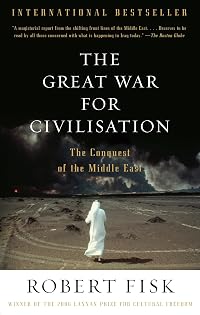
The Great War for Civilisation: The Conquest of the Middle East
by Robert Fisk
On This Page
Description
Robert Fisk's bestselling eyewitness account of the events that have shaped the Middle East is alive with vivid reporting and incisive historical analysis. The history of the Middle East is an epic story of tragedy, betrayal and world-shaking events. It is a story that Robert Fisk has been reporting for over thirty years. His masterful narrative spans the most volatile regions of the Middle East, chronicling with both rage and compassion the death by deceit of tens of thousands of Muslims, show more Christians and Jews. Robert Fisk's remarkable history is also the tale of a journalist at war - learning of the 9/11 attacks while aboard a passenger jet, reporting from a bombed-out Baghdad, interviewing Osama bin Laden - and of the courage and frustration of a life spent writing the first draft of history. show lessTags
Recommendations

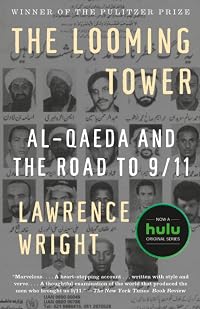
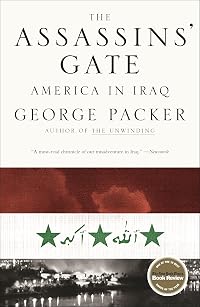
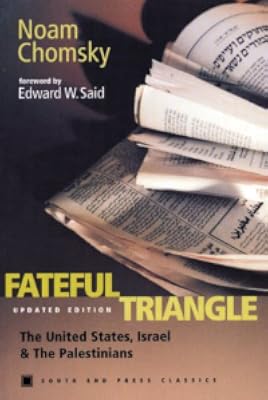
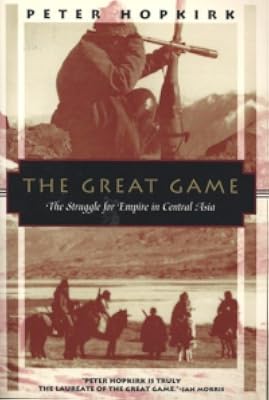





Member Recommendations
charlie68 A good history of the region
Member Reviews
You can see why Robert Fisk is controversial. He comes off as one-note, unceasingly ranting, venomous towards the West and obsessed with describing and lamenting the suffering of people in this very troubled part of the world. He is morally unmovable, and to a large extent his unyielding stance opened my eyes. So many figures that we've seen as fanatical and wicked actually tried to fight what they saw as the great evil facing their people, Western imperialism, from Bin Laden to the Ayatollahs to Saddam Hussein, and they were somewhat justified.
There were many memorable accounts in the book, enough to fill a 1000 pages (which they do.) His gruesome reporting from the trenches of the Iran-Iraq war and the Gulf War; his investigation show more into the origins of weaponry Israel used to recklessly strike civilians in Lebanon; his piercing interviews with Bin Laden; his fearless reports from the blood-soaked quagmire of the Algerian civil war; his historical forays into the Armenian genocide and the First World War. This was doubtlessly a tour-de-force, a lifetime's work of bravery and heart and representative of an inspiring campaign to push the world closer to what is right.
I did find some of his research and focus regrettably partisan, especially when discussing Israel/Palestine, which I've done much research on, being an Israeli myself. Fisk constantly returns to the Sabra and Shatila massacres as an exemplary motivation for revenge against the West, and he constantly refers to the occupation as a primary reason for 9/11, but taking these justifications at face value ignores the complicated web of responsibility that gave rise to the original crimes. Did the IDF know that Phalangists were massacring refugees? Is there not a significant push within Israeli society to end the occupation? With respect to the Israeli peace process, Fisk never discusses how the issue of refugee return has nipped in the bud any possible separation between two future Israeli and Palestinian states, choosing only to focus on settlements, or "colonies", as he calls them. And he also attributes US involvement in Iraq War to the Israeli lobby, something I've never heard before, that Fisk doesn't even go into detail about, that seems plainly wrong. These omissions definitely raise questions about the veracity and integrity of the rest of the book. show less
There were many memorable accounts in the book, enough to fill a 1000 pages (which they do.) His gruesome reporting from the trenches of the Iran-Iraq war and the Gulf War; his investigation show more into the origins of weaponry Israel used to recklessly strike civilians in Lebanon; his piercing interviews with Bin Laden; his fearless reports from the blood-soaked quagmire of the Algerian civil war; his historical forays into the Armenian genocide and the First World War. This was doubtlessly a tour-de-force, a lifetime's work of bravery and heart and representative of an inspiring campaign to push the world closer to what is right.
I did find some of his research and focus regrettably partisan, especially when discussing Israel/Palestine, which I've done much research on, being an Israeli myself. Fisk constantly returns to the Sabra and Shatila massacres as an exemplary motivation for revenge against the West, and he constantly refers to the occupation as a primary reason for 9/11, but taking these justifications at face value ignores the complicated web of responsibility that gave rise to the original crimes. Did the IDF know that Phalangists were massacring refugees? Is there not a significant push within Israeli society to end the occupation? With respect to the Israeli peace process, Fisk never discusses how the issue of refugee return has nipped in the bud any possible separation between two future Israeli and Palestinian states, choosing only to focus on settlements, or "colonies", as he calls them. And he also attributes US involvement in Iraq War to the Israeli lobby, something I've never heard before, that Fisk doesn't even go into detail about, that seems plainly wrong. These omissions definitely raise questions about the veracity and integrity of the rest of the book. show less
But war is primarily not about victory or defeat but about death and the infliction of death. It represents the total failure of the human spirit.
It would be spurious to suggest that I'm not haunted by this book. Maybe it is a touch of American isolationism, perhaps a hint of xenophobia, that we -- meaning I -- don't peer more into these pages.
Robert Fisk has proven, amongst loftier achievements, to be an audible author. Dozens of times over the past three days I sighed and groaned under the spell of his vivid accounts. Whereas his devotion to the Iran-Iraq War was singular and crushing, his interlude revisiting the Armenian genocide was overly familiar given our reading last summer of Burning Tigris, a text Fisk cites on several show more turns. Yesterday afternoon I arrived at the plight of the Palestinians the expanse and compunction of the myriad Treaties and Accords, the all-too-familiar events which I recall so directly, the settlements, the Intifadas, the ultimate fall of Sharon and Arafat, who asked Fisk about Michael Collins’ fate.
All of these insights imprint themselves on the conscious reader. I hesitate to say accusations ring and that culpability adheres like the noisome legacy of an accident. I dare anyone to attempt otherwise. show less
It would be spurious to suggest that I'm not haunted by this book. Maybe it is a touch of American isolationism, perhaps a hint of xenophobia, that we -- meaning I -- don't peer more into these pages.
Robert Fisk has proven, amongst loftier achievements, to be an audible author. Dozens of times over the past three days I sighed and groaned under the spell of his vivid accounts. Whereas his devotion to the Iran-Iraq War was singular and crushing, his interlude revisiting the Armenian genocide was overly familiar given our reading last summer of Burning Tigris, a text Fisk cites on several show more turns. Yesterday afternoon I arrived at the plight of the Palestinians the expanse and compunction of the myriad Treaties and Accords, the all-too-familiar events which I recall so directly, the settlements, the Intifadas, the ultimate fall of Sharon and Arafat, who asked Fisk about Michael Collins’ fate.
All of these insights imprint themselves on the conscious reader. I hesitate to say accusations ring and that culpability adheres like the noisome legacy of an accident. I dare anyone to attempt otherwise. show less
Noble-winged seraphs of the jury, look at this tangle of thorns.
See the eruption of this area in flames, see the piles of skulls disintegrating in the wind, see houses ridden with bullets and children torn apart in martyrdom, see trenches full of soldiers, dead of gas.
I would like to read his thoughts on current events, on new revolutions and civil wars, and faint hopes on democracy, but I doubt, after what he has seen and heard, he has any hope.
This is a fearsome history, scourging and lamenting, leaving none as the moral victor. Only war, and the failings of the human spirit.
Read it, damn you.
See the eruption of this area in flames, see the piles of skulls disintegrating in the wind, see houses ridden with bullets and children torn apart in martyrdom, see trenches full of soldiers, dead of gas.
I would like to read his thoughts on current events, on new revolutions and civil wars, and faint hopes on democracy, but I doubt, after what he has seen and heard, he has any hope.
This is a fearsome history, scourging and lamenting, leaving none as the moral victor. Only war, and the failings of the human spirit.
Read it, damn you.
The Great War for Civilisation covers the past thirty years of Middle Eastern history, as covered by Fisk, with pauses to take in more distant reaches such as the Armenian genocide under the Ottoman Empire. The book is vast and a real education in the region’s recent history. It is intensely partisan; Fisk is a journalist and his writing is highly emotive (which makes it all the more involving): he is pro-Palestinian and regards Western policy across the region as arrogant, foolish and catastrophic. His vivid depictions of the wars and atrocities of the past thirty years amount pass comprehensible levels of horror, and reading the book is a largely dispiriting experience, leavened by the acts of kindness from the people who have to show more cope with it on a daily basis. show less
This is a book every Israeli should read.
Robert Fisk is a British journalist who writes for The Independent. He lives in Beirut and has been reporting from the Middle East for decades, having witnessed many of the region’s conflicts firsthand. The West’s interest in Osama Bin Laden following the 9/11 terror attacks in the US propelled him to fame, because of his interviews with the bearded arch-terrorist during the 1990s.
In this book, Fisk sets out to explain the “Conquest of the Middle East” (the subtitle of this book). He borrows the name of the book - “The Great War for Civilization” – from words engraved on one of the medals his father received for participating in World War One (Fisk’s father features prominently in show more this book, with Fisk the son expending considerable efforts to reconcile his pacifistic ideals with the fact that his father wore a uniform and held a gun). The book covers many of the conflicts in the Middle East: the Armenian Genocide, Algeria’s civil war for overthrowing French colonial rule, the eight-year Iraq-Iran war, the civil war in Lebanon, the Soviet and West’s wars in Afghanistan, the two Gulf wars in Iraq and the Arab-Israeli conflict.
Fisk was witness to many horrors in these wars. His prose is most masterly when he describes these horrors in great detail. We get to know many of the victims personally, and some get a “mini biography” several pages long, as Fisk traces their families and friends to reconstruct a life that has been brutally taken or shattered by war. Afghans, Algerians, Iranians, Iraqis, Lebanese and many other Arab and Muslim victims receive a passionate and compassionate treatment. In this respect, Fisk’s attention to detail and his aptitude for understanding human suffering are remarkable.
But given Fisk’s extensive experience and knowledge of the Middle East and the grandiose title of the book, one would have expected this voluminous tome (well over 1,000 pages in hardcover) to provide an insightful and well though-out perspective into the “conquest of the Middle East”. That was certainly my expectation.
Instead of a perspective we get a rambling, disordered memoir that is despairingly long and pompously self-centered. After a few hundred pages, the reader comes to realise that this is not a book about the Middle East conflict or even the victims of war; it is a book about Fisk and his terribly misguided outlook on life, an outlook that can be summarised in a few short sentences. Everything the West does is wrong, especially the US and Britain. The Arabs are blameless victims of the West’s brutal aggression. There is no such thing as “terrorism”, only the desperate acts of people who have been repressed and abused for too long. And, last but not least, we have a modern-day prophet who can open our eyes and expose all the lies: Robert Fisk.
As an account of the Middle East conflict, this book is a total failure. It reads like a collection of newspaper columns, shoddily lumped together with little thought given about what they all mean. There is no “big picture” perspective. The graphic detail of some of the war horrors are borderline war porn. Fisk’s shattered soul after decades of reporting these horrors is understandable, yet one is left with an uneasy feeling that it is Fisk we are really supposed to feel sorry about, not the real victims.
Now the reason why this is a book every Israeli should read.
Fisk’s commendable humanitarian approach to the victims of the “Great War for Civilization” in the Middle East is nonexistent when it comes to Israeli victims. The innocent lives of the hundreds of Israelis who died in senseless and barbarous terrorist attacks by Palestinian terrorists get only a cursory mention, and almost always in order to find some excuse to exonerate the terrorist and “explain” his motives. In most cases the Israeli victims have no name; none get the biographical treatment that Arab victims get in this book. Fisk is unable to mask his hatred of Israel and his bigotry is exposed in all its ugliness when he is incapable of feeling any compassion towards Israelis whose lives were torn apart by war.
It is important for Israelis to understand Fisk, because his attitude is representative of the outlook of many Europeans towards Israel. Fisk is not ignorant of the facts of the Arab-Israeli conflict, yet his selective and one-sided views influence those of many who are not as well-versed in the facts. This delegitimisation of Israel in the guise of pacifistic humanitarianism is a danger we should all be aware of, and Fisk is an excellent example of this danger. show less
Robert Fisk is a British journalist who writes for The Independent. He lives in Beirut and has been reporting from the Middle East for decades, having witnessed many of the region’s conflicts firsthand. The West’s interest in Osama Bin Laden following the 9/11 terror attacks in the US propelled him to fame, because of his interviews with the bearded arch-terrorist during the 1990s.
In this book, Fisk sets out to explain the “Conquest of the Middle East” (the subtitle of this book). He borrows the name of the book - “The Great War for Civilization” – from words engraved on one of the medals his father received for participating in World War One (Fisk’s father features prominently in show more this book, with Fisk the son expending considerable efforts to reconcile his pacifistic ideals with the fact that his father wore a uniform and held a gun). The book covers many of the conflicts in the Middle East: the Armenian Genocide, Algeria’s civil war for overthrowing French colonial rule, the eight-year Iraq-Iran war, the civil war in Lebanon, the Soviet and West’s wars in Afghanistan, the two Gulf wars in Iraq and the Arab-Israeli conflict.
Fisk was witness to many horrors in these wars. His prose is most masterly when he describes these horrors in great detail. We get to know many of the victims personally, and some get a “mini biography” several pages long, as Fisk traces their families and friends to reconstruct a life that has been brutally taken or shattered by war. Afghans, Algerians, Iranians, Iraqis, Lebanese and many other Arab and Muslim victims receive a passionate and compassionate treatment. In this respect, Fisk’s attention to detail and his aptitude for understanding human suffering are remarkable.
But given Fisk’s extensive experience and knowledge of the Middle East and the grandiose title of the book, one would have expected this voluminous tome (well over 1,000 pages in hardcover) to provide an insightful and well though-out perspective into the “conquest of the Middle East”. That was certainly my expectation.
Instead of a perspective we get a rambling, disordered memoir that is despairingly long and pompously self-centered. After a few hundred pages, the reader comes to realise that this is not a book about the Middle East conflict or even the victims of war; it is a book about Fisk and his terribly misguided outlook on life, an outlook that can be summarised in a few short sentences. Everything the West does is wrong, especially the US and Britain. The Arabs are blameless victims of the West’s brutal aggression. There is no such thing as “terrorism”, only the desperate acts of people who have been repressed and abused for too long. And, last but not least, we have a modern-day prophet who can open our eyes and expose all the lies: Robert Fisk.
As an account of the Middle East conflict, this book is a total failure. It reads like a collection of newspaper columns, shoddily lumped together with little thought given about what they all mean. There is no “big picture” perspective. The graphic detail of some of the war horrors are borderline war porn. Fisk’s shattered soul after decades of reporting these horrors is understandable, yet one is left with an uneasy feeling that it is Fisk we are really supposed to feel sorry about, not the real victims.
Now the reason why this is a book every Israeli should read.
Fisk’s commendable humanitarian approach to the victims of the “Great War for Civilization” in the Middle East is nonexistent when it comes to Israeli victims. The innocent lives of the hundreds of Israelis who died in senseless and barbarous terrorist attacks by Palestinian terrorists get only a cursory mention, and almost always in order to find some excuse to exonerate the terrorist and “explain” his motives. In most cases the Israeli victims have no name; none get the biographical treatment that Arab victims get in this book. Fisk is unable to mask his hatred of Israel and his bigotry is exposed in all its ugliness when he is incapable of feeling any compassion towards Israelis whose lives were torn apart by war.
It is important for Israelis to understand Fisk, because his attitude is representative of the outlook of many Europeans towards Israel. Fisk is not ignorant of the facts of the Arab-Israeli conflict, yet his selective and one-sided views influence those of many who are not as well-versed in the facts. This delegitimisation of Israel in the guise of pacifistic humanitarianism is a danger we should all be aware of, and Fisk is an excellent example of this danger. show less
A good book if long and terrible all the atrocities that make up every chapter. I got tired of it after about six hundred pages after which I skimmed. I would skip to the next chapter until something horrible happened and then move on to the next one. There's no white hats in this book, except for civilians.
This is full of the amazing telling of random adventures and biting analysis of the author who has been a Middle East correspondent for English newspapers for most of his life and may never retire. It covers virtually all of the many Middle Eastern conflicts over thirty years including visits with Bin Laden and covers it all with insight if occasionally with undue obsession. The story of his near-death encounter in Pakistan is simply amazing and his reaction is incredible. I'm now a confirmed Fiskite as a result of this comprehensive and compendious work. It's worth every hour of reading it.
Members
- Recently Added By
Published Reviews
ThingScore 50
There are no illustrations in the text, but there is an end paper portrait of Bin Laden, looking benign but, oddly, a bit drunk. A great book is a great evil, wrote Callimachus. Vigilant editing and ruthless pruning could perhaps have made two or three good short books out of this one.
added by mikeg2
This is really several books fighting each other inside the sack. It could have been an intelligent young person's guide to Western Asia, or a concentrated, closely structured polemic against American policy in the region, or just a memoir.
added by doomjesse
Lists

The Emergence of the Modern Middle East
289 works; 13 members

Top-Rated Books on LibraryThing
272 works; 118 members

Non-Fiction Worth Reading
1,025 works; 264 members

Middle East
15 works; 1 member
Author Information

33+ Works 3,576 Members
Robert Fisk is Middle East Correspondent of the Independent, based in Beirut.
Some Editions
Awards and Honors
Awards
Notable Lists
Torchlight List (#195)
Series
Belongs to Publisher Series
Imago mundi (89)
Common Knowledge
- Alternate titles
- The Great War for Civilisation: The Conquest of the Middle East
- Original publication date
- 2005
- Important places
- Middle East; USA; Iraq; Iran; Afghanistan; Algeria (show all 12); Israel; Palestine; Lebanon; Sudan; France; Douai, France
- Important events
- Afghan Wars (2001- ); Soviet-Afghan War (1979 | 1989); Iranian Revolution; First World War 1914 - 1918; Iran-Iraq War
- First words
- When I was a small boy, my father would take me each year around the battlefields of the First World War, the conflict that H. G. Wells called 'the war to end all wars'.
- Last words
- (Click to show. Warning: May contain spoilers.)Which is why, as I have written this book, I have heard repeatedly and painfully and in a dreamlike reality the footfall of 2nd Lieutenant Bill Fisk and his comrades of the 12th Battalion, the King's Liverpool Regiment, marching on the evening of 11 November 1918 into the tiny French village of Louvencourt, on the Somme.
- Disambiguation notice
- Full title (2005): The great war for civilisation : the conquest of the Middle East / Robert Fisk
Classifications
- Genres
- History, Nonfiction, General Nonfiction
- DDC/MDS
- 956.04 — History & geography History of Asia Middle East Asia: Turkey, Iraq, Syria, Lebanon, Israel, Jordan Middle East 1945-1980; 20th Century
- LCC
- DS62.8 .F53 — History of Europe, Asia, Africa and Oceania Asia History of Asia Middle East. Southwestern Asia. Ancient Orient. History
- BISAC
Statistics
- Members
- 2,197
- Popularity
- 9,280
- Reviews
- 42
- Rating
- (4.33)
- Languages
- 10 — Arabic, Catalan, Dutch, English, French, German, Italian, Portuguese, Spanish, Swedish
- Media
- Paper, Ebook
- ISBNs
- 30
- ASINs
- 13