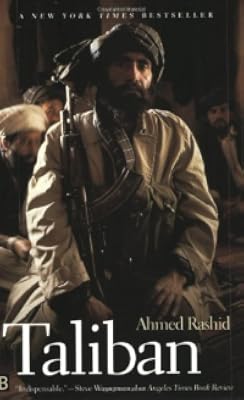
Taliban: Militant Islam, Oil and Fundamentalism in Central Asia
by Ahmed Rashid
On This Page
Description
The American bombing of terrorist bases in Afghanistan under the protection of the Islamic fundamentalist Taliban movement has brought the Taliban into sharp focus as the most radical and extreme Islamic movement in the world today. Little is known about the Taliban because of the deep secrecy that surrounds their political movement, their leaders and their aims._x000D__x000D_The geo-strategic implications of the Taliban are already creating severe instability in Russia, Iran and the five show more Central Asian republics where the Taliban have become a major player in the new Great Game, as Western cou show lessTags
Recommendations
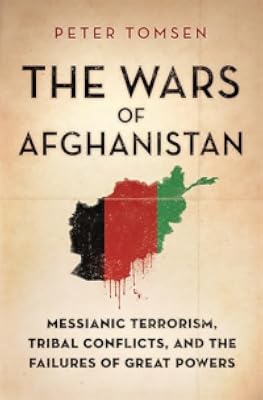
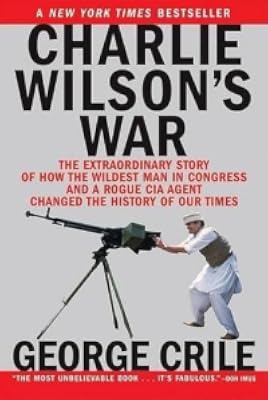
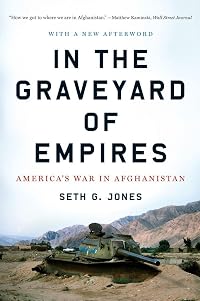
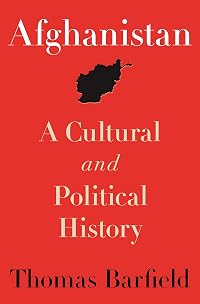
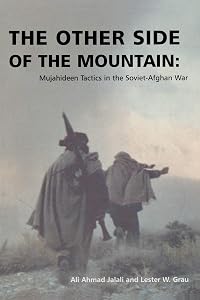
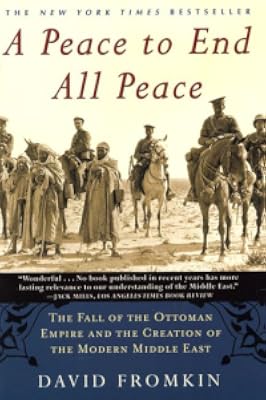
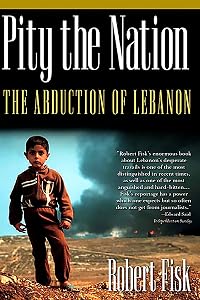
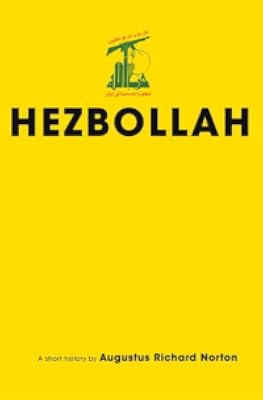
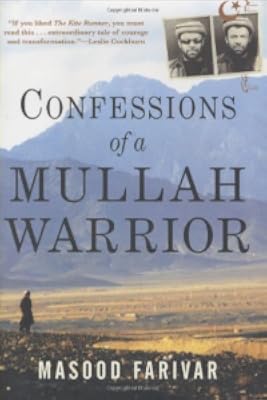
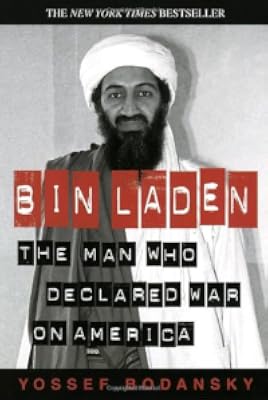
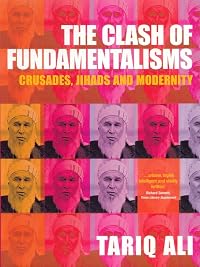
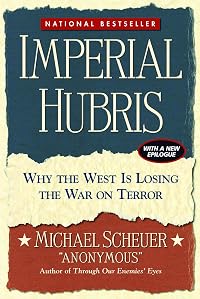
Member Recommendations
Member Reviews
A detailed look at the Taliban's origins, history, and policies up to 2000. (Note: This is a review of the first edition; the second edition adds an updated chapter on additional developments 2000–2009.)
The first section of the book covers the history of the movement and how the Taliban came to control most of Afghanistan's territory by 2000. The second section covers the movement's internal policies, including its interpretation of Islam, treatment of women, drug policy, and connections to Bin Laden. The last section focuses on the Taliban's relations with its regional neighbors and other countries with an interest in the region.
Overall I found this an interesting and very informative book. Some parts were a little dry, such as the show more two chapters describing international oil companies' efforts to build an oil pipeline through Afghanistan. Also, the index had a few errors and omissions, which was occasionally frustrating when trying to refer back to previous information about a given person or faction. But apart from these minor flaws, this is a fascinating, well-organized, and comprehensive treatment of its subject matter. show less
The first section of the book covers the history of the movement and how the Taliban came to control most of Afghanistan's territory by 2000. The second section covers the movement's internal policies, including its interpretation of Islam, treatment of women, drug policy, and connections to Bin Laden. The last section focuses on the Taliban's relations with its regional neighbors and other countries with an interest in the region.
Overall I found this an interesting and very informative book. Some parts were a little dry, such as the show more two chapters describing international oil companies' efforts to build an oil pipeline through Afghanistan. Also, the index had a few errors and omissions, which was occasionally frustrating when trying to refer back to previous information about a given person or faction. But apart from these minor flaws, this is a fascinating, well-organized, and comprehensive treatment of its subject matter. show less
Se ritenete che le informazioni che leggete sui giornali o sentite ai telegiornali sui talebani, l'Afghanistan e la regione circostante non siano sufficienti (e non lo sono), allora leggete questo libro. E' fatto bene, esauriente nella descrizione della nascita del movimento talebano, le cause che lo hanno favorito, guerre civili, tensioni sociali ed economiche, influenze sinistre di tutti i paesi confinanti, soprattutto il Pachistan. Poi la sottovalutazione, se non menefreghismo delle potenze occidentali del problema talebano fino ai noti disastri degli attacchi alle ambasciate USA in Africa e l'attacco alle torri gemelle. Fino ai giorni nostri, i sviluppi, il contagio talebano che sta colpendo i paesi contro asiatici e Pachistan show more facendo temere un futuro ancor più pessimista.
A cooredo del libro ci sono 3 appendici: una riguardante un esmpio di decreto talebano sulle donne e su altre questioni culturasli; una riguarda la struttura dell'allora governo talebano e l'ultima riguarda Il nuovo grande gioco, praticamente la corsa delle compagnie petrolifere occidentali per mettere le mani sul petrolio e gas della regione.
L'analisi di Ahmed Rashid arriva fino al 2009 quando il libro va alle stampe, pertanto non è ancora avvenuta l'uccisione di Osama Bin Laden, ma questo non toglie nulla all'attualità e all'autorevolezza del libro.
Ne consiglio vivamenta la lettura per non correre il rischio di parlare di cose che non si conoscono o di prendere per oro colato le tesi altrui. show less
A cooredo del libro ci sono 3 appendici: una riguardante un esmpio di decreto talebano sulle donne e su altre questioni culturasli; una riguarda la struttura dell'allora governo talebano e l'ultima riguarda Il nuovo grande gioco, praticamente la corsa delle compagnie petrolifere occidentali per mettere le mani sul petrolio e gas della regione.
L'analisi di Ahmed Rashid arriva fino al 2009 quando il libro va alle stampe, pertanto non è ancora avvenuta l'uccisione di Osama Bin Laden, ma questo non toglie nulla all'attualità e all'autorevolezza del libro.
Ne consiglio vivamenta la lettura per non correre il rischio di parlare di cose che non si conoscono o di prendere per oro colato le tesi altrui. show less
"Taliban: Militant Islam, Oil and Fundamentalism in Central Asia" by Ahmed Rashid is a very complex, very intricate history of Afghanistan's recent past. As a Pakistan journalist covering Central Asia, Rashid was a first hand witness to the rise of the Taliban in the early '90s. In foreign policy circles, he is known as one of the few true experts of the ethnic, religious, and political strife that has plagued Central Asia.
In this book, Rashid holds few punches when it comes to who deserves the blame for what has happened in Afghanistan and the broader region. Complicit agencies in the United States, Pakistan, Saudi Arabia, Iran, and the former Soviet Union take the brunt of the blame for arming various factions including the Taliban. show more Homegrown religious schools and ethnic rivalries also contributed to frequent disasters. When Texas oil companies brought Taliban leaders to Houston in order to fuel a rivalry with other international companies competing for pipeline contracts, things only got worse.
The author does not present any solutions to solve the crisis of Afghanistan perhaps because, as his history shows, outside involvement has only created more destruction in the area.
Rashid's history is very complete, but that also makes it very complicated. Although I believe he did his best to keep it simple, the constant flow of proper nouns made this book a little difficult to follow. show less
In this book, Rashid holds few punches when it comes to who deserves the blame for what has happened in Afghanistan and the broader region. Complicit agencies in the United States, Pakistan, Saudi Arabia, Iran, and the former Soviet Union take the brunt of the blame for arming various factions including the Taliban. show more Homegrown religious schools and ethnic rivalries also contributed to frequent disasters. When Texas oil companies brought Taliban leaders to Houston in order to fuel a rivalry with other international companies competing for pipeline contracts, things only got worse.
The author does not present any solutions to solve the crisis of Afghanistan perhaps because, as his history shows, outside involvement has only created more destruction in the area.
Rashid's history is very complete, but that also makes it very complicated. Although I believe he did his best to keep it simple, the constant flow of proper nouns made this book a little difficult to follow. show less
interesting and informative, a fire-hose of relevant background information as well as a solid overall feel for the region and the circumstances that allowed the Taliban to take root and polarize Afghanistan.
Is yr country invading Afghanistan? Who'll it be next mnth? What's the invasion flavor of the mnth?! Anyway, I decided to read this to try to educate myself about Afhgani politics around the time the US government decided to invade there. It's published by Yale University Press - wch immediately makes it suspect as ruling elite propaganda - but I still found it to be informative & even-handed anyway. Will fundamentalist religious assholes NEVER GO AWAY?! & by that, I mean the ones in Afghanistan AND the United States (etc) - in case that wasn't already obvious.
Informative, but at times I struggled to follow due to lack of familiarity with most of the people and places. Part 2, “Islam and the Taliban,” was the most informative for me simply because I know more about Islam than Afghanistan.
This book was recommended on the same World podcast as The Places in Between and I am glad I read them consecutively as they balanced well and each book helped me understand the other book a little better.
This book was recommended on the same World podcast as The Places in Between and I am glad I read them consecutively as they balanced well and each book helped me understand the other book a little better.
An excellent summary of the Taliban and the ethnic and sectarian struggle in Afghanistan. Rashid's analysis in the last chapter is insightful but pre-dates the coalition invasion. The supplement to the last chapter which lists the rules governing women issued by the Taliban following their conquest of Kabul is chillingly Orwellian.
Members
- Recently Added By
Published Reviews
Ahmed Rashid examines the rise of militant Islamic movements in the newly independent states of former Soviet Central Asia. The post-Soviet regimes of the region blame this phenomenon on outside support from the Taliban, Pakistan, Saudi Arabia and elsewhere in the Muslim world. Rashid disagrees, arguing strongly that the repressive nature of these regimes, combined with their inability - even show more unwillingness - to foster economic development, has provided a breeding ground for militant Islamic movements. It is an argument the regimes and their supporters, including the United States, would do well to heed. show less
added by mnkatz
Lists

The Emergence of the Modern Middle East
289 works; 13 members

LtGen James Mattis' Reading List
58 works; 2 members
Author Information

15+ Works 2,921 Members
Pakistani journalist and bestselling author Ahmed Rashid was born in Rawalpindi in 1948. He was educated at Malvern College in England, Government College in Lahore, and Fitzwilliam College in Cambridge. He works as a correspondent for the Far Eastern Economic Review and the Daily Telegraph and writes for the Wall Street Journal, The Nation, and show more academic journals. His titles include Taliban: Militant Islam, Oil and Fundamentalism in Central Asia, Jihad: The Rise of Militant Islam in Central Asia, and Descent into Chaos. (Bowker Author Biography) show less
Some Editions
Awards and Honors
Series
Belongs to Publisher Series
Common Knowledge
- Original title
- Taliban. Islam, Oil and the New Great Game in Central Asia; Taliban. The Power of Militant Islam in Afghanistan and Beyond
- Original publication date
- 2000
- Important places
- Afghanistan
- Important events
- Soviet-Afghan War (1979 ∙ 1989); Afghan Civil War
- Dedication
- For my mother, what I have seen she taught me to see. I hope I have honoured it. And for Angeles.
Classifications
Statistics
- Members
- 1,611
- Popularity
- 14,134
- Reviews
- 19
- Rating
- (3.92)
- Languages
- 12 — Catalan, Chinese, Danish, Dutch, English, French, German, Hindi, Italian, Portuguese, Spanish, Swedish
- Media
- Paper, Audiobook, Ebook
- ISBNs
- 53
- ASINs
- 13