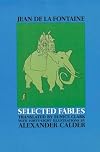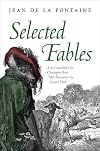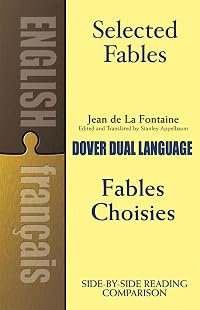
Selected Fables of Jean de la Fontaine with 48 illustrations
by Jean de La Fontaine, Alexander Calder (Illustrator), Marianne Moore
On This Page
Description
La Fontaine's verse fables turned the traditional folktales derived from Aesop and a range of Oriental sources into some of the greatest, and best-loved, poetic works in French. His versions of stories such as The Hare and the Tortoise and The Wolf and the Lamb are witty and sophisticated, satirizing human nature in miniature dramas in which the outcome is always unpredictable. The behavior of both animals and humans is usually centered on deception and cooperation (or the lack of it), as show more they cheat and fight each other, arguing about life and death, property and food, in an astonishing variety of narrative styles. The fables have long been popular with all ages, though their ironic take on contemporary society in French aristocratic circles is best appreciated by adults. This new translation by Christopher Betts matches the original in inventiveness and subtlety. It includes half of the fables first published in twelve books between 1668 and 1693, across the full range of subjects and themes. The fables are illustrated with a selection of Gustave Dore's majestic engravings, and an introduction offers insights into La Fontaine's life and literary artistry. show lessTags
Recommendations























Member Reviews
This review applies to the Viking edition of selected fables, translated by James Michie with an introduction by Geoffrey Grigson and the illustrations of J. J. Grandville (from an 1842 Paris edition). Grandville's illustrations may well be the best part of the book. La Fontaine's verse retellings of ancient fables (mostly of Aesop and Phaedrus) may lose something in the translation, but mostly didn't make for particularly pleasant reading: the verse comes through as somewhat stilted. Nonetheless, it was neat to see the versions of these stories that La Fontaine's contemporary readers would have known and learned.
Jean de la Fontaine is a must-read for anyone interested in folktales and fables throughout history.
The 17th-century poet took various tales from Aesop, Greek myth, and various other sources and set them to verse. Here, they appear in English translation. While the presentation of the stories and their social commentary is witty; I didn't find the 'poetry' of the language to be that engaging - the rhyme could be distracting, and the phrasing was often clunky. I don't know if this has to do with the original or the translation; I suspect a combination of both.
For French poems in translation; I tend to prefer a side-by-side presentation - even if one understands little of the original language, one can read to get an idea of the sound show more and rhythm of the original. However, I'm sure the originals are available freely online, for those motivated to look them up.
The selected fables presented here (apparently, the book includes about half of de la Fontaine's fabulist output) are prefaced by a very nice academic essay on the author, which really helps place the writing in context. There are also liberal endnotes mentioning the source (if known), and references found in each fable. I might've preferred if the notes relating to each story were found adjacent to the relevant section, but overall, this was fine.
A recommended volume.
I received a copy of this title through NetGalley. Thanks to NetGalley and Oxford University Press. show less
The 17th-century poet took various tales from Aesop, Greek myth, and various other sources and set them to verse. Here, they appear in English translation. While the presentation of the stories and their social commentary is witty; I didn't find the 'poetry' of the language to be that engaging - the rhyme could be distracting, and the phrasing was often clunky. I don't know if this has to do with the original or the translation; I suspect a combination of both.
For French poems in translation; I tend to prefer a side-by-side presentation - even if one understands little of the original language, one can read to get an idea of the sound show more and rhythm of the original. However, I'm sure the originals are available freely online, for those motivated to look them up.
The selected fables presented here (apparently, the book includes about half of de la Fontaine's fabulist output) are prefaced by a very nice academic essay on the author, which really helps place the writing in context. There are also liberal endnotes mentioning the source (if known), and references found in each fable. I might've preferred if the notes relating to each story were found adjacent to the relevant section, but overall, this was fine.
A recommended volume.
I received a copy of this title through NetGalley. Thanks to NetGalley and Oxford University Press. show less
I was not impressed with my first reading of Fontaine’s fables. The rhyming scheme seems to numb my brain and have a glossing-over effect on my eyes. I have heard rave reviews about this translation (by Eunice Clark), but mostly among French students who have the English/French parallel edition. I cannot help but wonder if these verses were better in French and the trouble lies in the translation. At any rate, Fontaine retells classic fables, riddling them with rhymes and occasionally an appended moral. The Hen That Laid the Golden Egg, The Little Carp and the Angler, The Stag and the Vine, and The Lion in Love are a few examples of classics retold. Unfortunately, this version includes no introductory material or guide for the reader show more as to which tales are adapted and which are originals. As for the illustrations, I think I prefer Alexander Calder’s work in sculpture. The animal drawings are entertaining, but I would prefer a few more loincloths and tank tops for the humans featured. To each his own, I suppose. show less
paperback
Members
- Recently Added By
Author Information

637+ Works 4,975 Members


85+ Works 2,849 Members
Born in St. Louis, the "first lady of American poetry," Marianne Moore, graduated from Bryn Mawr College in 1909. In 1918 she moved to New York City with her mother, remaining there for the rest of her life. She became a well-known character in her Brooklyn Heights neighborhood, easily recognizable in a large black hat and rather eccentric style. show more In 1921 a few of her friends pirated her work and published it under the title Poems. On her seventy-fifth birthday, November 15, 1962, she was honored by the National Institute of Arts and Letters, and in a special interview for the N.Y. Times, she spoke of her feelings concerning the treatment of poetry: "I'm very doubtful about scholasticizing poetry," she said. "I feel very strongly that poetry should not be an assignment but a joy." Five years later she said: "I wonder that I can bear myself to be in a world where they don't outlaw war." In 1967 Moore received both the MacDowell Medal and a Gold Medal. Mayor John Lindsay of New York City hailed her as "truly the poet laureate of New York City." The famed Rosenbach Museum in Philadelphia has a collection devoted to her work and a detailed replica of a room in her Brooklyn home. Moore brought to her work a prodigious knowledge and passionate interest in many diverse fields, including the arts, natural history, and public affairs. Her use of the images and language of these fields in her poetry enabled her to offset traditional poetic tones with the cadences of prose rhetoric and everyday speech. This talent, coupled with her precision and intricate metrics, make her one of the leading modernist poets. (Bowker Author Biography) show less
All Editions
Some Editions
Series
Belongs to Publisher Series
Work Relationships
Is contained in
Common Knowledge
- Canonical title
- Selected Fables; Selected Fables of Jean de la Fontaine with 48 illustrations
- Original publication date
- 1668; 1676; 1693
Classifications
Statistics
- Members
- 555
- Popularity
- 53,559
- Reviews
- 7
- Rating
- (3.84)
- Languages
- 5 — English, Finnish, French, German, Spanish
- Media
- Paper, Audiobook, Ebook
- ISBNs
- 48
- UPCs
- 3
- ASINs
- 7