
Marianne Moore (1887–1972)
Author of Complete Poems
About the Author
Born in St. Louis, the "first lady of American poetry," Marianne Moore, graduated from Bryn Mawr College in 1909. In 1918 she moved to New York City with her mother, remaining there for the rest of her life. She became a well-known character in her Brooklyn Heights neighborhood, easily recognizable show more in a large black hat and rather eccentric style. In 1921 a few of her friends pirated her work and published it under the title Poems. On her seventy-fifth birthday, November 15, 1962, she was honored by the National Institute of Arts and Letters, and in a special interview for the N.Y. Times, she spoke of her feelings concerning the treatment of poetry: "I'm very doubtful about scholasticizing poetry," she said. "I feel very strongly that poetry should not be an assignment but a joy." Five years later she said: "I wonder that I can bear myself to be in a world where they don't outlaw war." In 1967 Moore received both the MacDowell Medal and a Gold Medal. Mayor John Lindsay of New York City hailed her as "truly the poet laureate of New York City." The famed Rosenbach Museum in Philadelphia has a collection devoted to her work and a detailed replica of a room in her Brooklyn home. Moore brought to her work a prodigious knowledge and passionate interest in many diverse fields, including the arts, natural history, and public affairs. Her use of the images and language of these fields in her poetry enabled her to offset traditional poetic tones with the cadences of prose rhetoric and everyday speech. This talent, coupled with her precision and intricate metrics, make her one of the leading modernist poets. (Bowker Author Biography) show less
Image credit: Marianne Moore (1887-1972)
Photographed by George Platt Lynes, circa 1935
(Library of Congress Prints and Photographs Division,
Reproduction Number: LC-USZ62-101955)
Photographed by George Platt Lynes, circa 1935
(Library of Congress Prints and Photographs Division,
Reproduction Number: LC-USZ62-101955)
Works by Marianne Moore
The Arctic ox; [poems] 5 copies
The Accented Syllable 3 copies
The absentee: A comedy in four acts 3 copies
Poetry [poem] 3 copies
Omaggio a Marianne Moore 2 copies
The seaman turned farmer 1 copy
The French grandmother 1 copy
Poetry and Criticism 1 copy
“In Distrust of Merits” 1 copy
Vtg The Complete Poems of Marianne Moore / First Edition 1967 [Hardcover] Marianne Moore (1967) 1 copy
℗2: ℗Come una fortezza 1 copy
℗1: Il ℗basilisco piumato 1 copy
The Complete Poems of Marianne Moore: Definitive Edition, with the Author’s Final Revisions. (1981) 1 copy
A talisman 1 copy
Tipoo's tiger 1 copy
I May, I Might, I Must 1 copy
The Student 1 copy
W. S. Landor 1 copy
The Complete Poems of Marianne Moore with Selected Translations from The Fables of La Fontaine (1967) 1 copy
Kein Schwan so schön 1 copy
Riverside poetry 3 — Editor — 1 copy
Complete Prose 1 copy
The Fish [poem] 1 copy
The Monkeys [poem] 1 copy
Marriage 1 copy
Dress and Kindred Subjects 1 copy
1: Il basilisco piumato 1 copy
Associated Works
The Making of a Poem: A Norton Anthology of Poetic Forms (2000) — Contributor — 1,475 copies, 9 reviews
The Best Poems of the English Language: From Chaucer Through Robert Frost (2004) — Contributor — 1,250 copies, 3 reviews
Literature: An Introduction to Fiction, Poetry, and Drama (1995) — Contributor, some editions — 1,017 copies, 7 reviews
World Poetry: An Anthology of Verse from Antiquity to Our Time (1998) — Contributor — 499 copies, 2 reviews
American Poetry: The Twentieth Century, Volume One: Henry Adams to Dorothy Parker (2000) — Contributor — 481 copies, 1 review
No More Masks: An Anthology of Twentieth-Century American Women Poets (1993) — Contributor, some editions — 226 copies, 3 reviews
From Totems to Hip-Hop: A Multicultural Anthology of Poetry Across the Americas 1900-2002 (2002) — Contributor — 181 copies
The Lincoln Anthology: Great Writers on His Life and Legacy from 1860 to Now (2008) — Contributor — 172 copies, 1 review
The Norton Anthology of American Literature, Volume 2: 1865 to Present (1979) — Contributor, some editions — 136 copies
The Sophisticated Cat: A Gathering of Stories, Poems, and Miscellaneous Writings About Cats (1992) — Contributor — 112 copies, 1 review
Writing New York: A Literary Anthology (Expanded 10th-Anniversary Edition) (2008) — Contributor — 101 copies, 1 review
The Poet's Work: 29 Poets on the Origins and Practice of Their Art (1979) — Contributor — 96 copies, 1 review
The Heath Anthology of American Literature, Concise Edition (2003) — Contributor — 73 copies, 1 review
Out of the Best Books: An Anthology of Literature, Vol. 1: The Individual and Human Values (1964) — Contributor — 40 copies
Out of the Best Books: An Anthology of Literature, Vol. 4: The World Around Us (1968) — Contributor — 28 copies
William Carlos Williams: A Collection of Critical Essays (1966) — Contributor, some editions — 24 copies
Poetry in crystal; interpretations in crystal of thirty-one new poems by contemporary American poets (1963) — Contributor — 21 copies
The Serpent and the Fire: Poetries of the Americas from Origins to Present (2024) — Contributor — 18 copies
Gender in Modernism: New Geographies, Complex Intersections (2007) — Contributor — 12 copies, 1 review
These Simple Things: Some Appreciations of the Small Joys in Daily Life (1965) — Contributor — 7 copies
The Edge of the Image: Marianne Moore, William Carlos Williams, and Some Other Poets (1968) — Contributor — 3 copies
Direction, Volume 1, Number 2 (Jan-March 1935) — Contributor — 1 copy
Tagged
Common Knowledge
- Birthdate
- 1887-11-15
- Date of death
- 1972-02-05
- Gender
- female
- Education
- Bryn Mawr College
- Occupations
- poet
writer
teacher - Organizations
- Carlisle Indian School
New York Public Library
Dial - Awards and honors
- Helen Haire Levinson Prize (1933)
Fellow, American Academy of Arts and Sciences (1962) - Short biography
- Marianne Moore was born in Kirkwood, Missouri, near St. Louis, in the manse of the Presbyterian church where her maternal grandfather, John Riddle Warner, served as pastor. Her father, John Milton Moore, suffered a psychotic episode before she was born, and her parents separated at that time; Moore never met him. She and her elder brother were raised by their mother, Mary Warner Moore in Carlisle, Pennsylvania. In 1909, she earned a BA in biology from Bryn Mawr College, and her early poems were first published in the college’s literary magazines. After graduation, Moore studied at Carlisle Commercial College and taught at the U.S. Indian School there. Moore and her mother, who were devoted to each other, moved to New York City in 1918 and Moore began working at the New York Public Library in 1921. Her first book Poems was published in London in 1921. From 1925 to 1929, she was the editor of the influential literary magazine
The Dial, a role that expanded her circle of literary acquaintances and introduced her work to a more international audience. She was particularly fond of animals and much of her imagery was drawn from the natural world. Her Collected Poems (1951) won both the Pulitzer Prize in poetry and the National Book Award, and in 1953 she was awarded the Bollingen Prize. Her prose works included Predilections (1955), a volume of literary criticism, and Idiosyncrasy and Technique: Two Lectures (1958). Her many honors and awards included the Poetry Society of America's Gold Medal for Distinguished Development and the National Medal for Literature. - Nationality
- USA
- Birthplace
- Kirkwood, Missouri, USA
- Places of residence
- New York, New York, USA
- Place of death
- New York, New York, USA
- Associated Place (for map)
- New York, USA
Members
Discussions
Marianne Moore in Legacy Libraries (March 2018)
Reviews

I love Marianne Moore. Her poetry is astonishing. The prose sections contain so many outdated references and phrases I had to look a lot up but it wasn’t so egregious that I couldn’t enjoy the works. The prose about the made up pet Raven, Pluto, was excellent. Very entertaining and real for something so far from my experiences and time. My favorite poem from this selection might be “To a Giraffe” or “Baseball and Writing”.
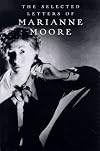
Strangely disappointing. The flap text quotes T.S. Eliot as having written, "One of the books which obviously must in the fullness of time be published [...] will be the Letters of Marianne Moore." Since this volume includes only a few, very short letters from her to him, it's almost impossible to know what he was thinking when he wrote that assessment. I would have preferred a volume combining her prose with a handful of the best letters here.

This review applies to the Viking edition of selected fables, translated by James Michie with an introduction by Geoffrey Grigson and the illustrations of J. J. Grandville (from an 1842 Paris edition). Grandville's illustrations may well be the best part of the book. La Fontaine's verse retellings of ancient fables (mostly of Aesop and Phaedrus) may lose something in the translation, but mostly didn't make for particularly pleasant reading: the verse comes through as somewhat stilted. show more Nonetheless, it was neat to see the versions of these stories that La Fontaine's contemporary readers would have known and learned. show less

Marianne Moore has a complex bibliography, as she revised some poems over the years; as result, the various "Complete Poems," especially that of 1967 (and its later republications), are not as complete as one would wish, because it is essentially impossible to pin down a specific version of a revised poem as "the definitive version". "The Poems of Marianne Moore," and, "Becoming Marianne Moore," are the best beginnings.
None of that detracts from the fact that she is delightful, with that show more genuine, infectious childlike sensibility essential to the "wide-eyedness" of the artist.
Have a dictionary nearby ("pangolin," as defined in Merriam-Webster: "any of several Asiatic and African edentate mammals . . . having the body covered with large imbricated horny scales"), and you'll have fun. show less
None of that detracts from the fact that she is delightful, with that show more genuine, infectious childlike sensibility essential to the "wide-eyedness" of the artist.
Have a dictionary nearby ("pangolin," as defined in Merriam-Webster: "any of several Asiatic and African edentate mammals . . . having the body covered with large imbricated horny scales"), and you'll have fun. show less
Lists
Awards


You May Also Like


Associated Authors
Statistics
- Works
- 85
- Also by
- 57
- Members
- 2,846
- Popularity
- #9,016
- Rating
- 3.9
- Reviews
- 22
- ISBNs
- 110
- Languages
- 8
- Favorited
- 19
