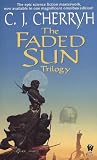
The Faded Sun Trilogy: Kesrith, Shon'jir, and Kutath
by C. J. Cherryh
The Faded Sun (Collections and Selections — Omnibus 01-03), Alliance-Union Universe (Collections and Selections — Omnibus 19-21)
On This Page
Description
All three books in C. J. Cherryh's epic The Faded Sun trilogy, Kesrith, Shon'jir, and Kutath, collected in one volume. They were the mri-tall, secretive, bound by honor and the rigid dictates of their society. For eons this golden-skinned, golden-eyed race had provided the universe mercenary soldiers of almost unimaginable ability. But now the mri have faced an enemy unlike any other-an enemy whose only way of war is widespread destruction. These "humans" are mass fighters, creatures of the show more herb, and the mri have been slaughtered like animals. Now, in the aftermath of war, the mri face extinction. It will be up to three individuals to save whatever remains of this devastated race: a warrior-one of the last survivors of his kind; a priestess of this honorable people; and a lone human-a man sworn to aid the enemy of his own kind. Can they retrace the galaxy-wide path of this nomadic race back through millennia to reclaim the ancient world that first gave them life? show lessTags
Recommendations








Member Recommendations

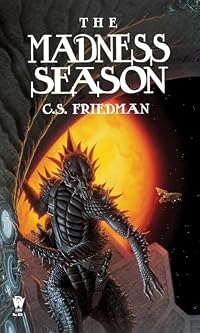
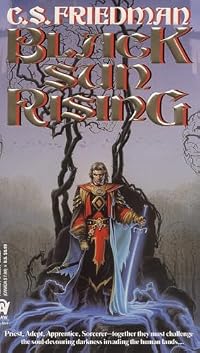
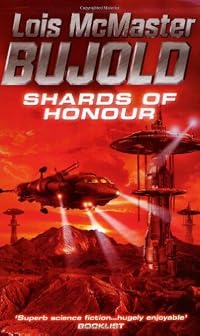
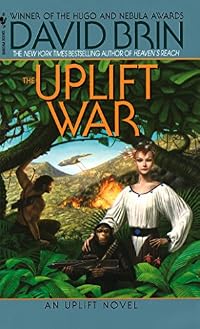
reading_fox Same basic sort of premise - SciFi set on desert worlds inspires the rise of a galactic empire, but very different outcomes!
51
Member Reviews
C. J. Cherryh is one of the best world-builders in science fiction. Her expanded Alliance-Union map is big enough for interstellar cultures to get lost in. The cultures of the Chanur novels, the Foreigner series, and The Faded Sun trilogy never meet, but they exist in the galaxy that also holds the Sol system, Cyteen, Pel, and the Hinder stars.
The timeline of the A-U universe is problematic. According to Jane Fancher, C. J. Cherryh’s wife and occasional co-author, The Faded Sun Trilogy (first published 1978-79) is just barely part of the Alliance-Union universe: “Way down the timeline, loosely related, if you squint.” She puts it somewhere between Brothers of Earth and Gates of Ivrel, both centuries after the Company Wars and both show more published in 1976.
The Faded Sun is early enough to be considered an apprentice work, but many of the elements that would sustain Cherryh’s 50-year career are already in place. We have armed spacecraft, most of whose human crews need sedation when traveling faster than light. There are multiple sapient cultures, many of which are close to human. Convergent evolution seems to be a thing. Cherryh’s deft third-person narration takes us from mind to mind so that we see everyone from multiple points of view. This style makes diplomacy and romance into chess games of motives and strategies. One of Cherryh’s favorite words is “reckon.” We know what everyone reckons about everyone else, but they are not always right.
Like the Foreigner series, The Faded Sun surrounds the human protagonist with alien cultures he must understand in order to survive. The Regul are ruthless traders with eidetic memories. They are long-lived and use age and size to determine status. The Mri are a matrilineal mercenary warrior culture. To join them, Duncan, the human protagonist, must go so totally native that he almost forgets his human origins.
The first novel in the trilogy was nominated for a Hugo, but the omnibus edition is the way to read it. It is one big novel divided into three parts. The audiobook narrated by Paul Woodson is worth a listen. show less
The timeline of the A-U universe is problematic. According to Jane Fancher, C. J. Cherryh’s wife and occasional co-author, The Faded Sun Trilogy (first published 1978-79) is just barely part of the Alliance-Union universe: “Way down the timeline, loosely related, if you squint.” She puts it somewhere between Brothers of Earth and Gates of Ivrel, both centuries after the Company Wars and both show more published in 1976.
The Faded Sun is early enough to be considered an apprentice work, but many of the elements that would sustain Cherryh’s 50-year career are already in place. We have armed spacecraft, most of whose human crews need sedation when traveling faster than light. There are multiple sapient cultures, many of which are close to human. Convergent evolution seems to be a thing. Cherryh’s deft third-person narration takes us from mind to mind so that we see everyone from multiple points of view. This style makes diplomacy and romance into chess games of motives and strategies. One of Cherryh’s favorite words is “reckon.” We know what everyone reckons about everyone else, but they are not always right.
Like the Foreigner series, The Faded Sun surrounds the human protagonist with alien cultures he must understand in order to survive. The Regul are ruthless traders with eidetic memories. They are long-lived and use age and size to determine status. The Mri are a matrilineal mercenary warrior culture. To join them, Duncan, the human protagonist, must go so totally native that he almost forgets his human origins.
The first novel in the trilogy was nominated for a Hugo, but the omnibus edition is the way to read it. It is one big novel divided into three parts. The audiobook narrated by Paul Woodson is worth a listen. show less
Cherryh's world-building in this trilogy is amazing, and the overarching plot of a dying civilization attempting to rebuild itself by finding its near-mythical roots -- is certainly compelling enough to carry the 700+ pages of the narrative. But … the pace is glacial, and huge swaths of the novel are so understated as to be nearly opaque.
For 2000 years (okay, 2002, according to the extremely punctilious reguls) nomadic mri mercenary soldiers have fought regul's many interplanetary wars. But this latest one, with human foes, is winding down after 40 years and a fragile peace is being imposed on the planet Kesrith. As power is being cautiously transferred, a blatant betrayal results in the death of nearly all the mri. One human tactical show more specialist, pressed into diplomatic duty, one mri fighter, and one young woman, acolyte of the mri spiritual leader pressed into the succession by the death of her predecessor, are all that stand between mri and extinction.
Thus the saga is set up, replete with diplomatic maneuvering, backstabbing both figurative and literal, villains and heroes and some who are a frustrating blend of both, seeking to use the most sacred object of mri culture to guide them back through millennia of star-wandering to find their species' place of origin.
Cherryh very wisely refrains from making the human character into the Great-White-Savior-of-the-Primitive-Aliens. Sten Duncan begins as a confused captive, progresses to a reluctant liaison, and ends up as a vital link -- but never the driving force -- of the mri journey and to the ultimate battle facing the voyagers when they reach their destination only to find a dead planet defended by automatons from a vanished race.
Or maybe not...
For the s-f reader with stamina, who is willing to infer motivations and actions from customs and worldviews only hinted at, this is meaty stuff indeed. For the casual reader of the genre, it may be heavy going. show less
For 2000 years (okay, 2002, according to the extremely punctilious reguls) nomadic mri mercenary soldiers have fought regul's many interplanetary wars. But this latest one, with human foes, is winding down after 40 years and a fragile peace is being imposed on the planet Kesrith. As power is being cautiously transferred, a blatant betrayal results in the death of nearly all the mri. One human tactical show more specialist, pressed into diplomatic duty, one mri fighter, and one young woman, acolyte of the mri spiritual leader pressed into the succession by the death of her predecessor, are all that stand between mri and extinction.
Thus the saga is set up, replete with diplomatic maneuvering, backstabbing both figurative and literal, villains and heroes and some who are a frustrating blend of both, seeking to use the most sacred object of mri culture to guide them back through millennia of star-wandering to find their species' place of origin.
Cherryh very wisely refrains from making the human character into the Great-White-Savior-of-the-Primitive-Aliens. Sten Duncan begins as a confused captive, progresses to a reluctant liaison, and ends up as a vital link -- but never the driving force -- of the mri journey and to the ultimate battle facing the voyagers when they reach their destination only to find a dead planet defended by automatons from a vanished race.
Or maybe not...
For the s-f reader with stamina, who is willing to infer motivations and actions from customs and worldviews only hinted at, this is meaty stuff indeed. For the casual reader of the genre, it may be heavy going. show less
While I have read some fantasy by C.J. Cherryh, this trilogy (Kesrith, Shon'jir, and Kutath) was the first science fiction I've read. Wow! I was completely engaged while reading and thoroughly satisfied when I finished. What more can you ask?
The three species that dominate the story (mri, regul, and human) are each carefully drawn and distinct. The non-humans are not human-like in different bodies--they are definitely alien. And yet we are drawn into their stories as completely as we are into the humans. And the dusei--so important and yet, so mysterious. The mri learn more of their long-time companions even as we do. Only the elee were not as fully realized and yet, for the purposes of the story, we knew enough.
There was no time in show more this story when I felt I knew what was going to happen next, and yet, as the plot unfolded, it made perfect sense.
A solid 10! show less
The three species that dominate the story (mri, regul, and human) are each carefully drawn and distinct. The non-humans are not human-like in different bodies--they are definitely alien. And yet we are drawn into their stories as completely as we are into the humans. And the dusei--so important and yet, so mysterious. The mri learn more of their long-time companions even as we do. Only the elee were not as fully realized and yet, for the purposes of the story, we knew enough.
There was no time in show more this story when I felt I knew what was going to happen next, and yet, as the plot unfolded, it made perfect sense.
A solid 10! show less
These books were written in the late 1970s. By a female author. That, in itself, would make this an excellent purchase. It is a fantastically written trilogy. The characters/races are distinct and individual and not "let's make this alien just like human" There is no overt "feminism" and yet the gender of the characters is fully irrelevant (and is actually explicitly de-centralized by the very nature of one of the alien species). There is no romance, no sob-story, no whiny "look what "we" did to that"....
I would put Cherryh up against any of the "old-school" sci-fi writers in story quality and the ability to connect to readers without a) weapon porn b) sexualizing everything c) glorifying humankind or d) trying to make up reasons to show more justify bad behaviors.
Books 1 and 2 were fully engaging. I will admit that book 3 had a bit of a lull around the 2/3 point, but it picked up very well for the last section. The story came to a satisfying close, and it was most enjoyable that in the last section we didn't know for sure how the ending would satisfy our urges for justice to be served.
t might take a bit at the outset to get used to the vocabulary, but it will settle in. show less
I would put Cherryh up against any of the "old-school" sci-fi writers in story quality and the ability to connect to readers without a) weapon porn b) sexualizing everything c) glorifying humankind or d) trying to make up reasons to show more justify bad behaviors.
Books 1 and 2 were fully engaging. I will admit that book 3 had a bit of a lull around the 2/3 point, but it picked up very well for the last section. The story came to a satisfying close, and it was most enjoyable that in the last section we didn't know for sure how the ending would satisfy our urges for justice to be served.
t might take a bit at the outset to get used to the vocabulary, but it will settle in. show less
3.75 stars. I’m exploring some of Cherryh’s earlier catalog and found this late 70s series to feel youthful but still well observed and engrossing. The themes central to her work are here - alienation, the uneasy meshing of foreign conceptual systems, finding common ground and realizing when commonality is impossible, and above all the process of assimilation to the ways of “others” or more accurately, naturalization and the realization that they never were quite so other as one might have considered - or ‘other’ at all; that, rather, one may find one’s home with them - that one belongs.
I currently re-read this book, and it keeps its place as my favorite science fiction novel of all time. A few of the things I particularly like about it: First, the characters. Cherryh taks a good deal of time developing her characters to the point that you actually CARE about them. Many authors (sci fi and otherwise) are too concerned with the plot to let the reader get to know the characters, and so when it comes down to plot crunch-time, nobody really cares what happens. Cherryh is very much the opposite. You care what happens to Niun and Duncan, you feel their emotions, you fear, cry, love, and laugh with them because Cherryh takes the time to let you into their hearts and minds. The friendship between Niun and Duncan feels so very show more real, because we see from the point of view of both, and understand how their minds slowly move together towards that point. Second, the emphasis on the alien cultures. Unlike in Star Trek, where all the alien cultures are just humans with a little body paint, the mri and the regul both are completely alien. While the mri at least are vaguely humanoid, both are very alien in their thought-processes, thinking in ways that humans find difficult or impossible to follow. Cherryh does a brilliant job in this book of describing and letting the reader into the cultures of both the mri and the regul. Fascinating! Three: The fact that the book is not resolved by Niun discovering he would be better off human, and assimilating. I've read so many books where the alien character is assimilated by the human character, with the feeling that human culture is better anyway, so of course it will win out. This book is the opposite, and runs in the face of that xenophobic cultural bigotry. Duncan becomes mri. Stavros is well on his way to becoming regul. I love the idea from this book that cultural identity is not just skin deep, but comes with a certain thought process and behavioral patterns - the fact that Duncan is mri is recognized both by the mri themselves, and by the regul - it is only the humans, set in their shallow ways, who refuse to see this change.
In all, this is my favorite book in the science fiction genre. show less
In all, this is my favorite book in the science fiction genre. show less
I usually have an interesting or poignant or relevant quote from a book at the beginning of my review. The fact that I don't have one here doesn't mean that there wasn't anything interesting or poignant or relevant to quote from this book, but rather that I was too engrossed in the reading of it to be paying such close attention to individual phrases and passages.
The three races of humanity, mri, and regul have been warring over intergalactic property for forty years. A negotiated treaty between the humans and the regul have brought a supposed end to that war, but mri remain outsiders to this agreement and a mystery to both of the other races. The Faded Sun trilogy tells the story of the mri race's struggle to survive in a universe that show more seems intent on wiping them out.
I haven't read a lot of Cherryh, nor I have a read her in a long while. From what I had remembered of earlier encounters with her work, I thought her stuff was ok, sometimes insightful, sometimes just entertaining, but I had never really felt like "I LOVE this author." This book changed that for me. Cherryh does a brilliant job of portraying not one, but two alien psychologies and depicting how three different races might navigate the intricacies of inter-species relations. The mri are difficult to understand, but as a reader I couldn't help feeling very deeply for them and respecting their worldview. It is very strange to find yourself aligning against humanity in a conflict of human and alien interests. There's a level of insight here that I think is rare in science-fiction writers, but which should be treasured when you can find it.
I thought the first and third books of the trilogy were far more enjoyable than the second - it drags a good bit, although I still wasn't able to put the book down. What you get at the end of the story is a stunning realization of what was wanted, and why it had been withheld for so long. I thought the outcome was beautiful, and now I find myself inclined to read some more of this author's works. show less
The three races of humanity, mri, and regul have been warring over intergalactic property for forty years. A negotiated treaty between the humans and the regul have brought a supposed end to that war, but mri remain outsiders to this agreement and a mystery to both of the other races. The Faded Sun trilogy tells the story of the mri race's struggle to survive in a universe that show more seems intent on wiping them out.
I haven't read a lot of Cherryh, nor I have a read her in a long while. From what I had remembered of earlier encounters with her work, I thought her stuff was ok, sometimes insightful, sometimes just entertaining, but I had never really felt like "I LOVE this author." This book changed that for me. Cherryh does a brilliant job of portraying not one, but two alien psychologies and depicting how three different races might navigate the intricacies of inter-species relations. The mri are difficult to understand, but as a reader I couldn't help feeling very deeply for them and respecting their worldview. It is very strange to find yourself aligning against humanity in a conflict of human and alien interests. There's a level of insight here that I think is rare in science-fiction writers, but which should be treasured when you can find it.
I thought the first and third books of the trilogy were far more enjoyable than the second - it drags a good bit, although I still wasn't able to put the book down. What you get at the end of the story is a stunning realization of what was wanted, and why it had been withheld for so long. I thought the outcome was beautiful, and now I find myself inclined to read some more of this author's works. show less
Members
- Recently Added By
Lists

Best Science Fiction Novels
816 works; 430 members

Favorite Science Fiction by Women Authors
737 works; 202 members
Best Books With Aliens
67 works; 10 members
Books Read in 2018
4,360 works; 110 members
Talk Discussions
Past Discussions
Found: SCI FI Novel Title Help in Name that Book (August 2021)
Author Information

259+ Works 74,540 Members
A multiple award-winning author of more than thirty novels, C. J. Cherryh received her B.A. in Latin from the University of Oklahoma, and then went on to earn a M.A. in Classics from Johns Hopkins University. Cherryh's novels, including Tripoint, Cyteen, and The Pride of Chanur, are famous for their knife-edge suspense and complex, realistic show more characters. Cherryh won the John W. Campbell Award for Best New Writer in 1977. She was also awarded the Hugo Award for her short story Cassandra in 1979, and the novels Downbelow Station in 1982 and Cyteen in 1989. (Bowker Author Biography) show less
Some Editions
Series

The Faded Sun
3 works (Collections and Selections — Omnibus 01-03)

Alliance-Union Universe
39 works (Collections and Selections — Omnibus 19-21)
Belongs to Publisher Series
DAW Book Collectors (1143)
Work Relationships
Is contained in
Contains
Common Knowledge
- Original publication date
- 1987-04; 1978-03 (Kesrith) (Kesrith); 1978-10 (Shon'jir) (Shon'jir); 1979-10 (Kutath) (Kutath)
- People/Characters
- Intel (she'pan of Edun Kesrithun); Melein s'Intel Zain-Abrin (she'pan); Niun s'Intel Zain-Abrin (kel'anth); Medai s'Intel Sov-Nelan (kel'en of Edun Kesrithun); Sten Duncan (kel'en); Hlil s'Sochil (kel'en) (show all 16); Melein s'Intel Zain-Abrin; Ras s'Sochil Kov-Nelan (kel'e'en); Boaz "Boz" (xenologist); James Galey (Lieutenant Commander); Koch (Admiral); Emil Luiz; Suth Horag-gi (regul); Nagn Align-ni (regul); Rhian s'Tafa Mar-Eddin (kel'anth of the hao'nath); George Stavros
- Important places
- Kesrith (planet); An-ehon, Kutath; Flower (probe ship); Kutath (planet); Saber (warship); Shirug (regul ship) (show all 8); Ele'et, Kutath; Edun Kesrithun, Kesrith
- First words
- Wind-child, sun-child, what is Kath?
Child-bearers, life-bringers, that is Kath.
It was a game, shon'ai, the passing-game, Kel-style, in the dim round hall of the Kel, the middle tower of the House--black-rob... (show all)ed men and a black-robed woman, a circle of ten. - Last words
- (Click to show. Warning: May contain spoilers.)He knew their names; they had been sung all his life. And the Kel stood still only for a moment more, then walked faster and faster to meet them, with the kel'anth and Duncan far in the lead.
- Disambiguation notice
- The Faded Sun Trilogy should not be combined with its component books: Kesrith, Kutath, and Shon'jir.
Classifications
Statistics
- Members
- 1,615
- Popularity
- 13,902
- Reviews
- 28
- Rating
- (4.02)
- Languages
- English, German, Italian
- Media
- Paper, Audiobook, Ebook
- ISBNs
- 10
- ASINs
- 10