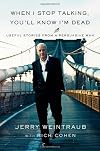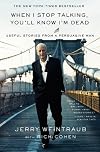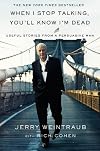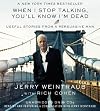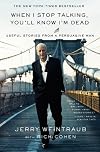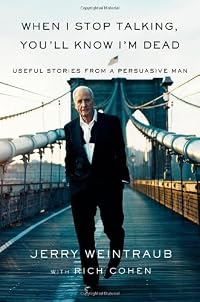
When I Stop Talking, You'll Know I'm Dead
by Jerry Weintraub
On This Page
Description
Here is the story of Jerry Weintraub: the self-made, Brooklyn-born, Bronx-raised impresario, Hollywood producer, legendary deal maker, and friend of politicians and stars. No matter where nature has placed him—the club rooms of Brooklyn, the Mafia dives of New York's Lower East Side, the wilds of Alaska, or the hills of Hollywood—he has found a way to put on a show and sell tickets at the door. "All life was a theater and I wanted to put it up on a stage," he writes. "I wanted to set the show more world under a marquee that read: 'Jerry Weintraub Presents.'"In WHEN I STOP TALKING, YOU'LL KNOW I'M DEAD, we follow Weintraub from his first great success at age twenty-six with Elvis Presley, whom he took on the road with the help of Colonel Tom Parker; to the immortal days with Sinatra and Rat Pack glory; to his crowning hits as a movie producer, starting with Robert Altman and Nashville, continuing with Oh, God!, The Karate Kid movies, and Diner, among others, and summiting with Steven Soderbergh and Ocean's Eleven, Twelve, and Thirteen.
Along the way, we'll watch as Jerry moves from the poker tables of Palm Springs (the games went on for days), to the power rooms of Hollywood, to the halls of the White House, to Red Square in Moscow and the Great Palace in Beijing-all the while counseling potentates, poets, and kings, with clients and confidants like George Clooney, Bruce Willis, George H. W. Bush, Armand Hammer, Brad Pitt, Matt Damon, Bob Dylan, Led Zeppelin, John Denver, Bobby Fischer . . .well, the list goes on forever.
And of course, the story is not yet over . . .as the old-timers say, "The best is yet to come."
As Weintraub says, "When I stop talking, you'll know I'm dead."
With wit, wisdom, and the cool confidence that has colored his remarkable career, Jerry chronicles a quintessentially American journey, one marked by luck, love, and improvisation. The stories he tells and the lessons we learn are essential, not just for those who love movies and music, but for businessmen, entrepreneurs, artists . . . everyone.
. show less
Tags
Recommendations



















Member Reviews
Let’s start with what Jerry Weintraub is not. Jerry Weintraub is not an author. It is painfully evident in the way this book is constructed and written. He may be a great raconteur (which is what this book feels like – the attempt to take a raconteur and put him between the pages) and he may have a great story to tell. But someone else should have been in charge of that story. (And hat’s off to Rich Cohen – the “with” part of the credits on this book. It is hard to imagine what it must have taken to get the book in this kind of shape.) A biography might have worked, but this autobiography comes off as self-serving, egomaniacal, and a collection of stories told to just tell stories (not to entertain.)
Which leads to the next show more point. What Jerry Weintraub IS is an agent – with every bit of ugliness and slander that phrase can carry.
I finished this book desperately disliking the man. In spite of his trying to tell a sympathetic story, he personifies the ugliness of show business. Maybe there are worse out there than Jerry (and I am sure there are), but we are reading his story, and it is not a nice story. Let’s go with one example.
In the sixth chapter he goes into great detail about how he did not want to become involved with kickbacks and protection money (him having to pay it) because it was illegal. The “mob boss” agrees to clear the way for him, but he cannot do anything illegal in the future. He goes on with some descriptions of how he kept on the straight and narrow. However, quite a few chapters later he describes how he got started in Chicago by going through the Daley machine…which included payoffs. Amazing – illegal, ethical, kickbacks – all a blur to an agent who warps situations for his personal needs.
Yet, there is some redemption to this otherwise “offputting” book. There are some decent lessons about business and about being true to yourself that are contained herein. (Not that I think Weintraub ever completely lived them. Yes, he believes them, but he lives them only when it is not inconvenient to do otherwise.)
Maybe this has become more of a review of the man rather than the book. But the two cannot be separated. So, some interesting stories, some interesting thoughts about business, but overall a nasty taste in the mouth as if you were promised steak and given MacDonald’s (and then told how it was really better for you.) show less
Which leads to the next show more point. What Jerry Weintraub IS is an agent – with every bit of ugliness and slander that phrase can carry.
I finished this book desperately disliking the man. In spite of his trying to tell a sympathetic story, he personifies the ugliness of show business. Maybe there are worse out there than Jerry (and I am sure there are), but we are reading his story, and it is not a nice story. Let’s go with one example.
In the sixth chapter he goes into great detail about how he did not want to become involved with kickbacks and protection money (him having to pay it) because it was illegal. The “mob boss” agrees to clear the way for him, but he cannot do anything illegal in the future. He goes on with some descriptions of how he kept on the straight and narrow. However, quite a few chapters later he describes how he got started in Chicago by going through the Daley machine…which included payoffs. Amazing – illegal, ethical, kickbacks – all a blur to an agent who warps situations for his personal needs.
Yet, there is some redemption to this otherwise “offputting” book. There are some decent lessons about business and about being true to yourself that are contained herein. (Not that I think Weintraub ever completely lived them. Yes, he believes them, but he lives them only when it is not inconvenient to do otherwise.)
Maybe this has become more of a review of the man rather than the book. But the two cannot be separated. So, some interesting stories, some interesting thoughts about business, but overall a nasty taste in the mouth as if you were promised steak and given MacDonald’s (and then told how it was really better for you.) show less
Jerry Weintraub is the man who packaged and marketed John Denver. Depending on your preference, this is either the best thing in the world or unforgivable. Me: I like John Denver. A lot.
What's weird is that about a year ago I delved rather deeply into Denver's music, life, etc., and was surprised to find out that (a) his real name is John Deutschendorf, Jr. (b), that he grew up in just about anywhere but the country (i.e., in a lot of cities -- which makes him a city slicker), (c) that both of his parents were German. The German ancestry thing figures prominently in Denver's music. If you know anything about Germans, you know that they love their "volkmusik" -- folk music. If you know anything about John Denver, you're thinking to show more yourself, "What's he talking about? There aren't accordions in Denver's music; he doesn't yodel." Correct. But what Denver does is sing a lot about home and mountains, the spirit of home and mountains, the near-attainment of an idealized woman, the "eternal-feminine" (das Ewig-Weibliche) whose mere presence suffices to draw upward to heaven the debased (and singing) male, grasping at her hem. These are also the themes of many if not most German folk songs, and thus the point of the comparison. (Of course, an idealized woman -- an idealized anyone, for that matter -- is also an objectified woman [or anyone:]; but that's a discussion for another Goodreads review.)
My point: it's not too gross a simplification, I believe, to say that John Denver's music is nothing but Americanized German folk music. Weintraubs genius was, I think, to recognize this fact, and to know how to market John Denver's volkmusik to a patriotic American mass audience. Which he did. To great acclaim. And it's not just marketing, Weintraub is quick to point out.
Moreover, it was Weintraub's connections with Frank Sinatra and Elvis Presley/Colonel Parker (so close they were almost the same person) that helped get John Denver's career off the (musical) ground and up and soaring into the resplendent blue sunshine of American pop stardom -- rather unlike the short and tragic and barely-airborne, drunken-hummingbird flight of the technically-deficient experimental plane that Denver piloted to his gruesome death.
Which is a sad note to end this review on. But a similar note to the one Mr. Weintraub ends his own memoirs on. Writing of his mother's death, which happened a few years ago, Weintraub says, "A man without a mother is a man without a country, an exile.... You never recover from it.... The world should come to an end but it doesn't; it goes on, carries you with it."
Weintraub pauses and then adds this: "But death is necessary. It makes the rope taut. Without it we would have no stories, no meaning."
Splash. show less
What's weird is that about a year ago I delved rather deeply into Denver's music, life, etc., and was surprised to find out that (a) his real name is John Deutschendorf, Jr. (b), that he grew up in just about anywhere but the country (i.e., in a lot of cities -- which makes him a city slicker), (c) that both of his parents were German. The German ancestry thing figures prominently in Denver's music. If you know anything about Germans, you know that they love their "volkmusik" -- folk music. If you know anything about John Denver, you're thinking to show more yourself, "What's he talking about? There aren't accordions in Denver's music; he doesn't yodel." Correct. But what Denver does is sing a lot about home and mountains, the spirit of home and mountains, the near-attainment of an idealized woman, the "eternal-feminine" (das Ewig-Weibliche) whose mere presence suffices to draw upward to heaven the debased (and singing) male, grasping at her hem. These are also the themes of many if not most German folk songs, and thus the point of the comparison. (Of course, an idealized woman -- an idealized anyone, for that matter -- is also an objectified woman [or anyone:]; but that's a discussion for another Goodreads review.)
My point: it's not too gross a simplification, I believe, to say that John Denver's music is nothing but Americanized German folk music. Weintraubs genius was, I think, to recognize this fact, and to know how to market John Denver's volkmusik to a patriotic American mass audience. Which he did. To great acclaim. And it's not just marketing, Weintraub is quick to point out.
Moreover, it was Weintraub's connections with Frank Sinatra and Elvis Presley/Colonel Parker (so close they were almost the same person) that helped get John Denver's career off the (musical) ground and up and soaring into the resplendent blue sunshine of American pop stardom -- rather unlike the short and tragic and barely-airborne, drunken-hummingbird flight of the technically-deficient experimental plane that Denver piloted to his gruesome death.
Which is a sad note to end this review on. But a similar note to the one Mr. Weintraub ends his own memoirs on. Writing of his mother's death, which happened a few years ago, Weintraub says, "A man without a mother is a man without a country, an exile.... You never recover from it.... The world should come to an end but it doesn't; it goes on, carries you with it."
Weintraub pauses and then adds this: "But death is necessary. It makes the rope taut. Without it we would have no stories, no meaning."
Splash. show less
An entertaining read. Weintraub is ridiculous, but also charming. Everyone is his friend whom he loves like a family member. When I say everyone I mean everyone. The list of people he considers like a brother or father or son goes from John Denver to the Rebbe Menachem Schneerson, from George Bush the elder to Bob Dylan, from Colonel Tom Parker to George Clooney. There is Forest Gump quality to some of this, but Weintraub verifiably had close relationships with all of these people and presumably at least a healthy percentage of this is true.
Most everyone is portrayed as being wonderful, Weitraub does talk about Bobby Fisher not being particularly lovable, but he also makes clear that the man was truly mentally ill. He professes neither show more love nor hate for Zepplin, but its clear he did not adore them, in part because the word love is thrown around so much and never in regards to anyone in that band. He says negative things about no one except his own children, (nothing super nasty, just oblique references to them having had "troubles) which is a little odd. It would have been easy to have left that out since he leaves out everyone else's skeletons. Weintraub glosses over the fact that he is married (to a woman for whom he professes true love) and has a very long term girlfriend, a successful producer in her own right,(for whom he professes real love.) In all things that went wrong he holds himself largely blameless with some two-bit rationalization. But we all rationalize away a pretty good sized chunk of our lives so I can't get upset about that. All in all he is has some great stories to tell, really wonderful and interesting, and he tells those stories well. show less
Most everyone is portrayed as being wonderful, Weitraub does talk about Bobby Fisher not being particularly lovable, but he also makes clear that the man was truly mentally ill. He professes neither show more love nor hate for Zepplin, but its clear he did not adore them, in part because the word love is thrown around so much and never in regards to anyone in that band. He says negative things about no one except his own children, (nothing super nasty, just oblique references to them having had "troubles) which is a little odd. It would have been easy to have left that out since he leaves out everyone else's skeletons. Weintraub glosses over the fact that he is married (to a woman for whom he professes true love) and has a very long term girlfriend, a successful producer in her own right,(for whom he professes real love.) In all things that went wrong he holds himself largely blameless with some two-bit rationalization. But we all rationalize away a pretty good sized chunk of our lives so I can't get upset about that. All in all he is has some great stories to tell, really wonderful and interesting, and he tells those stories well. show less
Fantastic book, fantastic man. This book goes over many of the same stories told in the HBO special on Weintraub but they are still fascinating to read. Weintraub's story is one of a true dealmaker It is easy to read and a very impressive story. I for one, would have liked to have met Mr. Weintraub.
(8hours) I picked this off the library shelf because of the catchy title. I found a jewel. Jerry Weintraub narrates his own autobiogrphy with his Bronx accent and honest account of his very successful life. Born the son of a New York Jewish jewel salesman, Jerry decided to not follow his father's footsteps and follow his dreams. His talent for talking himself into anything he wanted got him to the position of managing music and movie talent. With clients such as Frank Sinatra, Elvis Presley, Led Zepplin, and John Denver, his career and name was solid. Even with that success, Jerry had even bigger plans. He went on to producing movies such as the Ocean's Eleven series and Jerry became a very successful and powerful person in the show more enterainment business. With all that he has, Jerry is able to talk about his family back in New York with humor, respect and endearment. This is a wonderful account of wisdom for business and human interactions. He is so honest, you gotta love him. show less
A review copy of this book was provided by Hachette Audio.
I liked this book. I had heard the name Jerry Weintraub before but I never really knew who he was. After hearing all of the things he has accomplished in his life I now realized that I've probably heard his name a million times but since he's not the star of anything I've never really paid that much attention to who he was.
This book is like sitting with your grandfather listening to the stories of his life and taking in all the advice he has to give. It was very enlightening. Jerry never really had a formal education, he just had the mindset that if he wanted something he was going to get it. His entire life he made things happen for himself, weather he was "prepared" for them show more or not. I wish I would have kept a pen and paper near by while listening to this one as there were so many nuggets that I can't even begin to remember them all.
I think this without realizing it this book has started to make subtle changes in my life. Since I've finished this I've had a bit more of a positive outlook and have been stepping outside my comfort zone to get things accomplished. Jerry says throughout the book that if a kid from the Bronx can do it... And while I don't think being from the Bronx is a detriment in life I do get what Jerry is trying to say. That he's nothing special, he's just another person, and if he can accomplish these things there is no reason that anyone else wouldn't be able to reach their goals.
What I really liked was that Jerry has such a great sense of humor. There were so many times in this one where he was able to laugh at himself. Even though he is a millionaire and has worked with Sinatra, Elvis, John Denver, Bob Dylan, Led Zeppelin, Brad Pitt, and so many others he gives off the feel that he is a truly humble person.
As I first started listening to this book I thought Jerry's voice would get a bit irritating, but the longer I listened the more I was endeared to Jerry because of his voice. I know it was his story, but he read the book like he was just sitting down and having a conversation. You could hear the emotion in his voice as he talked about the moments that really changed his life. He made a great narrator.
I really liked this book. It made me want to meet Jerry. And I keep calling him Jerry because after spending 8 hours with him and his life story I feel like I know him. I feel like if I were to be given the chance to speak with him it would be like catching up with a long lost friend. show less
I liked this book. I had heard the name Jerry Weintraub before but I never really knew who he was. After hearing all of the things he has accomplished in his life I now realized that I've probably heard his name a million times but since he's not the star of anything I've never really paid that much attention to who he was.
This book is like sitting with your grandfather listening to the stories of his life and taking in all the advice he has to give. It was very enlightening. Jerry never really had a formal education, he just had the mindset that if he wanted something he was going to get it. His entire life he made things happen for himself, weather he was "prepared" for them show more or not. I wish I would have kept a pen and paper near by while listening to this one as there were so many nuggets that I can't even begin to remember them all.
I think this without realizing it this book has started to make subtle changes in my life. Since I've finished this I've had a bit more of a positive outlook and have been stepping outside my comfort zone to get things accomplished. Jerry says throughout the book that if a kid from the Bronx can do it... And while I don't think being from the Bronx is a detriment in life I do get what Jerry is trying to say. That he's nothing special, he's just another person, and if he can accomplish these things there is no reason that anyone else wouldn't be able to reach their goals.
What I really liked was that Jerry has such a great sense of humor. There were so many times in this one where he was able to laugh at himself. Even though he is a millionaire and has worked with Sinatra, Elvis, John Denver, Bob Dylan, Led Zeppelin, Brad Pitt, and so many others he gives off the feel that he is a truly humble person.
As I first started listening to this book I thought Jerry's voice would get a bit irritating, but the longer I listened the more I was endeared to Jerry because of his voice. I know it was his story, but he read the book like he was just sitting down and having a conversation. You could hear the emotion in his voice as he talked about the moments that really changed his life. He made a great narrator.
I really liked this book. It made me want to meet Jerry. And I keep calling him Jerry because after spending 8 hours with him and his life story I feel like I know him. I feel like if I were to be given the chance to speak with him it would be like catching up with a long lost friend. show less
Fun, breezy "I did it my way" autobiography from the larger-than-life producer/entertainment mogul Jerry Weintraub, a Jewish kid from Brooklyn who, with little more than street-smarts and a twinkle in his eye, make a fortune and had a ball working with everyone all the way from Robert Altman to Frank Sinatra back to Paul Anka and Frank Zapppa.
This book is destined to be popular among the MBA business-class set, although the keys to success Weintraub mentions are standard bromide cliches; it all basically boils down to networking and luck
Weintraub is a gentleman, so there are no confessions or sordid tales, nor is there much mention of the checks that bounced and the handshake deals that ended up in court. (legal, not tennis) But overall show more very enjoyable reading. Yeoman's ghostwriting job by Rich Cohen. show less
This book is destined to be popular among the MBA business-class set, although the keys to success Weintraub mentions are standard bromide cliches; it all basically boils down to networking and luck
Weintraub is a gentleman, so there are no confessions or sordid tales, nor is there much mention of the checks that bounced and the handshake deals that ended up in court. (legal, not tennis) But overall show more very enjoyable reading. Yeoman's ghostwriting job by Rich Cohen. show less
Members
- Recently Added By
Author Information
3+ Works 394 Members
All Editions
Awards and Honors
Distinctions
Common Knowledge
- Canonical title
- When I Stop Talking, You'll Know I'm Dead
- Original title
- When I Stop Talking, You'll Know I'm Dead: Useful Stories from a Persuasive Man
Classifications
- Genres
- Biography & Memoir, Nonfiction, General Nonfiction
- DDC/MDS
- 791.4302 — Arts & recreation Recreation, sports, and performing arts Movies, TV, Video Motion pictures, radio, television, podcasting Motion pictures Standard subdivisions
- LCC
- PN1998.3 .W435 .A3 — Language and Literature Literature (General) Literature (General) Drama Motion pictures
- BISAC
Statistics
- Members
- 273
- Popularity
- 116,003
- Reviews
- 15
- Rating
- (3.52)
- Languages
- English
- Media
- Paper, Audiobook, Ebook
- ISBNs
- 7
- ASINs
- 8