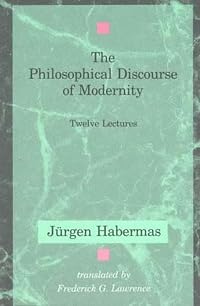
The Philosophical Discourse of Modernity: Twelve Lectures
by Jürgen Habermas
On This Page
Description
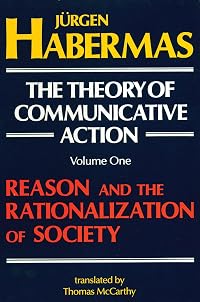
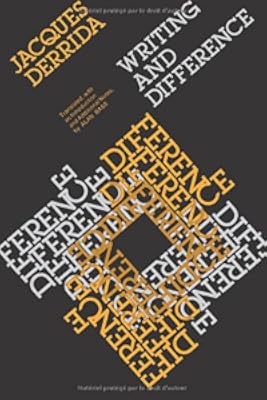
The Philosophical Discourse of Modernity is a tour de force that has the immediacy and accessibility of the lecture form and the excitement of an encounter across, national cultural boundaries. Habermas takes up the challenge posed by the radical critique of reason in contemporary French poststructuralism. Tracing the odyssey of the philosophical discourse of modernity, Habermas's strategy is to return to those historical "crossroads" at which Hegel and the Young Hegelians, Nietzsche and show more Heidegger made the fateful decisions that led to this outcome. His aim is to identify and clearly mark out a road indicated but not taken: the determinate negation of subject-centered reason through the concept of communicative rationality. As The Theory of Communicative Action served to place this concept within the history of social theory, these lectures locate it within the history of philosophy. Habermas examines the odyssey of the philosophical discourse of modernity from Hegel through the present and tests his own ideas about the appropriate form of a postmodern discourse through dialogs with a broad range of past and present critics and theorists. The lectures on Georges Bataille, Michel Foucault, Jacques Derrida, and Cornelius Castoriadis are of particular note since they are the first fruits of the recent cross-fertilization between French and German thought. Habermas's dialogue with Foucault - begun in person as the first of these lectures were delivered in Paris in 1983 culminates here in two appreciative yet intensely argumentative lectures. His discussion of the literary-theoretical reception of Derrida in America - launched at Cornell in 1984 - issues here in a long excursus on the genre distinction between philosophy and literature. The lectures were reworked for the final time in seminars at Boston College and first published in Germany in the fall of 1985. -- from http://mitpress.mit.edu (August 22, 2011). show lessTags
Recommendations









Member Reviews
Members
- Recently Added By
Author Information

236+ Works 9,420 Members
Jurgen Habermas is a German sociologist who studied at the universities of Gottingen, Zurich, and Bonn. He taught at Frankfurt am Main, Marburg, and Heidelberg before becoming professor of philosophy at the University of Frankfurt. His works, widely translated, have made him one of the most influential social theorists of our time. Habermas is show more considered by some to be an intellectual heir to Max Weber and what has been called the Frankfurt School. His work has centered mainly on the role of communication and technology in changing patterns of social relations, human activity, and values. An outspoken advocate of the Enlightenment and a champion of reason, he has also cautioned that the technical rationality associated with modern capitalism often functions as ideology and may stand in the way of human progress. (Bowker Author Biography) show less
Some Editions
Series
Belongs to Publisher Series
Common Knowledge
- Canonical title
- The Philosophical Discourse of Modernity: Twelve Lectures
- Original title
- Der philosophische Diskurs der Moderne
- Original publication date
- 1985
- Dedication*
- Für Rebekka,
die mir den Neostrukturalismus
nähergebracht hat
*Some information comes from Common Knowledge in other languages. Click "Edit" for more information.
Classifications
- Genres
- Philosophy, Nonfiction, Literature Studies and Criticism, General Nonfiction
- DDC/MDS
- 190 — Philosophy & psychology Modern western philosophy Modern western and other noneastern philosophy
- LCC
- B3258 .H323 .P5513 — Philosophy, Psychology and Religion Philosophy (General) By period Modern By region or country
- BISAC
Statistics
- Members
- 672
- Popularity
- 43,013
- Reviews
- 1
- Rating
- (4.06)
- Languages
- 9 — English, French, German, Italian, Lithuanian, Polish, Portuguese, Russian, Spanish
- Media
- Paper, Ebook
- ISBNs
- 21
- ASINs
- 3