Tree and Leaf
by J. R. R. Tolkien
On This Page
Description
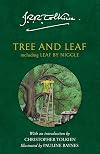
New edition of Tolkien's Tree and Leaf, illustrated for the first time by Pauline Baynes, which includes his famous essay, 'On Fairy-stories' and the story that exemplifies this, 'Leaf by Niggle', together with the poem 'Mythopoeia' and the verse drama, 'The Homecoming of Beorhtnoth', that tells of events following the disastrous Battle of Maldon. Fairy-stories are not just for children, as anyone who has read Tolkien will know. In his essay On Fairy-Stories, Tolkien discusses the nature of show more fairy-tales and fantasy and rescues the genre from those who would relegate it to juvenilia. The haunting short story, Leaf by Niggle, recounts the story of the artist, Niggle, who has 'a long journey to make' and is seen as an allegory of Tolkien's life. The poem Mythopoeia relates an argument between two unforgettable characters as they discuss the making of myths. Lastly, we are treated to The Homecoming of Beorthnoth which considers the wastefulness of war following the disastrous Battle of Maldon in 991. Tree and Leaf is an eclectic, amusing, provocative and entertaining collection of works which reveals the diversity of J.R.R. Tolkien's imagination, the depth of his knowledge of English history, and the breadth of his talent as a creator of fantastic fiction. show lessTags
Recommendations


















Member Reviews
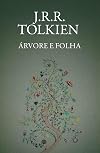
Este volume inclui o ensaio Sobre Contos de Fadas e o conto Folha, de Migalha (Leaf by Niggle). Em seu ensaio Sobre contos de fadas, Tolkien discute a natureza dos contos de fadas e da fantasia e resgata o gênero que alguns pretenderam relegar à literatura infantil. Isso é ilustrado de maneira hábil e refinada por Folha, de Migalha, conto fascinante que narra a história do artista, Migalha (Niggle), que "precisa fazer uma longa viagem", e é visto como uma alegoria à vida de Tolkien. Escritas na época em que O Senhor dos Anéis estava tomando forma, essas duas obras mostram a maestria de Tolkien e sua compreensão da arte de subcriação, ou seja, o poder de dar à fantasia a "consistência da realidade". Tradução de Ronald show more Eduard Kyrmse. show less
I read this in college--for fun, not for a class, although I later used something from it as inspiration for a writing assignment.
Very sweet and (unlike much of Tolkien) short. It was the kind of thing I enjoyed reading on a weekend as a break from course-assigned work. After reading it I felt cheerful and a bit mellow.
Very sweet and (unlike much of Tolkien) short. It was the kind of thing I enjoyed reading on a weekend as a break from course-assigned work. After reading it I felt cheerful and a bit mellow.
Signed Copy 1st Addition
Não lido
Ratings
Members
- Recently Added By
Lists

Favorite Childhood Books
1,646 works; 518 members

BEST BOOKS TO UNDERSTAND TOLKIEN
14 works; 5 members
Author Information

601+ Works 516,819 Members
A writer of fantasies, Tolkien, a professor of language and literature at Oxford University, was always intrigued by early English and the imaginative use of language. In his greatest story, the trilogy The Lord of the Rings (1954--56), Tolkien invented a language with vocabulary, grammar, syntax, even poetry of its own. Though readers have show more created various possible allegorical interpretations, Tolkien has said: "It is not about anything but itself. (Certainly it has no allegorical intentions, general, particular or topical, moral, religious or political.)" In The Adventures of Tom Bombadil (1962), Tolkien tells the story of the "master of wood, water, and hill," a jolly teller of tales and singer of songs, one of the multitude of characters in his romance, saga, epic, or fairy tales about his country of the Hobbits. Tolkien was also a formidable medieval scholar, as evidenced by his work, Beowulf: The Monster and the Critics (1936) and his edition of Anciene Wisse: English Text of the Anciene Riwle. Among his works published posthumously, are The Legend of Sigurd and Gudrún and The Fall of Arthur, which was edited by his son, Christopher. In 2013, his title, TheHobbit (Movie Tie-In) made The New York Times Best Seller List. (Bowker Author Biography) show less
Some Editions
Series
Belongs to Publisher Series
Work Relationships
Is contained in
Tolkien Fantasy Tales Box Set (The Tolkien Reader/The Silmarillion/Unfinished Tales/Sir Gawain and the Green Knight) by J. R. R. Tolkien (indirect)
Tree and Leaf. Smith of Wootton Major. The Homecoming of Beorhtnoth, Beorhthelm's Son by J. R. R. Tolkien
Contains
Common Knowledge
- Canonical title*
- Árvore e Folha
- Original title
- Tree and Leaf
- Alternate titles
- Saduista; Niukun lehti
- Original publication date
- 1947 (Leaf by Niggle) (Leaf by Niggle); 1947 (On Fairy Stories) (On Fairy Stories); 1964
- People/Characters
- Niggle; Mr. Parish; Mrs. Parish; First Voice; Second Voice; Councillor Tompkins (show all 10); Atkins; Perkins; Inspector of Houses; The Driver
- Important places
- Niggle's Country; Parish's Garden; Niggle's Parish in the bay; The Workhouse; The Other World
- First words
- These two things, On Fairy-stories and Leaf by Niggle, are here reprinted and issued together.
I propose to speak about fairy-stories, though I am aware that this is a rash adventure. - Last words
- (Click to show. Warning: May contain spoilers.)'They both laughed. Laughed - the Mountains rang with it!'
- Disambiguation notice
- Tree and Leaf contains "Leaf by Niggle" and "On Fairy Stories." Other editions with the same title also including "Mythopoeia", "The Homecoming of Beorhtnoth", and/or "Smith of Wootton Major"
This work is for Tre... (show all)e and Leaf with the original two essays alone
*Some information comes from Common Knowledge in other languages. Click "Edit" for more information.
Classifications
- Genres
- Fiction and Literature, Fantasy
- DDC/MDS
- 809.915 — Literature & rhetoric Literature, rhetoric & criticism History, description, critical appraisal of more than two literatures Literature displaying specific features, miscellaneous writings Literature displaying specific qualities of style, mood, viewpoint Symbolism, allegory, fantasy, myth
- LCC
- PN3437 .T6 — Language and Literature Literature (General) Literature (General) Prose. Prose fiction Special kinds of fiction. Fiction genres
- BISAC
Statistics
- Members
- 624
- Popularity
- 46,658
- Reviews
- 4
- Rating
- (3.71)
- Languages
- 11 — English, Finnish, German, Greek, Hungarian, Norwegian (Bokmål), Norwegian, Portuguese (Brazil), Russian, Slovenian, Swedish
- Media
- Paper, Ebook
- ISBNs
- 18
- ASINs
- 13