On This Page
Description
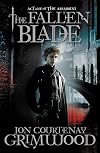
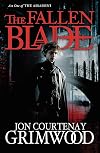
Venice, 1407. The city is at the height of its powers. In theory, Duke Marco commands, but Marco is a simpleton so his aunt and uncle rule in his stead. They seem all powerful, yet live in fear of assassins better than their own. On the night their world changes, Marco's young cousin prays in the family chapel for deliverance from a forced marriage. It is her misfortune to be alone when Mamluk pirates break in to abduct her--an act that will ultimately trigger war. Elsewhere Atilo, the show more Duke's chief assassin, cuts a man's throat. Hearing a noise, he turns back to find a boy drinking from the victim's wound. The speed with which the angel-faced boy dodges his dagger and scales a wall stuns Atilo. He knows then he must hunt him. Not to kill him, but because he's finally found what he thought was impossible--someone fit to be his apprentice. show lessTags
Recommendations










Member Reviews
It was a fight to read the first three-quarters of The Fallen Blade, and the last quarter only worked because it was incessant action involving a character you actually like. Almost every character, both protagonist and villain, are either bland and or unlikable, and not in the good way. There were so many times I just wanted to slap one of the POV characters upside the head, lost track of who they were duo to the sheer number of them combined with very little distinction,or ended up putting the book down because something about a character just elementally made no sense. Their interactions with one another are stilted, feel contrived and, much like themselves, are absolutely devoid of life.
Beyond the characters, the Fallen Blade's show more prose is rough. While it has some flow, it is also boring and lifeless, serving only to build ubiquitously colorless scenes for its colorless characters which sapped other life it might have had. More than that, there was moments were the prose is confusing, switches scenes, characters, and focus without warning, and is so weighed down by the authors attempts at style that the flow almost stops. Speaking of style and scene building, the author has too much of the former and far too little of the latter. In the Fallen Blade Venice, one of the most interesting cities a writer could explore, is barely touched by the author and throughout the entire books remains a vague notion of how it should like, and this notion is derived from the reader's own experience with Venice. Much like everything else, the city and culture is utterly sapped of life.
Finally we have the plot, only the Fallen Blade barely has one. The characters flail around uselessly for the first half of the book, getting pulled this way and that by whichever tide happens to be in motion. In the next quarter one of the characters is given a direction for his story, not purpose mind you, but the author then skips most of that character's journey and instead shows you more meaningless flailing. Then, finally, you reach the last quarter of a book, meet a enjoyable character, and receive an actual plot, no matter that said plot is just a vast army invading and the protagonists have to heroically deffest it. Much self-sacrifice ensues, including the death the one protagonist you actually like, and then book ends and the reader is left wondering why he bothered to finish it.
So in summary, I did not like the Fallen Blade, and have no intention of reading its sequel. show less
Beyond the characters, the Fallen Blade's show more prose is rough. While it has some flow, it is also boring and lifeless, serving only to build ubiquitously colorless scenes for its colorless characters which sapped other life it might have had. More than that, there was moments were the prose is confusing, switches scenes, characters, and focus without warning, and is so weighed down by the authors attempts at style that the flow almost stops. Speaking of style and scene building, the author has too much of the former and far too little of the latter. In the Fallen Blade Venice, one of the most interesting cities a writer could explore, is barely touched by the author and throughout the entire books remains a vague notion of how it should like, and this notion is derived from the reader's own experience with Venice. Much like everything else, the city and culture is utterly sapped of life.
Finally we have the plot, only the Fallen Blade barely has one. The characters flail around uselessly for the first half of the book, getting pulled this way and that by whichever tide happens to be in motion. In the next quarter one of the characters is given a direction for his story, not purpose mind you, but the author then skips most of that character's journey and instead shows you more meaningless flailing. Then, finally, you reach the last quarter of a book, meet a enjoyable character, and receive an actual plot, no matter that said plot is just a vast army invading and the protagonists have to heroically deffest it. Much self-sacrifice ensues, including the death the one protagonist you actually like, and then book ends and the reader is left wondering why he bothered to finish it.
So in summary, I did not like the Fallen Blade, and have no intention of reading its sequel. show less
Grimwood, who developed his style writing mean nasty cyberpunk thrillers, applies it to a mean nasty historical fantasy set in Venice in 1407. Assassins battle with werewolves over fleeing aristocratic brides-to-be, with the assassins coming off the worse, leaving the city of Venice defended in the secret war by a few surviving killers and a lingering reputation. Can the strange young man with silver hair taken from a hidden compartment in a Mamluk ship, with his unnatural strength, speed and hungers be the answer? He will have to be caught and trained and tamed and forced to give in to his unnatural nature. Kidnappings, murders, power plays and political intrigues come to a head with a massive armada sailing for Cyprus with only a show more smaller flotilla and the silver haired boy standing in the way.
Fast-moving and vivid, atmospheric and grimy and I may be a little drunk and i had this lovely savoury pie bread thing and yum and I enjoyed this book and the pie and the cider so yay! Stars all round! show less
Fast-moving and vivid, atmospheric and grimy and I may be a little drunk and i had this lovely savoury pie bread thing and yum and I enjoyed this book and the pie and the cider so yay! Stars all round! show less
Meh.
Actually, this is an interesting book to try and talk about, because my emotional response when reading was "this is just lacking" but once I actually try and think about "how to fix it", I become puzzled as to why it doesn't work. It seems to have everything it should - a pretty tight story focused around a collection of interlocking characters with high stakes. Also vampires, werewolves, magick and swooning maidens.
Why doesn't it work?
For me, it's because I'm just not feeling it, and that's probably down to a couple of big factors about the way it's told. One: the story is tight, but the telling of it is all over the place. It jumps between narrators without balance (one guy's only used in the first third of the book, one guy only show more used in the middle third, the final third is almost exclusively from the "hero's" POV without break). It jumps around in time without giving you any clear indication until you get a couple of pages into the new chapter, and thus confusion abounds (not assisted by his drama-over-clarity style, especially in the meta-story patches). And Two: it talks a lot about the big emotions the characters are feeling - which drive their actions - but I rarely saw or felt the justification for them. This was especially bad for love, which all of the characters feel passionately for one or more of the other characters, usually not the one who feels that way about them - I had no idea what any of them were talking about, because there rarely seemed to be any basis for that love, and certainly few of them acted like they genuinely cared about that person. (Particular extra-special face-pulling for Tycho and Giulietta, who meet for scant moments and are bound by love henceforth. Bleurgh.) In general, I just didn't care much for any of the characters (a little for Atilo; a little for Desdaio; both of these withered as the book progressed) and thus I just plain didn't care.
Anyway, when you havea vampire and a werewolf duelling with magical swords atop a Venetian tower and I'm BORED, you're doing something wrong. show less
Actually, this is an interesting book to try and talk about, because my emotional response when reading was "this is just lacking" but once I actually try and think about "how to fix it", I become puzzled as to why it doesn't work. It seems to have everything it should - a pretty tight story focused around a collection of interlocking characters with high stakes. Also vampires, werewolves, magick and swooning maidens.
Why doesn't it work?
For me, it's because I'm just not feeling it, and that's probably down to a couple of big factors about the way it's told. One: the story is tight, but the telling of it is all over the place. It jumps between narrators without balance (one guy's only used in the first third of the book, one guy only show more used in the middle third, the final third is almost exclusively from the "hero's" POV without break). It jumps around in time without giving you any clear indication until you get a couple of pages into the new chapter, and thus confusion abounds (not assisted by his drama-over-clarity style, especially in the meta-story patches). And Two: it talks a lot about the big emotions the characters are feeling - which drive their actions - but I rarely saw or felt the justification for them. This was especially bad for love, which all of the characters feel passionately for one or more of the other characters, usually not the one who feels that way about them - I had no idea what any of them were talking about, because there rarely seemed to be any basis for that love, and certainly few of them acted like they genuinely cared about that person. (Particular extra-special face-pulling for Tycho and Giulietta, who meet for scant moments and are bound by love henceforth. Bleurgh.) In general, I just didn't care much for any of the characters (a little for Atilo; a little for Desdaio; both of these withered as the book progressed) and thus I just plain didn't care.
Anyway, when you have
The setting is Venice, 1407. La Serenissima is effectively ruled by the Council of Ten, responsible for the security of the republic. Titular head is Duke Marco, descendant of Marco Polo, but the real ruler is his uncle Duke Alonzo, Regent because Marco is a halfwit. To maintain its role as one of the most powerful of the Italian city-states, alliances are necessary, and Duke Alonzo has the power to dispose - in all senses of the word - of family members to meet political expediency; to this end he has decided that his niece, 15-year-old Giulietta, will be married to the King of Cyprus. Desperate to evade her role as a political pawn, deserted, she thinks, by the aunt she has trusted, Giulietta flees, but is caught and returned by Atilo show more (until recently, Admiral of the Venetian Fleet, and still secret head of the Assassini), after witnessing a terrifying street battle. The night before she is due to sail to Cyprus, Giulietta, filled with horror by the knowledge that she is to bear a son to the King and then murder him, escapes again, this time to the Basilica San Marco, where she intends to kill herself. Instead, she meets a mysterious, silver-haired boy. We've already seen his arrival in Venice, incarcerated in the hold of a Mamluk ship, bereft of memory, nameless, and shackled with silver chains.
There are books that draw you in from the very beginning, and this is one of them. There is a flow to the story that keeps you turning the pages long after you should have turned off the light and settled down to sleep. The cords of the story are expertly woven, each character's thread - and there are more to follow than Giulietta's and silver-haired Tycho's - reappearing just when the need to discover what has happened to them becomes too insistent to ignore, so that you feel just one more chapter can't be resisted. If it lacks quite the savage brilliance of some of Jon Courtenay Grimwood's earlier books, The Fallen Blade is nonetheless very hard to put down, and as Act One of The Assassini, it promises great things. As usual the characterisation is excellent - he's particularly good at young women - and he has a gift for keeping you absorbed in the dangerous characters as well as the sympathetic ones: they might be brutal, ambitious and ruthless, often charming, sometimes appalling, but their motivation is always understandable and their single-mindedness can even at times seem laudable. In other words, they are complex, multi-faceted individuals, and your interest is held because they seem real and unpredictable.
JCG mostly eschews the long descriptions that some authors use for scene setting - where they are used they are sparing and always advance the action, or your understanding of it, but such description as is included builds a strong sense of place - at times, you can almost smell Venice. There's grandeur here, and squalor, and a cast of warring factions whose allegiances could never be relied upon, liable to turn at the slightest spark. It's an alternate history so close to reality that it's utterly plausible, and the reader slips between the real past and the imagined one as easily as Tycho slips between his real city and the invisible one which shelters him when he is first cast adrift in Venice. Vampires and krieghund seem native to this dark and watery city, where assassins lurk not only on every calle but also in the palazzi of the rulers, and poisoning is the quickest way to get rid of a rival. At the end of the book much about Tycho's nature, too, remains to be revealed - bring on Act Two. show less
There are books that draw you in from the very beginning, and this is one of them. There is a flow to the story that keeps you turning the pages long after you should have turned off the light and settled down to sleep. The cords of the story are expertly woven, each character's thread - and there are more to follow than Giulietta's and silver-haired Tycho's - reappearing just when the need to discover what has happened to them becomes too insistent to ignore, so that you feel just one more chapter can't be resisted. If it lacks quite the savage brilliance of some of Jon Courtenay Grimwood's earlier books, The Fallen Blade is nonetheless very hard to put down, and as Act One of The Assassini, it promises great things. As usual the characterisation is excellent - he's particularly good at young women - and he has a gift for keeping you absorbed in the dangerous characters as well as the sympathetic ones: they might be brutal, ambitious and ruthless, often charming, sometimes appalling, but their motivation is always understandable and their single-mindedness can even at times seem laudable. In other words, they are complex, multi-faceted individuals, and your interest is held because they seem real and unpredictable.
JCG mostly eschews the long descriptions that some authors use for scene setting - where they are used they are sparing and always advance the action, or your understanding of it, but such description as is included builds a strong sense of place - at times, you can almost smell Venice. There's grandeur here, and squalor, and a cast of warring factions whose allegiances could never be relied upon, liable to turn at the slightest spark. It's an alternate history so close to reality that it's utterly plausible, and the reader slips between the real past and the imagined one as easily as Tycho slips between his real city and the invisible one which shelters him when he is first cast adrift in Venice. Vampires and krieghund seem native to this dark and watery city, where assassins lurk not only on every calle but also in the palazzi of the rulers, and poisoning is the quickest way to get rid of a rival. At the end of the book much about Tycho's nature, too, remains to be revealed - bring on Act Two. show less
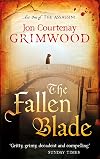
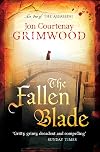
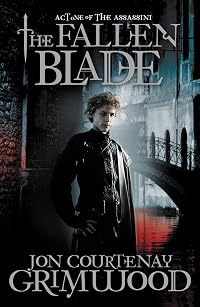
Pros: political intrigue, gritty realism, great setting, lots of plot twists, gorgeous cover
Cons: so much is happening I didn't get to connect with any of the characters as much as I'd have liked
It's Venice, 1407. Marco IV, 'the simpleton', is Duke in name only. His mother, Duchess Alexa, co-rules with her hated brother-in-law, the Regent, Prince Alonzo.
One thing they agree on is the upcoming wedding of their niece Giulietta di Millioni to King James of Cyprus. But Lady Giulietta is 15 and unwilling to wed. And Alonzo has sinister reasons for agreeing to the nuptials.
Meanwhile, the numbers of Venice's royal assassins have dwindled. Their head, Atilo il Mauros, needs an heir and fins potential in a chance meeting with a pale faced, show more silver haired young man. A young man named Tycho, who was freed by chance from a special prison aboard a Mamluk ship.
The plot changes focus frequently, dealing with the politics of Alexa vs Alonzo, Atilo and his new apprentice, Giulietta and others. In this book alone are: werewolves, a vampire, a stregoi, several fights (including a naval battle), unrequited love, frustrated love and true love. Many people die.
The Venice of the story is gritty, dirty and dark. The underside is better detailed than the palace scenes, which are brutal in their own fashion.
While going back to the origins of his creatures (Tycho can't abide sunlight or cross water comfortably), he still makes them unique.
The one downside to the book is that scenes change so fast you can't really connect with the characters. On the other hand, this makes it easier to move on when principle characters start dying.
A fantastic novel. show less
Cons: so much is happening I didn't get to connect with any of the characters as much as I'd have liked
It's Venice, 1407. Marco IV, 'the simpleton', is Duke in name only. His mother, Duchess Alexa, co-rules with her hated brother-in-law, the Regent, Prince Alonzo.
One thing they agree on is the upcoming wedding of their niece Giulietta di Millioni to King James of Cyprus. But Lady Giulietta is 15 and unwilling to wed. And Alonzo has sinister reasons for agreeing to the nuptials.
Meanwhile, the numbers of Venice's royal assassins have dwindled. Their head, Atilo il Mauros, needs an heir and fins potential in a chance meeting with a pale faced, show more silver haired young man. A young man named Tycho, who was freed by chance from a special prison aboard a Mamluk ship.
The plot changes focus frequently, dealing with the politics of Alexa vs Alonzo, Atilo and his new apprentice, Giulietta and others. In this book alone are: werewolves, a vampire, a stregoi, several fights (including a naval battle), unrequited love, frustrated love and true love. Many people die.
The Venice of the story is gritty, dirty and dark. The underside is better detailed than the palace scenes, which are brutal in their own fashion.
While going back to the origins of his creatures (Tycho can't abide sunlight or cross water comfortably), he still makes them unique.
The one downside to the book is that scenes change so fast you can't really connect with the characters. On the other hand, this makes it easier to move on when principle characters start dying.
A fantastic novel. show less
Imprisoned in a Mamluk ship, Tycho arrives into a parallel Venice, ruled by a simpleton Doge, and populated by mages, girls fleeing unwanted betrothals, streetwise thieves, scheming assassins and witches and beset by supernatural enemies. He has come though fire from a land of ice, and must find himself soon, or perish...... John Courtney Grimwood delivers in 'The Fallen Blade'. First of a trilogy.
I had a small amount of trouble truly getting into this book. I'm not sure if for whatever reason my brain just could not grasp all the different characters, or if there was just too much going on at once for me to follow properly, but I found myself constantly having to refer back to the 'Character List' in the front in order to remember who was who. Who was beholden to who, who held what position, etc.
There was also the matter that other then Tycho and Guiletta, the characters all seemed to have the same 'voice'. Its told in third person limited, but there wasn't much to distinguish one viewpoint from another. They all sort of bled into each other in a confusing manner.
Moving back to the confusion I felt regarding the characters and show more remembering their various allegiances, some of that stemmed from the fact few of the characters seemed to be truly tied to one faction or the other. Everyone was running so many agendas and schemes, most of which crossed each other and interfered with each other, it was hard to keep the lines straight. I eventually resorted to keeping a running list of everyone's actions, but even then it became a long winded chart.
Where Grimwood really shone was in his depiction of Venice and the time period. Many times I could almost feel the decadence and filth that Grimwood meticulously details of the canals, streets and palaces. The intrigues of the families and parishes, the various types of people and stations of life, they came alive. The narrative though doesn't let the reader figure out very much on their own. A mystery, or secret, is introduced, some clues are strewn about, but almost immediately things become obvious. There's very little sustained tension. show less
There was also the matter that other then Tycho and Guiletta, the characters all seemed to have the same 'voice'. Its told in third person limited, but there wasn't much to distinguish one viewpoint from another. They all sort of bled into each other in a confusing manner.
Moving back to the confusion I felt regarding the characters and show more remembering their various allegiances, some of that stemmed from the fact few of the characters seemed to be truly tied to one faction or the other. Everyone was running so many agendas and schemes, most of which crossed each other and interfered with each other, it was hard to keep the lines straight. I eventually resorted to keeping a running list of everyone's actions, but even then it became a long winded chart.
Where Grimwood really shone was in his depiction of Venice and the time period. Many times I could almost feel the decadence and filth that Grimwood meticulously details of the canals, streets and palaces. The intrigues of the families and parishes, the various types of people and stations of life, they came alive. The narrative though doesn't let the reader figure out very much on their own. A mystery, or secret, is introduced, some clues are strewn about, but almost immediately things become obvious. There's very little sustained tension. show less
Members
- Recently Added By
Lists

Jean's Sci Fi/Fantasy Reading list
189 works; 12 members

Books Read in 2021
5,361 works; 114 members
Author Information

32+ Works 4,358 Members
Awards and Honors
Distinctions
Series

Work Relationships
Has as a commentary on the text
Common Knowledge
- Canonical title
- The Fallen Blade
- Original publication date
- 2011-01-27
- People/Characters
- Marco di Millioni IV, Duke of Venice & Prince of Serenissima; Lady Giulietta di Millioni; Tycho; Alexa di Millioni, Dowager Duchess of Venice; Prince Alonzo di Millioni, Regent of Venice; Lady Eleanor di Millioni (show all 22); Marco di Millioni III, Duke of Venice & Prince of Serenissima; Atilo il Mauros; Lord Bribanzo; Lady Desdaio Bribanzo; Sir Richard Glanville; Prince Leopold zum Bas Friedland; Patriarch Theodore, Archbishop of Venice; A'rial; Iacopo; Amelia; Lord Roderigo; Temujin; Josh; Rosalyn; Pietro; Dr Hightown Crow
- Important places
- Venice, Veneto, Italy; Italy
- Epigraph
- "...what a hell of witchcraft lies
in the small orb of one particular tear..."
A Lover's Complaint, William Shakespeare - Dedication
- For Sam,
who found Venice stranger than she imagined. - First words
- The boy hung naked from wooden walls, shackles circling one wrist and both ankles.
Classifications
Statistics
- Members
- 355
- Popularity
- 88,647
- Reviews
- 20
- Rating
- (3.05)
- Languages
- 6 — English, French, German, Hungarian, Italian, Spanish
- Media
- Paper, Audiobook, Ebook
- ISBNs
- 23
- ASINs
- 4