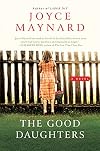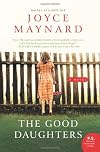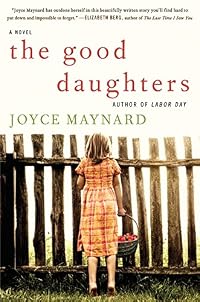
The Good Daughters
by Joyce Maynard
On This Page
Description
"A story of choices and events so intimate I felt I was part of it. The novel is wrenching, the emotions radiant, and it will leave readers transformed"—Luanne Rice, author of The Deep Blue Sea for Beginners
"Joyce Maynard has outdone herself in this beautifully written story you'll find hard to put down and impossible to forget."
— Elizabeth Berg, author of The Last Time I Saw You
Bestselling author of the critically acclaimed Labor Day, Joyce Maynard now brings us The Good Daughters, show more a spellbinding novel about friendship, family secrets, and the strange, unexpected twists of fate that shape our lives. The story of two women born the same day in the same hospital, but raised in vastly different emotional environments, The Good Daughters is another high note in Maynard's already distinguished writing career.
. show less
Tags
Recommendations






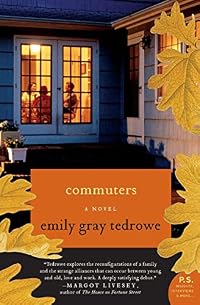
Member Recommendations
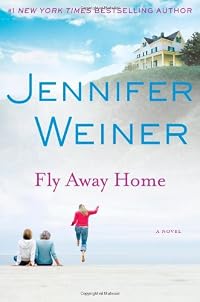
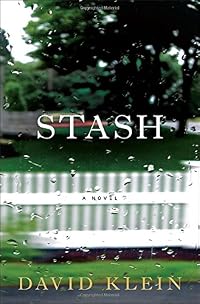
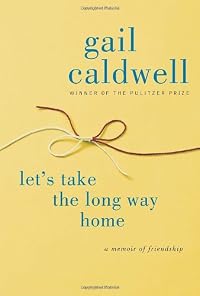
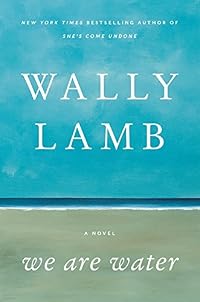
terran Both are stories of parent-grown child relationships and family secrets
Member Reviews
Ruth Plank and Dana Dickerson are born on the same day...July 4, 1950. Ruth's mother (Connie) declares that they are "birthday sisters" and maintains contact with the Dickersons even as the Dickersons move every year to another town or state. This need for contact is somewhat baffling to Ruth, who feels no attachment to Dana. The story spans about six decades in the lives of the two "sisters".
It's an good book even though the big mystery is very easy to figure out. The characters are interesting and that's what kept me reading. I wanted to know how their lives played out....even if there had been no mysterious connection.
It's an good book even though the big mystery is very easy to figure out. The characters are interesting and that's what kept me reading. I wanted to know how their lives played out....even if there had been no mysterious connection.
Two girls are born on the same day in the same hospital. Their stories are told in alternating chapters. Ruth Plank is the fifth daughter of farmer Edwin and his wife, Connie. She grows up on the farm which has been in the Plank family for ten generations, but she always feels out of place. Her birthday sister was Dana Dickerson, whose family had only lived in town a few years. They had only one son before Dada was born. They moved away to Pennsylvania but returned annually to visit the Plank farmstand.
The families weren't close but maintained contact throughout the years in spite of their differences. Ruth didn't mind because she was attracted to Dana's older brother,. Ray. Through each girl's story runs a thread of confusion about show more their place in their family. In the seventh grade Dana realizes she is a lesbian. That same year Ruth begins to suspect some secret between her father and Dana's mother, Valerie Dickinson.
I enjoyed the writing very much and liked the voices of the characters. The relationships, partiicularly that of Dana and her partner, Clarice, are well drawn. Early on I felt that I knew what lay ahead, but the writing held me and I continued reading to the end. I would recommend it to Elizabeth Berg fans in particular. show less
The families weren't close but maintained contact throughout the years in spite of their differences. Ruth didn't mind because she was attracted to Dana's older brother,. Ray. Through each girl's story runs a thread of confusion about show more their place in their family. In the seventh grade Dana realizes she is a lesbian. That same year Ruth begins to suspect some secret between her father and Dana's mother, Valerie Dickinson.
I enjoyed the writing very much and liked the voices of the characters. The relationships, partiicularly that of Dana and her partner, Clarice, are well drawn. Early on I felt that I knew what lay ahead, but the writing held me and I continued reading to the end. I would recommend it to Elizabeth Berg fans in particular. show less
 This review was written for LibraryThing Early Reviewers.
I love family sagas so I might be a tad biased on this review but I loved this story and following Dana and as they grew up. I knew there was a plot twist somewhere, but I didn't see it coming which made me enjoy it even more. Of course some parts of it seemed unrealistic, but in the end I though this was a wonderful story with wonderful characters.
My mother and her cousin had daughters born on the same day, at the same hospital. We lived parallel lives, not great friends, but cordial friends, until she passed away. So the premise of this book attracted me to it.
Ruth Plank and Dana Dickerson are "birthday sisters," born on the same day at the same hospital. The story switches back and forth between these two as narrators, beginning at their youth and moving into late middle age, chronicling their lives, and leading up to what I think was supposed to be a "shocking" revelation.
I found the chapters to be too short to keep my interest, and the "revelation" was obvious to me very early on in the book. The story and characters never connected with me, although I can see how it would be show more appealing to a different kind of reader. Ultimately disappointing to me. show less
Ruth Plank and Dana Dickerson are "birthday sisters," born on the same day at the same hospital. The story switches back and forth between these two as narrators, beginning at their youth and moving into late middle age, chronicling their lives, and leading up to what I think was supposed to be a "shocking" revelation.
I found the chapters to be too short to keep my interest, and the "revelation" was obvious to me very early on in the book. The story and characters never connected with me, although I can see how it would be show more appealing to a different kind of reader. Ultimately disappointing to me. show less
This review was written for LibraryThing Early Reviewers.Throughout Part 1 of the good daughters I was giving this book 5 stars for character development. Watching the two daughters pretty much raise themselves and delve into their interests was fascinating. Following the development of Dana both professionally and personally, through the rest of book maintained the promise of the beginning.
I especially liked the development of the agricultural symbolism of the good daughters of both the strawberry and human variety. Unfortunately, early in part 2 a strange blight seemed to effect Ruth, stunted her growth, and turned her into a specimen not worth reproduction. In accordance with the agricultural symbolism, Maynard places heavy emphasis on the importance of nature versus nurture in the show more maturation, and lack of maturation of the girls. Perhaps Ruth's strange blight is a manifestation of sexual schizophrenia. Unlike plants, however, people have personalities and schizophrenia is not manifested in only one area of the personality, so I have no idea what Maynard was trying to do with the character. One star deducted for inconsistent character development of one of the main characters.
Then I had to deduct one big star for the tiresome use of The Big Secret plot device. Why, oh why do authors insist on scooping up a big dose of secret and plopping it on characters who remain clueless while the reader grows more and more nauseated trying to work her way through it?
Thus a book that should have been 5 star if it had matched Dana's story with something equally consistent from Ruth and, at the least, greatly diluted The Big Secret effect ended up with a disappointing 3 stars. Maynard thanked her editor for all her help. I think she needed a great deal more. show less
I especially liked the development of the agricultural symbolism of the good daughters of both the strawberry and human variety. Unfortunately, early in part 2 a strange blight seemed to effect Ruth, stunted her growth, and turned her into a specimen not worth reproduction. In accordance with the agricultural symbolism, Maynard places heavy emphasis on the importance of nature versus nurture in the show more maturation, and lack of maturation of the girls. Perhaps Ruth's strange blight is a manifestation of sexual schizophrenia. Unlike plants, however, people have personalities and schizophrenia is not manifested in only one area of the personality, so I have no idea what Maynard was trying to do with the character. One star deducted for inconsistent character development of one of the main characters.
Then I had to deduct one big star for the tiresome use of The Big Secret plot device. Why, oh why do authors insist on scooping up a big dose of secret and plopping it on characters who remain clueless while the reader grows more and more nauseated trying to work her way through it?
Thus a book that should have been 5 star if it had matched Dana's story with something equally consistent from Ruth and, at the least, greatly diluted The Big Secret effect ended up with a disappointing 3 stars. Maynard thanked her editor for all her help. I think she needed a great deal more. show less
This review was written for LibraryThing Early Reviewers.Stuck in a cabin having read all the other books that I had brought with me, I started to read The Good Daughters, and it was with a sinking feeling that I recognized it as a classic "TV novel". These books seem to be rooted in a TV universe with TV dialogue, TV plots, TV characters, TV themes, and worst of all TV language. Which is likely all a winning combination with an assured [TV] audience. The Good Daughters has it all, most likely including the audience. It has incest, lesbian love, childhood sexual abuse, assisted suicide, high profile diseases (lots of these to choose from), a deep, dark secret (though implausible in extremis and telegraphed in flagrante from about the beginning) upon which absolutely everything hinges, and show more bags of money that arrive out of thin air at the last minute - just prior to the last commercial and improbable denouement, and an agricultural metaphor to tie it all neatly together. For me though it is the thin prose (smooth as another reviewer below describes it) that serviceably, but unmemorably tracks two parallel lives over many decades over very few pages that epitomizes the TVness of it all - surely these fictional lives deserved more? There is one sentence that stays with me, the one that the author or editor had the good sense to excerpt for the novel's title, but to paraphrase Sherman Alexie, this is barely enough goodness. show less
Sometimes a book isn’t about the dramatic unveiling of mysteries and secrets.
When I picked up this book, when I read the back of it, that short summary that talked about “birthday sisters”, I guessed immediately what the “twist” of the story would be – so it was with a bit of a sigh that I opened up the book.
Then I was blown away by how the world came to life with just that opening scene.
Here is what The Good Daughters taught me. It taught me that a good story is told in the small scenes that chronicle the lives of two very different girls/women. It taught me that a tragic mistake, or circumstance, or “mystery” isn’t the story, it’s just a piece of the puzzle. It taught me that love always finds a place to manifest show more itself, even if it’s unexpected.
So while I could do the obvious and berate Joyce Maynard for writing a book with such an overused story, I won’t.. because it wasn’t used as a plot device – instead it was just part of the story tat helped tie things together, and I loved it for that.
I loved the descriptions, both of the country and the people. I felt connected to both Ruth and Dana, but never intimately involved in their lives, more as an outsider watching through a window as the story developed. It was a strange feeling for me, because I usually want to be so emotionally invested, but I didn’t need to be with this book, because I knew how the story ended. But that didn’t make it any less interesting and that is the mark, to m show less
When I picked up this book, when I read the back of it, that short summary that talked about “birthday sisters”, I guessed immediately what the “twist” of the story would be – so it was with a bit of a sigh that I opened up the book.
Then I was blown away by how the world came to life with just that opening scene.
Here is what The Good Daughters taught me. It taught me that a good story is told in the small scenes that chronicle the lives of two very different girls/women. It taught me that a tragic mistake, or circumstance, or “mystery” isn’t the story, it’s just a piece of the puzzle. It taught me that love always finds a place to manifest show more itself, even if it’s unexpected.
So while I could do the obvious and berate Joyce Maynard for writing a book with such an overused story, I won’t.. because it wasn’t used as a plot device – instead it was just part of the story tat helped tie things together, and I loved it for that.
I loved the descriptions, both of the country and the people. I felt connected to both Ruth and Dana, but never intimately involved in their lives, more as an outsider watching through a window as the story developed. It was a strange feeling for me, because I usually want to be so emotionally invested, but I didn’t need to be with this book, because I knew how the story ended. But that didn’t make it any less interesting and that is the mark, to m show less
Members
- Recently Added By
Published Reviews
ThingScore 88
Although Maynard relies on a central plot contrivance that strains credulity, she consistently brings emotional authenticity to the long arc of her characters’ lives and to the joy and loss they experience.
added by khuggard
As Ruth and Dana pursue love, contemplate children, and search for home, the truth of what unites their families is finally--at long last--revealed, in this beautifully written book
added by khuggard
Author Information

32+ Works 5,127 Members
Joyce Maynard was born on November 5, 1953. She first came to national attention in 1973 with the publication of her New York Times cover story An Eighteen-Year-Old Looks Back on Life, which she wrote while a freshman at Yale University. Since then, she has been a reporter and columnist for The New York Times, a syndicated newspaper columnist, and show more a regular contributor to NPR. Her writing have also been published in numerous magazines including O, The Oprah Magazine; Newsweek; The New York Times Magazine; Forbes; Salon; San Francisco Magazine; and USA Weekly. She has written both fiction and nonfiction works including The Usual Rules, The Cloud Chamber, Internal Combustion, After Her, and her memoirs Looking Back and At Home in the World. Maynard's memoirs include details about her relationship with J. D. Salinger when she was 18 years old and attending Yale University. To Die For was adapted into a movie starring Nicole Kidman, Matt Dillon and Joaquin Phoenix and Labor Day was adapted into a movie starring Kate Winslet and Josh Brolin. (Bowker Author Biography) show less
Common Knowledge
- Canonical title
- The Good Daughters
- Original publication date
- 2010
- People/Characters
- Ruth Plank; Dana Dickerson; Edwin Plank; Connie Plank; George Dickerson; Valerie Dickerson (show all 8); Ray Dickerson; Victor Patucci
- Important places
- New Hampshire, USA
- Important events
- Woodstock Music and Art Fair
- Dedication
- For Laurie Clark Buchar and for Rebecca Tuttle Schultze--Like myself, two daughters of New Hampshire My sisters not by blood but by choice
- First words
- It begins with a humid wind, blowing across the fields from the northeast, and strangely warm for this time of year.
- Last words
- (Click to show. Warning: May contain spoilers.)Sturdier stock perhaps, or simply luckier, if you can call us that.
- Blurbers
- Berg, Elizabeth; Rice, Luanne
- Original language
- English
Classifications
Statistics
- Members
- 740
- Popularity
- 37,908
- Reviews
- 65
- Rating
- (3.49)
- Languages
- 5 — Dutch, English, French, German, Turkish
- Media
- Paper, Audiobook, Ebook
- ISBNs
- 20
- ASINs
- 6