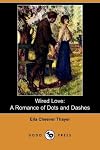
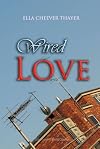
Wired Love: A Romance of Dots and Dashes
by Ella Cheever Thayer
On This Page
Description
Wired Love a Romance of Dots and Dashes by Ella Cheever Thayer, is an enchanting book about a love affair between two telegraphers in America, code names 'N' and 'C'. The couple fall victim to the dangers that internet chat-room users are faced with today: they begin to fall for the stranger on the other end of the line without knowing what they look like, who they are, or anything much about them. For the first few chapters, 'N', known as Nattie, has no idea if the grapher on the end of the show more line is a man or a woman. She leads a double life - her 'online' life and her humdrum normal life. She has her real, 'visible' friends, and this increasingly special 'invisible' friend. The humor in this novel is touching and farcical at times, and I found this to be one of the most charming aspects of the book. Charming is the perfect word for it as you fall in love with the characters and delight in the myriad of misunderstanding that makes this novel so highly cinematic. show lessTags
Recommendations






















Member Reviews
Perhaps presaging the advent of internet dating, this is a lovely old-fashioned story about a telegraph operator who begins to fall in love with another telegraph operator -- though of course they've never met, they've only spoken to each other "on the wire."
If you are able to enjoy a late-1800s style of writing (I personally find it quite charming) and its accompanying social commentary, I highly recommend this book. Think of it as a Jane Austen novelette tackling the strangeness of getting to know people without having met them -- or, as the case may be, of forming a very complete picture of a stranger in your mind, then being faced with the reality.
If you are able to enjoy a late-1800s style of writing (I personally find it quite charming) and its accompanying social commentary, I highly recommend this book. Think of it as a Jane Austen novelette tackling the strangeness of getting to know people without having met them -- or, as the case may be, of forming a very complete picture of a stranger in your mind, then being faced with the reality.
I found it impossible not to read this book as an internet romance avant la lettre. Published in 1879 Wired Love deals with Nattie, an introverted and slightly lonely telegraph operator, and the flirtatious teasing she engages in with an anonymous colleague in a station far away. Gradually Nattie surrounds herself with the friends she makes in her boarding house, as well as with her beau, who via a helpful coincidence or two ends up taking lodging in the same building. This being a romance novel, the remainder of the plot consists of misunderstandings and obstacles thrown in the way of the main couple's eventual reconciliation and admissions of mutual affection.
Without the telegraphy angle, this book would merely be a sweet but show more standard romance novel, more straightforward and a little trashier, perhaps, than Pride and Prejudice. But I think that for modern-day readers the charm of Wired Love lies in discovering how relatable Nattie's understanding of and interaction with the telegraph wire network is. To name but two examples: 19thC characters engaging in an online relationship while hiding behind nicknames; and an introverted main character developing her online persona as different from the meatspace one. Much of this is left unstated, and given that author Ella C. Thayer herself worked as a telegraph operator, I'm inclined to take these as realistic representations of wire culture.
Another point that rings true is that Natty finds communicating via Morse a more comfortable way of expressing her feelings than the immediacy of spoken words. This leads to genuinely cute moments, such as when after the two meet IRL, Nattie feels that their discussions, now that they take place face-to-face, just aren't the same any more, and the couple-to-be promptly install telegraph keys and a connecting wire in their boarding house rooms and resume their Morse chattering, to the satisfaction of both.
Wired Love also features some interesting side characters, including a self-confident and financially independent opera singer who assumes catalyst duties. Thayer, who later went on to write pro-suffragette plays, even has her make some pretty unconventional decisions near the end of the book. And that is a quality of most female main characters here, who buck 19thC stereotypes and are firmly in control of their decisions. Even when overcome by crippling self-doubt.
One thing I did find puzzling, though: bad teeth and, especially, red hair are seen as inherently offputting, and immediately disqualify characters as suitable romantic partners.
But apart from that: Wired Love is a very enjoyable read. It offers a lovely glimpse of a 19thC version of online dating, complete with Morse slang, strong female heroines and social awkwardness. Warmly recommended.
*** This book is available through Project Gutenberg. *** show less
Without the telegraphy angle, this book would merely be a sweet but show more standard romance novel, more straightforward and a little trashier, perhaps, than Pride and Prejudice. But I think that for modern-day readers the charm of Wired Love lies in discovering how relatable Nattie's understanding of and interaction with the telegraph wire network is. To name but two examples: 19thC characters engaging in an online relationship while hiding behind nicknames; and an introverted main character developing her online persona as different from the meatspace one. Much of this is left unstated, and given that author Ella C. Thayer herself worked as a telegraph operator, I'm inclined to take these as realistic representations of wire culture.
Another point that rings true is that Natty finds communicating via Morse a more comfortable way of expressing her feelings than the immediacy of spoken words. This leads to genuinely cute moments, such as when after the two meet IRL, Nattie feels that their discussions, now that they take place face-to-face, just aren't the same any more, and the couple-to-be promptly install telegraph keys and a connecting wire in their boarding house rooms and resume their Morse chattering, to the satisfaction of both.
Wired Love also features some interesting side characters, including a self-confident and financially independent opera singer who assumes catalyst duties. Thayer, who later went on to write pro-suffragette plays, even has her make some pretty unconventional decisions near the end of the book. And that is a quality of most female main characters here, who buck 19thC stereotypes and are firmly in control of their decisions. Even when overcome by crippling self-doubt.
One thing I did find puzzling, though: bad teeth and, especially, red hair are seen as inherently offputting, and immediately disqualify characters as suitable romantic partners.
But apart from that: Wired Love is a very enjoyable read. It offers a lovely glimpse of a 19thC version of online dating, complete with Morse slang, strong female heroines and social awkwardness. Warmly recommended.
*** This book is available through Project Gutenberg. *** show less
Nattie Rogers is a telegraph operator in an out-of-the-way town, supporting herself through her work as she lives in a boarding house with a couple other young women. Her call sign is "Xn," and the novel opens as she makes the telegraphic acquaintance of "C," someone she supposes is a man-- at the very least, he is quite a flirt. Wired Love chronicles the ups and downs of their relationship, as they go from tentative associates to people who annoy everyone else on the line with their carrying-on to meeting in person, though all of this is of course interspersed with the kind of misunderstandings that make romance novels have plots.
There were a couple things I found interesting about this: Wired Love really does show that the telegraph show more as a precursor to the Internet, a safe space where people who otherwise might suffer from social awkwardness having an anonymous safe haven, and building strong relationships as a result. When Nattie finally meets "C" in person, their interactions don't quite have the same spark-- but then they take to using the telegraph to signal each other even within the same house! There are also the same issues of mistaken identity that we might fret about these days, and at least one character declaring that the telegraph has ended social interaction as we know it. The cutest scenes are those where the characters rap on tables and such to "telegraph" each other in person. I was also interested in that the book depicted a number of working women with no apparent stigmatization or even justification-- having read a number of novels dealing with working women in the 19th century, the authors generally needed to justify their position (dead or deadbeat parents or husbands, usually), but not here. We don't know why these women are working, but there's nothing wrong with that. Admirably progressive.
Though the novel's first half is fun, I found it became so-so once Nattie met up with her "C" in person; at that point, you're just biding time until they get together, and most of the complications come from other people's (not very interesting) relationship problems. It's kind of a slog to the end-- though the final scene is flat-out brilliant! show less
There were a couple things I found interesting about this: Wired Love really does show that the telegraph show more as a precursor to the Internet, a safe space where people who otherwise might suffer from social awkwardness having an anonymous safe haven, and building strong relationships as a result. When Nattie finally meets "C" in person, their interactions don't quite have the same spark-- but then they take to using the telegraph to signal each other even within the same house! There are also the same issues of mistaken identity that we might fret about these days, and at least one character declaring that the telegraph has ended social interaction as we know it. The cutest scenes are those where the characters rap on tables and such to "telegraph" each other in person. I was also interested in that the book depicted a number of working women with no apparent stigmatization or even justification-- having read a number of novels dealing with working women in the 19th century, the authors generally needed to justify their position (dead or deadbeat parents or husbands, usually), but not here. We don't know why these women are working, but there's nothing wrong with that. Admirably progressive.
Though the novel's first half is fun, I found it became so-so once Nattie met up with her "C" in person; at that point, you're just biding time until they get together, and most of the complications come from other people's (not very interesting) relationship problems. It's kind of a slog to the end-- though the final scene is flat-out brilliant! show less
I have been meaning to read this for years. It is about Nattie, a telegraph operator who chats whenever she can “over the wire” with C., another telegraph operator miles down the line.
I love stories where characters fall in love through exchanged messages. (Is there a simple title for this dynamic? Aside from calling it You’ve Got Mail-ish? I couldn’t find one on TVtropes. Is there an AO3 tag?) And the experiences of telegraph operators is absolutely fascinating -- simultaneously a product of the past and yet incredibly relatable from a contemporary perspective, because the internet and mobile phones mean we spend so much time communicating through text.
I was a little disappointed that, after Nattie and Clem meet in real life, show more the focus shifts away from the telegraph office to antics at their boardinghouse. But the story continues to be fun and delightful.
“Yes,” replied Nattie, "it's hard to make them believe sometimes that everything less than ten words is a stated price, and that we only charge per word after that number. And, speaking of ignorance, do you know I once actually had a letter brought me, all sealed, to be sent that way by telegraph. [...] and I had a young woman come in here once, who asked me to write the message for her, and after I had done so, in a somewhat hasty scrawl, she took it, looked it all over critically, dotted some 'i's,' and crossed some 't's,' I all the time staring, amazed, and wondering if she supposed I could not read my own hand-writing, then scowled and threw it down disgustedly saying, 'John never can read that! I shall have to write it myself. He knows my writing!'”
“Can such things be!” cried Miss Archer.
“But,” asked Quimby, from his uncomfortable perch on the edge of the chair, "Isn't there a—a something—a fac-simile arrangement?”
“I believe there is, but it is not yet perfected,” replied Nattie.
“Ah, well! then the young woman was only in advance of the age,” said Miss Archer; “and what with that and the telephone, and that dreadful phonograph that bottles up all one says and disgorges at inconvenient times, we will soon be able to do everything by electricity; who knows but some genius will invent something for the especial use of lovers? something, for instance, to carry in their pockets, so when they are far away from each other, and pine for a sound of 'that beloved voice,' they will have only to take up this electrical apparatus, put it to their ears, and be happy. Ah! blissful lovers of the future!” show less
I love stories where characters fall in love through exchanged messages. (Is there a simple title for this dynamic? Aside from calling it You’ve Got Mail-ish? I couldn’t find one on TVtropes. Is there an AO3 tag?) And the experiences of telegraph operators is absolutely fascinating -- simultaneously a product of the past and yet incredibly relatable from a contemporary perspective, because the internet and mobile phones mean we spend so much time communicating through text.
I was a little disappointed that, after Nattie and Clem meet in real life, show more the focus shifts away from the telegraph office to antics at their boardinghouse. But the story continues to be fun and delightful.
“Yes,” replied Nattie, "it's hard to make them believe sometimes that everything less than ten words is a stated price, and that we only charge per word after that number. And, speaking of ignorance, do you know I once actually had a letter brought me, all sealed, to be sent that way by telegraph. [...] and I had a young woman come in here once, who asked me to write the message for her, and after I had done so, in a somewhat hasty scrawl, she took it, looked it all over critically, dotted some 'i's,' and crossed some 't's,' I all the time staring, amazed, and wondering if she supposed I could not read my own hand-writing, then scowled and threw it down disgustedly saying, 'John never can read that! I shall have to write it myself. He knows my writing!'”
“Can such things be!” cried Miss Archer.
“But,” asked Quimby, from his uncomfortable perch on the edge of the chair, "Isn't there a—a something—a fac-simile arrangement?”
“I believe there is, but it is not yet perfected,” replied Nattie.
“Ah, well! then the young woman was only in advance of the age,” said Miss Archer; “and what with that and the telephone, and that dreadful phonograph that bottles up all one says and disgorges at inconvenient times, we will soon be able to do everything by electricity; who knows but some genius will invent something for the especial use of lovers? something, for instance, to carry in their pockets, so when they are far away from each other, and pine for a sound of 'that beloved voice,' they will have only to take up this electrical apparatus, put it to their ears, and be happy. Ah! blissful lovers of the future!” show less
I cannot fit into one review everything I loved about this book. Witty, charming, hilarious, poignant, unbelievably relevant, Wired Love was a pure delight.
This 100 year-old novel holds a category all its own. But the premise is so timely with the rise of the cell phone--I never would have guessed at the many parallels of a texting relationship and one carried on "over the wire."
Unfortunately, the author wields a beautifully skilled vocabulary that might weary younger readers. Clean, fun and romantic, I would love to see this story on the big screen.
This 100 year-old novel holds a category all its own. But the premise is so timely with the rise of the cell phone--I never would have guessed at the many parallels of a texting relationship and one carried on "over the wire."
Unfortunately, the author wields a beautifully skilled vocabulary that might weary younger readers. Clean, fun and romantic, I would love to see this story on the big screen.
The more things change, the more they stay the same. I was struck by how similar love over the wires is to online relationships. This was a fun romance that I actually found pretty informative of how telegraphs worked, in addition to just being a sweet story over all.
Tremendously cute. The type of story in the "Shop Around the Corner" and "You've Got Mail" genre, although this one pre-dates both.
Nattie, a young woman who has obtained a post in a telegraph office, is having a particularly bad few minutes. The telegrapher on the other end is sending way too fast for her to decipher, a customer is asking stupid questions, and then she upsets a bottle of ink all over herself. These things cause her to interrupt "C" (the telegrapher on the other end) several times and ask for a repeat of the message, until "C" loses patience with her and gets a little sarcastic. Nattie (who signs as "N") retorts back and also attempts to explain what was going on to cause her to be so inefficient. "C" mellows out, and show more the two "converse" in Morse code over the wire whenever they get a few moments the rest of the day.
"C" and "N" find over the weeks that follow that they are developing a unique friendship, and Nattie is satisfied to find out, as she soon does, that "C" is a man. She expects to never meet him in person, and so allows herself a greater degree of openness than she normally would. Of course, all this is: A) extremely UNPROFESSIONAL, and B) risky due to the possibility of deception. (This is why it feels kind of modern in places...technology has changed, but the pitfalls are the same.) Anyway, half of the story is their friendship over the wire, and the second half is their friendship in person, which actually gets MORE complicated than the formerly anonymous relationship, because Nattie finds herself tongue-tied when she's away from her telegrapher's key, and gets convinced that "C" is actually in love with her best friend.
Anyone who likes the aforementioned movies will probably like this book. show less
Nattie, a young woman who has obtained a post in a telegraph office, is having a particularly bad few minutes. The telegrapher on the other end is sending way too fast for her to decipher, a customer is asking stupid questions, and then she upsets a bottle of ink all over herself. These things cause her to interrupt "C" (the telegrapher on the other end) several times and ask for a repeat of the message, until "C" loses patience with her and gets a little sarcastic. Nattie (who signs as "N") retorts back and also attempts to explain what was going on to cause her to be so inefficient. "C" mellows out, and show more the two "converse" in Morse code over the wire whenever they get a few moments the rest of the day.
"C" and "N" find over the weeks that follow that they are developing a unique friendship, and Nattie is satisfied to find out, as she soon does, that "C" is a man. She expects to never meet him in person, and so allows herself a greater degree of openness than she normally would. Of course, all this is: A) extremely UNPROFESSIONAL, and B) risky due to the possibility of deception. (This is why it feels kind of modern in places...technology has changed, but the pitfalls are the same.) Anyway, half of the story is their friendship over the wire, and the second half is their friendship in person, which actually gets MORE complicated than the formerly anonymous relationship, because Nattie finds herself tongue-tied when she's away from her telegrapher's key, and gets convinced that "C" is actually in love with her best friend.
Anyone who likes the aforementioned movies will probably like this book. show less
Members
- Recently Added By
Lists

Read in 2016
107 works; 7 members
Author Information
2 Works 87 Members
Series
Belongs to Publisher Series
Project Gutenberg EBook (24353)
Common Knowledge
- Original publication date
- 1880
- Dedication
- DEDICATED TO THE MEMORY OF A DEAR FRIEND BUT FOR WHOM THIS LITTLE WORK HAD NEVER BEEN
- First words
- -… — .-.. -.
Just a noise, that is all.
Classifications
Statistics
- Members
- 84
- Popularity
- 379,881
- Reviews
- 12
- Rating
- (3.72)
- Languages
- English
- Media
- Paper, Audiobook, Ebook
- ISBNs
- 28
- ASINs
- 5