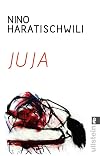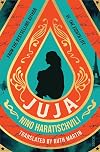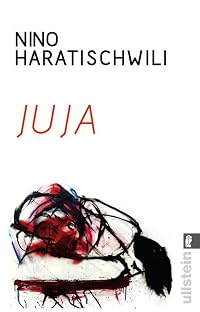
Juja
by Nino Haratischwili
On This Page
Description
In 1953, a teenage girl, Jeanne Saré, jumps in front of a train at the Gare du Nord station. She leaves behind writings that to some are unreadable, but to others tell universal, unspoken truths about the lives and struggles of women. When published in the 1970s, her work triggers a rash of copycat suicides. It is hastily withdrawn from sale and eventually forgotten about. Then, in 2004, two women from opposite corners of the globe-Amsterdam and Sydney-rediscover Jeanne Saré's book and set show more out to discover who the author was and what happened to her. Women across the ages have attached their own stories to Saré's, often with devastating results, but the truth about her may be even stranger than the fictions they have invented. show lessTags
Recommendations













Member Reviews
I finished this book about a month ago and it has been percolating away in my brain ever since. Partly because I needed to write this review of it but also because it is that type of book for me. A book that was interesting and disturbing to read and that stays with me long after reading. And one that probably begs a reread or two.
Interestingly, I’m currently wrapping up my reading of the amazing Rodrigo Fresán triptych of The Dreamed Part, The Invented Part, and The Remembered Part. The protagonist in those books is a writer and one of the “themes” that constantly comes up is that readers today want to take whatever they read as fact. In other words, there is no fiction; a writer is of course being autobiographical or writing show more about things that happened. This is exacerbated by the autofiction and memoir that is so ubiquitous in today’s publishing market, and by the glowing screens we all consult to get the “facts.” In Juja, that tendency to assume autobiography and fact has tragic consequences for some of the women who come across, read, and often obsess about the book and the mysterious person who wrote it.
But who wrote it? And who is talking? There are so many narrators, most of them pretty unreliable, I’d say. Is ICE AGE the mysterious Jeanne Saré? The original suicide? The one who pens the first lines:
“I was an EMBRYO and knew everything. I was pushed out into life and forgot my knowledge. I was fucked into life. My knowledge was taken from me. I want revenge.”
What are we getting into here?
It took me half the book to think I figured out who “ME” was.
The most reliable narrator is Laura, a university professor who ends up researching the book attributed to Jeanne Saré, and even she has challenges to confuse the reader. In no small part her reluctance to even be involved in something so outside her expertise in the visual arts. And while she doesn’t seem to be one of the women in the book that is susceptible to the suicide spell, she’s definitely processing her own baggage and acting out because of it. It doesn’t help that she’s a loner with little space for people in her life:
“Sometimes Laura thought that there just wasn't room in her heart for more than one person. Child, husband, sister, it didn't matter. It was a very monogamous heart, a very eccentric heart.”
Another intersection with the Fresán book for me is chasing down musical references. The title seems to refer to a song ‘Juja,’ which is referenced in the epigraph but I sure can’t find it out in the streamiverse. Maybe it’s an invention of Hratischvili’s? It’s driving me crazy.
I’ve read all of Haratischvili’s books available in English and they have each been enthralling reads for different reasons. The premise of this one and the characters she develops have stayed with me since finishing it. It’s got some lessons to teach about the dangers of taking a book too seriously, or, conversely, the dangers of fiction posing as non-fiction or truth. And, as I mourn the loss of some of my oldest friends and prepare to lose my elderly parents, there is a great line about grief that I think is often on point:
“… the saddest thing about the death of someone you love is the disregard for your own life that follows it.” show less
Interestingly, I’m currently wrapping up my reading of the amazing Rodrigo Fresán triptych of The Dreamed Part, The Invented Part, and The Remembered Part. The protagonist in those books is a writer and one of the “themes” that constantly comes up is that readers today want to take whatever they read as fact. In other words, there is no fiction; a writer is of course being autobiographical or writing show more about things that happened. This is exacerbated by the autofiction and memoir that is so ubiquitous in today’s publishing market, and by the glowing screens we all consult to get the “facts.” In Juja, that tendency to assume autobiography and fact has tragic consequences for some of the women who come across, read, and often obsess about the book and the mysterious person who wrote it.
But who wrote it? And who is talking? There are so many narrators, most of them pretty unreliable, I’d say. Is ICE AGE the mysterious Jeanne Saré? The original suicide? The one who pens the first lines:
“I was an EMBRYO and knew everything. I was pushed out into life and forgot my knowledge. I was fucked into life. My knowledge was taken from me. I want revenge.”
What are we getting into here?
It took me half the book to think I figured out who “ME” was.
The most reliable narrator is Laura, a university professor who ends up researching the book attributed to Jeanne Saré, and even she has challenges to confuse the reader. In no small part her reluctance to even be involved in something so outside her expertise in the visual arts. And while she doesn’t seem to be one of the women in the book that is susceptible to the suicide spell, she’s definitely processing her own baggage and acting out because of it. It doesn’t help that she’s a loner with little space for people in her life:
“Sometimes Laura thought that there just wasn't room in her heart for more than one person. Child, husband, sister, it didn't matter. It was a very monogamous heart, a very eccentric heart.”
Another intersection with the Fresán book for me is chasing down musical references. The title seems to refer to a song ‘Juja,’ which is referenced in the epigraph but I sure can’t find it out in the streamiverse. Maybe it’s an invention of Hratischvili’s? It’s driving me crazy.
I’ve read all of Haratischvili’s books available in English and they have each been enthralling reads for different reasons. The premise of this one and the characters she develops have stayed with me since finishing it. It’s got some lessons to teach about the dangers of taking a book too seriously, or, conversely, the dangers of fiction posing as non-fiction or truth. And, as I mourn the loss of some of my oldest friends and prepare to lose my elderly parents, there is a great line about grief that I think is often on point:
“… the saddest thing about the death of someone you love is the disregard for your own life that follows it.” show less
Juja is a cosmopolitan novel about literature and identity and desire which feels like it belongs more to a shared Western literary tradition than to any particular national literature. It requires some patience at the beginning, as the narrative jumps between a handful of characters across a 50-year period and it’s not initially clear what connects them except perhaps for a certain spiritual condition: they all seem to have been very traumatized by something in their past and they struggle with a sense of anxiety and emptiness, a disconnect with the world.
Which all sounds very grim, but I found there is something oddly compelling about the author’s writing and imagery which made me want to keep reading and learn more about the show more characters. Perhaps because they’re all also very hungry for life, for passion and it’s that yearning that apparently also has a profound effect on the characters as well.
Gradually four main strands emerge: a girl in Paris in the 1950s, who committed suicide at 17, leaving behind a notebook with reflections entitled "The Ice Age"; the eventual publisher of the manuscript, whom we meet at the beginning of his own career as a writer, as a young man in the unrest of Paris in 1968; a woman in the 1980s who becomes one of a series of suicides inspired by reading The Ice Age; three individuals in the present day, who embark on a search to find out more about the book and its mysterious author in an attempt to understand how it could have such power over the young women who killed themselves.
In the second half of the book these strands come together in a mostly satisfying conclusion. The final message about how art can serve as sort of an amplifier of the reader/viewer's thoughts and feelings felt a little bit artificial, but in the end it was, for me, the characters and their unresolved pain and struggles -- no easy closure, just a pause, a regrouping, for more strength to continue anew -- who left the most vivid impression after the last page was turned.
(Read in German; the novel has not been translated into English at this time, but I hope it will be, as Haratischwili's writing seems likely to appeal to audiences outside of Germany.) show less
Which all sounds very grim, but I found there is something oddly compelling about the author’s writing and imagery which made me want to keep reading and learn more about the show more characters. Perhaps because they’re all also very hungry for life, for passion and it’s that yearning that apparently also has a profound effect on the characters as well.
Gradually four main strands emerge: a girl in Paris in the 1950s, who committed suicide at 17, leaving behind a notebook with reflections entitled "The Ice Age"; the eventual publisher of the manuscript, whom we meet at the beginning of his own career as a writer, as a young man in the unrest of Paris in 1968; a woman in the 1980s who becomes one of a series of suicides inspired by reading The Ice Age; three individuals in the present day, who embark on a search to find out more about the book and its mysterious author in an attempt to understand how it could have such power over the young women who killed themselves.
In the second half of the book these strands come together in a mostly satisfying conclusion. The final message about how art can serve as sort of an amplifier of the reader/viewer's thoughts and feelings felt a little bit artificial, but in the end it was, for me, the characters and their unresolved pain and struggles -- no easy closure, just a pause, a regrouping, for more strength to continue anew -- who left the most vivid impression after the last page was turned.
(Read in German; the novel has not been translated into English at this time, but I hope it will be, as Haratischwili's writing seems likely to appeal to audiences outside of Germany.) show less
Ich muss es wohl nochmal lesen. Das Format eBook ist nicht geeignet für diesen Roman, wo man ständig vor und zurück blättern muss, um die Übersicht zu behalten. - Alles in allem ein gutes Debüt, relativ sexlastig...
Nov 23, 2024German
Ratings
Members
- Recently Added By
Lists

Translingualism
191 works; 4 members
Author Information

16+ Works 1,430 Members
Some Editions
Awards and Honors
Common Knowledge
- Original title
- Juja
- Original publication date
- 2010
- Epigraph
- Fixed, complete, we can understand ourselves
Helmut Krausser, Melodies
Juja / A song
I want nothing, Juja.
I am dried out,
Like a parched puddle.
And in my heart
It's empty
It's cold.
And the factory chimneys smoke,
And you kiss me on the lips,
But the rain they fo... (show all)recast__
Where is it now?
Today, another drunken evening,
But it seems easier to me this way.
And even the stars shine brighter:
Ro-mance!
And we dissolve each other, Juja,
Like acid, or someting worse.
And we have to bear the pain
Together:
The glassy pain...
And on the river, the old boats again
So much older than me,
But even so each one lands
Somewhere
Somewhere
Somewhere...it lands.
Zemfira, 'Juja', on the Vendetta album - First words
- I was an EMBRYO and knew everything. I was pushed out into life and forgot my knowledge. I was fucked into life. My knowledge was taken from me. I want revenge.
Classifications
Statistics
- Members
- 49
- Popularity
- 612,954
- Reviews
- 3
- Rating
- (3.38)
- Languages
- English, German
- Media
- Paper, Audiobook, Ebook
- ISBNs
- 9
- ASINs
- 2