On This Page
Description
A seductive and shockingly inventive literary thriller that entwines suspense, history, the supernatural, adventure, steampunk, and a wicked sense of adventure into an intoxicating new genre.EPISODE ONE IN AN ASTONISHING NEW SERIES
New Venice—the "pearl of the Arctic"—is a place of ice palaces and pneumatic tubes, of beautifully ornate sled-gondolas and elegant Victorian garb, of long nights and short days and endless vistas of crystalline ice. But as the city prepares for spring, it show more feels more like qarrtsiluni— "the time when something is about to explode in the dark."
Local "poletics" are wracked by tensions between the city's security forces—the Subtle Army—and the Eskimos who were there first; by suffragette riots led by an underground music star; and by drug round-ups led by the ruthless secret police force known as the Gentlemen of the Night.
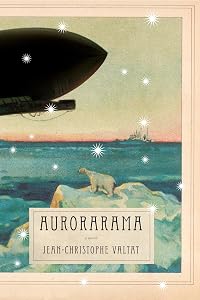
Meanwhile, a mysterious and ominous black airship hovers over the city like a supernatural threat—is New Venice about to come under assault, or is it another government ploy?
At the root of it all is an anonymous pamphlet calling for revolt, which the Gentlemen suspect was written by one of the city's most prominent figures, Brentford Orsini. But as they tighten the net around him, Orsini receives a message from a long-lost love that compels him to radical action. show less
Tags
Recommendations


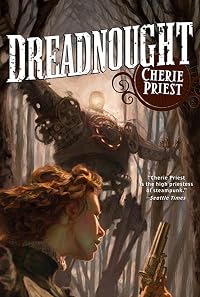
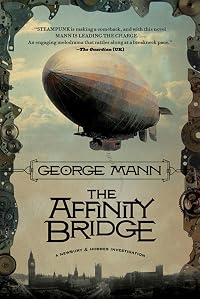


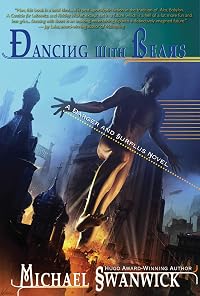
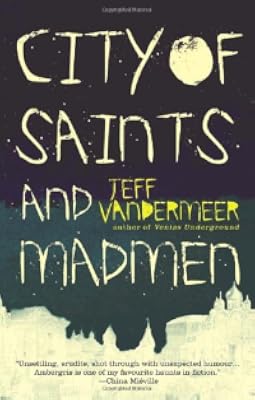






















Member Reviews
I both enjoyed and was disappointed by ‘Aurorarama’. It was magnificent and ambitious in scope, but failed in several significant ways. The scene of events is New Venice, a magnificent confection of a city located inside the Arctic Circle, north of Canada. The time is around the end of the 19th or beginning of the 20th century. The city is undergoing some political upheaval relating to circulation of a forbidden book, dissatisfaction among the native Inuit, and a black airship that hovers ominously. This setting is beautifully evoked and the world-building is rich, multi-layered, and fascinating. New Venice seems like a captivating place to explore, with a singular underground music scene, drug culture, and fragile economy. The show more descriptive passages are for the most part beautiful and evocative. There are plenty of allusions to spot and many amusing plays on words.
I found myself less impressed with the plot and characterisation. The pace of plotting was curiously inconsistent; for a while the narrative merely seemed to follow two characters around their daily lives. Whilst this introduced New Venice nicely, it didn’t sufficiently set the scene for things to come. Thus, the escalation of events seemed sudden and inexplicable. The initial scattering of strange apparitions and mysterious happenings did not tie in very clearly to subsequent developments. This general weirdness was certainly atmospheric, however I also found it a little frustrating. I believe this was linked to the two point of view characters, neither of whom had a clear agenda (that they articulated) and seemed constantly to be reacting to the unexpected. Nonetheless, I basically grasped what was going on.
The real problem to me was the rampant misogyny of the whole thing. Both of the point of view characters are male and for more than half the book they only mention women if they’re having sex with them. This is especially maddening given references to a since-deceased woman called Helen who apparently ‘saved the city’ in some unspecified way. I wanted to hear more about her. Both of the main female characters (Sybil and Stella) exist solely as love interests and to be manipulated and controlled by men. I found this deeply depressing. Latterly, an interesting woman called Lillian turns up, yet gets little to do, is not given the point of view, and by the end seems slated to be another love interest. Thus the male gaze is dominant, which I think holds the novel back. When I started reading it, I anticipated something like [b:The Glass Books of the Dream Eaters|19215955|The Glass Books of the Dream Eaters (Chapter 2 Cardinal)|Gordon Dahlquist|https://images.gr-assets.com/books/1386277269s/19215955.jpg|29633783], which combines mystery, adventure, and atmosphere, whilst including excellent female characters. Although ‘Aurorarama’ begins with a more interesting setting and the prospect of revolution (which I always love to read about), I much prefer [b:The Glass Books of the Dream Eaters|19215955|The Glass Books of the Dream Eaters (Chapter 2 Cardinal)|Gordon Dahlquist|https://images.gr-assets.com/books/1386277269s/19215955.jpg|29633783] overall.
I am in two minds about whether to read the sequel, [b:Luminous Chaos|13406754|Luminous Chaos (The Mysteries of New Venice, #2)|Jean-Christophe Valtat|https://images.gr-assets.com/books/1333581004s/13406754.jpg|18638970]. There is a short extract from it at the end of ‘Aurorarama’, which suggests that the points of view will remain with Gabriel (a dilettante that I often wished to slap) and Brentford (who is merely tedious in his lack of personality). The action seems to move to Paris, though, which surely undermines the main appeal of the series - New Venice is a wonderful creation. There must be better characters within it to follow the adventures of! Indeed, the side characters of ‘Aurorarama’ are idiosyncratic and interesting. Also at the end of the book is a short essay ‘Towards a New Steampunk’, which articulates some interesting points about the appeal of this sub-genre. I’ve mostly given up on steampunk novels, after getting bored with and failing to finish several. ‘Aurorarama’ is a cut above most steampunk in world-building and quality of writing, but the fact that it could have been so much better is maddening. I am glad that I went to New Venice, I just wish it had been with more congenial companions. show less
I found myself less impressed with the plot and characterisation. The pace of plotting was curiously inconsistent; for a while the narrative merely seemed to follow two characters around their daily lives. Whilst this introduced New Venice nicely, it didn’t sufficiently set the scene for things to come. Thus, the escalation of events seemed sudden and inexplicable. The initial scattering of strange apparitions and mysterious happenings did not tie in very clearly to subsequent developments. This general weirdness was certainly atmospheric, however I also found it a little frustrating. I believe this was linked to the two point of view characters, neither of whom had a clear agenda (that they articulated) and seemed constantly to be reacting to the unexpected. Nonetheless, I basically grasped what was going on.
The real problem to me was the rampant misogyny of the whole thing. Both of the point of view characters are male and for more than half the book they only mention women if they’re having sex with them. This is especially maddening given references to a since-deceased woman called Helen who apparently ‘saved the city’ in some unspecified way. I wanted to hear more about her. Both of the main female characters (Sybil and Stella) exist solely as love interests and to be manipulated and controlled by men. I found this deeply depressing. Latterly, an interesting woman called Lillian turns up, yet gets little to do, is not given the point of view, and by the end seems slated to be another love interest. Thus the male gaze is dominant, which I think holds the novel back. When I started reading it, I anticipated something like [b:The Glass Books of the Dream Eaters|19215955|The Glass Books of the Dream Eaters (Chapter 2 Cardinal)|Gordon Dahlquist|https://images.gr-assets.com/books/1386277269s/19215955.jpg|29633783], which combines mystery, adventure, and atmosphere, whilst including excellent female characters. Although ‘Aurorarama’ begins with a more interesting setting and the prospect of revolution (which I always love to read about), I much prefer [b:The Glass Books of the Dream Eaters|19215955|The Glass Books of the Dream Eaters (Chapter 2 Cardinal)|Gordon Dahlquist|https://images.gr-assets.com/books/1386277269s/19215955.jpg|29633783] overall.
I am in two minds about whether to read the sequel, [b:Luminous Chaos|13406754|Luminous Chaos (The Mysteries of New Venice, #2)|Jean-Christophe Valtat|https://images.gr-assets.com/books/1333581004s/13406754.jpg|18638970]. There is a short extract from it at the end of ‘Aurorarama’, which suggests that the points of view will remain with Gabriel (a dilettante that I often wished to slap) and Brentford (who is merely tedious in his lack of personality). The action seems to move to Paris, though, which surely undermines the main appeal of the series - New Venice is a wonderful creation. There must be better characters within it to follow the adventures of! Indeed, the side characters of ‘Aurorarama’ are idiosyncratic and interesting. Also at the end of the book is a short essay ‘Towards a New Steampunk’, which articulates some interesting points about the appeal of this sub-genre. I’ve mostly given up on steampunk novels, after getting bored with and failing to finish several. ‘Aurorarama’ is a cut above most steampunk in world-building and quality of writing, but the fact that it could have been so much better is maddening. I am glad that I went to New Venice, I just wish it had been with more congenial companions. show less
About fifty-five pages into this book I set it down with a harumph. I'd been waiting, waiting for the first introduction of a female character, and shortly after it happened that character may or may not have been turned over the knee of her professor and spanked.
Seriously?
I turned the book over and examined the back cover for a blurb by a woman. Opened to the first page of promotional blurbs, still looking. All men or publication names (so... 80% likely to be men.) Then there's a quote. From my sister. A rave, of course.
Fine.
I acknowledge that I am a little oversensitive to issues of representation just now (I blame the pinkification of Wonder Woman at Target, which, just, seriously? FEMINIST-HULK SMASH!) I decided to give the book a show more second chance and see where it went from there.
I am very glad that I did. Pretty much my only regret with this novel is that I read it in the summer. I read great chunks of it while walking to and from work on the river trail and could only imagine how much more perfect it would have been walking through a landscape heavy with snow.
I still haven't said much about the novel. It's been described as steampunk speculative fiction (the author prefers the term "Teslapop.") There are so many influences here it seems foolish to try to list them for all that would be missed. It's set in the early 20th century, in a city in the extreme North of North America -- New Venice. The city is a utopia-turning-dystopia with secret societies, shadowy police, a cornucopia of drugs, experimental music, magic, strained relations with local natives, powerful legends, and a mysterious airship floating above the city.
The book is crazy-thick with allusions and sly references and twists in on itself with a density that is sometimes oppressive. But it is also sometimes breath-takingly imaginative and visionary. And while the fantastical elements were sometimes excessive for me (I prefer my sf on the hard-science side of the spectrum), the Tesla-esque gadgets were fun to think about, and Valtat seemed always to suggest that surely there is some entirely plausible scientific explanation for all (well, maybe most) of this.
Did I mention there were zombies? And a polar kangaroo leading a white man on a shamanistic vision quest?
But whatever. I was hooked. Am hooked. I want to read this again in the winter, and am stalking the publisher's website for the sequel (whose publication date seems to have been pushed back multiple times).
A thoroughly diverting romp. Despite having a little bit of a girl problem. show less
Seriously?
I turned the book over and examined the back cover for a blurb by a woman. Opened to the first page of promotional blurbs, still looking. All men or publication names (so... 80% likely to be men.) Then there's a quote. From my sister. A rave, of course.
Fine.
I acknowledge that I am a little oversensitive to issues of representation just now (I blame the pinkification of Wonder Woman at Target, which, just, seriously? FEMINIST-HULK SMASH!) I decided to give the book a show more second chance and see where it went from there.
I am very glad that I did. Pretty much my only regret with this novel is that I read it in the summer. I read great chunks of it while walking to and from work on the river trail and could only imagine how much more perfect it would have been walking through a landscape heavy with snow.
I still haven't said much about the novel. It's been described as steampunk speculative fiction (the author prefers the term "Teslapop.") There are so many influences here it seems foolish to try to list them for all that would be missed. It's set in the early 20th century, in a city in the extreme North of North America -- New Venice. The city is a utopia-turning-dystopia with secret societies, shadowy police, a cornucopia of drugs, experimental music, magic, strained relations with local natives, powerful legends, and a mysterious airship floating above the city.
The book is crazy-thick with allusions and sly references and twists in on itself with a density that is sometimes oppressive. But it is also sometimes breath-takingly imaginative and visionary. And while the fantastical elements were sometimes excessive for me (I prefer my sf on the hard-science side of the spectrum), the Tesla-esque gadgets were fun to think about, and Valtat seemed always to suggest that surely there is some entirely plausible scientific explanation for all (well, maybe most) of this.
Did I mention there were zombies? And a polar kangaroo leading a white man on a shamanistic vision quest?
But whatever. I was hooked. Am hooked. I want to read this again in the winter, and am stalking the publisher's website for the sequel (whose publication date seems to have been pushed back multiple times).
A thoroughly diverting romp. Despite having a little bit of a girl problem. show less
In the year 1908, the city of New Venice is threatened by unrest. Hardly unique in a time when preachers of anarchy and committed revolutionaries roamed about the Western world. The forces of the status quo are particularly interested in who wrote a subversive tract called A Blast on the Barren Land, or The Standard of True Community Advanc'd, an accusation that this utopian community of the Arctic (seemingly around Greenland) has betrayed its principles. The genially sinister and nattily dressed secret police, the Gentlemen of the Night, think dissolute literature professor Gabriel d'Allier knows who wrote the book and pressure him into providing evidence it is his friend Brentford Orsini. The latter is highly placed in the Arctic show more Administration, manages the Greenhouse important to the city, and is also interested in Inuit-New Venice relationships.
Gabriel and Brentford are the viewpoint characters, and we follow them to meetings with conspiracies of garbagemen, magicians who may just work real magic, anarchists and suffragettes, and try to discover the meaning of a message from Brentford's dead lover urging him towards a rendezvous at the North Pole. And, especially, we see their romances play out - Gabriel with a Stella, a wild, tattooed magician's assistant and Brentford with fiance Sybil.
There are things to like in this book. Valtat provides lots of humor. It may not be of the laugh out loud variety, but it's there. The drugs, avante-garde musicians (a bit like anachronistically early progressive rock), legends, architecture, and wonderfully named places and government bureaus all amuse and kept me reading. In particular, I picked this book out because of its Arctic setting and steampunk tropes. And Valtat mostly delivers there with a melange of real and fake Arctic exploration and, besides just providing the obligatory airship, he comes up with some interesting bits of invented technology - enough that I think a steampunk fan who likes the subgenre for its alternate technology would probably like the book for that reason alone.
Ultimately, though, these all added up to a less than satisfying experience, a literary trip that, oddly, got less interesting when we actually left New Venice to follow Gabriel and Brentford. For a science fiction fan, the story uneasily amalgmates the supernatural with alternate science. For a fan of utopian fiction, the values of New Venice are too sketchily drawn, its administration too vaguely drawn and disguised by Valtat's clever nomenclature, to be interesting. The bohemian artists and architecture are too quickly glimpsed, ephemeral visions as we head to the spiritual North Pole of the novel's end.
And when the novel entered the realm of political revolution, I lost even more interest. Though, to be fair, I did like Valtat's anarchists who seemed more practical than many of their breed. (We even get echoes of the October 1917 Bolshevik Revolution with Navy Cadets playing a role.) Our journey of exploration ends up with some mundane statements about the difference between revolt and governing justly, communal politics versus the exclusivity of romantic love.
If you don't mind a trip to an unsatisfying destination and just want to gawk at some sights along the way, this is the book for you. Besides technophilic steampunk fans, the book also has some appeal to completists of the lost race novel. show less
Gabriel and Brentford are the viewpoint characters, and we follow them to meetings with conspiracies of garbagemen, magicians who may just work real magic, anarchists and suffragettes, and try to discover the meaning of a message from Brentford's dead lover urging him towards a rendezvous at the North Pole. And, especially, we see their romances play out - Gabriel with a Stella, a wild, tattooed magician's assistant and Brentford with fiance Sybil.
There are things to like in this book. Valtat provides lots of humor. It may not be of the laugh out loud variety, but it's there. The drugs, avante-garde musicians (a bit like anachronistically early progressive rock), legends, architecture, and wonderfully named places and government bureaus all amuse and kept me reading. In particular, I picked this book out because of its Arctic setting and steampunk tropes. And Valtat mostly delivers there with a melange of real and fake Arctic exploration and, besides just providing the obligatory airship, he comes up with some interesting bits of invented technology - enough that I think a steampunk fan who likes the subgenre for its alternate technology would probably like the book for that reason alone.
Ultimately, though, these all added up to a less than satisfying experience, a literary trip that, oddly, got less interesting when we actually left New Venice to follow Gabriel and Brentford. For a science fiction fan, the story uneasily amalgmates the supernatural with alternate science. For a fan of utopian fiction, the values of New Venice are too sketchily drawn, its administration too vaguely drawn and disguised by Valtat's clever nomenclature, to be interesting. The bohemian artists and architecture are too quickly glimpsed, ephemeral visions as we head to the spiritual North Pole of the novel's end.
And when the novel entered the realm of political revolution, I lost even more interest. Though, to be fair, I did like Valtat's anarchists who seemed more practical than many of their breed. (We even get echoes of the October 1917 Bolshevik Revolution with Navy Cadets playing a role.) Our journey of exploration ends up with some mundane statements about the difference between revolt and governing justly, communal politics versus the exclusivity of romantic love.
If you don't mind a trip to an unsatisfying destination and just want to gawk at some sights along the way, this is the book for you. Besides technophilic steampunk fans, the book also has some appeal to completists of the lost race novel. show less
Yes, this book took me a month to read. I finished it out of sheer cussedness - and so that, if I posted a less-than-glowing review, people wouldn't be able to convincingly tell me it got better.
In Aurorarama, we have two main point of view characters, plus periodic appearances of an intrusive omniscient narrator. I rather liked the omniscient narrator, as it fit with the emulated time period.
I hated Gabriel d'Allier. He's a terrible person and (worse) not in any sort of interesting way. When we meet him, he's in danger of losing his job as a professor due to an accusation he's behaved improperly towards a female student. He is righteously angry because he did no such thing - not with that student. Though when the student tearfully show more comes to him with concerns about the professor who made her voice these false accusations, he ... gives her a spanking.
Gabriel is a lech and a drug abuser, he doesn't care about anything involving effort and generally falls aimlessly through the plot: an observer necessary to let the readers know that plot is happening, rather than an actor himself.
I also didn't like Brentford Orsini much. Compared to Gabriel, I suppose he is all right, and he is set up as one of the few denizens of New Venice to recognize the humanity of - and validity of complaints by - the local Inuit. It is through Brentford that we learn that New Venice is a place where dream portents are true, though subject to interpretation. We meet through Brentford's dream the Ghost Lady, whom Brentford mistakes as Sandy Lake (a once-famous, long vanished pop singer), and from his search for meaning we briefly see Kujira Etsuko (a woman whose body once literally produced drugs, thus positioning her at the center of a famous New Venice love story).
Shortly after his introduction, we readers are led through a painfully lacking-in-introspection perspective on his upcoming marriage. Although Brentford is still in love with the dead Helen (a seeming paragon and savior of the city, and the person he'd been seeking in dreams), he is engaged to and living with Sybil - who is a pop singer and utterly vacant in Brentford's perspective. He doesn't even seem to like her music/band. I just can't understand intentionally tying oneself to someone you don't even like, so Brentford pretty much lost me there. But at least he acts (even if he often waits until the last moment to choose to do so).
There's a lot of ideas in this book, probably too many. There's the usual steampunk technology and digressions into exactly how this particular dirigible is constructed. There are mentions of the various quarters of the district, arising from different cultural bases. There are a number of descriptions of the music and music scene, none of which made me wish I could actually hear any of it. At some point in the past, time started running backwards (this may have something to do with Helen saving New Venice by magic - oh, yes, and there's magic), but since New Venice is still in contact with the wider world, I'm not sure what it means that time is running backwards. There are anarchists in the literary tradition of the turn of the previous century (i.e. people who like to blow things up). There are the Inuit, whom the chapter titles call Eskimos, and who are excellent plot points but barely painted in as characters. There are spirit animals, of a sort. And, like the cover copy promised me, there are Suffragettes (herein titled Sophragettes).
While I was talking about this book to a friend, I promised that this line would make it into my review. So here it is.About two thirds of the way through the novel, every significant female character vanishes from the story. Stella runs off on Gabriel with another man (possibly under hypnotic coercion). Sybil vanishes from Brentford's wedding bed (definitely under hypnotic coercion) and is replaced by a puppet. The other women who have played any sort of significant role at this point are the dead Helen and the ghost of a woman who arrived dead at the docks of New Venice in a sled drawn by dogs, holding a mirror with "Lancelot" written on it for anyone who missed the Lady of Shallot allusion. The ghost woman's appearances are tied to Phoebe - who vanished in the company of the bad man who has now taken Sybil. Lilian/Sandy is in hiding with the Scavengers. At this point, every woman has disappeared from the text. This sounds like a metaphor for everything I hate in bad fiction, only it literally happens!
So then I had to finish reading, even though I was seriously done with this book, because I knew - knew - that someone would pop up to tell me I was wrong and should have kept reading. But no.Sure, the Sophragettes turn up deus ex machina style to save the day - but can any reader tell what they were fighting for or against before they get swept up into Brentford's goals? A small piece of the tale is from Lillian Lenton nee Sandy Lake's point of view, but that section is not about what Lillian wants or does - it's about one of our dead ladies' desires (and entirely wrapped up in the needs one of the gentlemen).
Brentford, from the epilogue, sums it up himself. He suddenly missed Lilian. He meant Sybil. He meant Helen. No. He meant Lilian. When the female characters are essentially interchangeable in what they mean to the main male character, there is a problem that no number of Sophragettes is going to cure. show less
In Aurorarama, we have two main point of view characters, plus periodic appearances of an intrusive omniscient narrator. I rather liked the omniscient narrator, as it fit with the emulated time period.
I hated Gabriel d'Allier. He's a terrible person and (worse) not in any sort of interesting way. When we meet him, he's in danger of losing his job as a professor due to an accusation he's behaved improperly towards a female student. He is righteously angry because he did no such thing - not with that student. Though when the student tearfully show more comes to him with concerns about the professor who made her voice these false accusations, he ... gives her a spanking.
Now maybe, dear reader, it would be more becoming in you to leave the room, and I would advise you not to look back on the scene if you can help it: were you to linger and witness, for instance, that Phoebe has now her grey dress and petticoats over her head, you would be, and not me, responsible for it, and you could not count on either yours truly or on Gabriel to confirm that this vision was not a child of your unbridled imagination.
Gabriel is a lech and a drug abuser, he doesn't care about anything involving effort and generally falls aimlessly through the plot: an observer necessary to let the readers know that plot is happening, rather than an actor himself.
I also didn't like Brentford Orsini much. Compared to Gabriel, I suppose he is all right, and he is set up as one of the few denizens of New Venice to recognize the humanity of - and validity of complaints by - the local Inuit. It is through Brentford that we learn that New Venice is a place where dream portents are true, though subject to interpretation. We meet through Brentford's dream the Ghost Lady, whom Brentford mistakes as Sandy Lake (a once-famous, long vanished pop singer), and from his search for meaning we briefly see Kujira Etsuko (a woman whose body once literally produced drugs, thus positioning her at the center of a famous New Venice love story).
Shortly after his introduction, we readers are led through a painfully lacking-in-introspection perspective on his upcoming marriage. Although Brentford is still in love with the dead Helen (a seeming paragon and savior of the city, and the person he'd been seeking in dreams), he is engaged to and living with Sybil - who is a pop singer and utterly vacant in Brentford's perspective. He doesn't even seem to like her music/band. I just can't understand intentionally tying oneself to someone you don't even like, so Brentford pretty much lost me there. But at least he acts (even if he often waits until the last moment to choose to do so).
There's a lot of ideas in this book, probably too many. There's the usual steampunk technology and digressions into exactly how this particular dirigible is constructed. There are mentions of the various quarters of the district, arising from different cultural bases. There are a number of descriptions of the music and music scene, none of which made me wish I could actually hear any of it. At some point in the past, time started running backwards (this may have something to do with Helen saving New Venice by magic - oh, yes, and there's magic), but since New Venice is still in contact with the wider world, I'm not sure what it means that time is running backwards. There are anarchists in the literary tradition of the turn of the previous century (i.e. people who like to blow things up). There are the Inuit, whom the chapter titles call Eskimos, and who are excellent plot points but barely painted in as characters. There are spirit animals, of a sort. And, like the cover copy promised me, there are Suffragettes (herein titled Sophragettes).
While I was talking about this book to a friend, I promised that this line would make it into my review. So here it is.
So then I had to finish reading, even though I was seriously done with this book, because I knew - knew - that someone would pop up to tell me I was wrong and should have kept reading. But no.
Brentford, from the epilogue, sums it up himself. He suddenly missed Lilian. He meant Sybil. He meant Helen. No. He meant Lilian. When the female characters are essentially interchangeable in what they mean to the main male character, there is a problem that no number of Sophragettes is going to cure. show less
This book is not for everyone. I’ll say that up front so as you read the rest you can judge for yourself if you’re part of the someones who will be delighted as I was. I had a hard time reading it, because Aurorarama demands more of the reader than just presence. The descriptions are complex, interwoven, and often drug-addled, leaving the feeling of strolling through an opium den while images swirl around you just out of comprehension.
The pieces of a traditional narrative are present, but in such a way as to be unrecognizable in the first half of the book, or maybe longer. Neither Brentford nor Gabriel offer up a reliable narrator as far as the reader can tell.
At the same time, the novel gives a wonderful picture of society in show more crisis, of corruption on a personal, political, and societal level. The city is ripe for a revolution, but the players don’t recognize their own roles until thrust into them, too wrapped up in their own impossible needs and desires, as well as their perceptions of who they are…and who they are not.
Wrap all this up in a self-referential, literary meta-text that has both elements of magical realism and steampunk, with quasi mechanical/genetic explanations for most, but not all, of the mystical elements should you be more comfortable that way, throw in a culture clash with the native population that is marked equally with patronizing attempts to “preserve” and underhanded exploitation/eradication efforts, and you’ve got a vague idea of the experience this novel offers.
As I said in the beginning, this is not for everyone, but if you’re willing to stick with it, you’ll come out of the story with questions to ponder, evocative descriptions drifting through your mind, and characters you loved…or loved to hate. I don’t regret a moment spent in New Venice, near, but no one knows how near, the North Pole.
P.S. I got this novel through NetGalley, but as always, the opinions are mine. show less
The pieces of a traditional narrative are present, but in such a way as to be unrecognizable in the first half of the book, or maybe longer. Neither Brentford nor Gabriel offer up a reliable narrator as far as the reader can tell.
At the same time, the novel gives a wonderful picture of society in show more crisis, of corruption on a personal, political, and societal level. The city is ripe for a revolution, but the players don’t recognize their own roles until thrust into them, too wrapped up in their own impossible needs and desires, as well as their perceptions of who they are…and who they are not.
Wrap all this up in a self-referential, literary meta-text that has both elements of magical realism and steampunk, with quasi mechanical/genetic explanations for most, but not all, of the mystical elements should you be more comfortable that way, throw in a culture clash with the native population that is marked equally with patronizing attempts to “preserve” and underhanded exploitation/eradication efforts, and you’ve got a vague idea of the experience this novel offers.
As I said in the beginning, this is not for everyone, but if you’re willing to stick with it, you’ll come out of the story with questions to ponder, evocative descriptions drifting through your mind, and characters you loved…or loved to hate. I don’t regret a moment spent in New Venice, near, but no one knows how near, the North Pole.
P.S. I got this novel through NetGalley, but as always, the opinions are mine. show less
A steampunk, post-apocalyptic tale set in the Arctic city of New Venice, a frozen dystopia where the ruling Council of Seven has not surprisingly allowed the cryogenically frozen bodies of the city's founders to decay, the police - called the Gentlemen of the Night - are floridly courteous and shockingly cruel, and the public sanitation workers or Scavengers - costumed as Plague Doctors - are the key to revolution. Or restoration as it is termed by Brentford Orsini: subversive, intellectual, Arcticocrat and Gardener-General of the Greenhouses & Glass Gardens. The time is late Winter, perhaps in 1908 or perhaps not, and the Inuit population is both increasingly restive and not at all appreciative of the opportunity to "preserve" their show more cultural heritage in an igloo museum. Sophragettes are beginning to agitate as well; magic and sex and dream incubators obscure and reveal; a black airship looms overhead; the undead are on the prowl; the Polar Kangaroo shows the way to the North Pole. Reminiscent of Pullman, an overly-layered but shallower Mieville, Valtat's most clever device is his use of alliteration for the names of government buildings and agencies. There is, in fact, an almost graphic novel quality to both plot and characters (is there a Victorian equivalent of "Shazam!"?) that draws the reader on. A worthy diversion. show less
Fantastical. Outrageous. Often funny. Often ridiculous.
I kept holding it up against The Yiddish Policemen's Union, that other arctic arc-fic. Is that a genre? Urban Arctic Fantasy?
They're not really so similar, beyond the near-identical setting. Chabon slogs forwards in that loquacious, hard-boiled way, while Aurorarama dances this way and that, often losing one thread as it moves back in search of another. Valtat's lines feel haphazard, twinkling like fresh snow, sometimes barely coherent, laced with wordplay. Made me think of Nabokov, actually.
I kept holding it up against The Yiddish Policemen's Union, that other arctic arc-fic. Is that a genre? Urban Arctic Fantasy?
They're not really so similar, beyond the near-identical setting. Chabon slogs forwards in that loquacious, hard-boiled way, while Aurorarama dances this way and that, often losing one thread as it moves back in search of another. Valtat's lines feel haphazard, twinkling like fresh snow, sometimes barely coherent, laced with wordplay. Made me think of Nabokov, actually.
Members
- Recently Added By
Published Reviews
ThingScore 75
...Aurorarama is very good indeed, considerably steamier than the standard punky moist air, even though set in a brilliantly chilly alt-historical North Pole. I recommend it.
added by Jannes
Lists

Jean's Sci Fi/Fantasy Reading list
189 works; 12 members

Alternate History Stories
11 works; 1 member
Author Information
6+ Works 493 Members
Awards and Honors
Series

Common Knowledge
- Canonical title
- Aurorarama
- Original publication date
- 2010
Classifications
- Genres
- Fiction and Literature, Science Fiction, General Fiction
- DDC/MDS
- 843.914 — Literature & rhetoric French Literature French fiction 1900- 20th Century 1945-1999
- LCC
- PQ2682 .A438 .A97 — Language and Literature French, Italian, Spanish and Portuguese literatures French literature Modern literature 1961-2000
- BISAC
Statistics
- Members
- 371
- Popularity
- 84,954
- Reviews
- 17
- Rating
- (3.15)
- Languages
- English
- Media
- Paper, Ebook
- ISBNs
- 3
- ASINs
- 3