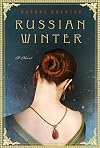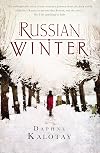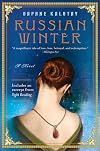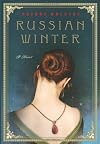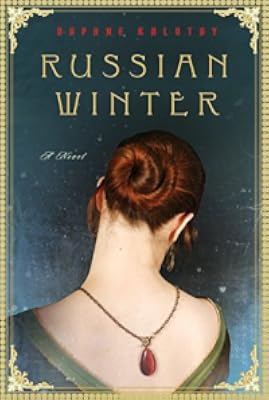
Russian Winter
by Daphne Kalotay
On This Page
Description
Former Bolshoi ballerina Nina Revskaya auctions off her jewelry collection and becomes overwhelmed by memories of her homeland, the friends she left behind amidst Stalinist aggression, and the dark secret that brought her to a new life in Boston.Tags
Recommendations





















Member Recommendations
Member Reviews
First Line: The afternoon was so cold, so relentlessly gray, few pedestrians passed the long island of trees dividing Commonwealth Avenue, and even little dogs, shunted along impatiently, wore thermal coats and offended expressions.
Nina Revskaya, prima ballerina of the Bolshoi Ballet in Stalinist Russia, is spending her remaining years in Boston. Crippled by arthritis and feeling that her body has betrayed her, Nina has become a bitter, secretive old woman. When a man shows up on her doorstep with a piece of jewelry and questions, Nina puts her entire jewelry collection on the auction block rather than part with the answers to his questions. Little does Nina know, but protecting her secrets won't be that easy. Drew Brooks, an associate show more at the Boston auction house, is researching the history of Nina's jewels, and Grigori Solodin, the man on her doorstep, will not take no for an answer.
When you get right down to it, there's not all that much that's new in the plot of Russian Winter. Girl dances. Girl falls in love. Girl suffers heartbreak and betrayal. Girl runs away and begins a new life. But it's what Kalotay weaves into this plot that makes this novel special.
In many ways, Kalotay's book was right up my alley. I enjoy reading about ballet, and jewelry collections and their histories can fascinate me. Both of these things were very satisfying in Russian Winter, but the best piece of all was showing life in the Russia of Stalin-- where a prima ballerina lives in a communal apartment shared with her husband, mother-in-law and thirty-three other people. Each family has one room. There is one telephone for all. There is one toilet and one washroom for all. There is one kitchen with three stoves and six tables. It is a world where secrets can kill you, so you learn to lock away pieces of your soul until the lock rusts and the key no longer works.
Once characters like Nina are seen in the setting in which they became adults, they change right before your eyes and become multi-dimensional. It doesn't matter that the basic plot has been used before. This may be Kalotay's first novel, but I hope it isn't her last. show less
Nina Revskaya, prima ballerina of the Bolshoi Ballet in Stalinist Russia, is spending her remaining years in Boston. Crippled by arthritis and feeling that her body has betrayed her, Nina has become a bitter, secretive old woman. When a man shows up on her doorstep with a piece of jewelry and questions, Nina puts her entire jewelry collection on the auction block rather than part with the answers to his questions. Little does Nina know, but protecting her secrets won't be that easy. Drew Brooks, an associate show more at the Boston auction house, is researching the history of Nina's jewels, and Grigori Solodin, the man on her doorstep, will not take no for an answer.
When you get right down to it, there's not all that much that's new in the plot of Russian Winter. Girl dances. Girl falls in love. Girl suffers heartbreak and betrayal. Girl runs away and begins a new life. But it's what Kalotay weaves into this plot that makes this novel special.
In many ways, Kalotay's book was right up my alley. I enjoy reading about ballet, and jewelry collections and their histories can fascinate me. Both of these things were very satisfying in Russian Winter, but the best piece of all was showing life in the Russia of Stalin-- where a prima ballerina lives in a communal apartment shared with her husband, mother-in-law and thirty-three other people. Each family has one room. There is one telephone for all. There is one toilet and one washroom for all. There is one kitchen with three stoves and six tables. It is a world where secrets can kill you, so you learn to lock away pieces of your soul until the lock rusts and the key no longer works.
Once characters like Nina are seen in the setting in which they became adults, they change right before your eyes and become multi-dimensional. It doesn't matter that the basic plot has been used before. This may be Kalotay's first novel, but I hope it isn't her last. show less
Daphne Kalotay's 'Russian Winter' is set around the framework of an aged Russian prima ballerina reflecting on her past. Nina Revskaya is offering her fabled jewel collection at auction for the benefit of the Boston ballet. And with each jewel comes a memory or two. We have not only Nina's personal history, but also the story of Russia under Stalin and the effect of the intentional mistrust engendered by the State on its citizens.
Skillfully interwoven with Nina's story is that of contemporary language professor Grigori Solodin, translator of poems written by Nina's late husband and possessor of a valuable amber necklace that may belong to a suite of amber owned by Nina.
Kalotay creates characters of great depth and emotional intensity. show more And the reader is caught up not only in the mystery of Nina’s past and Girgori’s present, but also in larger themes of trust and love, mistakes and redemption.
It is to her credit that kalotay's story can be read as riveting mystery and as a compelling exploration of the human heart. show less
Skillfully interwoven with Nina's story is that of contemporary language professor Grigori Solodin, translator of poems written by Nina's late husband and possessor of a valuable amber necklace that may belong to a suite of amber owned by Nina.
Kalotay creates characters of great depth and emotional intensity. show more And the reader is caught up not only in the mystery of Nina’s past and Girgori’s present, but also in larger themes of trust and love, mistakes and redemption.
It is to her credit that kalotay's story can be read as riveting mystery and as a compelling exploration of the human heart. show less
Russian Winter – Daphne Kalotay
4 stars
This debut novel takes an interesting look at the personal consequences of cold war history.
Nina Revskaya is an aging, crippled, former Bolshoi prima ballerina. She has arranged to auction her jewels as a donation to the Boston Ballet. Ostensibly an act of charity, Nina is actually attempting to lay the ghosts of her past. The novel is structured around the intersection of two story lines; the contemporary story involving the jewel auction and Nina’s memories of life in the USSR under Stalin.
Although, I found this book to be extremely slow moving, the historical setting and artistic details were enough to hold my interest. Nina was not always a very likable character, but I found her to be show more completely believable. The tragedy of her past is caused as much by the extreme narcissism of a great artist as by the repressive policies of her government. Kalotay does a great job of describing the social dynamics of an elite ballet company within the context of the privations and paranoia of communist Russia. The contemporary story line was less compelling. It was annoying when the commonplace issues of the contemporary characters intruded on the more dramatic storyline. show less
4 stars
This debut novel takes an interesting look at the personal consequences of cold war history.
Nina Revskaya is an aging, crippled, former Bolshoi prima ballerina. She has arranged to auction her jewels as a donation to the Boston Ballet. Ostensibly an act of charity, Nina is actually attempting to lay the ghosts of her past. The novel is structured around the intersection of two story lines; the contemporary story involving the jewel auction and Nina’s memories of life in the USSR under Stalin.
Although, I found this book to be extremely slow moving, the historical setting and artistic details were enough to hold my interest. Nina was not always a very likable character, but I found her to be show more completely believable. The tragedy of her past is caused as much by the extreme narcissism of a great artist as by the repressive policies of her government. Kalotay does a great job of describing the social dynamics of an elite ballet company within the context of the privations and paranoia of communist Russia. The contemporary story line was less compelling. It was annoying when the commonplace issues of the contemporary characters intruded on the more dramatic storyline. show less
Stories that revolve around a physical object always intrigue me. The hidden history a thing has been a silent witness to can be a great way to tell a story and fire the imagination so that’s why I picked up this book which hinges on a woman selling her jewelry collection. For the most part it delivers, but it was a little prolonged in places where the pacing just dragged.
It does have a good sense of mystery and Nina’s dramatic past. While I can understand where she’s coming from, Nina is a jerk and continues to be a jerk because she can and people let her. She’s content that she’s revered and respected, but doesn’t care if no one likes her. She uses her history as an excuse to deny things to people, be rude and keep show more herself at a distance. I didn’t want to spend time with her, but finished the book so I could know what happened. It wasn’t wholly predictable and had some good moments of surprise. Nina’s past and Gregori’s present came together nicely. show less
It does have a good sense of mystery and Nina’s dramatic past. While I can understand where she’s coming from, Nina is a jerk and continues to be a jerk because she can and people let her. She’s content that she’s revered and respected, but doesn’t care if no one likes her. She uses her history as an excuse to deny things to people, be rude and keep show more herself at a distance. I didn’t want to spend time with her, but finished the book so I could know what happened. It wasn’t wholly predictable and had some good moments of surprise. Nina’s past and Gregori’s present came together nicely. show less
A beautiful and engaging novel, Russian Winter by Daphne Kalotay will sweep you up in the tragedies of life in Soviet Russia and have you hoping and praying for present-day redemption. There are many narratives in this novel including those of the young Nina Revskaya, ballerina at the Bolshoi and also her ailing modern self, now residing in Boston. There is also Grigoiri Solodin, a professor who was adopted as a newborn in Russia and who believes he has traced his parentage to Nina through the few small artifacts he inherited. And finally there is Drew Brooks, a woman who works at the auction house where Nina Revskaya is selling her famous jewelry collection. Though the lives of these people seem to have little in common, we see that show more there are common human threads that run through each of their lives.
I'll admit to having lost track of time and I started this book a bit late but it wasn't a chore at all to read this almost-500-page book over the course of three days. I got caught up in Nina's story and couldn't wait to find out what had happened to cause her defection from the Soviet Union and to learn if Grigori was really her son. Some readers might be a bit put off at first by the switching of tenses in the novel (the past story is written in the present tense) but after a while it simply becomes the natural rhythm of the book. There were a few slightly redundant parts and it took me some time to care about Grigori and Drew's stories but it all came together nicely by the end. As for Nina, I fell in love with her, as did so many others, and her story slowly broke my heart.
As I was reading this novel, I realized that though I frequently read novels set in Russia, they are never set in this time period of Stalin and Communism. I enjoyed this journey and appreciated the depth of Kalotay's research. The artforms that she chose to include in the story--ballet, music and poetry--are all well-incorporated as well and make this an epic sort of novel.
http://webereading.com/2011/04/new-paperback-release-russian-winter.html show less
I'll admit to having lost track of time and I started this book a bit late but it wasn't a chore at all to read this almost-500-page book over the course of three days. I got caught up in Nina's story and couldn't wait to find out what had happened to cause her defection from the Soviet Union and to learn if Grigori was really her son. Some readers might be a bit put off at first by the switching of tenses in the novel (the past story is written in the present tense) but after a while it simply becomes the natural rhythm of the book. There were a few slightly redundant parts and it took me some time to care about Grigori and Drew's stories but it all came together nicely by the end. As for Nina, I fell in love with her, as did so many others, and her story slowly broke my heart.
As I was reading this novel, I realized that though I frequently read novels set in Russia, they are never set in this time period of Stalin and Communism. I enjoyed this journey and appreciated the depth of Kalotay's research. The artforms that she chose to include in the story--ballet, music and poetry--are all well-incorporated as well and make this an epic sort of novel.
http://webereading.com/2011/04/new-paperback-release-russian-winter.html show less
My own skills lack to sum up this novel in the way that it deserves. This is one of the most beautifully written books I have read in a while. The story was lovely in its simplicity, every description dripping with meaning without being overly sentimental or pedantic. The whole way through I marveled at the language. Despite its length, the book moved at a swift pace. The plot was not one of action, but still I hardly wanted to put the book down. This is masterful writing.
The portrayal of Nina's past in Soviet Russia was fantastic. I have studied the Soviet Union quite a bit, particularly through the writings of Aleksandr Solzhenitsyn. Kalotay did a good job portraying the way Soviet citizens likely felt about their lives. She shows the show more reverence for Stalin, even in the worst times. Never once does Nina see him as anything but a savior; the problems come from others and he does not know. Shocking though that may be, anything else would probably have been inaccurate. The faith that she had in the country and the small things that lead her to question that are done well. Kalotay confronts rough issues with subtlety, with no overarching need to make her point clear by bashing you over the head with it.
I recommend this one extremely highly (in case that wasn't clear from the above). Do yourself a favor and read this. show less
The portrayal of Nina's past in Soviet Russia was fantastic. I have studied the Soviet Union quite a bit, particularly through the writings of Aleksandr Solzhenitsyn. Kalotay did a good job portraying the way Soviet citizens likely felt about their lives. She shows the show more reverence for Stalin, even in the worst times. Never once does Nina see him as anything but a savior; the problems come from others and he does not know. Shocking though that may be, anything else would probably have been inaccurate. The faith that she had in the country and the small things that lead her to question that are done well. Kalotay confronts rough issues with subtlety, with no overarching need to make her point clear by bashing you over the head with it.
I recommend this one extremely highly (in case that wasn't clear from the above). Do yourself a favor and read this. show less
Going in to the reading, I was almost giddy with anticipation - I have a 'thing' for jewelry, and I thought this was going to be a lovely exploration of ballet and jewels and ballerinas in Russia-once-upon-a-time. That was not exactly what I got. However, I was not devastated - this ended up being a good read (and there are pages before every chapter that feature a piece from Nina's collection that is up for auction featuring descriptions like would appear in an auction catalogue).
While it took me a little bit to figure out the way Kalotay was telling the stories involved, once I figured out the 'trick' to reading, I was quickly engrossed. There are four story lines unfurling simultaneously: Nina's present, as she is struggling against show more Time & Age; Drew's journey to self-discovery, aided by her work with Nina's auction collection; Grigori's battle against memory and fight for identity; and Nina's past - which started everything. I was fascinated by the accounts of Communist Russia, and the lives of the artists as represented by Nina and her friends. That time is so foreign to me, so unexplored, I felt like I was truly getting a glimpse into a different world. As everything in the individual story lines grows and develops, eventually tying together in a stunning ending.
So while Russian Winter was not exactly what I expected, I'm glad I read it - there are details and ideas of life in Russia that made me think, and there are threads of humanity explored and discussed that are universal. The characters' discoveries can apply to any and all of us. That, I think, is part of what makes a book a keeper: the ability to create characters that are human. These characters are flawed and imperfect, but they are real. Their stories feel real. And there's just enough jewelry-talk to make me feel like I got what I wanted. show less
While it took me a little bit to figure out the way Kalotay was telling the stories involved, once I figured out the 'trick' to reading, I was quickly engrossed. There are four story lines unfurling simultaneously: Nina's present, as she is struggling against show more Time & Age; Drew's journey to self-discovery, aided by her work with Nina's auction collection; Grigori's battle against memory and fight for identity; and Nina's past - which started everything. I was fascinated by the accounts of Communist Russia, and the lives of the artists as represented by Nina and her friends. That time is so foreign to me, so unexplored, I felt like I was truly getting a glimpse into a different world. As everything in the individual story lines grows and develops, eventually tying together in a stunning ending.
So while Russian Winter was not exactly what I expected, I'm glad I read it - there are details and ideas of life in Russia that made me think, and there are threads of humanity explored and discussed that are universal. The characters' discoveries can apply to any and all of us. That, I think, is part of what makes a book a keeper: the ability to create characters that are human. These characters are flawed and imperfect, but they are real. Their stories feel real. And there's just enough jewelry-talk to make me feel like I got what I wanted. show less
Members
- Recently Added By
Published Reviews
ThingScore 75
Despite its engaging suspense, pristine character development, and jolting plot twists, the novel’s sentences can feel rambling and comma-heavy. Certain passages burst with unnecessary asides and needless details, which at times can bog down this otherwise gripping conflict. Other times, some characters’ behavior is so melodramatic as to make them seem cartoonish. These hammy expressions show more are distracting, as if to force readers to feel for these characters when, in actuality, such empathy comes naturally to a writer like Kalotay.
The length of the novel also makes for a small but noteworthy letdown—the climax is spectacular but disproportionate to a 459-page story. It comes slowly, meticulously, and fantastically—but then it quickly goes, with a resolution that also feels too short.
Still, Russian Winter is a fantastic first novel. The drama of Soviet oppression isn’t laid on too thick, and the hidebound world of the Bolshoi ballet, though pertinent to Nina’s life, doesn’t suffocate the story. Instead, human emotions breathe human qualities into this novel: passion, pain, love, jealousy, insolence, regret, loneliness, loss. show less
The length of the novel also makes for a small but noteworthy letdown—the climax is spectacular but disproportionate to a 459-page story. It comes slowly, meticulously, and fantastically—but then it quickly goes, with a resolution that also feels too short.
Still, Russian Winter is a fantastic first novel. The drama of Soviet oppression isn’t laid on too thick, and the hidebound world of the Bolshoi ballet, though pertinent to Nina’s life, doesn’t suffocate the story. Instead, human emotions breathe human qualities into this novel: passion, pain, love, jealousy, insolence, regret, loneliness, loss. show less
added by sduff222
Lists

A High School Trip to Russia
25 works; 3 members

Books Read in 2017
4,249 works; 130 members

First Novels
373 works; 17 members
Author Information

5 Works 1,187 Members
Awards and Honors
Common Knowledge
- Canonical title
- Russian Winter
- Original title
- Russian Winter
- Original publication date
- 2010
- People/Characters
- Nina Revskaya; Drew Brooks; Grigori Solodin
- Important places
- USSR (Soviet Union); Moscow, Russia; Boston, Massachusetts, USA
- Epigraph*
- Silloin opin tietämään, ettei rakkaus ole vain ilon lähde tai leikki, vaan osa loputonta elämän tragediaa, yhtä lailla sen ikuinen kirous kuin kaikkinielevä voima, joka antaa sille merkityksen.
NADEŽDA MANDELŠT... (show all)AM
Hänen miehellään oli vanhanaikaiset käsitykset jalokivistä: mies osti niitä vaimolleen tunnustukseksi siitä, mitä ei osannut kauniisti ilmaista.
WILLA CATHER - Dedication*
- MAMUKALLE
JA IMRE JA BAMBI FARKASSIN MUISTOKSI - First words
- The afternoon was so cold, so relentlessly gray, few pedestrians passed the long island of trees dividing Commonwealth Avenue, and even the little dogs, shunted along impatiently, wore thermal coats and offended expressions.
- Quotations
- A song keeps running through my head, the one about the husband missing his wife like a wave misses the shore – over and over again.
She senses, for the first time, how far away one can be from one’s own life, how contentedly distant. The gaping enormity of the universe, its endless possibility…She feels it, an aura, an inkling: the illusion of absolu... (show all)te freedom.
‘How can you be this way? How can you act as if nothing is wrong’ He walked away, because of course it was dangerous to do what I was doing. Later that day, my husband came and sat down next to me and said to me, so quie... (show all)t, he said, ‘Don’t you see, I have to believe in him.’ He meant Stalin. He said, ‘I have to believe. Otherwise, how can I get up out of bed in the morning?”
...there are only two things that really matter in life. Literature and love - Last words
- (Click to show. Warning: May contain spoilers.)But then he saw the look on her face and, wondering, nodded hello, as she reached for the door and beckoned him in.
*Some information comes from Common Knowledge in other languages. Click "Edit" for more information.
Classifications
Statistics
- Members
- 944
- Popularity
- 28,088
- Reviews
- 64
- Rating
- (3.65)
- Languages
- 10 — Dutch, English, Finnish, French, German, Italian, Norwegian (Bokmål), Portuguese, Croatian, Spanish
- Media
- Paper, Audiobook, Ebook
- ISBNs
- 40
- ASINs
- 9