
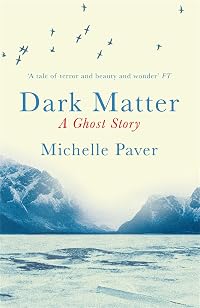
Dark Matter: A Ghost Story
by Michelle Paver
On This Page
Description
'What is it? What does it want? Why is it angry with me?' January 1937. Clouds of war are gathering over a fogbound London. Twenty-eight year old Jack is poor, lonely and desperate to change his life. So when he's offered the chance to be the wireless operator on an Arctic expedition, he jumps at it. Spirits are high as the ship leaves Norway: five men and eight huskies, crossing the Barents Sea by the light of the midnight sun. At last they reach the remote, uninhabited bay where they will show more camp for the next year. Gruhuken. But the Arctic summer is brief. As night returns to claim the land, Jack feels a creeping unease. One by one, his companions are forced to leave. He faces a stark choice. Stay or go. Soon he will see the last of the sun, as the polar night engulfs the camp in months of darkness. Soon he will reach the point of no return - when the sea will freeze, making escape impossible. And Gruhuken is not uninhabited. Jack is not alone. Something walks there in the dark. show lessTags
Recommendations













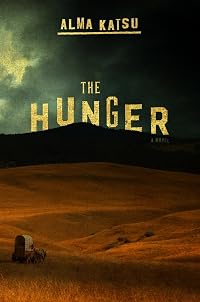


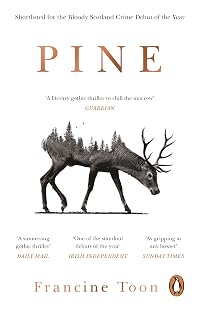
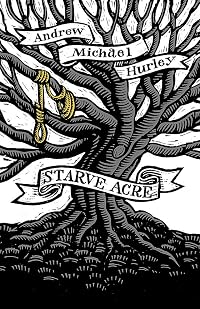



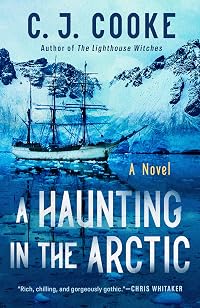



















Member Recommendations

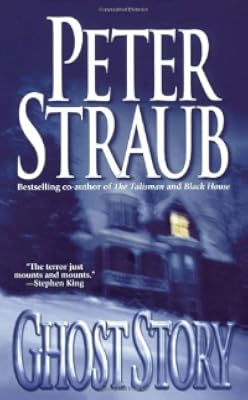
bibliobeck Both beautifully written and menacing rather than horrific, both about men alone in baren environments and both perfect for reading on a cold night in front of the fire!
70

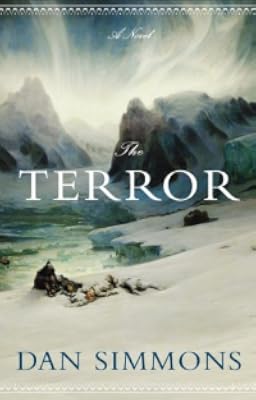
Jannes More Arctic horror. Simmons might is a bit more viceral, but the heart of the horror - the cold, darkness and isolation of the arctic north - is the same in both novels.
21
Member Reviews
⭐ Review: Dark Matter by Michelle Paver — 4.0★
(With a comparison that highlights Paver’s evolution into Thin Air)
Dark Matter is a fast, atmospheric ghost story about isolation, trauma, and the way a mind can unravel in the dark. It’s the kind of book you can read in a day or two — the pacing is tight, the journal format keeps the tension personal, and Jack’s loneliness is convincing even before anything supernatural occurs. As a quick winter read, it absolutely works.
I rated it 4.0 stars, because it is good: eerie, emotionally clear, and engaging all the way through. But I’ll be honest — I suspect I might have liked it even more if I hadn’t already read Thin Air.
The comparison is almost unfair, yet impossible to show more avoid. Dark Matter shows Paver building her ghost-story toolkit, but in Thin Air she sharpens every tool to a finer, more brutal point. In Dark Matter, the Arctic setting is spooky and remote, but ultimately interchangeable. The cold is background, not destiny. The haunting feels more like a shape in the darkness than a personality, and the backstory behind it barely affects the story.
In Thin Air, Paver graduates.
The environment isn’t scenery — it’s the antagonist. The cold, the altitude, the thinning oxygen, the crushing sense of vertical space… they create a suffocating pressure that Dark Matter never reaches. And the ghost in Thin Air is a full character, one you sit with, one whose history and guilt shape the horror. It’s simply the more mature, more claustrophobic, more resonant novel.
That doesn’t diminish Dark Matter; it clarifies it.
This is the easier, quicker, more accessible ghost story — one centered on personal trauma rather than environmental menace. If you haven’t read Thin Air yet, Dark Matter may even strike you as more haunting than it did for me.
But for what it sets out to do, it succeeds.
A lonely man in the Arctic darkness, a creeping presence, and a mind collapsing under its own weight — all delivered with efficiency and cold dread.
4.0 stars. A very good book. Just not the masterwork Paver would write later. show less
(With a comparison that highlights Paver’s evolution into Thin Air)
Dark Matter is a fast, atmospheric ghost story about isolation, trauma, and the way a mind can unravel in the dark. It’s the kind of book you can read in a day or two — the pacing is tight, the journal format keeps the tension personal, and Jack’s loneliness is convincing even before anything supernatural occurs. As a quick winter read, it absolutely works.
I rated it 4.0 stars, because it is good: eerie, emotionally clear, and engaging all the way through. But I’ll be honest — I suspect I might have liked it even more if I hadn’t already read Thin Air.
The comparison is almost unfair, yet impossible to show more avoid. Dark Matter shows Paver building her ghost-story toolkit, but in Thin Air she sharpens every tool to a finer, more brutal point. In Dark Matter, the Arctic setting is spooky and remote, but ultimately interchangeable. The cold is background, not destiny. The haunting feels more like a shape in the darkness than a personality, and the backstory behind it barely affects the story.
In Thin Air, Paver graduates.
The environment isn’t scenery — it’s the antagonist. The cold, the altitude, the thinning oxygen, the crushing sense of vertical space… they create a suffocating pressure that Dark Matter never reaches. And the ghost in Thin Air is a full character, one you sit with, one whose history and guilt shape the horror. It’s simply the more mature, more claustrophobic, more resonant novel.
That doesn’t diminish Dark Matter; it clarifies it.
This is the easier, quicker, more accessible ghost story — one centered on personal trauma rather than environmental menace. If you haven’t read Thin Air yet, Dark Matter may even strike you as more haunting than it did for me.
But for what it sets out to do, it succeeds.
A lonely man in the Arctic darkness, a creeping presence, and a mind collapsing under its own weight — all delivered with efficiency and cold dread.
4.0 stars. A very good book. Just not the masterwork Paver would write later. show less
Paver has pulled off two real achievements here: first, she perfectly recreates the explorer’s diary, with its combination of matter-of-fact relation of everyday detail, the excitement of discovery and the loneliness of exile; second, she has written a “classic” ghost story, a creepy, chilling tale that will linger unsettlingly with the reader.
It’s 1937, and Jack Miller’s plans to become a physicist have been hit by the Depression, so he is working in a dead-end job when he hears of an expedition to the High Arctic in need of a radio operator. He’s initially put off by the four ex-public schoolboys he meets, but realising how important the expedition might be in shaping the rest of his life, agrees to go.
From the outset, show more however, the expedition seems fated, and by the time they arrive in Norway, they are already one person down – the doctor of the team has had to stay in England following the death of his father. Nonetheless, the remaining members decide to go ahead – after all, how could they possibly guess that before long only Jack would be left to face the Arctic winter alone? The first obstacle is overcoming the reluctance of Eriksson, the skipper of the boat they have chartered, to land them at Gruhuken, the site they have chosen for their camp. He won’t give reasons, but insists that it’s not a good place. It’s not a virgin site, there is a ruined mine there, with the remains of a cabin, and a “bear post”, used to attract polar bears so that they could be shot.
From the very start, the bear post makes Jack uneasy, something he puts down at first to his distaste for fellow expedition-member Algie’s evident pleasure in killing animals. Gradually, however, he comes to a conviction that the post is the focus of…not a haunting – the rational Jack can’t entertain that idea – but a memory, an echo of something from the past. And alone and afraid in the Arctic night, Jack is at risk, not just from whatever may or may not be outside the cabin, but also of the loss of routine induced by his own fear.
Paver strikes a perfect balance between describing the beauty of the Arctic and the creeping paranoia of the people at Gruhuken. The chill is cracklingly tangible as winter settles in to the remote bay, and more so when it becomes clear that even the dogs are afraid of something. Paver’s background in writing for young adults shows to the good, I think: at 200-odd pages, it’s a tightly written story, ideal for one so hard to put down and, with its pre-war setting, feels like a book from an earlier tradition of story-telling. I found myself thinking of M.R. James while I was reading, and at times, of John Buchan’s Sickheart River, or some of his supernatural tales. This is a story not just for one deliciously creepy Hallowe’en, but for many to come. show less
It’s 1937, and Jack Miller’s plans to become a physicist have been hit by the Depression, so he is working in a dead-end job when he hears of an expedition to the High Arctic in need of a radio operator. He’s initially put off by the four ex-public schoolboys he meets, but realising how important the expedition might be in shaping the rest of his life, agrees to go.
From the outset, show more however, the expedition seems fated, and by the time they arrive in Norway, they are already one person down – the doctor of the team has had to stay in England following the death of his father. Nonetheless, the remaining members decide to go ahead – after all, how could they possibly guess that before long only Jack would be left to face the Arctic winter alone? The first obstacle is overcoming the reluctance of Eriksson, the skipper of the boat they have chartered, to land them at Gruhuken, the site they have chosen for their camp. He won’t give reasons, but insists that it’s not a good place. It’s not a virgin site, there is a ruined mine there, with the remains of a cabin, and a “bear post”, used to attract polar bears so that they could be shot.
From the very start, the bear post makes Jack uneasy, something he puts down at first to his distaste for fellow expedition-member Algie’s evident pleasure in killing animals. Gradually, however, he comes to a conviction that the post is the focus of…not a haunting – the rational Jack can’t entertain that idea – but a memory, an echo of something from the past. And alone and afraid in the Arctic night, Jack is at risk, not just from whatever may or may not be outside the cabin, but also of the loss of routine induced by his own fear.
Paver strikes a perfect balance between describing the beauty of the Arctic and the creeping paranoia of the people at Gruhuken. The chill is cracklingly tangible as winter settles in to the remote bay, and more so when it becomes clear that even the dogs are afraid of something. Paver’s background in writing for young adults shows to the good, I think: at 200-odd pages, it’s a tightly written story, ideal for one so hard to put down and, with its pre-war setting, feels like a book from an earlier tradition of story-telling. I found myself thinking of M.R. James while I was reading, and at times, of John Buchan’s Sickheart River, or some of his supernatural tales. This is a story not just for one deliciously creepy Hallowe’en, but for many to come. show less
"Dark Matter" is a ghost story of the kind only a master storyteller can get right. The sense of bone-deep, hair-raising, hope-defeating dread builds with a slow inexorability that is almost too much to endure.
It is a book that seems at first to about the atmosphere of a place and the state of mind of an individual producing an unshakable uneasiness. This defensive explanation of fear as a product of the confluence of nature and character turns out to be too brittle to stand against the truth: the presence of something deeply malevolent, unrelentingly vengeful and entirely supernatural.
"Dark Matter" tells, mostly in journal form, the story of a 1937 British scientific expedition to the Arctic that ended disastrously.
The journal writer show more is Jack Miller a lower-middle-class man who sees himself as having, through no fault of his own, "missed his chance" to make a career. At twenty-seven, to change his life, he signs on to be the radio operator for a five-man Arctic expedition, made up of privileged, Harrow and Oxford educated young men, none of whom have any Arctic experience.
Michelle Paver uses the journal format with great skill to let us see what the journal writer sees and all the things that he doesn't see because he takes them for granted or they sit in a blind spot created by ignorance or inexperience.
In the early parts of the journal Jack is focused on the differences between himself and his upper-class companions, yet I was struck most by how similar they all are in their innocent unpreparedness and their unconscious sense of invulnerability. These young men are unable to imagine the reality of the terrible power of a winter. Although they have no experience of the Arctic, they are confident that, with the right kit, some teamwork and a bit of pluck, they can conquer it. This combination of ignorance, self-confidence and wealth is probably one of the most lethal forces on the planet.
The expedition is dogged by bad luck from the beginning, so that, by the time they are encamped in the Arctic, Jack is accompanied only by Gus the charismatic leader of the expedition, Algie Gus' annoying, huntin'-shootin'-fishin' best friend winter and a pack of huskies. As full winter arrives, events conspire to leave Jack alone for a time with the darkness, the dogs and a nameless malevolent presence.
The power of this book comes from the quality of the writing, which subtly creates and sustains an atmosphere of creeping dread, one small scene at a time, letting your imagination fall slowly into the endless dark of an Arctic night until you feel the overwhelming isolation of being alone in a deadly cold darkness so silent you can hear yourself blink. Then Michelle Paver cranks up the horror by introducing an awareness of a manifest evil, a dread that is nameless only because daring to name it would make it too real to be borne.
There is one journal entry that describes Jack becoming lost in fog on Halloween night, a short distance from the cabin he can no longer see. Nothing happens. Probably. Yet the passage held more fear in it than any confrontation with a monster could have produced.
I found the ending of the story very satisfying. There we no shortcuts and no cheap thrills, only the knowledge of how evil, once met, changes the lives of everyone it touches.
My enjoyment of the story was greatly increased by Jeremy Northam's skilled narration. Click on the SoundCloud link below to hear an extract.
[soundcloud url="https://api.soundcloud.com/tracks/117937492" params="color=#ff5500&auto_play=false&hide_related=false&show_comments=true&show_user=true&show_reposts=false&show_teaser=true&visual=true" width="100%" height="300" iframe="true" /] show less
It is a book that seems at first to about the atmosphere of a place and the state of mind of an individual producing an unshakable uneasiness. This defensive explanation of fear as a product of the confluence of nature and character turns out to be too brittle to stand against the truth: the presence of something deeply malevolent, unrelentingly vengeful and entirely supernatural.
"Dark Matter" tells, mostly in journal form, the story of a 1937 British scientific expedition to the Arctic that ended disastrously.
The journal writer show more is Jack Miller a lower-middle-class man who sees himself as having, through no fault of his own, "missed his chance" to make a career. At twenty-seven, to change his life, he signs on to be the radio operator for a five-man Arctic expedition, made up of privileged, Harrow and Oxford educated young men, none of whom have any Arctic experience.
Michelle Paver uses the journal format with great skill to let us see what the journal writer sees and all the things that he doesn't see because he takes them for granted or they sit in a blind spot created by ignorance or inexperience.
In the early parts of the journal Jack is focused on the differences between himself and his upper-class companions, yet I was struck most by how similar they all are in their innocent unpreparedness and their unconscious sense of invulnerability. These young men are unable to imagine the reality of the terrible power of a winter. Although they have no experience of the Arctic, they are confident that, with the right kit, some teamwork and a bit of pluck, they can conquer it. This combination of ignorance, self-confidence and wealth is probably one of the most lethal forces on the planet.
The expedition is dogged by bad luck from the beginning, so that, by the time they are encamped in the Arctic, Jack is accompanied only by Gus the charismatic leader of the expedition, Algie Gus' annoying, huntin'-shootin'-fishin' best friend winter and a pack of huskies. As full winter arrives, events conspire to leave Jack alone for a time with the darkness, the dogs and a nameless malevolent presence.
The power of this book comes from the quality of the writing, which subtly creates and sustains an atmosphere of creeping dread, one small scene at a time, letting your imagination fall slowly into the endless dark of an Arctic night until you feel the overwhelming isolation of being alone in a deadly cold darkness so silent you can hear yourself blink. Then Michelle Paver cranks up the horror by introducing an awareness of a manifest evil, a dread that is nameless only because daring to name it would make it too real to be borne.
There is one journal entry that describes Jack becoming lost in fog on Halloween night, a short distance from the cabin he can no longer see. Nothing happens. Probably. Yet the passage held more fear in it than any confrontation with a monster could have produced.
I found the ending of the story very satisfying. There we no shortcuts and no cheap thrills, only the knowledge of how evil, once met, changes the lives of everyone it touches.
My enjoyment of the story was greatly increased by Jeremy Northam's skilled narration. Click on the SoundCloud link below to hear an extract.
[soundcloud url="https://api.soundcloud.com/tracks/117937492" params="color=#ff5500&auto_play=false&hide_related=false&show_comments=true&show_user=true&show_reposts=false&show_teaser=true&visual=true" width="100%" height="300" iframe="true" /] show less
Dark Matter was an unexpected pleasure. I loved the setting to bits. Paver's description of the Arctic landscape was great. The main character's slow descent into constant darkness and madness was gripping. The secondary characters were slowly teased out and well written. She also writes a pretty good dog. :)
The only quibble I have with the book is the ending.It was very deus ex machina. At the moment of certain death, his rescue appears on the horizon.
The only quibble I have with the book is the ending.
Recommended in a review, Dark Matter is a story which actually makes a better blurb than a novel, and I'm glad that I borrowed rather downloaded a copy. Michelle Paver's research of the Arctic setting cannot be faulted, but the old first person 'Is That A Ghost or Am I Mad?' schtick should be left to nineteenth century authors with the last name of James.
An obnoxious middle class graduate fallen on hard times called Jack Miller agrees to go on an expedition to the Arctic with a group of Hooray Henrys. When they set up camp on Spitsbergen, there are only three men left of the original party - Jack, Gus and Algie. Jack gets the feeling from the start that something is amiss on the island, but of course he has his lower class pride to show more protect. Then Gus develops appendicitis, Algie has to accompany him back to civilisation - and then there was one. But has Jack merely developed cabin fever, stranded at the end of the earth with only a pack of dogs for conversation, or is the camp site at Gruhuken haunted?
Traditional 'ghost stories' like this one just don't work for me, so I was hoping for more of a psychological angle, but was sadly disappointed. Arrogant narrator, diary format, imaginary bogeyman, campfire recounting of tragic event - nineteenth century clichés abound. Yawn. Jack isn't even very sympathetic to begin with ('You know, Jack, sometimes you can be a tad oversenstive', as one character observes), so I couldn't bring myself to care whether he was going stir crazy or being stalked by a hunchbacked trapper. Isaak the huskie would have made a better protagonist. I think the author only set the story in the 1930s to eliminate modern technology, then had to resort to class-ridden stereotypes to conform to the 'classic' notion of that era - Gus and Algie? Really?
A short story - padded out with large text, spacing and black and white photographs of the Arctic setting - stretched to make a novel. The atmospheric detail is beautifully written, but the characters get in the way. show less
An obnoxious middle class graduate fallen on hard times called Jack Miller agrees to go on an expedition to the Arctic with a group of Hooray Henrys. When they set up camp on Spitsbergen, there are only three men left of the original party - Jack, Gus and Algie. Jack gets the feeling from the start that something is amiss on the island, but of course he has his lower class pride to show more protect. Then Gus develops appendicitis, Algie has to accompany him back to civilisation - and then there was one. But has Jack merely developed cabin fever, stranded at the end of the earth with only a pack of dogs for conversation, or is the camp site at Gruhuken haunted?
Traditional 'ghost stories' like this one just don't work for me, so I was hoping for more of a psychological angle, but was sadly disappointed. Arrogant narrator, diary format, imaginary bogeyman, campfire recounting of tragic event - nineteenth century clichés abound. Yawn. Jack isn't even very sympathetic to begin with ('You know, Jack, sometimes you can be a tad oversenstive', as one character observes), so I couldn't bring myself to care whether he was going stir crazy or being stalked by a hunchbacked trapper. Isaak the huskie would have made a better protagonist. I think the author only set the story in the 1930s to eliminate modern technology, then had to resort to class-ridden stereotypes to conform to the 'classic' notion of that era - Gus and Algie? Really?
A short story - padded out with large text, spacing and black and white photographs of the Arctic setting - stretched to make a novel. The atmospheric detail is beautifully written, but the characters get in the way. show less
A pretty much flawless ghost story in the MR James tradition; men of science - in this case, an arctic expedition to the Svalbard archipelago in the 1930s - finding themselves faced with the irrational and inexplicable.
Paver builds the tension expertly and the book is, at times, a fairly stressful experience, despite the fact that, as in all the best creepy horror tales, very little actually happens. What makes this a great rather than good read, however, are Paver's descriptions of, and obvious love of, the cold, cold, beautiful, indifferent arctic setting.
If you like a ghost story and want to find yourself looking uneasily over your shoulder while charging your wireless sets with your bicycle generator (or 21st century equivalent show more thereof), read this. It's a masterful example of the form. show less
Paver builds the tension expertly and the book is, at times, a fairly stressful experience, despite the fact that, as in all the best creepy horror tales, very little actually happens. What makes this a great rather than good read, however, are Paver's descriptions of, and obvious love of, the cold, cold, beautiful, indifferent arctic setting.
If you like a ghost story and want to find yourself looking uneasily over your shoulder while charging your wireless sets with your bicycle generator (or 21st century equivalent show more thereof), read this. It's a masterful example of the form. show less
A quick, easy read. Sometimes slow burns don't work for me, but this one did. Paver's imagery and atmospheric writing are phenomenal. This reminded me of the old-fashioned kind of ghost stories that I enjoy. Constant slow building of tension, creepiness, and foreboding. It's a very simplistic kind of ghost story, so if you're looking for major jump scares and gore, look elsewhere. This is a great atmospheric psychological horror, and I enjoyed it thoroughly. Yes, I can agree with some that the ending felt a bit rushed and would love to have seen this fleshed out more, but it still didn't dimish how I felt overall. Recommend to those who like reading about the Arctic and enjoy psychological horror, especially in regards to lonliness and show more isolation. show less
Members
- Recently Added By
Published Reviews
ThingScore 100
Det är sällan jag blir så rädd att jag inte kan läsa klart en bok. Men det finns gränser: hade jag läst ut ”Evig natt” den kvällen så hade jag inte kunnat sova alls
added by Jannes
Lists

Best Horror Books
281 works; 85 members

Historical Fiction
889 works; 89 members

Best 21st Century Books (So Far)
670 works; 86 members

Winter Books
127 works; 17 members

Female Author
1,235 works; 67 members

Scary Stories for the Season
160 works; 94 members

Books Set in the Polar Regions
16 works; 6 members

Sense of place
156 works; 13 members

LGBTQIA Horror
172 works; 7 members

Five star books
1,755 works; 108 members

Shirley Jackson Award Winners and Shortlist 2007-2020
77 works; 6 members
Recommended Horror and Dark Fiction by Women
81 works; 13 members

ScaredyKIT 2018
17 works; 1 member

Ghosts
278 works; 18 members

Best Horror Mega-List
342 works; 6 members

Traveling the world in books
24 works; 1 member

Good LGBT fiction for LGBT folk and friends
537 works; 54 members

Historical Fantasy
93 works; 14 members

Recommended Speculative Fiction by Women and People of Color
298 works; 45 members

Fiction: Supernatural Horror
97 works; 1 member
Reedsydiscovery 100 Best Horror Books of All Time
100 works; 5 members

100 Hemskaste
81 works; 1 member
Haunted Places and Ghost Stories Reading List
99 works; 4 members
LGBTQ+ Speculative Fiction
820 works; 51 members

Same Title
115 works; 3 members

Best Books About Journeys and Quests
117 works; 30 members
Arctic novels
35 works; 5 members
Books Read in 2018
4,360 works; 110 members

Kindle Fantasy/Science Fiction Re-Read
151 works; 1 member
Ghost Stories That Thrill Us
256 works; 115 members
Author Information

63+ Works 10,788 Members
Awards and Honors
Awards
Notable Lists
Work Relationships
Common Knowledge
- Canonical title
- Dark Matter: A Ghost Story
- Alternate titles*
- Evig natt : en arktisk spökroman
- Original publication date
- 2010
- People/Characters
- Jack Miller; Algie Carlisle; Gus Balfour
- Important places
- Arctic; Spitsbergen, Norway; Gruhuken; Longyearbyen, Svalbard, Norway; Svalbard, Norway
- First words
- Dear Dr Murchison, forgive me for this rather belated reply to your letter.
- Quotations
- This is a bad mistake. The one who walks. You have seen it. Ja?
Out of nowhere, for no reason, I was afraid. My skin prickled. My heart thudded in my throat. My body knew before I did that I was not alone. Thirty yards away on the rocks, something moved. - Last words
- (Click to show. Warning: May contain spoilers.)Not even when I remember how it was in the beginning: the guillemots on the cliffs and the seals slipping through the green water, and the ice talking to itself in the bay.
*Some information comes from Common Knowledge in other languages. Click "Edit" for more information.
Classifications
Statistics
- Members
- 1,243
- Popularity
- 19,752
- Reviews
- 70
- Rating
- (3.85)
- Languages
- 6 — Dutch, English, French, German, Italian, Swedish
- Media
- Paper, Audiobook, Ebook
- ISBNs
- 19
- ASINs
- 10