On This Page
Description
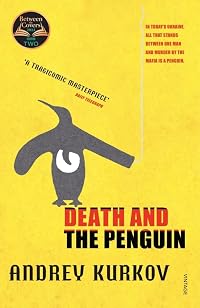
In the prequel to Penguin Lost, aspiring writer Viktor Zolotaryov leads a down-and-out life in poverty-and-violence-wracked Kiev--he's out of work and his only friend is a penguin, Misha, that he rescued when the local zoo started getting rid of animals. Even more nerve-wracking: a local mobster has taken a shine to Misha and wants to keep borrowing him for events. But Viktor thinks he's finally caught a break when he lands a well-paying job at the Kiev newspaper writing "living obituaries" show more of local dignitaries--articles to be filed for use when the time comes. The only thing is, it seems the time always comes as soon as Viktor writes the article. Slowly understanding that his own life may be in jeopardy, Viktor also realizes that the only thing that might be keeping him alive is his penguin. show lessTags
Recommendations






















Member Recommendations

alalba In both books the main character makes up stories as a way of keeping his job, in both cases, they become reality.

Member Reviews
"Relax. You're out of it, and if you're not, you're only very indirectly in. Let's have some coffee."
Viktor is an aspiring writer. He lives alone now that his girlfriend left him, except for the penguin he brought home when the zoo closed down the exhibit and gave the animals away. When he attempts to sell one of his short stories to a newspaper, he is instead hired to write obituaries, first he is asked to look at people in the news and prepare obituaries for them, but then he's given lists of names and of details to include. This goes well for him, but soon there are signs that all is not well. The first is that one of the contacts he has with the paper has to leave his young daughter with Viktor, just until things calm down. It's show more clear that while Viktor has no idea what's going, ignorance won't keep him, or anyone around him, safe.
Set in Kyiv in the nineties, well before the Russian invasion, the world Viktor inhabits is one where the structures of society are crumbling and criminal syndicates have their hands in everything. Viktor knows how to be careful, but it's hard to protect oneself when the threat is from people unknown. I think I would have gotten far more from this book if I had a deeper knowledge of what life was like in Ukraine at that time, but this was still a wonderful and unsentimental book with sense of the absurd. Misha the penguin and young Sonya are great characters and Kurkov doesn't sentimentalize them. They both seem to embody a certain kind of stoicism that is necessary to survive in an uncertain world. show less
Viktor is an aspiring writer. He lives alone now that his girlfriend left him, except for the penguin he brought home when the zoo closed down the exhibit and gave the animals away. When he attempts to sell one of his short stories to a newspaper, he is instead hired to write obituaries, first he is asked to look at people in the news and prepare obituaries for them, but then he's given lists of names and of details to include. This goes well for him, but soon there are signs that all is not well. The first is that one of the contacts he has with the paper has to leave his young daughter with Viktor, just until things calm down. It's show more clear that while Viktor has no idea what's going, ignorance won't keep him, or anyone around him, safe.
Set in Kyiv in the nineties, well before the Russian invasion, the world Viktor inhabits is one where the structures of society are crumbling and criminal syndicates have their hands in everything. Viktor knows how to be careful, but it's hard to protect oneself when the threat is from people unknown. I think I would have gotten far more from this book if I had a deeper knowledge of what life was like in Ukraine at that time, but this was still a wonderful and unsentimental book with sense of the absurd. Misha the penguin and young Sonya are great characters and Kurkov doesn't sentimentalize them. They both seem to embody a certain kind of stoicism that is necessary to survive in an uncertain world. show less
Perhaps it was the phlegm. It could be the fact that it is hot and humid outside while only being the 17th of March. It could be the steady decompression from the whirlwind trip to Miami. Whatever the primary cause, I started my holiday this a.m. burdened with an ineffable heaviness. This condition appears now in hindsight as a perfect disposition for Kurkov's Death and the Penguin. There is a philosophical calm, almost Stoic to Kurkov's prose. The world is going to shit but the spring dawn still encourages contentment. I found this necessary.
A black comedy delivered in an emotionless, deadpan manner, "Death and the Penguin" is a sinister satirical take on life in post-Soviet, modern-day Ukraine. Things take a turn for the better for Viktor, a struggling writer of short stories living alone with only a king penguin for company, when he is taken on by Capital News editor Igor Lvovich to compose obituaries of the various big shots and political big-wigs pulling the strings in post-Soviet Kiev society, these to be kept on file for future use as and when the subjects die. Victor is instructed to incorporate into his compositions, certain loaded material, underlined in the file notes provided him, designed to undermine reputations through insidious innuendo.
Shortly after show more expressing his frustration to a visitor, Misha-non-penguin, (a Mafia-linked figure who wishes Viktor to write an obituary) that none of his work ever appears in print because none of his selected subjects to-date has died, Viktor is shocked to find that in no time at all, the subject of his best obituary is - lo and behold! - suddenly dead. Thereafter, deaths of Viktor's subjects proliferate with such alarming rapidity that Victor fears his penning of an obituary is tantamount to passing a death sentence, his obituaries of the still living having become in effect, requisitions for future death, each obituary providing per se more than sufficient cause for the snuffing out of a life.
The unwitting dupe of State Security conspiracy, at least initially, Victor has become enmeshed in the violent underworld of Mafia dealings and political machinations where his own life may end being written up in an obituary. Around Victor, the very air seems charged with menace, an air of menace that pervades the novel. Viktor is at the mercy of dark and dangerous forces swirling around him that he can't exactly get a fix on but knows are there, lurking ominously in the background. Entertaining and original! show less
Shortly after show more expressing his frustration to a visitor, Misha-non-penguin, (a Mafia-linked figure who wishes Viktor to write an obituary) that none of his work ever appears in print because none of his selected subjects to-date has died, Viktor is shocked to find that in no time at all, the subject of his best obituary is - lo and behold! - suddenly dead. Thereafter, deaths of Viktor's subjects proliferate with such alarming rapidity that Victor fears his penning of an obituary is tantamount to passing a death sentence, his obituaries of the still living having become in effect, requisitions for future death, each obituary providing per se more than sufficient cause for the snuffing out of a life.
The unwitting dupe of State Security conspiracy, at least initially, Victor has become enmeshed in the violent underworld of Mafia dealings and political machinations where his own life may end being written up in an obituary. Around Victor, the very air seems charged with menace, an air of menace that pervades the novel. Viktor is at the mercy of dark and dangerous forces swirling around him that he can't exactly get a fix on but knows are there, lurking ominously in the background. Entertaining and original! show less
I had a good time with Death and the Penguin by Ukrainian writer Andrey Kurkov, ably translated from the Russian. Set in an up-for-grabs Kiev, it's funny and relatively short, with dark humor and intrinsic criticisms of post-Soviet life. Despite the title, it not a mystery; I've seen it called absurdist noir.
Viktor is an unemployed writer living with his penguin, Misha, who he obtained when the local zoo closed. Misha is not a literary gimmick, but a legitimate soulmate filled with affection and melancholy. Out of the blue Viktor gets a job writing obituaries for a local paper, and finally has some money. However, what he is asked to write may have a more sinister purpose. He fills the obituaries with his personal touch, including show more poetic prose and philosophy. When an opera singer dies, he writes:
"The voice of Yuliya Parkhomenko is now silent. But so long as the walls of the Mariynsky Palace endure, and the splendour of the National Opera is reflected in the gold of its inner cupola, she will abide as a golden haze dissolved upon the air we breathe. Her voice will be the gilding of the silence she has left behind."
Viktor gets drawn into involvement with suspect types, who also have a role for Misha to play. Somehow, he winds up taking care of a little girl named Sonya and hiring a nanny to whom he becomes close. The content is often surreal, but delivered matter-of-factly and with wit. There is an indictment of corruption and lawlessness delivered with a velvet glove. Beneath the story is an always-present resignation and determination to survive that I associate with many Russian authors.
"The once terrible was now commonplace, meaning that people accepted it as the norm and went on living, instead of getting needlessly agitated. For them, as for Viktor, the main thing, after all, was still to live, come what might."
Viktor is a decent man dealing with often difficult circumstances, with the help of friends he makes along the way, including a surprisingly honest policeman. The writing style made me think of Gogol, but it moves even faster. I'll be reading more by Kurkov, and I'm hoping he becomes better known on this side of the Atlantic and elsewhere. show less
Viktor is an unemployed writer living with his penguin, Misha, who he obtained when the local zoo closed. Misha is not a literary gimmick, but a legitimate soulmate filled with affection and melancholy. Out of the blue Viktor gets a job writing obituaries for a local paper, and finally has some money. However, what he is asked to write may have a more sinister purpose. He fills the obituaries with his personal touch, including show more poetic prose and philosophy. When an opera singer dies, he writes:
"The voice of Yuliya Parkhomenko is now silent. But so long as the walls of the Mariynsky Palace endure, and the splendour of the National Opera is reflected in the gold of its inner cupola, she will abide as a golden haze dissolved upon the air we breathe. Her voice will be the gilding of the silence she has left behind."
Viktor gets drawn into involvement with suspect types, who also have a role for Misha to play. Somehow, he winds up taking care of a little girl named Sonya and hiring a nanny to whom he becomes close. The content is often surreal, but delivered matter-of-factly and with wit. There is an indictment of corruption and lawlessness delivered with a velvet glove. Beneath the story is an always-present resignation and determination to survive that I associate with many Russian authors.
"The once terrible was now commonplace, meaning that people accepted it as the norm and went on living, instead of getting needlessly agitated. For them, as for Viktor, the main thing, after all, was still to live, come what might."
Viktor is a decent man dealing with often difficult circumstances, with the help of friends he makes along the way, including a surprisingly honest policeman. The writing style made me think of Gogol, but it moves even faster. I'll be reading more by Kurkov, and I'm hoping he becomes better known on this side of the Atlantic and elsewhere. show less
It is always interesting to read a story about a writer. This writer is even more interesting both for what he writes - obituaries - and his penguin. When his girl friend abandoned him he adopted a King penguin who was likewise abandoned by the local zoo. Together they share an apartment and one another's unique sort of loneliness. This is the tempting, for some, beginning of what is a melancholy and comic thriller of a novel.
Writing obituaries turns out to be more interesting than one might suspect. His passion for writing and the assistance of a Mafia operative combine to lead him into a mysterious situation from which he may not be able to escape.
"The more he worked, the more his suspicions grew, until they became the absolute show more certainty that this whole obelisk business was part of a patently criminal operation. The realization of this in no way influenced his daily life and work. And although he could not help thinking about it, he found it easier to do so every day, having recognized the complete impossibility of ever changing his life." (p 156)
The penguin is an updated version of a Bulgakov-style social satire, where the improbable comes to look more and more sensible against the depiction of what is real. While pathos and humor shine through, this is at its core as black of a black comedy that I have read in some time. It has that rare distinction among my reading of being an evocative look at friendship with a penguin and an invention of genius.
It is energized by comic twists and turns that make Kurkov's writing unique in my experience. Subtly humorous and exciting, it contains unexpected moments galore. A vigorous bizarreness makes it a successfully brooding novel, which creates an enduring sense of dismay and strangeness. show less
Writing obituaries turns out to be more interesting than one might suspect. His passion for writing and the assistance of a Mafia operative combine to lead him into a mysterious situation from which he may not be able to escape.
"The more he worked, the more his suspicions grew, until they became the absolute show more certainty that this whole obelisk business was part of a patently criminal operation. The realization of this in no way influenced his daily life and work. And although he could not help thinking about it, he found it easier to do so every day, having recognized the complete impossibility of ever changing his life." (p 156)
The penguin is an updated version of a Bulgakov-style social satire, where the improbable comes to look more and more sensible against the depiction of what is real. While pathos and humor shine through, this is at its core as black of a black comedy that I have read in some time. It has that rare distinction among my reading of being an evocative look at friendship with a penguin and an invention of genius.
It is energized by comic twists and turns that make Kurkov's writing unique in my experience. Subtly humorous and exciting, it contains unexpected moments galore. A vigorous bizarreness makes it a successfully brooding novel, which creates an enduring sense of dismay and strangeness. show less
When the Kiev zoo can no longer afford to feed its animals, Viktor, a struggling Ukrainian writer, adopts Mischa the penguin. He and Mischa live together in complementary loneliness. When Viktor is hired by an unusual newspaper to write obituaries for the rich and powerful while they are still living, his life begins to change, not always for the better. He becomes wealthy, but the people about whom he has written obituaries begin to die under mysterious circumstances. And Viktor has suddenly drawn the attention of the Russian mafia.
While some of the circumstances in the book may seem absurdist, the book as a whole is coherent and reasonable. It's also very funny, as well as being a sharp political and social commentary. And I loved show more Mischa the penguin, who plays a vital role in all the goings-on. Highly recommended. show less
While some of the circumstances in the book may seem absurdist, the book as a whole is coherent and reasonable. It's also very funny, as well as being a sharp political and social commentary. And I loved show more Mischa the penguin, who plays a vital role in all the goings-on. Highly recommended. show less
Viktor is a frustrated aspiring author but his short stories are often too short and any sign of a novel is so distant it might as well be the other side of the world. And that's pretty much where his constant companion, Misha the penguin, comes from. The zoo couldn't afford to keep all their animals and asked the public to take some off their hands so that's how Viktor and Misha came together. One day Viktor gets a job offer from a local paper. They liked his writing style though couldn't publish a story he'd submitted but thought his technique suited a new kind of obituary they wanted to try. Viktor starts writing them for notable personages that aren't quite dead yet so doesn't immediately see the fruits of his labour and it's only show more when one of those he's written about dies in suspicious circumstances that Viktor gets an inkling of what his new position is all about. His fears are increased when one of the people who provide his work asks him to take care of his daughter as he has to disappear for a while. After no immediate reappearance occurs, this necessitates the employing of a nanny to help him look after the little girl and so a family unit is born. When this family starts to become more of a reality will Viktor start questioning what he does for a living? And what will it get him if he does?
This fairly bleak story is riddled with dark humour. Set in the post-Soviet era Kiev with a lot of political manoeuvring (off-stage) which affects the main protagonists life dramatically but he seems to readily accept his situation no matter how much he's put upon. He tries to make the best of events while trying to keep as low a profile as possible. It's not that easy to lie low with a penguin in tow. The story follows Viktor in his day-to-day life but it's the relationship he has with Misha that really infuses it with warmth and feeling as his dealings with other people are quite cold and distant.
I definitely want to read more from this author and will, at some time, be seeking out the sequel to this particular story. show less
This fairly bleak story is riddled with dark humour. Set in the post-Soviet era Kiev with a lot of political manoeuvring (off-stage) which affects the main protagonists life dramatically but he seems to readily accept his situation no matter how much he's put upon. He tries to make the best of events while trying to keep as low a profile as possible. It's not that easy to lie low with a penguin in tow. The story follows Viktor in his day-to-day life but it's the relationship he has with Misha that really infuses it with warmth and feeling as his dealings with other people are quite cold and distant.
I definitely want to read more from this author and will, at some time, be seeking out the sequel to this particular story. show less
Members
- Recently Added By
Published Reviews
What they might approximate for the curious reader, however, is what it’s like to sit for a long late evening with a genial and gifted storyteller as he leads you through the most ancient and, in many ways, still most pleasurable functions of literature — making us wonder what on earth is going to happen next.
added by prosperosbook
The novel's hero, Viktor Zolotaryov, is a frustrated writer whose short stories are too short and too sensation-free to be published. When a newspaper editor offers him a new job as star obituarist, paying $300 a month to write 'snappy, pithy, way-out' pieces, he agrees. His brief is to select powerful figures from Ukrainian high society and prepare mournful articles in readiness for the show more possibility that they might suddenly die.
But then the unexpected death of a senior politician after falling from a sixth-floor window triggers a clan war of killings and Viktor's obituaries are suddenly in demand. It is only later, when he discovers that his pieces are neatly filed in the editor's office - marked with dates for imminent publication although their subjects remain alive - that he becomes uncomfortable about his role in the eruption of violence unsettling the city.
The obituarist assumes a pragmatic approach to the uneasy morality of his work - accepting the money and getting on with it. This approach is one which Kurkov believes many Ukrainians have been forced to adopt, and his book is free of any censure for the way characters behave. 'People have got used to the corruption. People here are flexible and they accept the new rules and don't dwell on moral questions. They just watch what everyone else is doing and try to find their own ways of deceiving others to make money for themselves to survive,' he says.
Viktor's blossoming career is watched with melancholic disapproval by the gloomy figure of his pet penguin, Misha, adopted a few months earlier from the impoverished city zoo. In the cynical atmosphere of post-communist Kiev, the penguin is the only being which inspires in Viktor real affection.
The silent, sad penguin is the key to understanding the novel as a portrayal of post-Soviet chaos, says Kurkov. 'The penguin is a collective animal who is at a loss when he is alone. In the Antarctic, they live in huge groups and all their movements are programmed in their brains so that they follow one another. When you take one away from the others he is lost.
'This is what happened to the Soviet people who were collective animals - used to being helped by one another. With the collapse of the Soviet Union suddenly they found themselves alone, no longer felt protected by their neighbours, in a completely unfamiliar situation where they couldn't understand the new rules of life.' show less
But then the unexpected death of a senior politician after falling from a sixth-floor window triggers a clan war of killings and Viktor's obituaries are suddenly in demand. It is only later, when he discovers that his pieces are neatly filed in the editor's office - marked with dates for imminent publication although their subjects remain alive - that he becomes uncomfortable about his role in the eruption of violence unsettling the city.
The obituarist assumes a pragmatic approach to the uneasy morality of his work - accepting the money and getting on with it. This approach is one which Kurkov believes many Ukrainians have been forced to adopt, and his book is free of any censure for the way characters behave. 'People have got used to the corruption. People here are flexible and they accept the new rules and don't dwell on moral questions. They just watch what everyone else is doing and try to find their own ways of deceiving others to make money for themselves to survive,' he says.
Viktor's blossoming career is watched with melancholic disapproval by the gloomy figure of his pet penguin, Misha, adopted a few months earlier from the impoverished city zoo. In the cynical atmosphere of post-communist Kiev, the penguin is the only being which inspires in Viktor real affection.
The silent, sad penguin is the key to understanding the novel as a portrayal of post-Soviet chaos, says Kurkov. 'The penguin is a collective animal who is at a loss when he is alone. In the Antarctic, they live in huge groups and all their movements are programmed in their brains so that they follow one another. When you take one away from the others he is lost.
'This is what happened to the Soviet people who were collective animals - used to being helped by one another. With the collapse of the Soviet Union suddenly they found themselves alone, no longer felt protected by their neighbours, in a completely unfamiliar situation where they couldn't understand the new rules of life.' show less
added by VivienneR
Viktor, an impoverished writer and penguin-owner in modern-day Kiev, gets lucky when a local newspaper editor hires him to compose a series of obituaries of still living Ukrainian notables. But when his subjects start dying and acquaintances disappearing, it becomes clear that Viktor is involved in something sinister and he's better off not asking questions.
added by bkwriter4life
Lists

The Guardian's 1000 Novels Everyone Must Read
1,005 works; 547 members

A Ukraine Reading List
121 works; 90 members

Nonhuman Protagonists
235 works; 34 members

Books Read in 2014
2,343 works; 86 members

A Novel Cure
742 works; 23 members

O, those Russians (as Boney M sang)
16 works; 1 member

Animals in the Title
498 works; 11 members

Books Read in 2015
3,299 works; 126 members
BingoDOG - Animals in Adult Fiction
78 works; 20 members
Put a Bird On It
75 works; 12 members

BIRDS IN FICTION & NON-FICTION
17 works; 1 member

BBC World Book Club
265 works; 5 members

Books We Love to Reread
688 works; 296 members

Favorite Books in Translation
320 works; 133 members

Books Read in 2026
1,913 works; 66 members
Author Information

70+ Works 5,266 Members
Andrey Kurkov was born in St. Petersburg and now lives in Kiev. He spent time in the military as a prison warden and has also worked as a journalist and film cameraman. He is now a screenwriter and author of four novels and four childrens books.
Some Editions
Awards and Honors
Series

Belongs to Publisher Series
Work Relationships
Is contained in
Common Knowledge
- Canonical title
- Death and the Penguin
- Original title
- Смерть постороннего
- Alternate titles
- Smert' postoronnego
- Original publication date
- 1996
- People/Characters
- Mischa (Penguin); Viktor Zolotaryov; Igor Lvovich; Sergey Fischbein-Stepanenko; Nina; Mischa (non-penguin) (show all 7); Sonya
- Important places
- Kyiv, Ukraine
- Epigraph
- A Militia major is driving along when he sees a militiaman standing with a penguin.
"Take him to the zoo," he orders.
Some time later the same major is driving along when he sees the militiaman still with the ... (show all)penguin.
"What have you been doing," he asks. "I said take him to the zoo."
"We've been to the zoo, Comrade Major," says the militiaman, "and the circus. And now we're going to the pictures." - Dedication
- For the Sharps, in gratitude
- First words
- First, a stone landed a metre from Viktor's foot.
- Quotations
- But Misha had brought his own kind of loneliness, and the result was now two complementary loneliness, creating an impression more of interdependence than of amity.
Everyone was in a hurry, as if afraid of finding their block on the verge of collapsing or shedding its balconies - both occurrences being no longer uncommon.
No. The pure and sinless did not exist, or else died unnoticed and with no obituary. The idea seemed persuasive. Those who merited obituaries had usually achieved things, fought for their ideals, and when locked in battle,... (show all) it wasn't easy to remain entirely honest and upright. Today's battles were all for material gain, anyway. The crazy idealist was extinct - survived by the crazy pragmatist...
To every time, its own normality. The once terrible was now commonplace, meaning that people accepted it as the norm and went on living instead of getting needlessly agitated. For them, as for Viktor, the main thing, after ... (show all)all, was still to live, come what might.
The past believed in dates. And everyone's life consisted of dates, giving life a rhythm and sense of gradation,as if from the eminence of a date one could look back and down, and see the past itself. A clear, comprehensibl... (show all)e past, divided up into squares of events, lines of paths taken. - Last words
- (Click to show. Warning: May contain spoilers.)"Let's go," he said. "We're loading."
- Original language
- Russian
Classifications
- Genres
- Fiction and Literature, General Fiction, Mystery
- DDC/MDS
- 813 — Literature & rhetoric American literature in English American fiction in English
- LCC
- PG3482.8 .U6756 .S613 — Language and Literature Slavic languages and literatures. Baltic languages. Albanian language Slavic. Baltic. Albanian Russian literature Individual authors and works 1961-2000
- BISAC
Statistics
- Members
- 2,266
- Popularity
- 8,825
- Reviews
- 93
- Rating
- (3.71)
- Languages
- 19 — Basque, Danish, Dutch, English, Estonian, Finnish, French, German, Hebrew, Hungarian, Italian, Japanese, Norwegian (Bokmål), Norwegian, Portuguese, Romanian, Russian, Spanish, Swedish
- Media
- Paper, Audiobook, Ebook
- ISBNs
- 55
- ASINs
- 12