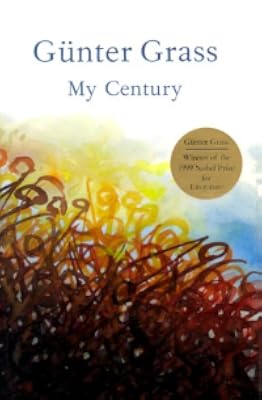
My Century
by Günter Grass
On This Page
Description
One hundred stories, each named after a year this century. In one, Erich Maria Remarque gives his views on World War I, in another former Nazis reflect on the good old days, while a third is on the fall of the Berlin Wall from a dead woman's point of view.Tags
Recommendations













Member Reviews
https://nwhyte.livejournal.com/3299324.html
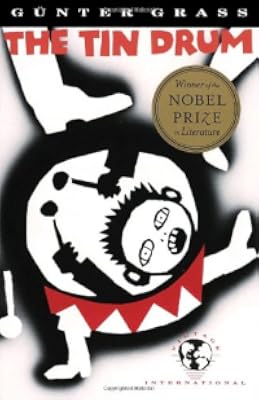
I had read both The Tin Drum and the autobiographical Peeling The Onion previously; My Century is different from both in that it is straight non-genre narrative, but telling short snapshots from every year from 1900 to 2000, mostly (though not all) with different protagonists. There are some odd choices - the second war is told in flashback by journalists reminising in the 1960s; the Holocaust is barely mentioned buring the war but intrudes on a Frankfurt wedding in 1964; reunification is recounted as experienced through election results. I think the reader is expected to be familiar with a lot of details of twentieth-century German history that a lot of people may not know so well.
But at the show more same time, if (against the author's expressed preference) you take the book as a sequence of 100 short stories with some internal links, rather than as a single novel, I think it works very well, with a lot of voices from various levels of society reminding us that a nation is made up of people,and so is its history. Some of the more memorable narrators are women - the actress early on, the Berlin survivor of 1946, the post-reunification Treuhand boss. It's not at the level of the other books by Grass that I have read, but I found it thought-provoking all the same. show less
I had read both The Tin Drum and the autobiographical Peeling The Onion previously; My Century is different from both in that it is straight non-genre narrative, but telling short snapshots from every year from 1900 to 2000, mostly (though not all) with different protagonists. There are some odd choices - the second war is told in flashback by journalists reminising in the 1960s; the Holocaust is barely mentioned buring the war but intrudes on a Frankfurt wedding in 1964; reunification is recounted as experienced through election results. I think the reader is expected to be familiar with a lot of details of twentieth-century German history that a lot of people may not know so well.
But at the show more same time, if (against the author's expressed preference) you take the book as a sequence of 100 short stories with some internal links, rather than as a single novel, I think it works very well, with a lot of voices from various levels of society reminding us that a nation is made up of people,and so is its history. Some of the more memorable narrators are women - the actress early on, the Berlin survivor of 1946, the post-reunification Treuhand boss. It's not at the level of the other books by Grass that I have read, but I found it thought-provoking all the same. show less
My Century is the history of the 20th century told by Günter Grass. One hundred little stories, one for each year of the century. The point of view is often that of a German individual: the author's relatives, the author himself and various other writers, his and others' fictional characters have their say as well as many many unnamed citizen from very different social classes and backgrounds.
I can understand--though I have only read one other book by Grass--that this is not considered as one his best works. But it is still a good read. This is history through German eyes, but it is still universal and generally human enough to be interesting to anyone. Whatever really important happened during that century is there, and only few times show more it happened that a story left me cold, not knowing anything about the subject of the story in question.
But, there is a but... Like said by the author's mother (dead by then) in the last 'year' of the book: "...now I should tell you all what it was like in the old days and even before that. And what else would it have been but war, war all over and then again with just a little break in between." It truly was. The first half of the century was like preparation for the big one and then the next thirty or so years were spent trying to recover from it all; trying to figure out what on earth happened and what should we do about it. And that is a good question any time. show less
I can understand--though I have only read one other book by Grass--that this is not considered as one his best works. But it is still a good read. This is history through German eyes, but it is still universal and generally human enough to be interesting to anyone. Whatever really important happened during that century is there, and only few times show more it happened that a story left me cold, not knowing anything about the subject of the story in question.
But, there is a but... Like said by the author's mother (dead by then) in the last 'year' of the book: "...now I should tell you all what it was like in the old days and even before that. And what else would it have been but war, war all over and then again with just a little break in between." It truly was. The first half of the century was like preparation for the big one and then the next thirty or so years were spent trying to recover from it all; trying to figure out what on earth happened and what should we do about it. And that is a good question any time. show less
This is a book about the individual in and through time. It is a staggering technical achievement. Each year is represented as a beautiful Flash piece, with an authentic voice, layered themes, a pertinent subject (such as technology, social events, politics, sport) and a strong story. The cumulative impact of the approach is to demonstrate time both from the perspective of the situated individual and the omniscient god simultaneously. As time passes, the nature of this book changes. Reading it will differ depending on when it is read and on when the reader was born. An extraordinary work of art.
The proper time to read this would have been in 1999. Still, even now that all the excitement of "Y2K" is long behind us, this is an interesting exercise. A hundred very short stories, all between about 750 and 1000 words, one for each year of the 20th century (except that he includes 1900 and misses out 2000, but he's a writer and artist, not a mathematician...). The stories are all in the first person: in five or six of them the narrator seems to be Grass himself, the rest are told by witnesses, famous or obscure, to the great and small events of German history. There are some very clever and unexpected viewpoints — the account of the first world war through a series of linked stories describing an imaginary meeting between Erich show more Maria Remarque and Ernst Jünger in Zürich, for instance, or the self-mocking account of the publication of Die Blechtrommel and Billard um Halbzehn in 1959 as though they were industrial products of the Wirtschaftswunder — but also some rather predictable ones, like the description of rubble-clearing by a "Berliner Trümmerfrau". I lost interest a bit in the sixties, where there is a whole string of stories involving Celan and Heidegger; the nineties, too are a bit of a dull stretch. There's not that much that Grass can say about reunification, the Gulf War, nuclear energy or pollution damage to trees that he hasn't already said many times elsewhere... The last story, though it also rehashes rather familiar material, is an effective way to end the collection. show less
This was a decent concept that was executed adequately, but overall it was hard to immerse oneself in this melange of memories, experiences, and transitions. There is one part per each year in this past century. There are ups and downs, exploits and famous happenings along with the seemingly mundane. Overall, a decent experience, just not one that fully connected- for me.
3 stars.
3 stars.
A book of short-short stories by the German Nobelist Gunter Grass--one story for each year of the 20th century. Like anything Grass writes they are well written. More or less a chronological fictional telling of the history of Germany in the 20th century through a series of snapshots. Of particular note for me were those concerning the first world war years 1914-1918 in which the German novelists Remarque and Junger remark on their war experiences to a much younger female interviewer many years later. Then the years leading up to the second world war and the years following. The 1960's and the student demonstrations and the rise of the Baader-Meinhof gang followed in the 80's by the fall of the wall and the East German communist regime. show more This probably is not one of Grass's major works but it is good work and easier to follow than some of Grass's longer and more difficult fiction. For someone who hasn't read Grass it would not be a bad choice to start out with. show less
the book is a collection of short stories that are really essays each story highlights a year, from 1900 to 1999. the stories show how history in this case german history has a direct effect on people.
Members
- Recently Added By
Published Reviews
ThingScore 25
Nichts hat Grass vergessen. Er betet die historischen Daten, die sich ins kollektive Gedächtnis der Deutschen eingegraben haben, so brav herunter, als stünde er zur Abfrage vorn an der Tafel. Das ideale Buch für den Elftklässer, der für die Geschichtsklausur büffelt. Ein literarischer Genuß aber entsteht bei der Lektüre nicht. Zu wenig Originelles, gar Spannendes hat Grass diesmal zu show more bieten. show less
added by Indy133
Lists

German Literature
518 works; 56 members

Blue Pyramid 1,276 Best Books of All Time
1,248 works; 32 members

History in the long view
55 works; 3 members
Author Information

214+ Works 22,886 Members
Günter Wilhelm Grass was born on October 16, 1927 in the Free City of Danzig, which is now Gdansk, Poland. He was a member of the Hitler Youth and at the age of 17, he was drafted into the German army. Near the end of the war, he served as a tank gunner in the 10th SS Panzer Division. He was captured by the Americans and forced to visit the newly show more liberated Dachau concentration camp. After his release from a POW camp in 1946, he worked in a potash mine and as a stonemason's apprentice and studied painting and sculpture in Düsseldorf. His first novel, The Tin Drum, was published in 1959. It was adapted into a film and won the Academy Award for Best Foreign Film in 1979. His other works included Cat and Mouse, Dog Years, From the Diary of a Snail, The Flounder, The Rat, and Crabwalk. He also wrote a memoir entitled Peeling the Onion. He received the Nobel Prize for Literature in 1999. He was also a political activist and liberal provocateur. He advocated for environmental conservation, debt relief for poor countries, and generous policies regarding political asylum. He died on April 13, 2015 at the age of 87. (Bowker Author Biography) show less
150+ Works 22,061 Members
Some Editions
Awards and Honors
Awards
Series
Belongs to Publisher Series
ET Tascabili [Einaudi] (793)
El balancí [Edicions 62] (362)
Keltainen kirjasto (322)
Meulenhoff editie (1785)
Work Relationships
Contains
Common Knowledge
- Canonical title
- My Century
- Original title
- Mein Jahrhundert
- Original publication date
- 1999; Prima edizione italiana, 1999
- Important places
- Germany
- Important events*
- Ereignisse des 20. Jahrhunderts; Fall der Berliner Mauer
- Dedication
- In memory of Jakob Suhl
- First words
- Ich, ausgetauscht gegen mich, bin Jahr für Jahr dabeigewesen. Nicht immer in vorderster Linie, denn da alleweil Krieg war, zog sich unsereins gerne in die Etappe zurück. Anfangs jedoch, als es gegen die Chinesen ging und un... (show all)ser Bataillon in Bremerhaven aufmarschierte, stand ich zuvorderst im mittleren Block. Freiwillig waren fast alle, aber aus Straubing hatte einzig ich mich gemeldet, obgleich seit kurzem mit Resi, meiner Therese, verlobt.
Sono stato presente ogni anno, dando il cambio a me stesso.
1900 - Quotations*
- Während wir bereits im Bewusstsein der kommenden, mauerlosen Zeit lebten und - kaum zu Hause angekommen - die Glotze in Gang setzten, dauerte es andererseits der Mauer noch ein Weilchen, bis endlich der Bekannte meines Bekan... (show all)nten die paar Schritte übers frischverlegte Parkett machte und den Ton des Fernsehers voll aufdrehte. Ab dann kein Wort mehr über Winterreifen. Dieses Problem mochte die neue Zeitrechnung, das "richtige Geld" lösen. Nur noch den restlichen Korn gekippt, dann weg und hin zur Invalidenstraße, wo sich bereits die AUtos - mehr Trabant als Wartburg - stauten, denn alle wollten zum Grenzübergang hin, der wunderbar offenstand.
- Last words
- (Click to show. Warning: May contain spoilers.)Nun kommt meine Tochter doch Ende Februar. Und ich freu mich schon auf all die Urenkel, wenn sie dann wieder unten im Park rumflitzen auf ihren Skätern, während ich vom Balkon runterguck. Und auf 2000 freu ich mich auch. Mal sehen, was kommt...Wenn nur nicht Krieg ist wieder...Erst da unten und dann überall...
(Click to show. Warning: May contain spoilers.)Però adesso mia figlia viene, alla fine di febbraio. E già sono contenta all'idea di rivedere tutti i pronipoti che sfrecciano di nuovo giù nel parco con i loro skäter, mentre li guardo dal balcone E sono contenta anche se penso al 2000. Stiamo un po' a vedere cosa ci porta... Basta che non sia di nuovo la guerra... Prima laggiù e poi dappertutto...
1999 - Original language
- German
*Some information comes from Common Knowledge in other languages. Click "Edit" for more information.
Classifications
- Genres
- Fiction and Literature, General Fiction
- DDC/MDS
- 833.914 — Literature & rhetoric German & related literatures German fiction 1900- 1900-1990 1945-1990
- LCC
- PT2613 .R338 .M4513 — Language and Literature German, Dutch and Scandinavian literatures German literature Individual authors or works 1860/70-1960
- BISAC
Statistics
- Members
- 1,304
- Popularity
- 18,574
- Reviews
- 13
- Rating
- (3.51)
- Languages
- 17 — Catalan, Danish, Dutch, English, Estonian, Finnish, French, German, Greek, Italian, Lithuanian, Norwegian (Bokmål), Polish, Portuguese, Russian, Spanish, Swedish
- Media
- Paper, Audiobook, Ebook
- ISBNs
- 57
- ASINs
- 12
