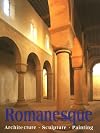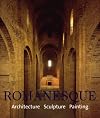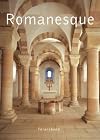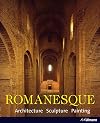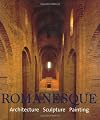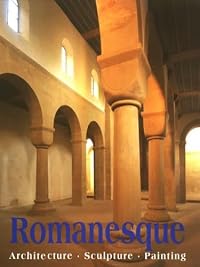
Romanesque: Architecture, Sculpture, Painting
by Rolf Toman (Editor)
On This Page
Description
The Romanesque was the first epoch of medieval art that encompassed all of Europe. Its origins hearken back to characteristic elements of Roman construction--reflected in the name of the period--and, in the course of the High Middle Ages, developed into the embodiment of Christian sacred art. Architecture, painting, and sculpture were permeated with the Christian worldview and the spirit of the religion. Romanesque at hand helps us understand and even experience this tight integration and show more masterfully explains the manifold aspects of Romanesque artistic composition, in which the hopes and fears of the people of the time found their expression. show lessTags
Recommendations
















Member Reviews
It's not so much that the artistic imagination has changed, although of course buildings are of their time and fashion, but everything has to be cost-conscious now and there is no vision of the future. Almost everything that is built is subject to the constraints of budget which means prefabrication rather than work by true craftsmen who had the skills and talent to make everything by hand.
From the Egyptians to the not-too-distant past, public buildings of note, palaces, churches, abbeys and seats of government among them, were built to last for all time. Workmen had few machines, pre-cast concrete and stick-on cornices were unknown. They weren't labourers, they were craftsmen, master masons, artists with tools and stone, sculptors and show more architects of vision. And these buildings were the result.
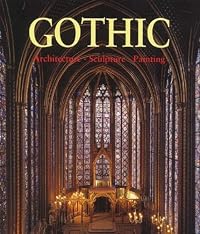
This is as beautiful a book as its companion book on Gothic architecture, and just as illuminating and entertaining to own. Its very much the sort of coffee-table book you could give to someone you want to impress, but one look at it and you would want to keep it for yourself. show less
From the Egyptians to the not-too-distant past, public buildings of note, palaces, churches, abbeys and seats of government among them, were built to last for all time. Workmen had few machines, pre-cast concrete and stick-on cornices were unknown. They weren't labourers, they were craftsmen, master masons, artists with tools and stone, sculptors and show more architects of vision. And these buildings were the result.
This is as beautiful a book as its companion book on Gothic architecture, and just as illuminating and entertaining to own. Its very much the sort of coffee-table book you could give to someone you want to impress, but one look at it and you would want to keep it for yourself. show less
None of the texts here dive very deep. There is no attempt to understand the mind of Romanesque mankind, nor to grasp the development of decisive elements within the style. Neither is any attempt made to explain its sudden rise. Still, they are descriptive and easily understood, even while a *why* is sorely missed.
The pictures easily make up for this. They are simply glorious, giving ample opportunity to do the diving all by one self. A book to look into often, even though its sheer bulk makes it an uncomfortable undertaking.
The pictures easily make up for this. They are simply glorious, giving ample opportunity to do the diving all by one self. A book to look into often, even though its sheer bulk makes it an uncomfortable undertaking.
Feb 7, 2012English
1
Ratings
Members
- Recently Added By
Author Information

All Editions
Some Editions
Series
Belongs to Publisher Series
Common Knowledge
- Canonical title*
- Romaanse kunst architectuur, beeldhouwkunst, schilderkunst
- Original title
- Romantik. Arkitektur, Skulptur, Malerei
- Original publication date
- 2004; 1995
- Disambiguation notice*
- The writer of this book is: Ulrike Laule; The editor of this book is: Rolf Toman.
*Some information comes from Common Knowledge in other languages. Click "Edit" for more information.
Classifications
Statistics
- Members
- 677
- Popularity
- 42,232
- Reviews
- 2
- Rating
- (3.97)
- Languages
- 13 — Czech, Danish, Dutch, English, Finnish, French, German, Hungarian, Italian, Polish, Portuguese, Spanish, Swedish
- Media
- Paper
- ISBNs
- 40
- UPCs
- 1
- ASINs
- 6