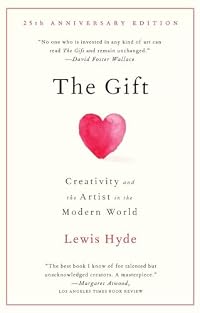
The Gift: Creativity and the Artist in the Modern World
by Lewis Hyde
On This Page
Description
A modern classic cherished by many of the greatest artists of our time, The Gift is a brilliant, life-changing defense of the value of creative labor. Drawing on examples from folklore and literature, history and tribal customs, economics and modern copyright law, Lewis Hyde demonstrates how our society-governed by the marketplace-is poorly equipped to determine the worth of artists' work. He shows us that another way is possible: the alternative economy of the gift, which allows creations show more and ideas to circulate freely, rather than hoarding them as commodities. Illuminating and transformative, The Gift is a triumph of originality and insight-an essential audiobook for anyone who has ever given or received a work of art. "A classic…If you want to write, paint, sing, compose, act, or make films, read The Gift." "No one who is invested in any kind of art can read The Gift and remain unchanged.". show lessTags
Recommendations
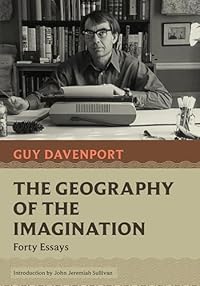
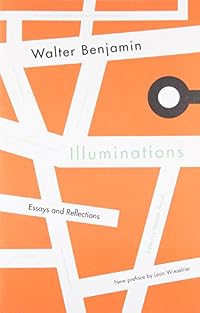
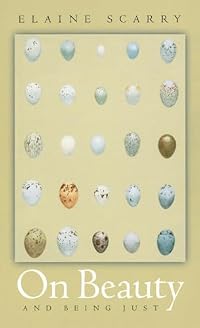
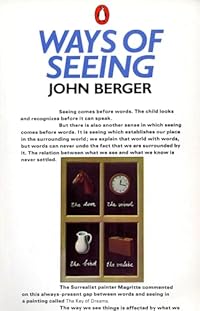



Member Recommendations
Member Reviews
Lewis Hyde writes about the creative process in a way that frees it from all cliches and focuses on its social meaning, looking at what it means in various contexts to have, and to give, a "gift," using anthropological studies, myth and fable, political economy, psychology and philosophy. Then he practices some excellent literary criticism on two authors, Whitman and Pound, to culminate the work. Is there any discipline the guy can't intelligently make use of? In the process of doing all this, he writes with verve and optimism about human creativity in a way that isn't at all corny but leaves you feeling that, practiced this way, intellectual inquiry can actually appeal to what I can only call the soul. It is as refreshing as a walk on show more a long, lovely beach on a beautiful day. I can't remember when I was so grateful to a book for its immediate impact on my own life. The Gift lived up to its name, for me. show less
The title of this book is the most egregious misnomer I've ever encountered. Combined with the misleading jacket description I don't think I've ever had a more disappointing or frustrating experience from a book that I thought was going to be pretty straightforward.
It would have been more accurately subtitled not "Creativity and the Artist in the Modern World," but "An Ethnographic Study Through the Works of Whitman and Pound." If that subtitle still appeals to you, by all means read the book, but at least now you have a more accurate perception of what you're in for. I see now that earlier versions were subtitled "Imagination and the Erotic Life of Property," which is both more accurate (though still annoyingly vague) and less show more interesting. As it is, the current subtitle is only directly addressed in the concluding section, for a total of 20 or so pages out of more than 300.
As I was reading, this reminded me of both Robert Bly's [b:Iron John|122600|Iron John A Book About Men|Robert Bly|http://d.gr-assets.com/books/1348052112s/122600.jpg|604566] and Radin's [b:The Trickster|605456|The Trickster A Study in American Indian Mythology|Paul Radin|http://d.gr-assets.com/books/1320418783s/605456.jpg|592007]. When I stopped to examine this feeling, I realized that all three books are written by poets/folklorists, and they all use the same loose, ephemeral arguments to support their theses. They also all ostensibly treat a very fascinating subject matter but get bogged down in esoteric mumbo-jumbo and poetic fluffiness, leaving a more rational reader disappointed. Some examples from this one:
Essentially, those passages are a microcosm of the book. The central thesis, as finally addressed head-on in the conclusion(!), is that it's difficult for artists to make a living because their "gifts" aren't appropriately valued on the commercial market. The fact that this is one of those "no duh" statements perhaps explains why Hyde had to fill up the book with so much irrelevant fluff. In fact, the entire 1st half of the book is dedicated to a tedious tracing of the anthropological history of gift-exchange, which only appears to relate in a very background way to what the cover of the book told me it was going to be about. As I said, frustrating.
In addition, the rational, non-literary arguments that Hyde does propose demonstrate either a misunderstanding or a misrepresentation of facts that arouses suspicion toward the rest of his argumentation. For example, on p.150 Hyde attempts to equate the simultaneous group-reinforcement and other-repulsion of Mosaic usury laws with the biological cell membrane but does not accurately portray the membrane, making the argument useless for anyone with an intermediate understanding of biology, and misleading for anyone else. Later, less forgivably (he's not a science teacher after all), he pens the following footnote talking about Pound's anti-semitism and the Hermes archetype:
My point is that Hyde is either profoundly ignorant about what he's arguing or he's making lazy arguments without supposing that people will realize. Deliberately attempting to obfuscate is another possibility, however improbable. Either way, it's shockingly inept and calls into question the validity of a lot of his book. It also further corroborates my opinion that the book doesn't say much at all rationally-speaking. Sure it may make some nifty artistic and intuitive points, but the non-"erotic" parts of the argument are uniformly suspect, lacking any kind of academic or scientific rigor.
On the plus side, I learned to avoid books written by poets, or by poetry enthusiasts. I am way too rational and analytical to appreciate literature-based arguments, so readers of this review can perhaps take it with a grain of salt. Also, I enjoyed learning about the lives of Whitman and Pound even if I don't think Hyde did a good job of incorporating them into the overall book. The chapters on usury and woman-giving were also somewhat interesting. For anyone familiar with Robert Pirsig's [b:Lila|31093|Lila An Inquiry Into Morals|Robert M. Pirsig|http://d.gr-assets.com/books/1346459192s/31093.jpg|2374212] (I just re-read it), Pound's "Eluesinian fecundity" v. "Confucian order" exactly mirrors Pirsig's "Dynamic v. Static Quality." Or I suppose it's vice versa. . .
Unfortunately, the majority of the book is boring and its value doubtful. It strikes me as one of those that artist-types like because it reinforces their flouting of conventional/rational standards and values. Perhaps its popularity is due to coming at a time when there were less people saying these things, I don't know. But it doesn't appear to say anything ground-breaking nor offer any original solutions to ease the tension between the artist and a monetary civilization. Disappointing.
I've seen that some people find this book inspirational. I'm an aspiring writing and was looking for that but was left in the cold. The most creatively inspiring book I've read continues to be, strangely enough, Stephen King's [b:On Writing|10569|On Writing|Stephen King|http://d.gr-assets.com/books/1348431774s/10569.jpg|150292]. I highly recommend it to any writer looking for a kick in the pants. Tied for second are John Fante's [b:Ask the Dust|46227|Ask the Dust |John Fante|http://d.gr-assets.com/books/1347747920s/46227.jpg|900807], Colin Wilson's [b:The Outsider|67880|The Outsider|Colin Wilson|http://d.gr-assets.com/books/1348172189s/67880.jpg|3310176] and (coincidentally) [b:Leaves of Grass|27494|Leaves of Grass|Walt Whitman|http://d.gr-assets.com/books/1352753899s/27494.jpg|28117]. show less
It would have been more accurately subtitled not "Creativity and the Artist in the Modern World," but "An Ethnographic Study Through the Works of Whitman and Pound." If that subtitle still appeals to you, by all means read the book, but at least now you have a more accurate perception of what you're in for. I see now that earlier versions were subtitled "Imagination and the Erotic Life of Property," which is both more accurate (though still annoyingly vague) and less show more interesting. As it is, the current subtitle is only directly addressed in the concluding section, for a total of 20 or so pages out of more than 300.
As I was reading, this reminded me of both Robert Bly's [b:Iron John|122600|Iron John A Book About Men|Robert Bly|http://d.gr-assets.com/books/1348052112s/122600.jpg|604566] and Radin's [b:The Trickster|605456|The Trickster A Study in American Indian Mythology|Paul Radin|http://d.gr-assets.com/books/1320418783s/605456.jpg|592007]. When I stopped to examine this feeling, I realized that all three books are written by poets/folklorists, and they all use the same loose, ephemeral arguments to support their theses. They also all ostensibly treat a very fascinating subject matter but get bogged down in esoteric mumbo-jumbo and poetic fluffiness, leaving a more rational reader disappointed. Some examples from this one:
The tribe and its gift are separate, but they are also the same -- there is a little gap between them so they may breathe into each other, and yet there is no gap at all, for they share one breath, one meal for the two of them. 46The first passage above says pretty much nothing, and the second one says something that I'm not going to take the time to figure out.
If we pause now to contrast the esemplastic cognition of imagination to the analytic cognition of logos-thought, we will be in a position to see one of the connections between the creative spirit and the bond that gift establishes. 196
Essentially, those passages are a microcosm of the book. The central thesis, as finally addressed head-on in the conclusion(!), is that it's difficult for artists to make a living because their "gifts" aren't appropriately valued on the commercial market. The fact that this is one of those "no duh" statements perhaps explains why Hyde had to fill up the book with so much irrelevant fluff. In fact, the entire 1st half of the book is dedicated to a tedious tracing of the anthropological history of gift-exchange, which only appears to relate in a very background way to what the cover of the book told me it was going to be about. As I said, frustrating.
In addition, the rational, non-literary arguments that Hyde does propose demonstrate either a misunderstanding or a misrepresentation of facts that arouses suspicion toward the rest of his argumentation. For example, on p.150 Hyde attempts to equate the simultaneous group-reinforcement and other-repulsion of Mosaic usury laws with the biological cell membrane but does not accurately portray the membrane, making the argument useless for anyone with an intermediate understanding of biology, and misleading for anyone else. Later, less forgivably (he's not a science teacher after all), he pens the following footnote talking about Pound's anti-semitism and the Hermes archetype:
This figure who is good with money but a little tricky is always treated as a foreigner even if his family has been around for centuries. Often he actually is a foreigner, of course. He is invited in when the nation needs trade and he is driven out -- or murdered -- when nationalism begins to flourish: the Chinese out of Vietnam in 1978, the Japanese out of China in 1949, the Yankees out of South America and Iran, the East Indians out of Uganda under Idi Amin, and the Armenians out of Turkey in 1915-16. The "outsider" is always used as a catalyst to arouse nationalism, and when times are hard he will always be its victim as well.The problems with this passage are many and outrageous, not least of which is that he counts Americans in South America/Iran and the Japanese in China as "victims." Let's keep in mind that the Chinese kicked out the Japanese after the latter had invaded the former in WWII and committed uncountable atrocities. And somehow the idea of South America and Iran inviting Americans in to help out with their economy before they turned on the innocent helpers doesn't quite ring true. So with only a basic understanding of history I have destroyed 2/5 of his supporting examples. This suggests I could probably do the same if I knew anything about the other examples, or perhaps with a short wikipedia search.
My point is that Hyde is either profoundly ignorant about what he's arguing or he's making lazy arguments without supposing that people will realize. Deliberately attempting to obfuscate is another possibility, however improbable. Either way, it's shockingly inept and calls into question the validity of a lot of his book. It also further corroborates my opinion that the book doesn't say much at all rationally-speaking. Sure it may make some nifty artistic and intuitive points, but the non-"erotic" parts of the argument are uniformly suspect, lacking any kind of academic or scientific rigor.
On the plus side, I learned to avoid books written by poets, or by poetry enthusiasts. I am way too rational and analytical to appreciate literature-based arguments, so readers of this review can perhaps take it with a grain of salt. Also, I enjoyed learning about the lives of Whitman and Pound even if I don't think Hyde did a good job of incorporating them into the overall book. The chapters on usury and woman-giving were also somewhat interesting. For anyone familiar with Robert Pirsig's [b:Lila|31093|Lila An Inquiry Into Morals|Robert M. Pirsig|http://d.gr-assets.com/books/1346459192s/31093.jpg|2374212] (I just re-read it), Pound's "Eluesinian fecundity" v. "Confucian order" exactly mirrors Pirsig's "Dynamic v. Static Quality." Or I suppose it's vice versa. . .
Unfortunately, the majority of the book is boring and its value doubtful. It strikes me as one of those that artist-types like because it reinforces their flouting of conventional/rational standards and values. Perhaps its popularity is due to coming at a time when there were less people saying these things, I don't know. But it doesn't appear to say anything ground-breaking nor offer any original solutions to ease the tension between the artist and a monetary civilization. Disappointing.
I've seen that some people find this book inspirational. I'm an aspiring writing and was looking for that but was left in the cold. The most creatively inspiring book I've read continues to be, strangely enough, Stephen King's [b:On Writing|10569|On Writing|Stephen King|http://d.gr-assets.com/books/1348431774s/10569.jpg|150292]. I highly recommend it to any writer looking for a kick in the pants. Tied for second are John Fante's [b:Ask the Dust|46227|Ask the Dust |John Fante|http://d.gr-assets.com/books/1347747920s/46227.jpg|900807], Colin Wilson's [b:The Outsider|67880|The Outsider|Colin Wilson|http://d.gr-assets.com/books/1348172189s/67880.jpg|3310176] and (coincidentally) [b:Leaves of Grass|27494|Leaves of Grass|Walt Whitman|http://d.gr-assets.com/books/1352753899s/27494.jpg|28117]. show less
Libro ricco e complesso che aiuta a interpretare il ruolo delle dinamiche del dono (e dello scambio, della compra-vendita, dell'usura) nella società in generale e nella pratica artistica in particolare. Nella prima parte si sviluppa il concetto di dono in termini generali, passando per le fiabe, la vita tribale, il luteranesimo e la parità/disparità di genere, con considerazioni sempre estremamente utili. Nella seconda parte si applicano i concetti emersi alle vite e all'opera di due poeti, Walt Whitman ed Ezra Pound, ricavando ulteriori osservazioni, mai banali e mai troppo assertive (Hyde ha anche il merito di ripensare a quanto scrive e cambiare magari opinione). Una lettura estremamente utile, non solo e non tanto per gli artisti show more (come la copertina vuol fare credere) ma a chiunque sia interessato ad approfondire un centrale tema antropologico quale è quello del dono. show less
An uneven but enlightening book -- part one relates the history of gift exchange, as contrasted against market exchange. The second looks at two significant American poets -- Whitman and Pound, and how their virtues and flaws can be filtered though the lends of the Gift. This is not a practical book for the working artist, Hyde says as much himself in the afterword, but rather a meditation on boundary -- because so often, it is the creation and demolition of boundaries that defines how we see art, commerce, and the social world in general. For anyone with a gut feeling that there are certain things whose value is poorly measured by market value, and who seeks language to define this ex-market value, Hyde's language of gift exchange show more could be a framework to investigate, and this book is recommended. show less
THE GIFT The Gift by Lewis Hyde, is a philosophical treatise on the interconnection between the ”gift” an artist’s creative spirit, a “gift” an object proffered to another and the act of “giving” a work of art. The author looks to anthropology and folk tales, to propose the circuit model: an artist creates a physical object, shares that item with another individual who briefly enjoys the entity, then passes the relic on to another, who repeats the process, etc. The archetypal token may or may not eventually return to the primary donor. Or the initial giver may receive an alternate present. A deeper set of discussions involves the impact of capitalism on talent. Should music, a painting or poem be given freely to all? If show more the artifact is sold, does consumerism taint the value of the artistry? Should the composer, the water colorist and the writer be constrained to a life of poverty? I find this discourse intriguing because firstly, this book was given to me as a gift by dear neighbors. Secondly, I shall follow the premise of circulation by sending this tome to a family member who operates a lending library from her garage. The Gift will live in my memory, yet have a life beyond my dusty bookshelf. And finally, I as an author, just published my first book. I have used my talent, i.e., gift, to create by an artistic means, and now am in the process of marketing my poetry volume. My solution to Hyde’s questions is to endeavor to always labor to produce worthy writing to submit to our capitalist society. show less
This book is pretty amazing.
It's dense and takes awhile to process. I feel I am going to have to return to The Gift again and again. There is an almost encyclopedic level of knowledge here.
The second part of the book takes a different structure, using chapters on Whitman and Pound to illustrate the complexities of both men.
Great book.
It's dense and takes awhile to process. I feel I am going to have to return to The Gift again and again. There is an almost encyclopedic level of knowledge here.
The second part of the book takes a different structure, using chapters on Whitman and Pound to illustrate the complexities of both men.
Great book.
This book is a multi course meal. Not a snack. Not dessert. It asks big questions about art and provides historical context for how we got to where we are today. It's not a I sat down and read it in a day sort of book either. You need time to digest all the ideas explored. If you are an artist or want to become one, however, it's required reading
Members
- Recently Added By
Lists

Mo's Reading List
218 works; 1 member

Mo's Reading List (Abridged)
75 works; 1 member

Story/Myth Reading List
25 works; 1 member
Author Information

12+ Works 3,163 Members
Common Knowledge
- Canonical title
- The Gift: Creativity and the Artist in the Modern World
- Original title
- The Gift: Creativity and the Artist in the Modern World
- Alternate titles
- The Gift: Imagination and the Erotic Life of Property; The Gift: How the Creative Spirit Transforms the World
- Original publication date
- 1983
- Epigraph
- O wonderful! O wonderful! O wonderful! I am food! I am food! I am food! I eat food! I eat food! I eat food! My name never dies, never dies, never dies! I was born first in the first of worlds, earlier than the gods, in the be... (show all)lly of what has no death! Whoever gives me away has helped me the most! I, who am food, eat the eater of food! I have overcome this world! He who knows this shines like the sun. Such are the laws of the mystery! Taittiri-ya Upanishad
You received gifts from me; they were accepted. But you don't understand how to think about the dead. The smell of winter apples, of hoarfrost, and of linen. There are nothing but gifts on this poor, poor earth. Czeslaw Mil... (show all)osz - Dedication
- For my parents. "What is good is given back"
- First words
- When the Puritans first landed in Massachusetts, they discovered a thing so curious about the Indians' feelings for property that they felt called upon to give it a name.
Preface: Book salesmen find it handy to have a ten-second description of each title when they go into a bookstore to pitch the product.
Introduction: At the corner drugstore my neighbors and I can now buy a lline of romantic novels written according to a formula developed through market research. - Last words
- (Click to show. Warning: May contain spoilers.)Yet maybe this small and mysetrious exchange of gifts remained inside me also, deep and indestructible, giving my poetry light.
- Blurbers
- Lethem, Jonathan; Smith, Zadie; Dyer, Geoff; Atwood, Margaret; Wallace, David Foster; Viola, Bill
- Original language
- English
Classifications
- Genres
- Nonfiction, Literature Studies and Criticism, Philosophy
- DDC/MDS
- 306.32 — Social sciences Social sciences, sociology & anthropology Culture and institutions Economic institutions Property systems
- LCC
- GN449.6 .H93 — Geography, Anthropology and Recreation Anthropology Anthropology Ethnology. Social and cultural anthropology Cultural traits, customs, and institutions Economic organization. Economic anthropology
- BISAC
Statistics
- Members
- 1,634
- Popularity
- 13,676
- Reviews
- 13
- Rating
- (4.03)
- Languages
- English, German, Italian, Turkish
- Media
- Paper, Audiobook, Ebook
- ISBNs
- 18
- ASINs
- 7