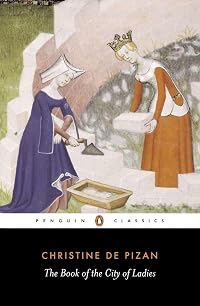
The Book of the City of Ladies
by Christine de Pizan
On This Page
Description
Christine de Pizan's Livre de la Cite des Dames (1405) is justly renowned for its full-scale assault on the misogynist stereotypes that dominated the culture of the Middle Ages. Rosalind Brown-Grant locates the Cite in the context of Christine's defense of women as it developed over a number of years and through a range of different texts. This study shows that Christine's case for women nonetheless had an underlying unity in its insistence on the moral, if not the social, equality of the show more sexes. show lessTags
Recommendations










Member Recommendations
by anonymous user
Member Reviews
A cidade das damas foi fundamental para uma retratação de milênios de misoginia nas artes e na filosofia, de escritores vilipendiando a figura das mulheres. Também não podemos esquecer que Pizan constrói em tal livro um tratado moral baseado nos critérios de Razão, Retidão e Justiça que dão nome às damas de sua cidade utópica.
Tendo em vista que Pizan está sob o jugo do medievalismo cristão, fica patente que seu texto é seminal em progressismo feminista do que era vigente ao status quo da época. Um exemplo é como ela trabalha a questão de que a mulher saiu de fato da costela de Adão, Pizan podia enxergar nisso uma metáfora poética como pôde enxergar em outros momentos alegorias oriundas das penas masculinas, em show more sumo ela era mais afeita a enxergar uma figura de linguagem do que uma misoginia literal.
No livro primeiro há diálogos salutares entre Pizan e as Damas Razão, Retidão e Justiça em que a tríade exemplifica mulheres históricas e fictícias, sempre lembrando que Pizan não distinguia as qualidades palpáveis das metafóricas em torno da persona dessas mulheres. Com isso o livro primeiro deixa claro o verniz proto feminista ao dotar tais mulheres com a razão, retidão e senso de justiça no mesmo patamar que os homens. show less
Tendo em vista que Pizan está sob o jugo do medievalismo cristão, fica patente que seu texto é seminal em progressismo feminista do que era vigente ao status quo da época. Um exemplo é como ela trabalha a questão de que a mulher saiu de fato da costela de Adão, Pizan podia enxergar nisso uma metáfora poética como pôde enxergar em outros momentos alegorias oriundas das penas masculinas, em show more sumo ela era mais afeita a enxergar uma figura de linguagem do que uma misoginia literal.
No livro primeiro há diálogos salutares entre Pizan e as Damas Razão, Retidão e Justiça em que a tríade exemplifica mulheres históricas e fictícias, sempre lembrando que Pizan não distinguia as qualidades palpáveis das metafóricas em torno da persona dessas mulheres. Com isso o livro primeiro deixa claro o verniz proto feminista ao dotar tais mulheres com a razão, retidão e senso de justiça no mesmo patamar que os homens. show less
I like Christine de Pizan -- she resonates with me, and strikes me as a woman with a very clear voice and definite confidence. What's really interesting is, she's extremely defiant, but somewhat passive-aggressively so...always apparently demurring and humbling herself, yeah, but at the same time, totally (and freely) re-interpreting basically all of history and literature in favor of all the Ladies out there. I mean, she's talking to these goddesses like Boethius talks to Philosophy. She puts herself right at the center of the stage, for to later enlighten women. I don't know how else to say it: She has guts. And she's really, really bright and well-educated. Maybe I'm just a nerd, but I consider her a role model for young women.
Cristine de Pizan es la primera mujer escritora profesional de la historia, nació 1364 y su primer escrito profesional fue publicado en 1399. Es considerada la precursora del movimiento feminista, varias de sus obras, como la que hoy nos compete, son abiertamente pro mujeres, escribió varios libros como protesta a otros autores que denigraban y minimizaban a las mujeres.
Este libro es un compendio de grandes mujeres a lo largo de la historia, que si bien es un reconocimiento a ellas, es también un recordatorio a sus lectores y a sus detractores de que la mujer ha tenido una fuerte influencia en la historia, que la mujer no solo ha comprobado ser históricamente valerosa si no también inteligente y valiosa.
Hay que poner en contexto show more esta obra, ya de por sí es un libro sumamente interesante considerando la época en el que fue escrito, si no también por quien la escribió, publicada en 1405 durante la edad media, donde había grandes detractores de la mujer, desde políticos, eclesiásticos, escritores y sociedad en general, de Pizan tuvo la valentía no solo de plantarles cara sino de hacerlo de manera exitosa, fue una escritora demandada por las cortes de Francia y de Inglaterra, vivía de la letra, con esto mantuvo económicamente a su familia y eso no era algo común.
Regresando al contexto, es verdad que esta obra tiene mucho de un grito rebelde, una sentencia hacía la misoginia pero desde el punto de vista de una mujer de su época, así que para quienes lean este libro, sobre todo las acérrimas feministas, es muy probable que encuentren criticables algunas de las afirmaciones de la autora, para mí ha sido una verdadera joya.
de Pizan en esta obra se ve a ella misma dudando realmente de su lugar en el mundo como mujer ¿tendrán razón todos aquellos hombres que afirman que las mujeres valen menos que los hombres? ..
“Me preguntaba cuáles podrían ser las razones que llevan a tantos hombres, clérigos y laicos, a vituperar a las mujeres, criticándolas bien de palabra, bien en escritos y tratados…….. Yo, que he nacido mujer, me puse a examinar mi carácter…….”
Si hay tantos que lo dicen, es porque debe ser cierto y ella sumida en sus pensamientos, angustias y dudas, se le presentan tres deidades: La Razón, la Rectitud y la Justicia, quienes le dicen que se presentan ante ella para encomendarle que construya “La ciudad de las Damas”
“¡Levántate, hija mía! Salgamos sin tardanza hacia el Campo de las Letras. Es allí, en aquel país rico y fértil, donde será fundada la Ciudad de las Damas”
Así es como la autora junto con estas tres Damas recorren un camino basado en la historia, donde le presentan a las muchas mujeres que han hecho y logrado tanto a lo largo de la historia.
Vamos pasando de una historia a otra, donde con ejemplos se va acallando a cada acusación a la que se le hace a las mujeres, que si no pueden pelear una guerra, que si no pueden trabajar o estudiar el derecho, que si no son lo suficientemente inteligentes para estudiar ciencias, que si no son capaces de inventar algo nuevo y a cada una de estas historias contadas o explicadas a través de la historia relacionada con alguna mujer se explica cómo las mujeres, son inteligentes y capaces.
Es realmente fascinante este libro, por muchas razones, es un libro que se disfruta y que no puedes evitar pensar en la mujer que lo escribió y la valentía de hacerlo.
No puedo evitar sentir una enorme admiración hacia esta escritora, es una pena que en castellano no haya más que este libro publicado, porque fue bastante prolífica, si bien es verdad que escribió muchos poemas y canciones que fueron muy populares, también escribió un libro sobre las artes de la guerra, una biografía del Rey Carlos V de Francia, una autobiografía y su última obra conocida sobre Juana de Arco que acababa de liberar Orleans de los Ingleses
“Tú, Juana, en buena hora nacida
¡Bendito sea el que creó! (……)
¡Ay! ¡Qué honor para el sexo
Femenino! Bien amado de Dios, según provee,
Cuando todo este gran pueblo desfallecido,
Huye del reino despavorido,
Ahora rescatado y salvado por una mujer
(lo que no pudieron los hombres hacer)
Y los traidores desertores,
Antes apenas hubiesen podido creer que fuera cierto” show less
Este libro es un compendio de grandes mujeres a lo largo de la historia, que si bien es un reconocimiento a ellas, es también un recordatorio a sus lectores y a sus detractores de que la mujer ha tenido una fuerte influencia en la historia, que la mujer no solo ha comprobado ser históricamente valerosa si no también inteligente y valiosa.
Hay que poner en contexto show more esta obra, ya de por sí es un libro sumamente interesante considerando la época en el que fue escrito, si no también por quien la escribió, publicada en 1405 durante la edad media, donde había grandes detractores de la mujer, desde políticos, eclesiásticos, escritores y sociedad en general, de Pizan tuvo la valentía no solo de plantarles cara sino de hacerlo de manera exitosa, fue una escritora demandada por las cortes de Francia y de Inglaterra, vivía de la letra, con esto mantuvo económicamente a su familia y eso no era algo común.
Regresando al contexto, es verdad que esta obra tiene mucho de un grito rebelde, una sentencia hacía la misoginia pero desde el punto de vista de una mujer de su época, así que para quienes lean este libro, sobre todo las acérrimas feministas, es muy probable que encuentren criticables algunas de las afirmaciones de la autora, para mí ha sido una verdadera joya.
de Pizan en esta obra se ve a ella misma dudando realmente de su lugar en el mundo como mujer ¿tendrán razón todos aquellos hombres que afirman que las mujeres valen menos que los hombres? ..
“Me preguntaba cuáles podrían ser las razones que llevan a tantos hombres, clérigos y laicos, a vituperar a las mujeres, criticándolas bien de palabra, bien en escritos y tratados…….. Yo, que he nacido mujer, me puse a examinar mi carácter…….”
Si hay tantos que lo dicen, es porque debe ser cierto y ella sumida en sus pensamientos, angustias y dudas, se le presentan tres deidades: La Razón, la Rectitud y la Justicia, quienes le dicen que se presentan ante ella para encomendarle que construya “La ciudad de las Damas”
“¡Levántate, hija mía! Salgamos sin tardanza hacia el Campo de las Letras. Es allí, en aquel país rico y fértil, donde será fundada la Ciudad de las Damas”
Así es como la autora junto con estas tres Damas recorren un camino basado en la historia, donde le presentan a las muchas mujeres que han hecho y logrado tanto a lo largo de la historia.
Vamos pasando de una historia a otra, donde con ejemplos se va acallando a cada acusación a la que se le hace a las mujeres, que si no pueden pelear una guerra, que si no pueden trabajar o estudiar el derecho, que si no son lo suficientemente inteligentes para estudiar ciencias, que si no son capaces de inventar algo nuevo y a cada una de estas historias contadas o explicadas a través de la historia relacionada con alguna mujer se explica cómo las mujeres, son inteligentes y capaces.
Es realmente fascinante este libro, por muchas razones, es un libro que se disfruta y que no puedes evitar pensar en la mujer que lo escribió y la valentía de hacerlo.
No puedo evitar sentir una enorme admiración hacia esta escritora, es una pena que en castellano no haya más que este libro publicado, porque fue bastante prolífica, si bien es verdad que escribió muchos poemas y canciones que fueron muy populares, también escribió un libro sobre las artes de la guerra, una biografía del Rey Carlos V de Francia, una autobiografía y su última obra conocida sobre Juana de Arco que acababa de liberar Orleans de los Ingleses
“Tú, Juana, en buena hora nacida
¡Bendito sea el que creó! (……)
¡Ay! ¡Qué honor para el sexo
Femenino! Bien amado de Dios, según provee,
Cuando todo este gran pueblo desfallecido,
Huye del reino despavorido,
Ahora rescatado y salvado por una mujer
(lo que no pudieron los hombres hacer)
Y los traidores desertores,
Antes apenas hubiesen podido creer que fuera cierto” show less
This was written in 1405 and is one of the earliest feminist books ever! Christine de Pizan was a French author who was sick of reading books written by men talking about how terrible women are. So she decided to write a book refuting the ridiculous accusations male authors have thrown at women since time began. To do this she writes about many famous women from history who disprove the negative claims, and gathers these women into a metaphorical city of ladies.
It was surprising and disappointing to see that many of the false claims that Christine combatted in her book are things that are still said about women (and have often been said about women throughout history). But it is really cool to see how easily and reasonably Christine was show more able to smack down everything said against women.
The only downside to this book is that most of the examples of famous women Christine de Pizan writes about are from legends, histories of questionable accuracy, and hagiographies of saints. I was hoping for more historically reliable biographies. But obviously, Christine didn't have access to any fact checking websites or anything, so she couldn't have possibly known that her sources weren't always reliable. But she does give some examples of women from her own time, which are my favorite examples. show less
It was surprising and disappointing to see that many of the false claims that Christine combatted in her book are things that are still said about women (and have often been said about women throughout history). But it is really cool to see how easily and reasonably Christine was show more able to smack down everything said against women.
The only downside to this book is that most of the examples of famous women Christine de Pizan writes about are from legends, histories of questionable accuracy, and hagiographies of saints. I was hoping for more historically reliable biographies. But obviously, Christine didn't have access to any fact checking websites or anything, so she couldn't have possibly known that her sources weren't always reliable. But she does give some examples of women from her own time, which are my favorite examples. show less
I read this in the 9th grade (and I know what a walkman is, so you can judge for yourself how long ago that was), so I'm pretty sure that (a) I didn't precisely get the maximum value out of the text, and (b) my memories do not do the book justice. I did a project on the role of women in medieval and renaissance times, and had a very hard time convincing my teacher that primary sources from the female perspective basically didn't exist. This is one of the very, very few examples. In the book, de Pizan discusses contemporary stereotypes of her gender and argues against certain negative portrayals. At a time in which women were considered to be ruled by passion, while men were ruled by reason, de Pizan argues strongly that women should show more also be ruled by reason. She does, however, maintain a dichotomy between the sexes, attributing gentleness, compassion, etc, to women and (if I remember correctly) decisiveness and action to men. She argues that the differences in nature between the genders itself implies an inherent difference in the roles that the gender is designed to take. To me, her argument here is interesting in itself, as she does not appear to address how she herself is in a position typically held by men. She also has a long section in which she expounds upon the female's role as wife and her duty towards her husband. An interesting but not precisely entertaining read. show less
Una lectura bastante agradable y con un estilo bastante fácil de soportar.
A pesar de su crisol religioso, inevitable en un texto de estas características, contiene una lectura bastante moderna (y feminista antes de lo que podríamos llamar feminista), ilumina a la posible lectora con historia de grandes mujeres, paganas o no, y las interpreta.
Me ha aclarado más de un aspecto, y he aprendido un poco, así que no estado mal.
A pesar de su crisol religioso, inevitable en un texto de estas características, contiene una lectura bastante moderna (y feminista antes de lo que podríamos llamar feminista), ilumina a la posible lectora con historia de grandes mujeres, paganas o no, y las interpreta.
Me ha aclarado más de un aspecto, y he aprendido un poco, así que no estado mal.
A fifteenth proto-feminist tretise that women's virtue and capacity for learning is equal to men's, largely told through examples from Christian and Classical history. Anybody who is planning to write a work of historical fiction or fantasy in a world similar to Renaissance Europe with feminist heroines would do well to take Christine de Pizan in an example in how to make a character seem believably a product of her time rather than of the twenty-first century.
Members
- Recently Added By
Lists

Favourite Medieval Books
49 works; 17 members

100 Books to Read in a Lifetime (That Are Older Than 200 Years)
415 works; 175 members

500 Great Books by Women
507 works; 60 members
Literature About Women and Girls
394 works; 39 members

Books Read in 2014
2,343 works; 89 members

Harold Bloom - The Western Canon: A. The Theocratic Age
97 works; 13 members

Western Canon
206 works; 2 members

Mustich's 1000 Books to Read Before You Die: A Life Changing List
1,001 works; 19 members

Biblioteca esencial de mujeres (100 libros 100)
53 works; 1 member

DigitalDreamDoor top 300
300 works; 4 members

In Our Time books
4,934 works; 2 members

Lectuurlijst
63 works; 1 member
Author Information

54+ Works 3,435 Members
Some Editions
Awards and Honors
Series
Belongs to Publisher Series
Work Relationships
Is abridged in
Common Knowledge
- Canonical title*
- Kvinnostaden
- Original title
- Le Livre de la Cité des Dames
- Alternate titles
- Boke of the Cyte of Ladyes
- Original publication date
- 1405
- Important events
- 14th century; 15th century
- First words
- Following the practice that has become the habit of my life, namely the devoted study of literature, one day as I was sitting in my study, surrounded by books on many different subjects, my mind grew weary from dwelling at ... (show all)length on the weighty opinions of authors whom I had studied for so long.
- Last words
- (Click to show. Warning: May contain spoilers.)May He in the end have mercy on my great sins and grant to me the joy which last forever, which I may, by His grace, afford to you. Amen.
- Blurbers
- Tuchman, Barbara; Quilligan, Maureen
- Original language
- French
- Disambiguation notice
- The Great Ideas edition/s of this book are edited versions and should be treated as a different work. If your version is not the complete version please seperate it from this work, thanks!
*Some information comes from Common Knowledge in other languages. Click "Edit" for more information.
Classifications
- Genre
- Fiction and Literature
- DDC/MDS
- 843.2 — Literature & rhetoric French Literature French fiction Transition period 1400–1500
- LCC
- PQ1575 .L56 .E5 — Language and Literature French, Italian, Spanish and Portuguese literatures French literature Old French literature (14th-) 15th century (to ca. 1525)
- BISAC
Statistics
- Members
- 1,699
- Popularity
- 13,095
- Reviews
- 16
- Rating
- (3.78)
- Languages
- 11 — Catalan, Dutch, English, French, German, Galician, Italian, Portuguese, Romanian, Spanish, Swedish
- Media
- Paper, Audiobook, Ebook
- ISBNs
- 44
- ASINs
- 17