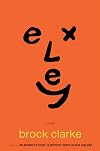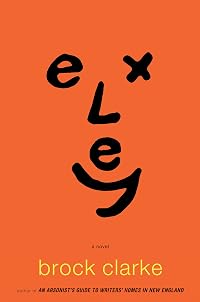
Exley
by Brock Clarke
On This Page
Description
“The literary equivalent of a half-court shot . . . Extraordinary.”—NPRFor young Miller Le Ray, life has become a search. A search for his dad, who may or may not have joined the army and gone to Iraq. A search for a notorious (and, unfortunately, deceased) writer, Frederick Exley, author of the “fictional memoir” A Fan’s Notes, who may hold the key to bringing Miller’s father back. But most of all, his is a search for truth. As Miller says, “Sometimes you have to tell the show more truth about some of the stuff you’ve done so that people will believe you when you tell them the truth about other stuff you haven’t done.”
In Exley as in his previous bestselling novel, An Arsonist’s Guide to Writers’ Homes in New England, Brock Clarke takes his reader into a world that is both familiar and disorienting, thought-provoking and thoroughly entertaining. Told by Miller and Dr. Pahnee, both unreliable narrators, it becomes an exploration of the difference between what we believe to be real and what is in fact real. show less
Tags
Recommendations
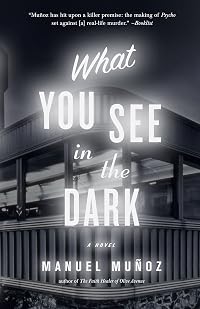


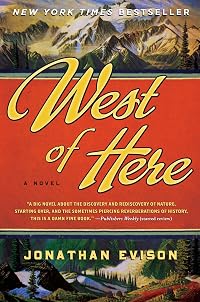

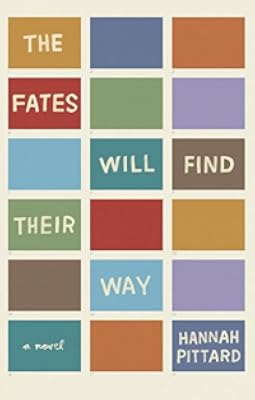


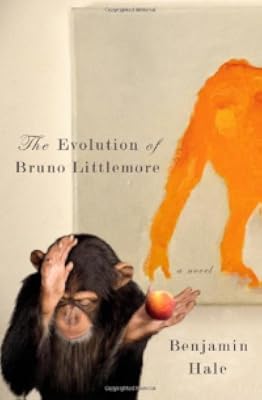




















Member Recommendations
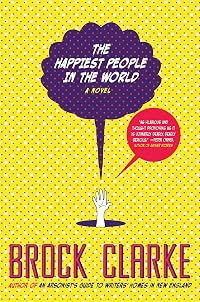
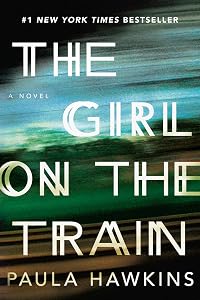
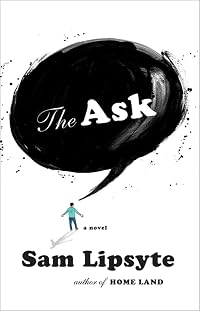
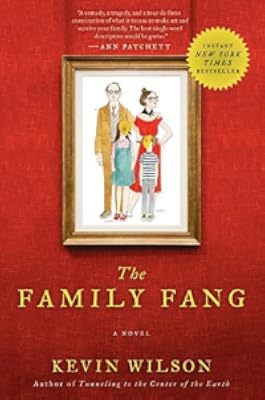
hairball These go together in my mind, somehow.
anonymous user should be obvious -- read the review of 'Exley'
Member Reviews
After you finish reading Exley, by Brock Clarke, you may need to take a few moments to catch your breath. You may not sleep well, and that’s certainly not because of anything horrific or scary in the book. This book, quite simply, messes with your mind.
First, the characters are wildly created and completely unpredictable. It starts with Miller, or M-, who is a child prodigy on a quest to find his father who left the family suddenly and without explanation. He’s a weird little kid, but likable, and you can’t help but feel sympathy for him as he misses his dad. The only explanation he can find is that his father must have left for Iraq (they live in an army base town), and this explanation doesn’t sit well with his mother. She show more arranges for him to meet with a psychiatrist to discuss Miller’s ‘wild imagination’. Miller and the doctor form a tentative relationship, with Miller’s explanations sounding more reasonable than anyone else’s.
The key to all of this, to separate it from any number of books about dysfunctional families, is Exley. Frederick Exley, is the author of A Fan’s Notes, the favorite book of Miller’s father. His father’s so tied to Exley’s books that when he gets a phone call on 9/11 to tell him to turn on the television, he can’t be bothered. He’s too busy re-reading the book. The book becomes Miller’s only connection to his dad. He carries on his father’s obsession and turns to Exley (or at least anything even remotely related to Exley or his writing) to bring him back. With book in hand, he searches all over Watertown to find a connection and an explanation. In between searching, he teaches his father’s English class at the Junior College, meets a mysterious young woman who may have known his father, and visits the VA hospital searching for clues. This is one busy kid.
The psychiatrist, Dr. Pahnee, isn’t exactly the appropriate choice for a mental health professional for Miller. This makes him perfect in terms of the book. Because while Dr. Pahnee utters the traditional psychobabble, he’s also not above prowling Miller’s house when no one’s home, and following him around to verify if any of Miller’s claims could possibly be true (both of them on bikes). He’s not above hitting on Miller’s mother, and as several of the chapters are written as his patient notes, we see just how far out of the range of normal he is. He is given to uttering repetitive phrases-repetitive and, indeed, annoying. (Just like that sentence!) Quirky doesn’t even begin to describe him.
Clarke writes the characters in a brisk way that creates instant visuals: he describes the father “like a bear with hurt feelings.” The mother is an uptight lawyer whose emotions are best deciphered by the position of her hands on her hips, and who is so rigid that her business suits are assigned a certain day to be worn. Everyone else that Miller meets fits the same non-mold, and the effect is dizzying. Despite the craziness, there is a genuine thread of humanity that aims to understand how much (or how little) of what we want to believe relates to what actually is true. It also toys with the idea of imagination as a therapeutic process, a means to adjust to and possibly accept changing circumstances.
The book reminded me a bit of Jonathan Safran Foer’s Extremely Loud and Incredibly Close, which has a child protagonist on a similar journey. Yet Clarke’s novel has a more satisfying ending, and doesn’t fold up quite as neatly. The flawed and outrageous characters for the most part were still sympathetic. My only irritation was that the character of Miller’s mother seemed apathetic much of the time, and insensitive to Miller’s father need. And to be honest, at times the unpredictable events almost became predictable once you get involved into the story…it’s as if you begin to expect more of the same. The cleverness that was refreshing at first, did, albeit only a few times, get stale. show less
First, the characters are wildly created and completely unpredictable. It starts with Miller, or M-, who is a child prodigy on a quest to find his father who left the family suddenly and without explanation. He’s a weird little kid, but likable, and you can’t help but feel sympathy for him as he misses his dad. The only explanation he can find is that his father must have left for Iraq (they live in an army base town), and this explanation doesn’t sit well with his mother. She show more arranges for him to meet with a psychiatrist to discuss Miller’s ‘wild imagination’. Miller and the doctor form a tentative relationship, with Miller’s explanations sounding more reasonable than anyone else’s.
The key to all of this, to separate it from any number of books about dysfunctional families, is Exley. Frederick Exley, is the author of A Fan’s Notes, the favorite book of Miller’s father. His father’s so tied to Exley’s books that when he gets a phone call on 9/11 to tell him to turn on the television, he can’t be bothered. He’s too busy re-reading the book. The book becomes Miller’s only connection to his dad. He carries on his father’s obsession and turns to Exley (or at least anything even remotely related to Exley or his writing) to bring him back. With book in hand, he searches all over Watertown to find a connection and an explanation. In between searching, he teaches his father’s English class at the Junior College, meets a mysterious young woman who may have known his father, and visits the VA hospital searching for clues. This is one busy kid.
The psychiatrist, Dr. Pahnee, isn’t exactly the appropriate choice for a mental health professional for Miller. This makes him perfect in terms of the book. Because while Dr. Pahnee utters the traditional psychobabble, he’s also not above prowling Miller’s house when no one’s home, and following him around to verify if any of Miller’s claims could possibly be true (both of them on bikes). He’s not above hitting on Miller’s mother, and as several of the chapters are written as his patient notes, we see just how far out of the range of normal he is. He is given to uttering repetitive phrases-repetitive and, indeed, annoying. (Just like that sentence!) Quirky doesn’t even begin to describe him.
Clarke writes the characters in a brisk way that creates instant visuals: he describes the father “like a bear with hurt feelings.” The mother is an uptight lawyer whose emotions are best deciphered by the position of her hands on her hips, and who is so rigid that her business suits are assigned a certain day to be worn. Everyone else that Miller meets fits the same non-mold, and the effect is dizzying. Despite the craziness, there is a genuine thread of humanity that aims to understand how much (or how little) of what we want to believe relates to what actually is true. It also toys with the idea of imagination as a therapeutic process, a means to adjust to and possibly accept changing circumstances.
The book reminded me a bit of Jonathan Safran Foer’s Extremely Loud and Incredibly Close, which has a child protagonist on a similar journey. Yet Clarke’s novel has a more satisfying ending, and doesn’t fold up quite as neatly. The flawed and outrageous characters for the most part were still sympathetic. My only irritation was that the character of Miller’s mother seemed apathetic much of the time, and insensitive to Miller’s father need. And to be honest, at times the unpredictable events almost became predictable once you get involved into the story…it’s as if you begin to expect more of the same. The cleverness that was refreshing at first, did, albeit only a few times, get stale. show less
I understand why this book garnered some negative reviews. If you're looking for a straightforward tale, told by a reliable narrator, you won't find it here. But if you want a departure from conventional storytelling (without any of the quirks of overly "post-modern" techniques), then you might find this book worth the ride. The novel is about a boy who can't accept his reality -- that his parents have separated and he's lost touch with his father. He is now convinced that his father went off to Iraq, but got injured and is lying comatose in a VA hospital in Watertown, New York -- the setting of the novel A Fan's Notes. The father was a big fan of Exley's book and modeled his life after Exley and the boy is convinced that if he brings show more Exley to his father, he'll be able to save his father's life. But the boy's mother doesn't believe him, and she brings the boy to a psychiatrist to help him stop fantasizing and creating what she believes are elaborate ruses to convince her he's telling the truth. The psychiatrist is no ordinary psychiatrist. We learn that he's a social misfit, and we discover right off that something's not quite right with him because he has a crash on the boy's mother and initially his only interest in treating the boy (whose name is Miller, but 2ho is mostly referred to as just M. in imitation of Exley's style) seems to stem from his desire to interact with her. Things get more and more complicated from there.
The chapters switch back and forth between M's point of view and case study notes taken by the psychiatrist. As each chapter unravels, the story functions like a series of Russian nesting dolls, where you assume each time you've gotten to the bottom of things, but you can never be sure. One minute you think Miller's telling the truth, another you think his mother is right and that his story is all just a fantasy. Facts that you thought were true are pulled out from under you, as you discover you too have been the victim of the boy's need to fantasize. The psychiatrist provides good comic fodder because he starts to unravel. In an attempt to get to the truth, he starts to follow the boy and even breaks into his house to read the journal he's told M.to write. In doing that, he even steals some letters written, we think, by the father from Iraq to his son, which the mother's been hiding because she believes Miller fabricated them. You're constantly kept guessing as the story gets more complicated and the stakes get higher. Later on, the psychiatrist takes on the persona of Exley, and it's not clear whether it's from lunacy or a brilliant to attempt to help Miller cope with what the psychiatrist realizes would be an unacceptable reality. Exley's biographer, Jonathan Yardley, is even brought into the story as Miller tries to sort everything out. The closing is heart-wrenching and pays off in a big way the effort you made to keep poring through what at times is a perplexing story. You'll be left feeling heartbroken for those of us who have to cope with untenable realities and sympathetic to the extent we can all go to create fantasies that make those harsh realities livable.
There's some serious "meta" stuff, and deep thinkers (of which I'm not) will have a lot of fun with how the story's bigger themes play into the whole notion of fiction. There's a lot of playing with words. The psychiatrist insists on being called a "mental health professional" because he doesn't like all the pejorative nicknames for psychiatrists -- in the belief that the words we choose can somehow shape the reality we live in. There's a whole examination of whether the stories we create for ourselves can become reality -- and Exley is the perfect vessel for that exploration. He wrote a "fictional memoir" (what is that? after all) and created a persona -- the fun-loving drunk who had disdain for all in the world he disaproved of -- as if that story and persona could become his reality. So in other words, if you're patient with the unconventional storytelling approach here, the book offers plenty of rewards. show less
The chapters switch back and forth between M's point of view and case study notes taken by the psychiatrist. As each chapter unravels, the story functions like a series of Russian nesting dolls, where you assume each time you've gotten to the bottom of things, but you can never be sure. One minute you think Miller's telling the truth, another you think his mother is right and that his story is all just a fantasy. Facts that you thought were true are pulled out from under you, as you discover you too have been the victim of the boy's need to fantasize. The psychiatrist provides good comic fodder because he starts to unravel. In an attempt to get to the truth, he starts to follow the boy and even breaks into his house to read the journal he's told M.to write. In doing that, he even steals some letters written, we think, by the father from Iraq to his son, which the mother's been hiding because she believes Miller fabricated them. You're constantly kept guessing as the story gets more complicated and the stakes get higher. Later on, the psychiatrist takes on the persona of Exley, and it's not clear whether it's from lunacy or a brilliant to attempt to help Miller cope with what the psychiatrist realizes would be an unacceptable reality. Exley's biographer, Jonathan Yardley, is even brought into the story as Miller tries to sort everything out. The closing is heart-wrenching and pays off in a big way the effort you made to keep poring through what at times is a perplexing story. You'll be left feeling heartbroken for those of us who have to cope with untenable realities and sympathetic to the extent we can all go to create fantasies that make those harsh realities livable.
There's some serious "meta" stuff, and deep thinkers (of which I'm not) will have a lot of fun with how the story's bigger themes play into the whole notion of fiction. There's a lot of playing with words. The psychiatrist insists on being called a "mental health professional" because he doesn't like all the pejorative nicknames for psychiatrists -- in the belief that the words we choose can somehow shape the reality we live in. There's a whole examination of whether the stories we create for ourselves can become reality -- and Exley is the perfect vessel for that exploration. He wrote a "fictional memoir" (what is that? after all) and created a persona -- the fun-loving drunk who had disdain for all in the world he disaproved of -- as if that story and persona could become his reality. So in other words, if you're patient with the unconventional storytelling approach here, the book offers plenty of rewards. show less
Contemporary American author Brock Clarke’s moving novel of a son’s love for his missing dad. And regarding the book’s title, that’s “Exley,” as in the writer Frederick Exley (1929-1992), author of 1968 autobiographical “A Fan’s Notes.” Clarke’s novel takes place during the war in Iraq, in Watertown, New York, also a prime location in Exley’s book. The novel features two alternating first-person narrators: number one: the son, a boy by the name of Miller, and number two: Miller’s therapist, a doctor who, during the course of his dealings with Miller, receives initiation into the literary world of “A Fan’s Notes.” By my reckoning, the novel’s narrative method is pitch perfect for all the unexpected twists show more and turns of unfolding events.
Take my word for it here, Clarke’s novel packs a real emotional charge; as readers, we want to keep turning the pages to learn what happens next, to discover what is fact and what is fiction since both narrators have their big hearts in the right place but their telling is as unreliable as hell. Every stage of the story reveals surprises so I will not disclose any details that could act as spoilers; rather, here is a thumbnail of each of the three, no, let’s make that four main characters:
Miller Le Ray - Since Miller at age 9 is a precocious reader of books, he is in 7th grade with 13-year olds. He loves his dad so much and since his dad loves Frederick Exley’s “A Fan’s Notes,” owning many copies, reading and rereading it to the point where he can and does quote freely and allude to continually, Miller does the same, exactly the same as his dad. For example, Miller will say or write the first initial of someone’s name, say “K” or “H” similar to Exley and by extension, similar to his dad. Miller lives with his mom and develops a tight emotional connection with his therapist.
Miller’s Mom – Drop dead gorgeous with dark eyes and jet black hair. She is a dedicated professional, the head lawyer in her office where she handles cases of spousal abuse among military personnel. She has plenty of work since Watertown is a big military town. Miller’s mom loves Miller and judges her son in need of some psychotherapy to help him in dealing with his missing father. Thus, she arranges for Miller to see a therapist.
Miller’s Therapist – An experienced and educated psychologist and counselor who continually refers to himself as a health care professional, which has a tincture of irony since a number of his actions are very unprofessional. He also is a 30-something bachelor who falls deeply in love at first sight with Miller’s mom. The lion’s share of his narrative is a reciting of his “Doctor’s Notes,” which, turns out, isn’t that far removed from Exley’s “A Fan’s Notes.”
Frederick Exley and his autobiographical novel – The book and the long dead author have a tangible presence on every page; it’s as if there is an Exleyesque film coating thoughts, words and actions. Brock Clarke’s novel will most certainly resonate with an added vibe for readers familiar with Exley’s book.
Incidentally, I intentionally did not give the names of either Miller’s mother or Miller’s therapist since Miller himself employs names as Exleyesque signifiers and modes of potential transformation. Does it sound like Miller is a bright, perceptive lad? Quite right, which adds a real zest. show less
Exley, the novel's title - as in American writer Frederick Exley (pictured above), author of his notorious 1968 fictionalized autobiography, A Fan’s Notes
Contemporary American author Brock Clarke’s moving story of a son’s love for his missing dad. The novel takes place in Watertown, New York at the time of George W. Bush's war in Iraq,
The book features two alternating first-person narrators: a nine-year old boy by the name of Miller and Miller’s therapist, a doctor who, during the course of his dealings with Miller, receives initiation into the literary world of A Fan’s Notes. By my reckoning, the novel’s switching back and forth between narrators, young patient and seasoned therapist, is the perfect choice for all of the show more tale's surprising twists and turns.
Take my word for it here, Clarke’s novel packs a real emotional charge. As readers, we want to keep turning the pages to learn what happens next, to discover what is fact and what is fiction since Miller and his therapist have their big hearts in the right place but their respective stories are as unreliable as can be.
Every stage of the unfolding drama reveals surprises so I will not disclose any details that could act as spoilers; rather, here is a thumbnail of each of the three, no, let’s make that four, main characters:
Miller Le Ray - Since Miller at age nine is a precocious reader of books, he is moved up from third grade to seventh grade with a class of thirteen-year olds. He loves his dad so much and since his dad loves Frederick Exley’s A Fan’s Notes, owning many copies, reading and rereading it to the point where he can and does quote freely and allude to continually, Miller does the same. For example, Miller will say or write the first initial of someone’s name, say “K” or “H” similar to what Exley does in his book and, by extension, similar to his dad. Miller lives with his mom and develops a tight emotional connection with his therapist.
Miller’s Mom – Drop dead gorgeous with dark eyes and jet black hair. She is a dedicated professional, the head lawyer in her office where she handles cases of spousal abuse among military personnel. She has plenty of work since Watertown is a big military town. Miller’s mom loves Miller and judges her son in need of some psychotherapy to help him in dealing with his missing father. Thus, she arranges for Miller to see a therapist.
Miller’s Therapist – An experienced and educated psychologist and counselor who continually refers to himself as a health care professional, which has a tincture of irony since a number of his actions are very unprofessional. He also is a thirty-something bachelor who falls deeply in love at first sight with Miller’s mom. The lion’s share of his narrative is a reciting of his Doctor’s Notes, which, as it turns out, isn’t that far removed from Exley’s A Fan’s Notes.
Frederick Exley and his autobiographical novel – The book and the long dead author have a tangible presence on every page; it’s as if there is an Exleyesque film coating thoughts, words and actions. Brock Clarke’s novel will most certainly resonate with an added vibe for readers familiar with Exley’s book.
Incidentally, I intentionally did not give the names of either Miller’s mother or Miller’s therapist since Miller himself employs names as Exleyesque signifiers and also as modes of potential transformation. Does it sound to you like Miller is a bright, perceptive lad? Quite right, which adds a real zest to Clarke's engaging novel.
American author Brock Clarke, born 1968
“There's nothing as quiet as that moment before one person is about to tell another something neither of them wants to hear.”
― Brock Clarke, Exley show less
Ugh. I don't know how to even describe this book. This is a perfect example of a book that I think the author was going for something that I just didn't get. I realize it may just be me that wanted to throw this book across the room, but that is how I felt.
The kid pissed me off constantly. The completely detached and horrible parent the mother was pissed me off. The ridiculousness that the therapist engaged in pissed me off.
The kid pissed me off constantly. The completely detached and horrible parent the mother was pissed me off. The ridiculousness that the therapist engaged in pissed me off.
Ratings
Members
- Recently Added By
Author Information

12+ Works 2,356 Members
Brock Clarke teaches creative writing at the University of Cincinnati.
Awards and Honors
Awards
Distinctions
Common Knowledge
- Original publication date
- 2010
- People/Characters
- Miller Le Ray; Frederick Exley; Dr. Pahnee
Classifications
Statistics
- Members
- 180
- Popularity
- 181,998
- Reviews
- 5
- Rating
- (3.58)
- Languages
- English
- Media
- Paper, Audiobook, Ebook
- ISBNs
- 11
- ASINs
- 3