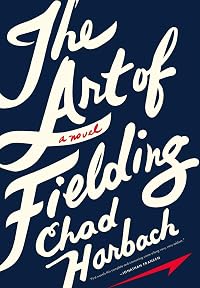
The Art of Fielding
by Chad Harbach
On This Page
Description
A disastrous error on the field sends five lives into a tailspin in this award-nominated tale about love, life, and baseball. At Westish College, a small school on the shore of Lake Michigan, baseball star Henry Skrimshander seems destined for big league stardom. But when a routine throw goes disastrously off course, the fates of five people are upended. Henry's fight against self-doubt threatens to ruin his future. College president Guert Affenlight, a longtime bachelor, has fallen show more unexpectedly and helplessly in love. Owen Dunne, Henry's gay roommate and teammate, becomes caught up in a dangerous affair. Mike Schwartz, the Harpooners' team captain and Henry's best friend, realizes he has guided Henry's career at the expense of his own. And Pella Affenlight, Guert's daughter, returns to Westish after escaping an ill-fated marriage, determined to start a new life. As the season counts down to its climactic final game, these five are forced to confront their deepest hopes, anxieties, and secrets. In the process they forge new bonds and help one another find their true paths. Written with boundless intelligence and filled with the tenderness of youth, "The Art of Fielding" is an expansive, warmhearted novel about ambition and its limits, about family and friendship and love, and about commitment to oneself and to others. show lessTags
Recommendations

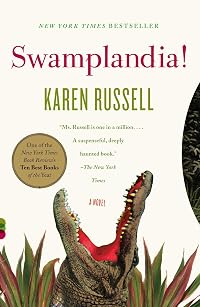
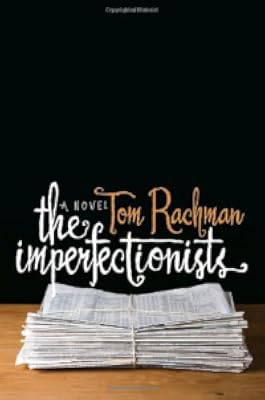
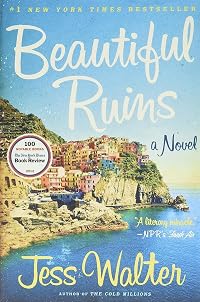
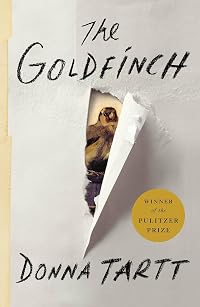






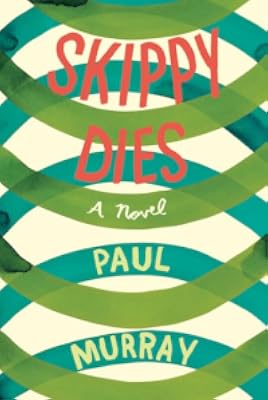
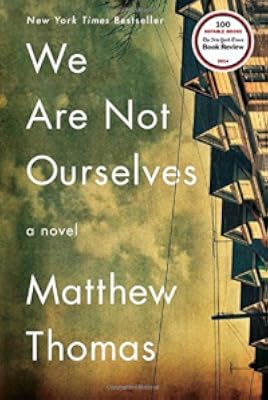
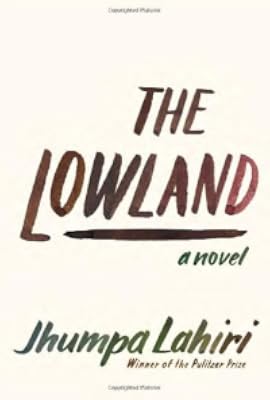
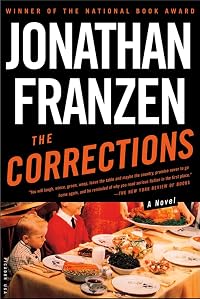

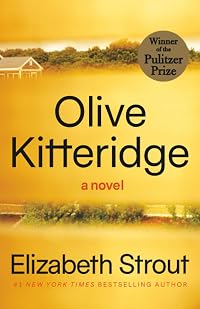

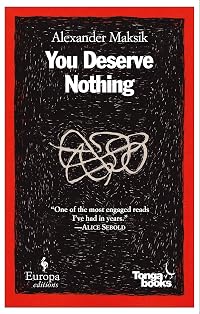


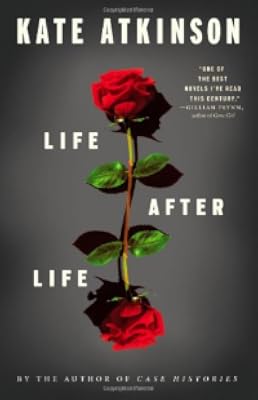
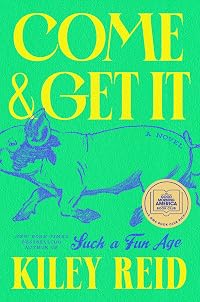




Member Recommendations
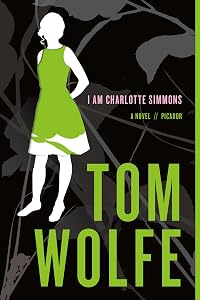
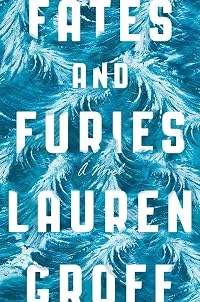
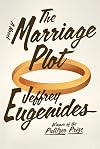
zhejw Both books are set in academia, are nicely plotted, and approach similar themes with just enough humor.
40

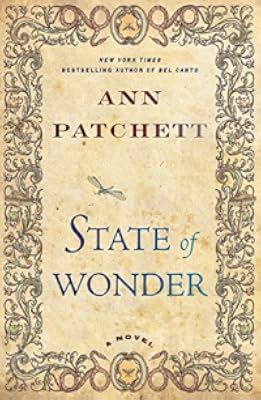
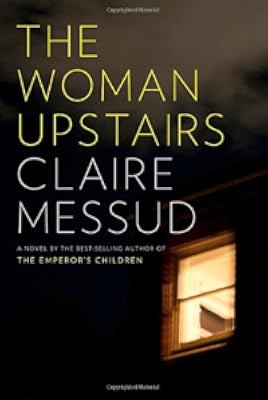
hairball These go together in my mind, somehow.
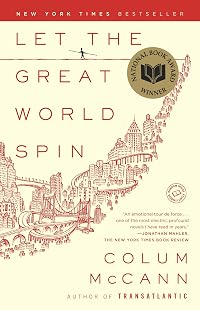
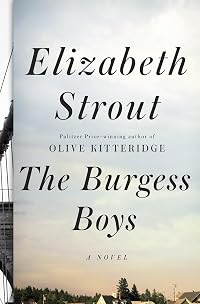
ReadHanded Baseball novels that are about life more than baseball.
by Fenoxielo
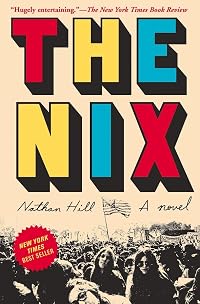
vwinsloe If you enjoy sports as a metaphor for life, you will enjoy this satire based on American football and Iraq war heroes.
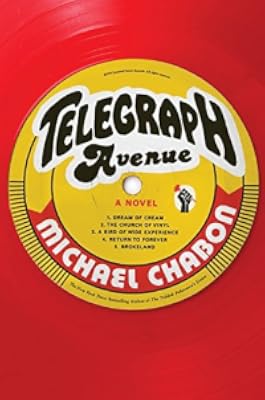
quartzite A great book examining life and relationships that features baseball to modest degree
Member Reviews
As the dark coolly draped over the heat-soaked desert foothills, I concentrated on the radio call for the San Francisco Giants series opener against the Rockies. The cool air outside the window where I sat and listened was no match for the crispness of the mile-high air in Coors Field. The stands sounded full, echoing just over the announcers banter, a tribute to the Rockies’ overachievement in the early weeks of the season. Maybe Tulowitzki is stealing signs, maybe not; maybe the team sneaks a non-humidor ball into the ump’s pouch at a critical time, maybe not. Even though I couldn’t see, I held my breath a little with each pitch, hoping Bumgarner, with his crane-like pivot, could sweep a 93 mph fastball over the corner of the show more plate. Or would the ball hang up just enough for the batter eye’s to widen with lust. As the final outs approached, the Giants were on top by a run thanks to a double that snaked into the left field corner, hit by a player that wore Rockies’ gray and purple last year. The Giants closed within one strike of victory. But the slight, wiry closer, the one with the beard sculpted to a gnome-like point, slotted a slider that a Rockies’ batter sent to the top of the wall in left field, scoring two. It’s only May. The Giants lead their division with one of the best records in baseball. It’s only one game. But listening to the excited voices of the announcers describing the path of the ball down the left field line turned my stomach. What is it about this game?
[The Art of Fielding], Chad Harbach’s debut novel, ponders the pull of the game, and how it mirrors life, transcending sport in so many ways. Not everyone sees that. Not everyone understands the game’s dichotomy: the routine interrupted by flashes of brilliant excitement and agony; the repeated failure broken by dizzying moments of success. Does that not describe life?
The book follows the life of Henry Skrimshander, a shortstop phenom, graceful and lithe on the field of play, but empty in all other ways except the pursuit of perfection. Playing college ball for a small, liberal arts college, ‘the Skrimmer’ develops an errorless streak that threatens to break records, only to see a rare errant throw destroy the face of a teammate. In that split second of failure, the minute slip of a finger, human fragility descends and consumes Henry. The doubt and confusion that follows, reflects the struggles of the people in Henry’s life: Schwartz, the captain of the team who suddenly loses his own single-minded path in life, Guert Affentlight, the college president who begins to pursue a love affair that will destroy his career; Pella, Guert’s daughter who is floundering from an abusively manipulative marriage. All of these obsessively single-minded people are confronted with the folly of life, the inability to control the ball as it teeters over the foul line, rolling independent and unmindful of everything around it, like life.
Harbach’s novel isn’t perfect, but even the most perfect of games often carries a blemish. Harbach occasionally loses his way in the narrative, almost working too hard to cobble a plot that carries his themes. Similarly, in Henry and Schwatz, he’s created such single-minded and obsessed people that their credibility as real humans comes into question – their workout routines, eating habits, and sleep schedules really push the boundaries of plausibility. But outside of these faults, Harbach presents an addictive read.
Baseball isn’t life; I know that somewhere in my rational brain. But in my heart, I see so much of life reflected on the field. Maybe that’s why I can’t stand to see the Giants to lose even one game, why I want every pitcher to pitch the perfect game, even though I know that the reality of life is that they will fail more often than they succeed. It is the search for perfection, the hope of permanent brilliance that keeps the heart alive. Harbach taps into that elusive knowledge with [The Art of Fielding], bringing a brief moment of brilliance into the routine of life.
Bottom Line: A baseball book that beautifully taps into the connections between the game and life.
4 ½ bones!!!!! show less
[The Art of Fielding], Chad Harbach’s debut novel, ponders the pull of the game, and how it mirrors life, transcending sport in so many ways. Not everyone sees that. Not everyone understands the game’s dichotomy: the routine interrupted by flashes of brilliant excitement and agony; the repeated failure broken by dizzying moments of success. Does that not describe life?
The book follows the life of Henry Skrimshander, a shortstop phenom, graceful and lithe on the field of play, but empty in all other ways except the pursuit of perfection. Playing college ball for a small, liberal arts college, ‘the Skrimmer’ develops an errorless streak that threatens to break records, only to see a rare errant throw destroy the face of a teammate. In that split second of failure, the minute slip of a finger, human fragility descends and consumes Henry. The doubt and confusion that follows, reflects the struggles of the people in Henry’s life: Schwartz, the captain of the team who suddenly loses his own single-minded path in life, Guert Affentlight, the college president who begins to pursue a love affair that will destroy his career; Pella, Guert’s daughter who is floundering from an abusively manipulative marriage. All of these obsessively single-minded people are confronted with the folly of life, the inability to control the ball as it teeters over the foul line, rolling independent and unmindful of everything around it, like life.
Harbach’s novel isn’t perfect, but even the most perfect of games often carries a blemish. Harbach occasionally loses his way in the narrative, almost working too hard to cobble a plot that carries his themes. Similarly, in Henry and Schwatz, he’s created such single-minded and obsessed people that their credibility as real humans comes into question – their workout routines, eating habits, and sleep schedules really push the boundaries of plausibility. But outside of these faults, Harbach presents an addictive read.
Baseball isn’t life; I know that somewhere in my rational brain. But in my heart, I see so much of life reflected on the field. Maybe that’s why I can’t stand to see the Giants to lose even one game, why I want every pitcher to pitch the perfect game, even though I know that the reality of life is that they will fail more often than they succeed. It is the search for perfection, the hope of permanent brilliance that keeps the heart alive. Harbach taps into that elusive knowledge with [The Art of Fielding], bringing a brief moment of brilliance into the routine of life.
Bottom Line: A baseball book that beautifully taps into the connections between the game and life.
4 ½ bones!!!!! show less
No, no, no, no…. NO! This is absolutely NOT the kind of novel we should be seeing on the 1001 list. Absolutely not. This is not a novel anyone needs to read before they die.
Harbach spent 10 years on this, his first novel. Margaret Mitchell also spent a decade crafting her first. Unlike Gone with the Wind though, The Art of Fielding is not, and never will be, a classic. While their novels have nothing in common, let’s hope that Harbach is inspired by the example Mitchell set of never writing another one again.
The Art of Fielding could have been a good novel. Instead, Harbach needed 3,650+ days to turn a good idea for a psychological novel about a baseball player hitting a run of bad form into a completely sterile and utterly show more predictable USAnian college drama.
For the academic plot, there’s the dean who has a fling with a student, there’s a dysfunctional parent-child relationship and, because one dysfunctional relationship can never be enough, a marriage on the rocks.
For the sport plot, there’s the jock, there’s the rookie, there’s the ageing, irascible, inscrutable coach and there’s the team who suck one year and win the nationals against all the odds the next.
Ooops… did I spoil it for you?
There’s romance, there’s drama, there’s comedy (well, attempts at it), and there are tears. It’s made for TV from the get go, and North American box-set-bingers will lap it up as they watch every loose end get tied into nice pretty pink bows.
If you’re into airport novels, this is right up your street. It’s an easy read, characters have predictable personalities and do predictable things, and the feel-good factor is laid on thick as everyone walks into the sunset in some kind of literary group hug. That’s what it is.
What it is not is a good novel. Get it off the 1001 list. show less
Harbach spent 10 years on this, his first novel. Margaret Mitchell also spent a decade crafting her first. Unlike Gone with the Wind though, The Art of Fielding is not, and never will be, a classic. While their novels have nothing in common, let’s hope that Harbach is inspired by the example Mitchell set of never writing another one again.
The Art of Fielding could have been a good novel. Instead, Harbach needed 3,650+ days to turn a good idea for a psychological novel about a baseball player hitting a run of bad form into a completely sterile and utterly show more predictable USAnian college drama.
For the academic plot, there’s the dean who has a fling with a student, there’s a dysfunctional parent-child relationship and, because one dysfunctional relationship can never be enough, a marriage on the rocks.
For the sport plot, there’s the jock, there’s the rookie, there’s the ageing, irascible, inscrutable coach and there’s the team who suck one year and win the nationals against all the odds the next.
Ooops… did I spoil it for you?
There’s romance, there’s drama, there’s comedy (well, attempts at it), and there are tears. It’s made for TV from the get go, and North American box-set-bingers will lap it up as they watch every loose end get tied into nice pretty pink bows.
If you’re into airport novels, this is right up your street. It’s an easy read, characters have predictable personalities and do predictable things, and the feel-good factor is laid on thick as everyone walks into the sunset in some kind of literary group hug. That’s what it is.
What it is not is a good novel. Get it off the 1001 list. show less
Writing a baseball book set at a small midwestern liberal arts college seems daunting enough - how much story could there possibly be there? - but Harbach also tackles questions of independence, aging and coming-of-age, ambition, and most importantly, friendship.
The story revolves around the intertwined lives of five characters: Henry Skrimshander, shortstop prodigy; Mike Schwartz, the Westish College player who recruits and trains Henry; Owen Dunne, Henry's roommate and teammate; Guert Affenlight, the president of the school; and Pella Affenlight, Guert's young prodigal daughter who shows up at Westish after fleeing her marriage.
My favorite thing about The Art of Fielding was that I really liked all the main characters. I wanted to show more spend time with them. I rooted for their happiness and success. I didn't sense that the author was ambivalent or wanted me to be ambivalent about any of them; there was a tone of goodwill towards and between the characters. When these folks made mistakes, Harbach and I regretted it on their behalf. So what if the whole character of Owen is extremely unlikely? I enjoyed him.
I also appreciated that the writing was unself-conscious and stayed out of the way of the story. Harbach won't win any awards for the spectacular or creative or clever use of the English language, but he's a wizard at turning a nearly-500 page book into something totally readable.
One reviewer commented on the pathetic humor of one particular scene, in which Guert, sitting in his annoyingly stationary office chair, reflects on a line from his favorite author, Herman Melville, referring to the "snivelization" of society. Guert wishes for the "swivelization" of society. He just wants his chair to turn. Far from being pathetic, I thought this was a perfect example of how Harbach develops character through an omniscient narrator. For Guert, Melville changed his life; this thought of his reinforces how much everything is connected to Melville for him. It also shows us that although he's not a particularly witty guy, he's not the stiff, elitist type you'd expect from an aged ex-Harvard man. He's happy, and a little silly sometimes. I liked him more after this scene. I related to him. show less
The story revolves around the intertwined lives of five characters: Henry Skrimshander, shortstop prodigy; Mike Schwartz, the Westish College player who recruits and trains Henry; Owen Dunne, Henry's roommate and teammate; Guert Affenlight, the president of the school; and Pella Affenlight, Guert's young prodigal daughter who shows up at Westish after fleeing her marriage.
My favorite thing about The Art of Fielding was that I really liked all the main characters. I wanted to show more spend time with them. I rooted for their happiness and success. I didn't sense that the author was ambivalent or wanted me to be ambivalent about any of them; there was a tone of goodwill towards and between the characters. When these folks made mistakes, Harbach and I regretted it on their behalf. So what if the whole character of Owen is extremely unlikely? I enjoyed him.
I also appreciated that the writing was unself-conscious and stayed out of the way of the story. Harbach won't win any awards for the spectacular or creative or clever use of the English language, but he's a wizard at turning a nearly-500 page book into something totally readable.
One reviewer commented on the pathetic humor of one particular scene, in which Guert, sitting in his annoyingly stationary office chair, reflects on a line from his favorite author, Herman Melville, referring to the "snivelization" of society. Guert wishes for the "swivelization" of society. He just wants his chair to turn. Far from being pathetic, I thought this was a perfect example of how Harbach develops character through an omniscient narrator. For Guert, Melville changed his life; this thought of his reinforces how much everything is connected to Melville for him. It also shows us that although he's not a particularly witty guy, he's not the stiff, elitist type you'd expect from an aged ex-Harvard man. He's happy, and a little silly sometimes. I liked him more after this scene. I related to him. show less
Set in the world of college baseball, The Art of Fielding is about aspiration, failure, and recovery. It also tells a compelling story, not only of Henry's challenges, doubts, and triumphs, but also of the love affairs and friendships that tie together the chief characters: Henry Skrimshander, the perfect shortstop until one error leads to a loss of confidence; Mike Schwartz, the mentor and teammate who guides Henry to potential greatness; Owen Dunne, Henry's gay college roommate whose love affair impacts all the other characters; Guert Affenlight, the college president who falls unexpectedly in love for the first time; and Pella Affenlight, his daughter, who is seeking a purpose for her life. All these unfolding stories make the novel show more very readable. These five characters are bound together in a struggle of love and betrayal that mirrors the art of fielding.
I thought the book was too long but possibly the author felt he needed it so the reader could understand the complexity of the five characters. I didn't love it as much as some of the other members of my book club. I enjoyed the first half but felt let down by the last half. At first I wasn't sure I would like it a book about baseball at all but I believe this is not a baseball novel, but a complex story of relationships and the connections between friends and teammates. show less
I thought the book was too long but possibly the author felt he needed it so the reader could understand the complexity of the five characters. I didn't love it as much as some of the other members of my book club. I enjoyed the first half but felt let down by the last half. At first I wasn't sure I would like it a book about baseball at all but I believe this is not a baseball novel, but a complex story of relationships and the connections between friends and teammates. show less
This book is slow to reveal its intelligence. It begins as if it will be a reverie on the zen of meeting your full potential - in this case, playing baseball. It continues as a comparison of relationships, and in particular, how the age divide can affect the outcome. And it reaches its apotheosis as a metaphor for T. S. Eliot’s great poem, “The Love Song of J. Alfred Prufrock,” that paean to ineffectuality that so typifies the human condition.
The story concerns five people whose lives become intertwined at Westish College in northeastern Wisconsin. One of them, Henry, is a baseball shortstop whose hero is the fictional shortstop Aparicio Rodriguez (presumably inspired by the the real-life shortstop Luis Aparicio). In the story, show more Rodriguez is the author of a vade mecum on playing baseball called “The Art of Fielding,” and Henry studies it religiously, just as he has studied the play of the shortstop:
"What he could do was field. He’d spent his life studying the way the ball came off the bat, the angles and the spin, so that he knew in advance whether he should break right or left, whether the ball that came at him would bound up high or skid low to the dirt. He caught the ball cleanly, always, and made, always, a perfect throw.”
Mike Schwartz, the catcher for the baseball team, takes Henry under his wing and helps him train and refine his skills. Mike is a natural coach, and basically takes over the job: "All you had to do was look at each of your players and ask yourself: What story does this guy wish someone would tell him about himself? And then you told the guy that story.”
Mike and Henry become close, but each thinks that the other’s perception of his own infallibility forms the basis of their friendship. For a while though, both the friendship and the infallibility work.
Henry’s roommate at Westish is Owen Dunne, a bright, somewhat posturing and effete intellectual who also, in an out-of-character turn, is the baseball team’s right fielder. Owen self-identifies as a “gay mulatto” and one almost gets the impression that he is gay for the same reason he likes to smoke pot and sit in espresso shops reading poetry. It is important to him to be seen in all of his arty manifestations.
The Westish baseball team begins to reap the benefits of the influence of Mike and Henry, and the wins start piling up. The team is called the Harpooners (Melville became the guiding spirit of this college after an important cache of his papers was discovered in its library).
Guert Affenlight, the president of Westish, is the one who discovered the Melville papers while working on his dissertation. Guert’s daughter Pella skipped college to get married, but now she returns to Westish to get her degree. (Pella’s mother died when Pella was three.)
Together, these five characters – Henry, Owen, Mike, Guert, and Pella - come to form a tightly interlocked matrix of hope, desire, disappointment and love that drives the second half of the book, and pulls us into its web by the tendrils of emotions that wind around the matrix.
Some of Harbach’s best writing about relationships concerns those early moments when insecurity vies with excitement for the obsessions of the actors. That nervous energy is exhibited in the following scene, when Pella has slept over a male’s house, and the next morning, sees all the dirty dishes and wants to wash them, but isn’t sure about the message it will send:
"It was a nice gesture, to do somebody else’s dishes, but it could also be construed as an admonishment: ‘If nobody else will clean up this shithole, I’ll do it myself!’ In fact, some version of that interpretation could hardly be avoided. She turned off the water. Even if [they] had been dating for months, unprovoked dishwashing might be considered strange. Meddlesome. Overbearing. Unless she dirtied the dishes herself: that would be different. Then the dishes should be done, and the failure to do them might pose its own problems. But the dishes weren’t hers, and [they] weren’t dating. Therefore the doing of dishes could only seem weird, neurotic, invasive.”
And that buildup of awe and happiness that comes with new love is shown ably in this observation: "Everything that floated through his life’s width…seemed loaded with such poignance that he found himself on the verge of country-music tears…”
Love ties the characters together, yes, but baseball provides an even sturdier glue. Schwartz sees baseball as a test of individual glory – not a melee sport dependent on team coordination, but as: "...a series of isolated contests. Batter versus pitcher, fielder versus ball. … When your moment came, you had to be ready, because if you fucked up, everyone would know whose fault it was. What other sport not only kept a stat as cruel as the error but posted it on the scoreboard for everyone to see?”
But for Schwartz, whose métier was coaching baseball, the contests were all vicarious: "He had no art to call his own. He knew how to motivate people, manipulate people, move them around; this was his only skill.”
He claims he’s not sick of coaching itself, yet he "just didn’t want to wake up in twenty years and see behind him a string of lives he’d changed, stretching out endlessly, rah rah go team, while he himself stayed exactly the same. Stagnant. Ungreat. Still wearing sweatpants to work. He who cannot, coaches.”
T. S. Eliot’s Prufrock’s lament could easily have been Schwartz’s:
"No! I am not Prince Hamlet, nor was meant to be;
Am an attendant lord, one that will do
To swell a progress, start a scene or two,
Advise the prince; no doubt, an easy tool,
Deferential, glad to be of use,
Politic, cautious, and meticulous;
Full of high sentence, but a bit obtuse;
At times, indeed, almost ridiculous—
Almost, at times, the Fool.
I grow old … I grow old …
I shall wear the bottoms of my trousers rolled.
Shall I part my hair behind? Do I dare to eat a peach?
I shall wear white flannel trousers, and walk upon the beach.
I have heard the mermaids singing, each to each.
I do not think that they will sing to me.
I have seen them riding seaward on the waves
Combing the white hair of the waves blown back
When the wind blows the water white and black.
We have lingered in the chambers of the sea
By sea-girls wreathed with seaweed red and brown
Till human voices wake us, and we drown."
Evaluation: Harbach takes on the existential challenge of the insignificance of man, expressed via the metaphor of playing baseball. Even as his characters struggle to make a mark in the world, most must resign themselves to the more common outcome of a quotidian life of mechanical repetition. Can love and companionship make it bearable? That’s the question the book leaves you to ponder, long after you turn the last page. show less
The story concerns five people whose lives become intertwined at Westish College in northeastern Wisconsin. One of them, Henry, is a baseball shortstop whose hero is the fictional shortstop Aparicio Rodriguez (presumably inspired by the the real-life shortstop Luis Aparicio). In the story, show more Rodriguez is the author of a vade mecum on playing baseball called “The Art of Fielding,” and Henry studies it religiously, just as he has studied the play of the shortstop:
"What he could do was field. He’d spent his life studying the way the ball came off the bat, the angles and the spin, so that he knew in advance whether he should break right or left, whether the ball that came at him would bound up high or skid low to the dirt. He caught the ball cleanly, always, and made, always, a perfect throw.”
Mike Schwartz, the catcher for the baseball team, takes Henry under his wing and helps him train and refine his skills. Mike is a natural coach, and basically takes over the job: "All you had to do was look at each of your players and ask yourself: What story does this guy wish someone would tell him about himself? And then you told the guy that story.”
Mike and Henry become close, but each thinks that the other’s perception of his own infallibility forms the basis of their friendship. For a while though, both the friendship and the infallibility work.
Henry’s roommate at Westish is Owen Dunne, a bright, somewhat posturing and effete intellectual who also, in an out-of-character turn, is the baseball team’s right fielder. Owen self-identifies as a “gay mulatto” and one almost gets the impression that he is gay for the same reason he likes to smoke pot and sit in espresso shops reading poetry. It is important to him to be seen in all of his arty manifestations.
The Westish baseball team begins to reap the benefits of the influence of Mike and Henry, and the wins start piling up. The team is called the Harpooners (Melville became the guiding spirit of this college after an important cache of his papers was discovered in its library).
Guert Affenlight, the president of Westish, is the one who discovered the Melville papers while working on his dissertation. Guert’s daughter Pella skipped college to get married, but now she returns to Westish to get her degree. (Pella’s mother died when Pella was three.)
Together, these five characters – Henry, Owen, Mike, Guert, and Pella - come to form a tightly interlocked matrix of hope, desire, disappointment and love that drives the second half of the book, and pulls us into its web by the tendrils of emotions that wind around the matrix.
Some of Harbach’s best writing about relationships concerns those early moments when insecurity vies with excitement for the obsessions of the actors. That nervous energy is exhibited in the following scene, when Pella has slept over a male’s house, and the next morning, sees all the dirty dishes and wants to wash them, but isn’t sure about the message it will send:
"It was a nice gesture, to do somebody else’s dishes, but it could also be construed as an admonishment: ‘If nobody else will clean up this shithole, I’ll do it myself!’ In fact, some version of that interpretation could hardly be avoided. She turned off the water. Even if [they] had been dating for months, unprovoked dishwashing might be considered strange. Meddlesome. Overbearing. Unless she dirtied the dishes herself: that would be different. Then the dishes should be done, and the failure to do them might pose its own problems. But the dishes weren’t hers, and [they] weren’t dating. Therefore the doing of dishes could only seem weird, neurotic, invasive.”
And that buildup of awe and happiness that comes with new love is shown ably in this observation: "Everything that floated through his life’s width…seemed loaded with such poignance that he found himself on the verge of country-music tears…”
Love ties the characters together, yes, but baseball provides an even sturdier glue. Schwartz sees baseball as a test of individual glory – not a melee sport dependent on team coordination, but as: "...a series of isolated contests. Batter versus pitcher, fielder versus ball. … When your moment came, you had to be ready, because if you fucked up, everyone would know whose fault it was. What other sport not only kept a stat as cruel as the error but posted it on the scoreboard for everyone to see?”
But for Schwartz, whose métier was coaching baseball, the contests were all vicarious: "He had no art to call his own. He knew how to motivate people, manipulate people, move them around; this was his only skill.”
He claims he’s not sick of coaching itself, yet he "just didn’t want to wake up in twenty years and see behind him a string of lives he’d changed, stretching out endlessly, rah rah go team, while he himself stayed exactly the same. Stagnant. Ungreat. Still wearing sweatpants to work. He who cannot, coaches.”
T. S. Eliot’s Prufrock’s lament could easily have been Schwartz’s:
"No! I am not Prince Hamlet, nor was meant to be;
Am an attendant lord, one that will do
To swell a progress, start a scene or two,
Advise the prince; no doubt, an easy tool,
Deferential, glad to be of use,
Politic, cautious, and meticulous;
Full of high sentence, but a bit obtuse;
At times, indeed, almost ridiculous—
Almost, at times, the Fool.
I grow old … I grow old …
I shall wear the bottoms of my trousers rolled.
Shall I part my hair behind? Do I dare to eat a peach?
I shall wear white flannel trousers, and walk upon the beach.
I have heard the mermaids singing, each to each.
I do not think that they will sing to me.
I have seen them riding seaward on the waves
Combing the white hair of the waves blown back
When the wind blows the water white and black.
We have lingered in the chambers of the sea
By sea-girls wreathed with seaweed red and brown
Till human voices wake us, and we drown."
Evaluation: Harbach takes on the existential challenge of the insignificance of man, expressed via the metaphor of playing baseball. Even as his characters struggle to make a mark in the world, most must resign themselves to the more common outcome of a quotidian life of mechanical repetition. Can love and companionship make it bearable? That’s the question the book leaves you to ponder, long after you turn the last page. show less
I read this book three months ago and have been thinking about it ever since. We've all heard the saying that "baseball is a metaphor for life." The Art of Fielding is more illustrative of the proposition that "baseball is a metaphor for what it means to be human." All of the characters in this novel make stupid, life changing, mistakes, some of them on the field and all of them off the field. How they cope with those mistakes is a lesson that can be learned from baseball. Dwell on your mistakes and they will paralyze you forever. Getting beyond those mistakes takes personal tenacity and courage as well as acceptance and trust from other members of the "team."
This book made me a baseball fan! (and the Red Sox won the world series!!)
This book made me a baseball fan! (and the Red Sox won the world series!!)
The Art of Fielding looks like a sports novel at first, but really it's a series of intertwined character studies which uses the novel's setting of a liberal arts college and its baseball program as the stage for exploring its characters. And it does so very, very well. The characters are interesting and believable, their situations compelling. The passages about baseball, about the playing of the game, are beautiful. The resolution to Henry's story, about the aftermath of his one disastrous throw, feels inevitable rather than predictable--which can be the difference between a brilliant, satisfying book and an annoying lackluster one. The book reads quickly and smoothly, with an ease which suggests that the prose must have come show more effortlessly--surely a sign of great care and crafting on the part of the writer. The only thing which keeps this book from perfection is an occasional roughness in the transitions from one point of view to another (information which feels repeated, rather than viewed alternately from a new character, for example) and two or three places where minor observations felt false (an ex-varsity swimmer returns to the pool after four years, slightly out of shape, but not disastrously so, and can only manage three laps? Doubtful.) But, these instances were small (and over the course of 512 pages, fairly few) and interfered only with the pure pleasure of the reading experience, never with the unfolding of the novel as a whole. Write another, Mr. Harbach. I'm there. show less
Members
- Recently Added By
Published Reviews
ThingScore 94
The book is a throwback to a bygone, if not universally mourned era when charismatic white male novelists wrote intelligent bestsellers, and one senses that it is intentionally so....It is a work of stridently unexperimental psychological realism, featuring likeable characters with cute nicknames, dramatic events that change people’s lives, easily identified and fully consummated narrative show more arcs, transparently conversational prose and big, obvious metaphors. show less
added by zhejw
Wie aan dit boek begint, wordt een wereld binnengezogen waaruit je niet meer kunt en wilt ontsnappen.
Naast honkbalroman, bildungsroman en campusroman zou je De kunst van het veldspel ook een Melvilleroman kunnen noemen. Zonder dat het hinderlijk wordt (zelfs als je ze allemaal zou opmerken, wat geen lezer zich verbeelde), stikt het boek van de verwijzingen naar met name Moby Dick.
Dit klinkt show more als gewichtigdoenerij, maar maakt gewoon deel uit van de spitsvondige speelsheid die dit hele boek kenmerkt. De kunst van het veldspel is een jongensboek voor jongens en meisjes van alle leeftijden. show less
Naast honkbalroman, bildungsroman en campusroman zou je De kunst van het veldspel ook een Melvilleroman kunnen noemen. Zonder dat het hinderlijk wordt (zelfs als je ze allemaal zou opmerken, wat geen lezer zich verbeelde), stikt het boek van de verwijzingen naar met name Moby Dick.
Dit klinkt show more als gewichtigdoenerij, maar maakt gewoon deel uit van de spitsvondige speelsheid die dit hele boek kenmerkt. De kunst van het veldspel is een jongensboek voor jongens en meisjes van alle leeftijden. show less
added by sneuper
Chad Harbach's The Art of Fielding cross-breeds two genres with limited gene pools, the baseball novel and the campus novel, and comes up with a vigorous hybrid, entertaining and engrossing, though almost absurdly high-minded.
added by zhejw
Lists

Top Five Books of 2013
1,562 works; 721 members

Recommend the 20 best books you've read in the last five years
2,168 works; 606 members

1001 Books You Must Read Before You Die
1,448 works; 1,134 members

Best 21st Century Books (So Far)
670 works; 85 members

Favourite Books
1,819 works; 316 members

Best Baseball Books
42 works; 20 members

Top Five Books of 2015
811 works; 241 members

2008-2012 Notable Books for Adults
127 works; 10 members

Five star books
1,767 works; 110 members

in the name of the game ~ sport novels
23 works; 2 members

Academia in Fiction
158 works; 23 members

Books Read in 2016
4,666 works; 199 members
Literary Travelogue of the United States Challenge
133 works; 6 members

Books about sports
65 works; 3 members

Snash's Favorites of 2013
5 works; 1 member

to get
244 works; 2 members

Florida
366 works; 3 members

Books Read in 2024
4,712 works; 127 members

Recreation
93 works; 1 member

Vlogbrothers Book Recommendations
307 works; 4 members

Books We Discovered On LibraryThing
530 works; 130 members

Bookshelf from Interstellar
62 works; 1 member

el
1,139 works; 1 member

Books Featured on Readers' Review of the Diane Rehm Show
161 works; 8 members
Author Information

5+ Works 4,689 Members
Some Editions
Awards and Honors
Awards
Distinctions
Notable Lists
Series
Belongs to Publisher Series
Otavan kirjasto (240)
Common Knowledge
- Canonical title
- The Art of Fielding
- Original title
- The Art of Fielding
- Original publication date
- 2011
- People/Characters
- Henry Skrimshander; Guert Affenlight; Owen Dunne; Mike Schwartz; Pella Affenlight
- Important places
- Wisconsin, USA; Lake Michigan; Westish College
- Epigraph
- So be cheery, my lads
Let your hearts never fall
While the bold Harpooner
Is striking the ball.
--Westish College fight song - Dedication
- For my family
- First words
- Schwartz didn't notice the kid during the game.
- Quotations
- Literature could turn you into an asshole; he'd learned that teaching grad-school seminars. It could teach you to treat real people the way you did characters, as instruments of your own intellectual pleasure, cadavers ... (show all)on which to practice your critical faculties.
Talking was like throwing a baseball. You couldn't plan it out beforehand. You just had to let go and see what happened. You had to throw out words without knowing whether anyone would catch them--you and to throw out w... (show all)ords you knew no one would catch. You had to send your words out where they weren't yours anymore. It felt better to talk with a ball in your hand, it felt better to let the ball do the talking. But the world, the nonbaseball world, the world of love and sex and jobs and friends, was made of words. - Last words
- (Click to show. Warning: May contain spoilers.)The ball came off the bat.
- Blurbers
- Franzen, Jonathan; Patterson, James; Obreht, Téa; Irving, John; Duncan, David James; Evison, Jonathan (show all 12); Dawidoff, Nicholas; McInerney, Jay; Koryta, Michael; Kunkel, Benjamin; Casey, John; Scott, Joanna
- Original language
- English
Classifications
Statistics
- Members
- 4,567
- Popularity
- 3,198
- Reviews
- 254
- Rating
- (3.95)
- Languages
- 12 — Danish, Dutch, English, Finnish, French, German, Italian, Korean, Portuguese, Slovenian, Spanish, Swedish
- Media
- Paper, Audiobook, Ebook
- ISBNs
- 46
- UPCs
- 2
- ASINs
- 18