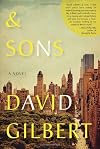
& Sons
by David Gilbert
On This Page
Description
A famous reclusive writer and his three sons find their bond tested by the weight of long-held secrets and a cumbersome legacy shaped by boarding school, Hollywood, and the elite circles of the publishing world.Tags
Recommendations








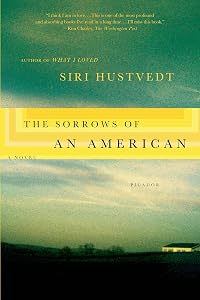
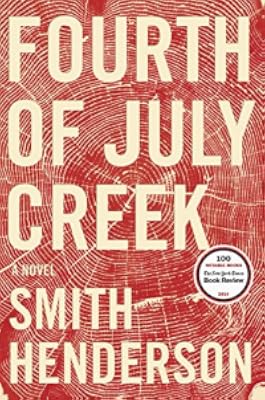
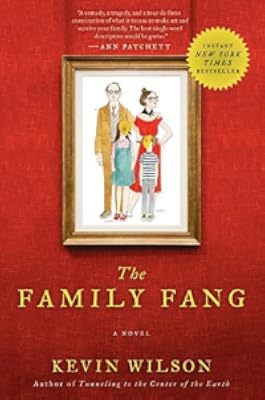

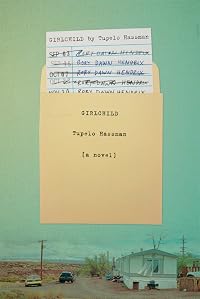



Member Recommendations
Member Reviews
We meet reclusive author, A.N. Dyer, when he waiting to give the elegy at the funeral of his "oldest and dearest" friend Charles Topping. Topping's son has often wished he were Dyer's son and has been a hanger-on to the (dysfunctional) Dyer family which consists of the author and his three sons. Flashbacks to the relationship between A.N. and Charles are provided by letters from their youth which are included in difficult to read handwriting. We follow the two families back and forth in time for 434 very boring pages. The biggest problem with the book is that none of the characters are interesting or likable so I simply couldn't get interested in what happened or was going to happen to them. I finished it only out of sheer stubbornness.
I really enjoyed & Sons by David Gilbert. It’s the kind of book that feels grounded and real, especially in how it looks at family relationships and personal goals. The writing is clear and approachable, and the characters feel like people you might actually know, complete with flaws and complicated motivations. What stood out to me most was how the story shows the ripple effects of decisions made years earlier, both professionally and personally. It’s engaging without being heavy, and it stays with you after you finish in a quiet, thoughtful way.
 This review was written for LibraryThing Early Reviewers.
After the first several pages of & Sons, it becomes abundantly clear that David Gilbert intended to settle for nothing less than reaching for the stars. By the end of this ambitious novel, the reader is left with the impression that the author very nearly succeeded in achieving that lofty goal. Packed with more themes, story lines, and literary devices than one might find in three different books, Gilbert has crafted a work that can be seen in many ways: a touching and heartbreaking story of a father’s inability to connect with his sons, a “book about books” look at the debilitating effect that the creative process can have on personal relationships, a tale of brothers coming to grips with their lives—and each other—as they show more try to step out of the long shadow cast by someone else’s fame, and a love-hate paean to New York City that only someone who was raised there would dare to write.
Having finished it a few days ago, I am struck by the wide range of thoughts and emotions that the novel still evokes. Indeed, it is at once one of the most impressive and more frustrating books I have read in a long time. Above all else, I found Gilbert’s prose to be nothing short of sublime, alternating between passages that were brilliantly insightful, extremely moving, and very funny. He also has a great ear for producing the sort of realistic dialogue that seemed like the kind of things that people would actually say to one another given the circumstances. What is truly remarkable to me is how much I enjoyed the overall experience of reading a book in which I found virtually none of the main characters to be particularly likeable.
However, the story also felt as if it had been stretched a little too thin in places. The entire novel-within-a-novel device became somewhat tedious and distracting at times; in fact, it was also a little brazen of the author to “reproduce” so much of A. N. Dyer’s fictional Ampersand within the pages of his novel, given that the former was portrayed as having a cult following that rivaled J. D. Salinger’s The Catcher in the Rye. Further, there were parts of the narrative—the over-the-top film produced by the Dyer’s youngest son involving the death of a former girlfriend as well as the book’s final dramatic events come to mind—that seemed forced and strained the reader’s credulity.
So, is & Sons a compelling and entertaining near-masterpiece or an unfortunate near-miss sunk by its own overly grand ambitions? While I suspect that a convincing case can be made on either side of that question, I think the first might be the right one. Gilbert has produced a smart and thoughtful work with an emotional core that is likely to remain with me long after most of the shortcomings in the plot have faded away. show less
Having finished it a few days ago, I am struck by the wide range of thoughts and emotions that the novel still evokes. Indeed, it is at once one of the most impressive and more frustrating books I have read in a long time. Above all else, I found Gilbert’s prose to be nothing short of sublime, alternating between passages that were brilliantly insightful, extremely moving, and very funny. He also has a great ear for producing the sort of realistic dialogue that seemed like the kind of things that people would actually say to one another given the circumstances. What is truly remarkable to me is how much I enjoyed the overall experience of reading a book in which I found virtually none of the main characters to be particularly likeable.
However, the story also felt as if it had been stretched a little too thin in places. The entire novel-within-a-novel device became somewhat tedious and distracting at times; in fact, it was also a little brazen of the author to “reproduce” so much of A. N. Dyer’s fictional Ampersand within the pages of his novel, given that the former was portrayed as having a cult following that rivaled J. D. Salinger’s The Catcher in the Rye. Further, there were parts of the narrative—the over-the-top film produced by the Dyer’s youngest son involving the death of a former girlfriend as well as the book’s final dramatic events come to mind—that seemed forced and strained the reader’s credulity.
So, is & Sons a compelling and entertaining near-masterpiece or an unfortunate near-miss sunk by its own overly grand ambitions? While I suspect that a convincing case can be made on either side of that question, I think the first might be the right one. Gilbert has produced a smart and thoughtful work with an emotional core that is likely to remain with me long after most of the shortcomings in the plot have faded away. show less
This review was written for LibraryThing Early Reviewers.From the description, this seemed to be a book that I was sure to love -- it featured elements to which I always gravitate: a NYC setting, a "peek" into the publishing and literary world, and an exploration of family dynamics and relationships. Unfortunately, this was a book that I liked better in the abstract than the execution.
Sentences that go on for nearly an entire page, and other sections that I had to read several times before I "got it" left me feeling annoyed and tired. At the same time, there were passages that I thought were just exquisite -- I thought that the last letter Charlie writes to Andrew was moving beyond words. And there are numerous instances in which the author perfectly captured feelings and thoughts in a show more succinct and accessible way. On some level, though that only made it all the more frustrating, as I wished that the rest of the book could have been like that. I wanted to be able to fall into this book and its characters, and I never could just relax into it, because of the writing style.
The characters are well defined; I could see each clearly in my mind. I found the narrator to be wholly unlikeable -- a whiny, child-man. My favorite was young Andrew (Andy).
I struggled with how to rate this book numerically, because my experience with it was so uneven -- the number reflects not an "okay" book -- but rather the average for a book in parts "outstanding" and "ugh, I need to plow through because I need to post a review." show less
Sentences that go on for nearly an entire page, and other sections that I had to read several times before I "got it" left me feeling annoyed and tired. At the same time, there were passages that I thought were just exquisite -- I thought that the last letter Charlie writes to Andrew was moving beyond words. And there are numerous instances in which the author perfectly captured feelings and thoughts in a show more succinct and accessible way. On some level, though that only made it all the more frustrating, as I wished that the rest of the book could have been like that. I wanted to be able to fall into this book and its characters, and I never could just relax into it, because of the writing style.
The characters are well defined; I could see each clearly in my mind. I found the narrator to be wholly unlikeable -- a whiny, child-man. My favorite was young Andrew (Andy).
I struggled with how to rate this book numerically, because my experience with it was so uneven -- the number reflects not an "okay" book -- but rather the average for a book in parts "outstanding" and "ugh, I need to plow through because I need to post a review." show less
This review was written for LibraryThing Early Reviewers.“& Sons,” by David Gilbert, is certainly worth all the fuss that critics have made about it. It is an impressive debut, unquestionably one of the finest I’ve read this year. The novel is a massive sprawling homage to the great American literary novel; a penetrating psychological dissection of male-centered, familial and familial-like relationships; a strange, unsettling—almost freakish—study of a literary idol and one of his more fanatic admirers; and perhaps best of all, an artifice through which the author showcases his extraordinary literary talents. Personally, I had a smile on my face through the entire book. I found literary delights within almost every paragraph and surprise twists in time, reference, and plot direction show more on almost every page. I never knew from one paragraph to the next where this book was taking me and after a while, I didn’t care. I abandoned myself to the book’s intellectual joy ride and thankfully, it never let me down.
So what about the plot? Well, there is one, and it is a good subtle character-driven plot that gets better as the story draws to its conclusion, but this is a book primarily about the personal struggles that shape lives and the incredible complexity of important interpersonal family and family-like relationships. The bulk of the content is there to build character and provide psychological depth and understanding about these relationships. It’s important not to skip over what may seem to be many digressive paragraphs in pursuit of what you may think is the plot; you’ll miss too much. And you need to pay close attention to the book within the book (recognizable by being printed in a different typeface), because knowing that plot is essential to figuring out what is happening in the main plot. Astonishingly, in the end, the author is able to pull everything together and all that detail suddenly makes sense and supports the whole. It’s brilliant, and a good ending to a terrific book. You leave the book not pondering the plot, but thinking about the book’s characters, particularly the intricate relationship dynamics that have shaped their lives.
Many reviewers mention difficulties they have with Phillip Topping as the book’s narrator. David Gilbert constructs Phillip as both a first-person narrator and an omniscient third-person reporter of all that takes place outside his own experience. That’s a perplexing combination! Some reviewers resolve the issue by calling him an “unreliable narrator,” and indeed, if Phillip were real, that is exactly what he would be. But in a literary sense, to call Phillip an “unreliable narrator” misses the point. If that were so, then all authors would be “unreliable narrators.” This is a book about literary writers, the art of creating fiction, and the price that many authors pay for pursuing this demanding and difficult craft. By making Phillip both a first- and third-person omniscient narrator, the author (David Gilbert) is drawing attention to the fact that this is fiction. None of the characters are real no matter how real they seem…and in Gilbert’s able hands these characters pop off the page and virtually shake your hand. No, this is all about fiction, the art of fiction, and the creation of “real” lives through words. As a literary construct, to be a true “unreliable narrator,” it requires that something significant the narrator said was incorrect…that the narrator cannot be trusted to tell the truth. But that is not what happens in this book. We can trust Phillip’s omniscient view of his characters because Phillip is writing fiction…and then there is that other layer where we know that David Gilbert is the real author who created Phillip and all Phillip’s characters. It’s a book with many layers of fictional reality and the author wants you to not lose sight of this important fact. Remember it is a book about writing and authors and fiction.
This is a remarkable book full of fascinating characters and their emotional struggles. The book is not for everyone. But for the right reader—typically those who read a lot of literary fiction—this work can be tons of fun. If that fits you, don’t miss it. show less
So what about the plot? Well, there is one, and it is a good subtle character-driven plot that gets better as the story draws to its conclusion, but this is a book primarily about the personal struggles that shape lives and the incredible complexity of important interpersonal family and family-like relationships. The bulk of the content is there to build character and provide psychological depth and understanding about these relationships. It’s important not to skip over what may seem to be many digressive paragraphs in pursuit of what you may think is the plot; you’ll miss too much. And you need to pay close attention to the book within the book (recognizable by being printed in a different typeface), because knowing that plot is essential to figuring out what is happening in the main plot. Astonishingly, in the end, the author is able to pull everything together and all that detail suddenly makes sense and supports the whole. It’s brilliant, and a good ending to a terrific book. You leave the book not pondering the plot, but thinking about the book’s characters, particularly the intricate relationship dynamics that have shaped their lives.
Many reviewers mention difficulties they have with Phillip Topping as the book’s narrator. David Gilbert constructs Phillip as both a first-person narrator and an omniscient third-person reporter of all that takes place outside his own experience. That’s a perplexing combination! Some reviewers resolve the issue by calling him an “unreliable narrator,” and indeed, if Phillip were real, that is exactly what he would be. But in a literary sense, to call Phillip an “unreliable narrator” misses the point. If that were so, then all authors would be “unreliable narrators.” This is a book about literary writers, the art of creating fiction, and the price that many authors pay for pursuing this demanding and difficult craft. By making Phillip both a first- and third-person omniscient narrator, the author (David Gilbert) is drawing attention to the fact that this is fiction. None of the characters are real no matter how real they seem…and in Gilbert’s able hands these characters pop off the page and virtually shake your hand. No, this is all about fiction, the art of fiction, and the creation of “real” lives through words. As a literary construct, to be a true “unreliable narrator,” it requires that something significant the narrator said was incorrect…that the narrator cannot be trusted to tell the truth. But that is not what happens in this book. We can trust Phillip’s omniscient view of his characters because Phillip is writing fiction…and then there is that other layer where we know that David Gilbert is the real author who created Phillip and all Phillip’s characters. It’s a book with many layers of fictional reality and the author wants you to not lose sight of this important fact. Remember it is a book about writing and authors and fiction.
This is a remarkable book full of fascinating characters and their emotional struggles. The book is not for everyone. But for the right reader—typically those who read a lot of literary fiction—this work can be tons of fun. If that fits you, don’t miss it. show less
David Gilbert’s & Sons is one of the most complex books I’ve read in a long time. By this I mean the plot did not appear until just shy of page 200 and I found most of the main characters to be unsympathetic throughout. For those who must sympathize with literary characters (The Woman Upstairs drama) stop now. If brilliant prose (Reality, already taking on water, capsized even further…) and unexpected insight are enough, then & Sons is a marvel. On the surface it could be a fictionalized look at the life of J.D. Salinger, with echoes from The Catcher in the Rye in the work of the protagonist, A.N. Dyer, but it goes much deeper, mining material from the subterranean tunnels of the male relationship, be it father-son or friends. show more
A.N. Dyer is the reclusive author of a series of American classics and an icon to readers. He has two grown sons, Richard and Jamie, from his marriage and a teenage son, Andy, from a brief affair, which effectively ended his marriage when his mistress died and he brought the boy home to his family. The book begins when he is in his 80s, attending the funeral of his closest friend, Charlie Topping.
He’s also been recreating the original draft of his breakthrough novel, Ampersand, for sale with the rest of his papers to the prestigious Morgan Library. He’s doing this because he burned the original drafts but won’t admit it. The recent events, combined with going back to his first novel, bring the past, with all its recriminations and regrets, to the forefront of his faltering mind. He asks his sons to come and visit because he needs to talk to them. Jamie and Richard are skeptical but obey, only to hear news that is so fantastical as to be unbelievable. And yet, given what is known of Andrew and Gilbert’s gift for sly foreshadowing, it is not improbable. It is left to the reader to decide if it is the ultimate gesture of grandiosity and self-love or an attempt to fix the past. In the present, this is a man whose parenting skills have left one of sons believing
…his father’s quiet yet aggravated labor, and when Jamie in his later teens, early twenties, sat down and read all the books with older eyes, they were better than any bullshit father-son bonding even if he only grasped half of what was being said, which became clearer over subsequent readings and opened up deeper understandings and engendered a different kind of awe—how funny and smart his father could be, how human, how moral…they spoke to Jamie and he knew they would continue to speak to him, the author a far greater father than the man.
And Sons is told between two points of view, the first person, as played by Philip Topping, Charlie’s son, who is a teacher (or was until his life flamed out due to a foolish affair) and the third person, allowing us into the minds of everyone else. Initially, Topping’s place in the scheme of things is vague but as the novel progresses and the plot builds he is shown to be integral to the reader’s interpretation of events. In addition to different points-of-view Gilbert mimics the challenge of communicating between men by slipping from past to present within the page. Men like to say women are difficult to understand but this mechanism means the reader has to lean in and pay close attention to get to the meat of the matter, as it is often thrown out as an afterthought or memory.
I finished & Sons two days ago and am still picking the book up and rereading passages. By the halfway point, I felt nothing but aggravation towards these men who came off like cheap coffee—a bitter brew of resentment, envy, and testosterone. Andrew and his sons are so angry yet, given the luxury of their boarding school lives and comparative wealth, it is hard to understand why. But as the past is revealed we see that some things never change, that fathers pass down traits to their sons that they may not have intended or would never have wanted their children to pick up. This is the case for both the Dyers and the Toppings and it keeps them entangled in a co-dependency that brings out the worst in all of them. There is little that will happen in the novel to redeem these men, especially Andrew who seems to glory in the unspoken belief that everyone in his life is fodder for his work, to the point of exposing something delicate and intimate without thought to anyone involved. Likability is not an option, but in their final scene, Richard does come to an understanding about his father.
…his father, his dad—Didi, he used to call him when he was eight—was incapable of reaching across that divide, the distance simply too frightening, the chance of slipping too great, and to blame the man for this, to hate him for this, would be like blaming or hating someone because of what they feared.
Whether this is more or less than the man deserves is a matter for discussion, another indication that Gilbert has done his job well and produced a thought-provoking novel guaranteed to engender conversation and dispute. And Sons will elicit a response one way or another. show less
A.N. Dyer is the reclusive author of a series of American classics and an icon to readers. He has two grown sons, Richard and Jamie, from his marriage and a teenage son, Andy, from a brief affair, which effectively ended his marriage when his mistress died and he brought the boy home to his family. The book begins when he is in his 80s, attending the funeral of his closest friend, Charlie Topping.
He’s also been recreating the original draft of his breakthrough novel, Ampersand, for sale with the rest of his papers to the prestigious Morgan Library. He’s doing this because he burned the original drafts but won’t admit it. The recent events, combined with going back to his first novel, bring the past, with all its recriminations and regrets, to the forefront of his faltering mind. He asks his sons to come and visit because he needs to talk to them. Jamie and Richard are skeptical but obey, only to hear news that is so fantastical as to be unbelievable. And yet, given what is known of Andrew and Gilbert’s gift for sly foreshadowing, it is not improbable. It is left to the reader to decide if it is the ultimate gesture of grandiosity and self-love or an attempt to fix the past. In the present, this is a man whose parenting skills have left one of sons believing
…his father’s quiet yet aggravated labor, and when Jamie in his later teens, early twenties, sat down and read all the books with older eyes, they were better than any bullshit father-son bonding even if he only grasped half of what was being said, which became clearer over subsequent readings and opened up deeper understandings and engendered a different kind of awe—how funny and smart his father could be, how human, how moral…they spoke to Jamie and he knew they would continue to speak to him, the author a far greater father than the man.
And Sons is told between two points of view, the first person, as played by Philip Topping, Charlie’s son, who is a teacher (or was until his life flamed out due to a foolish affair) and the third person, allowing us into the minds of everyone else. Initially, Topping’s place in the scheme of things is vague but as the novel progresses and the plot builds he is shown to be integral to the reader’s interpretation of events. In addition to different points-of-view Gilbert mimics the challenge of communicating between men by slipping from past to present within the page. Men like to say women are difficult to understand but this mechanism means the reader has to lean in and pay close attention to get to the meat of the matter, as it is often thrown out as an afterthought or memory.
I finished & Sons two days ago and am still picking the book up and rereading passages. By the halfway point, I felt nothing but aggravation towards these men who came off like cheap coffee—a bitter brew of resentment, envy, and testosterone. Andrew and his sons are so angry yet, given the luxury of their boarding school lives and comparative wealth, it is hard to understand why. But as the past is revealed we see that some things never change, that fathers pass down traits to their sons that they may not have intended or would never have wanted their children to pick up. This is the case for both the Dyers and the Toppings and it keeps them entangled in a co-dependency that brings out the worst in all of them. There is little that will happen in the novel to redeem these men, especially Andrew who seems to glory in the unspoken belief that everyone in his life is fodder for his work, to the point of exposing something delicate and intimate without thought to anyone involved. Likability is not an option, but in their final scene, Richard does come to an understanding about his father.
…his father, his dad—Didi, he used to call him when he was eight—was incapable of reaching across that divide, the distance simply too frightening, the chance of slipping too great, and to blame the man for this, to hate him for this, would be like blaming or hating someone because of what they feared.
Whether this is more or less than the man deserves is a matter for discussion, another indication that Gilbert has done his job well and produced a thought-provoking novel guaranteed to engender conversation and dispute. And Sons will elicit a response one way or another. show less
This 2014 novel was named a “best book of the year” by many reviewers, and it’s full of richness on every page. A literary novel in every sense, it’s about an aging Manhattan author and notorious recluse, A.N.Dyer, whose failing faculties compel him to call his sons to him and in other ways try to straighten out the tangle he’s made of his life.
His two older sons are estranged both from him and each other. Jamie is a filmmakers living on the East Coast who’s just completed a dubious project documenting, perhaps too rigorously, life’s final decay. Richard is a struggling Los Angeles-based screenwriter, who has the prospect of long-awaited success dangled in front of him if only he can deliver the impossible-to-get film show more rights to his father’s first and most important novel, Ampersand.
The third, much younger son, is 17-year-old Andy. (You’ll have noticed A.N.Dyer, Andy, Ampersand, and the book’s title). Andy is ostensibly the product of a liaison between Dyer and a Swedish nanny. The arrival in the household of baby Andy and the story of his conception ended Dyer’s marriage. But the real story of Andy’s origins are more significant than anyone but Dyer knows, and he’s summoned Jamie and Richard to New York to tell it. And to enlist them in ensuring to Andy’s future welfare, should he die.
Throughout, as a sort of shambling Greek chorus is Philip Topping, son of Dyer’s oldest friend, Charlie, whose funeral opens the book. Philip is the same age as the two older sons, and they’ve obviously never had much use for him and still don’t, even though he’s ensconced in Dyer’s East 70th Street apartment, the flotsam washed ashore from a foundering marriage. Topping is a “Mr. Cellophane”; they look right through him and never know he’s there. Or, as Philip himself says, “I’m guilty of easily falling in love, of confusing the abstract with the concrete, hoping those words might cast me as a caring individual and dispel my notions of a sinister center. I believe in love at first sight so that I might be seen.” But the Dyers don’t see him, even when it’s necessary they should.
Dyer’s clean-up of his affairs includes selling his papers to the Morgan Library, and they, like the Hollywood manipulators, are interested in Ampersand. They will sweeten their offer considerably if he includes a draft of it. Alas, he destroyed all the drafts years before, so is pushed into the insupportable position of having to retype the whole manuscript, inserting awkward phrases and misdirected text, which he crosses out to arrive at the version in the published book.
It’s a very New York book, with apt references not just to places and events but to the way the city and its citizens go about their business. All this seems sly and perfectly grounded. Here are a few sentences from the Morgan Library rep’s pitch to Dyer:
"In my biased view, we are the intellectual heart of this city. A visitor from another planet would do well to visit here first in order to understand our human narrative. We also have a tremendous gift shop."
Dyer’s agent then suggests they’ve been approached by the University of Texas’s Harry Ransom Center with a much more generous offer, and receives this response, which manages to insult everyone:
"If money’s the bottom line, we can’t possibly compete. Ransom and their ilk will always win. And they are a fine institution and Austin is a fine central Texas town. But if you want to maximize profits, may I suggest breaking up the archive and selling the pieces in lots. But if respect, sensitivity, geo . . ."
Philip Topping is everywhere and nowhere in the book, as its part-time narrator. It also includes excerpts (freshly typed!) from Ampersand—a vicious tale indeed—correspondence between Dyer and Topping, senior, from childhood on, and texts between Andy and a young woman he’s hoping to seduce.
Full of humor, human foibles, and beautiful writing—“seductive and ripe with both comedy and heartbreak,” as NPR reviewer Mary Pols said—it’s a book that flew under my radar, but which I’m glad I finally found. show less
His two older sons are estranged both from him and each other. Jamie is a filmmakers living on the East Coast who’s just completed a dubious project documenting, perhaps too rigorously, life’s final decay. Richard is a struggling Los Angeles-based screenwriter, who has the prospect of long-awaited success dangled in front of him if only he can deliver the impossible-to-get film show more rights to his father’s first and most important novel, Ampersand.
The third, much younger son, is 17-year-old Andy. (You’ll have noticed A.N.Dyer, Andy, Ampersand, and the book’s title). Andy is ostensibly the product of a liaison between Dyer and a Swedish nanny. The arrival in the household of baby Andy and the story of his conception ended Dyer’s marriage. But the real story of Andy’s origins are more significant than anyone but Dyer knows, and he’s summoned Jamie and Richard to New York to tell it. And to enlist them in ensuring to Andy’s future welfare, should he die.
Throughout, as a sort of shambling Greek chorus is Philip Topping, son of Dyer’s oldest friend, Charlie, whose funeral opens the book. Philip is the same age as the two older sons, and they’ve obviously never had much use for him and still don’t, even though he’s ensconced in Dyer’s East 70th Street apartment, the flotsam washed ashore from a foundering marriage. Topping is a “Mr. Cellophane”; they look right through him and never know he’s there. Or, as Philip himself says, “I’m guilty of easily falling in love, of confusing the abstract with the concrete, hoping those words might cast me as a caring individual and dispel my notions of a sinister center. I believe in love at first sight so that I might be seen.” But the Dyers don’t see him, even when it’s necessary they should.
Dyer’s clean-up of his affairs includes selling his papers to the Morgan Library, and they, like the Hollywood manipulators, are interested in Ampersand. They will sweeten their offer considerably if he includes a draft of it. Alas, he destroyed all the drafts years before, so is pushed into the insupportable position of having to retype the whole manuscript, inserting awkward phrases and misdirected text, which he crosses out to arrive at the version in the published book.
It’s a very New York book, with apt references not just to places and events but to the way the city and its citizens go about their business. All this seems sly and perfectly grounded. Here are a few sentences from the Morgan Library rep’s pitch to Dyer:
"In my biased view, we are the intellectual heart of this city. A visitor from another planet would do well to visit here first in order to understand our human narrative. We also have a tremendous gift shop."
Dyer’s agent then suggests they’ve been approached by the University of Texas’s Harry Ransom Center with a much more generous offer, and receives this response, which manages to insult everyone:
"If money’s the bottom line, we can’t possibly compete. Ransom and their ilk will always win. And they are a fine institution and Austin is a fine central Texas town. But if you want to maximize profits, may I suggest breaking up the archive and selling the pieces in lots. But if respect, sensitivity, geo . . ."
Philip Topping is everywhere and nowhere in the book, as its part-time narrator. It also includes excerpts (freshly typed!) from Ampersand—a vicious tale indeed—correspondence between Dyer and Topping, senior, from childhood on, and texts between Andy and a young woman he’s hoping to seduce.
Full of humor, human foibles, and beautiful writing—“seductive and ripe with both comedy and heartbreak,” as NPR reviewer Mary Pols said—it’s a book that flew under my radar, but which I’m glad I finally found. show less
Members
- Recently Added By
Lists

Top Five Books of 2013
1,562 works; 721 members

Books Read in 2016
4,666 works; 197 members
Talk Discussions
Past Discussions
Recent American novel, two word title, first word "But" in Name that Book (August 2015)
Author Information
8+ Works 848 Members
Awards and Honors
Common Knowledge
- Canonical title
- & Sons
- Original title
- & Sons
- Original publication date
- 2013
- People/Characters
- A. N. Dyer; Charles Topping; Philip Topping; Richard Dyer; Jaime Dyer; Andy Dyer
- Important places
- New York, New York, USA
- Dedication
- For Max & Eliza & Olivia
- First words
- Once upon a time, the moon had a moon.
- Last words
- (Click to show. Warning: May contain spoilers.)But his roots slowly turn that cockled surface into a misshapen reflection of his own face, all in hopes that those looking up might remember him and kindly return him to where he once belonged.
Classifications
Statistics
- Members
- 639
- Popularity
- 45,460
- Reviews
- 57
- Rating
- (3.48)
- Languages
- English, German
- Media
- Paper, Audiobook, Ebook
- ISBNs
- 13
- ASINs
- 2