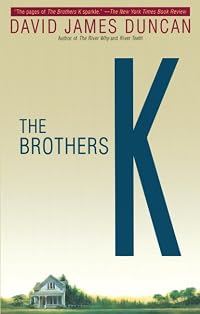
The Brothers K
by David James Duncan
On This Page
Description
A NEW YORK TIMES NOTABLE BOOKOnce in a great while a writer comes along who can truly capture the drama and passion of the life of a family. David James Duncan, author of the novel The River Why and the collection River Teeth, is just such a writer. And in The Brothers K he tells a story both striking and in its originality and poignant in its universality.
This touching, uplifting novel spans decades of loyalty, anger, regret, and love in the lives of the Chance family. A father show more whose dreams of glory on a baseball field are shattered by a mill accident. A mother who clings obsessively to religion as a ward against the darkest hour of her past. Four brothers who come of age during the seismic upheavals of the sixties and who each choose their own way to deal with what the world has become. By turns uproariously funny and deeply moving, and beautifully written throughout, The Brothers K is one of the finest chronicles of our lives in many years.
Praise for The Brothers K
“The pages of The Brothers K sparkle.”—The New York Times Book Review
“Duncan is a wonderfully engaging writer.”—Los Angeles Times
“This ambitious book succeeds on almost every level and every page.”—USA Today
“Duncan’s prose is a blend of lyrical rhapsody, sassy hyperbole and all-American vernacular.”—San Francisco Chronicle
“The Brothers K affords the . . . deep pleasures of novels that exhaustively create, and alter, complex worlds. . . . One always senses an enthusiastic and abundantly talented and versatile writer at work.”—The Washington Post Book World
“Duncan . . . tells the larger story of an entire popular culture struggling to redefine itself—something he does with the comic excitement and depth of feeling one expects from Tom Robbins.”—Chicago Tribune. show less
Tags
Recommendations

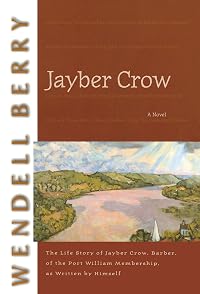
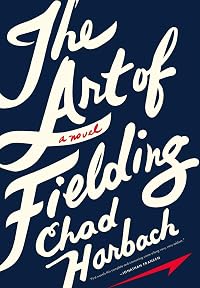
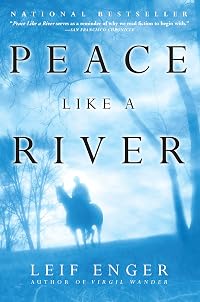
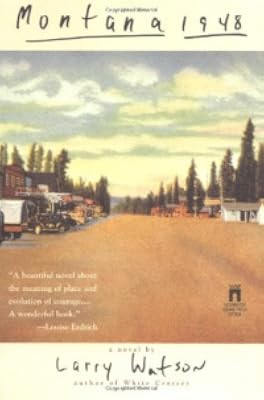


Member Recommendations
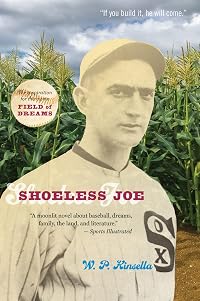
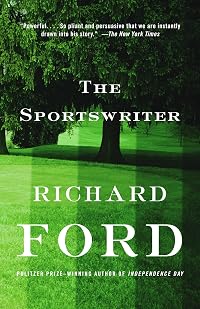
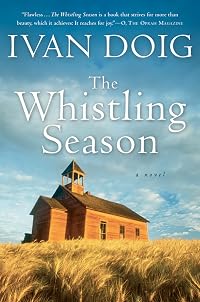
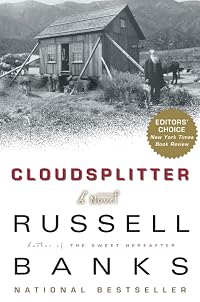
charlie68 Both deal with similar themes
Member Reviews
This chronicle of a baseball family’s ups and downs in the ‘50s through the early ‘70s was expansive and (I’ll say it) breathtaking. Papa Chance, the father in this 500 page tome has spawned, a hippie radical, a eastern-studies guru, a thorough narrator, a dense but lovable Adventist and two peculiar twin girls who have worked out a method of killing birds and cleaning up the dead that is a sight to behold. Roger Maris, Vietnam, Religion, it’s all here, folks. Warning: The next book you pick up after reading this (unless it’s freaking brilliant) is going to reek like you just stuck your head in a barrel full of fish heads. Smell the [baseball] glove.
This is a big book. It is about God (and gods and organized religion and spirituality), love, duty, baseball, and family. Rather than God is love, I think the message here is that love is god.
One need not have read the Russians to get this, but this is very much an homage. Honestly, this feels more Tolstoy than Dostoyevsky to me. I am one of those hopeless people who never much like reading Dostoyevsky. I find him humorless and pedantic. I know this is my problem. But I love Tolstoy, who manages to make the clearly sentimental moving to me, a person who hates the sentimental. I was often moved as I read this, but the thing that made this very serious often painful book such a joy to read was that it was incredibly funny much of the show more time, even when the things that were happening were spectacularly tragic. I am not sure how Duncan did that, but let me tell you, this dude can write like no one's business at the sentence level and at the story level.
I don't want to fully summarize this story, and I don't think I could even if I wanted to, but I will offer some basic info. This is the story of the Chance family, led by Hugh, a baseball phenom whose potential was ruined by the Korean War (the wars following knocked others off of their tracks too) , and then by a mill accident. Baseball continues to define the life of all of the Chances, Hugh, his Adventist wife, Laura (Hugh is an atheist, as was his mother, and that creates a lot of the tension here), and their six boomer children. The "K" here is a reference to baseball shorthand, which uses the letter to indicate a strikeout. And the Chances have lots of K's, but also other things. There is tension, brutally severing tension, that comes from the obsessive observance by some Chances, and the rejection by others of the Adventist faith. Baseball also becomes a paradoxical force, uniting the family and creating wedges at the same time. Political difference is something of a paper tiger, but that tiger mauls a few people anyway. War, though, war is not a paradox here -- it is the one predictable thing. War does nothing but destroy everyone decent in its path. In many ways, there is a happy ending here, but only insofar as we freeze moments; if we ended at a different point, the endings would not be happy at all.
This is the story of the 60's and 70's, but like the work of the Russian masters, it defines a time while also defining themes that are timeless. This one goes on my best of the best. I have already told my sister and son that they get the book next -- I can't wait for the family discussion of this one. (This is another one of the books that has been sitting on my physical shelf for years. I am so glad I pledged this year to read more of these, because all I have blown the dust off have been really really good!) show less
One need not have read the Russians to get this, but this is very much an homage. Honestly, this feels more Tolstoy than Dostoyevsky to me. I am one of those hopeless people who never much like reading Dostoyevsky. I find him humorless and pedantic. I know this is my problem. But I love Tolstoy, who manages to make the clearly sentimental moving to me, a person who hates the sentimental. I was often moved as I read this, but the thing that made this very serious often painful book such a joy to read was that it was incredibly funny much of the show more time, even when the things that were happening were spectacularly tragic. I am not sure how Duncan did that, but let me tell you, this dude can write like no one's business at the sentence level and at the story level.
I don't want to fully summarize this story, and I don't think I could even if I wanted to, but I will offer some basic info. This is the story of the Chance family, led by Hugh, a baseball phenom whose potential was ruined by the Korean War (the wars following knocked others off of their tracks too) , and then by a mill accident. Baseball continues to define the life of all of the Chances, Hugh, his Adventist wife, Laura (Hugh is an atheist, as was his mother, and that creates a lot of the tension here), and their six boomer children. The "K" here is a reference to baseball shorthand, which uses the letter to indicate a strikeout. And the Chances have lots of K's, but also other things. There is tension, brutally severing tension, that comes from the obsessive observance by some Chances, and the rejection by others of the Adventist faith. Baseball also becomes a paradoxical force, uniting the family and creating wedges at the same time. Political difference is something of a paper tiger, but that tiger mauls a few people anyway. War, though, war is not a paradox here -- it is the one predictable thing. War does nothing but destroy everyone decent in its path. In many ways, there is a happy ending here, but only insofar as we freeze moments; if we ended at a different point, the endings would not be happy at all.
This is the story of the 60's and 70's, but like the work of the Russian masters, it defines a time while also defining themes that are timeless. This one goes on my best of the best. I have already told my sister and son that they get the book next -- I can't wait for the family discussion of this one. (This is another one of the books that has been sitting on my physical shelf for years. I am so glad I pledged this year to read more of these, because all I have blown the dust off have been really really good!) show less
Sweeping family saga set mostly in the 1960’s – 1970’s in the state of Washington, The Brothers K is the story of the Papa Hugh Chance, a former baseball player whose career was derailed by injury, Mama Laura, a fervent Seventh Day Adventist with a painful past, and their four sons and two daughters. It is told in first person by the youngest son, Kincaid, through his own observations, as well as news articles, letters, school papers, and family memorabilia that provide additional points of view into relationships and events, and covers topics such as baseball, family dynamics, religion, nature, politics, war, and coming of age during the turbulent sixties. Though the characters are many, the focus is primarily on Papa Hugh, Mama show more Laura, and three of the four sons: Everett, Peter, and Irwin. Everett, the eldest, clashes with his mother regarding religion and becomes a rebel-hippie-agnostic. Peter, the second son, is the most athletically gifted, but is drawn to intellectual pursuits and Eastern spiritualism. Irwin is a good-hearted trusting soul who embraces his mother’s religion but also suffers the most trauma. It is a great example of how siblings can be remarkably different in temperament and avocations.
The author has a wry sense of humor and is skilled at evoking emotion, at times funny, poignant, or heart-breaking. Baseball anecdotes and analogies are prevalent in the first half of the book. Duncan uses baseball as a metaphor for life, and baseball fans will particularly enjoy this part. As the storyline expands, and the children grow to adulthood, the focus shifts away from baseball and toward their various interests. It also moves away from their small hometown in Washington to international locations. There are plentiful allusions to The Brothers Karamazov, for which the book is named, but the storyline is substantially different, and it is not required to have read Dostoevsky’s novel in order to appreciate this one. As baseball fans will know, a “K” represents a strike-out, and the characters suffer a number of failures, life lessons, and adversities. Duncan explores the nature of success and failure by examining life-altering decisions, and the roles of fate, chance, and spirituality. The characterization is outstanding, with enough detail to understand motivations. At almost 650 pages, Duncan takes a few detours that perhaps were not strictly required and relates extended dream sequences. It will require the reader’s patience and persistence, but the payoff felt worth the effort. This book explores the themes of faith, hope, self-discovery, doubt, internal strife, love, forgiveness, and redemption. It is a gem of a book, a mixture of a great yarn and a thought-provoking philosophical look at life. show less
The author has a wry sense of humor and is skilled at evoking emotion, at times funny, poignant, or heart-breaking. Baseball anecdotes and analogies are prevalent in the first half of the book. Duncan uses baseball as a metaphor for life, and baseball fans will particularly enjoy this part. As the storyline expands, and the children grow to adulthood, the focus shifts away from baseball and toward their various interests. It also moves away from their small hometown in Washington to international locations. There are plentiful allusions to The Brothers Karamazov, for which the book is named, but the storyline is substantially different, and it is not required to have read Dostoevsky’s novel in order to appreciate this one. As baseball fans will know, a “K” represents a strike-out, and the characters suffer a number of failures, life lessons, and adversities. Duncan explores the nature of success and failure by examining life-altering decisions, and the roles of fate, chance, and spirituality. The characterization is outstanding, with enough detail to understand motivations. At almost 650 pages, Duncan takes a few detours that perhaps were not strictly required and relates extended dream sequences. It will require the reader’s patience and persistence, but the payoff felt worth the effort. This book explores the themes of faith, hope, self-discovery, doubt, internal strife, love, forgiveness, and redemption. It is a gem of a book, a mixture of a great yarn and a thought-provoking philosophical look at life. show less
The praise that this novel continues to attract mystifies me. Its protracted, rambling narrative about the various members of a wholly uninteresting family felt phony to me from its first word. Only a long list of laudatory reviews kept me reading in the hope that The Brothers K would get better. Every seventy pages or so, it seemed it was getting better and soon become very good, indeed--at which point the author stumbled-in yet again with a fresh inanity to destroy the mood, the moment, all caring.
Many words would be necessary to describe the impatience and frustration caused by this ebb and flow of great expectation and smashed hope. When I say that my mental anguish was close to physical pain, I do not exaggerate. The spirit in show more which I read to the end might be described as "the fascination of the abomination" (to filch a phrase from Conrad): I needed to know if a novel so long and overwrought by a writer who obviously believed in what he had written (and who just as obviously had worked long & hard to write it) could truly achieve thoroughgoing triviality at a cost of a 600-plus-page meander to its unmemorable end. I am sorry to report that, truly, it did.
If the title makes you hopeful for a contemporary American rendition of Dostoyevsky's great and difficult book, abandon that hope. If the tome's thickness and large-ish cast of characters makes you think of Dickens, think again. I do not know if the author was aiming for either effect or whether he adopted one or both of the aforementioned "D"-initialed novelists as a model, only that all such possible intentions & designs are irrelevant in the face of such clumsy storytelling and verbosity.
Others have described The Brothers K with encomiums every writer would love to have said of his novel: "touching, uplifting"; "uproariously funny"; "deeply moving"; "beautifully written throughout"; and so on. I wonder if these readers have read the same book I read. Yes, yes, I know: no two readers can read the same novel because they themselves differ from each other. It is also said that no reader reads the same book twice--that it is impossible to do so: having read a book once, the reader is changed in greats ways or small and thus brings a new self--a different reader--to his or her second reading. Well, maybe. I have not read The Brothers K a second time since forcing myself through it some 20 years ago, nor do I plan to ("fool me once," etc.), so I will never discover if my perception of it has changed for the better. But I doubt it.
I do not know why I take time and trouble to knock down a book that seems much beloved by pretty much everyone who reads it. It is true that I have pondered these criticisms at various moments during the last twenty years. If writing them out finally frees me from them--and erases The Brothers K completely from my memory, the effort is worthwhile. I suspect, however, that I will never forget my frustration with this great mess of a baggy monster--because it could have been really good. If its author had been more canny and in better control of what he was doing and saying, The Brothers K might likely have been in fact what it seems to have become by reputation: a really fine American novel. show less
Many words would be necessary to describe the impatience and frustration caused by this ebb and flow of great expectation and smashed hope. When I say that my mental anguish was close to physical pain, I do not exaggerate. The spirit in show more which I read to the end might be described as "the fascination of the abomination" (to filch a phrase from Conrad): I needed to know if a novel so long and overwrought by a writer who obviously believed in what he had written (and who just as obviously had worked long & hard to write it) could truly achieve thoroughgoing triviality at a cost of a 600-plus-page meander to its unmemorable end. I am sorry to report that, truly, it did.
If the title makes you hopeful for a contemporary American rendition of Dostoyevsky's great and difficult book, abandon that hope. If the tome's thickness and large-ish cast of characters makes you think of Dickens, think again. I do not know if the author was aiming for either effect or whether he adopted one or both of the aforementioned "D"-initialed novelists as a model, only that all such possible intentions & designs are irrelevant in the face of such clumsy storytelling and verbosity.
Others have described The Brothers K with encomiums every writer would love to have said of his novel: "touching, uplifting"; "uproariously funny"; "deeply moving"; "beautifully written throughout"; and so on. I wonder if these readers have read the same book I read. Yes, yes, I know: no two readers can read the same novel because they themselves differ from each other. It is also said that no reader reads the same book twice--that it is impossible to do so: having read a book once, the reader is changed in greats ways or small and thus brings a new self--a different reader--to his or her second reading. Well, maybe. I have not read The Brothers K a second time since forcing myself through it some 20 years ago, nor do I plan to ("fool me once," etc.), so I will never discover if my perception of it has changed for the better. But I doubt it.
I do not know why I take time and trouble to knock down a book that seems much beloved by pretty much everyone who reads it. It is true that I have pondered these criticisms at various moments during the last twenty years. If writing them out finally frees me from them--and erases The Brothers K completely from my memory, the effort is worthwhile. I suspect, however, that I will never forget my frustration with this great mess of a baggy monster--because it could have been really good. If its author had been more canny and in better control of what he was doing and saying, The Brothers K might likely have been in fact what it seems to have become by reputation: a really fine American novel. show less
The praise that this novel continues to attract mystifies me. Its protracted, rambling narrative about the various members of a wholly uninteresting family felt phony to me from its first word. Only a long list of laudatory reviews kept me reading in the hope that The Brothers K would get better. Every seventy pages or so, it seemed it was getting better and soon become very good, indeed--at which point the author stumbled-in yet again with a fresh inanity to destroy the mood, the moment, all caring.
Many words would be necessary to describe the impatience and frustration caused by this ebb and flow of great expectation and smashed hope. When I say that my mental anguish was close to physical pain, I do not exaggerate. The spirit in show more which I read to the end might be described as "the fascination of the abomination" (to filch a phrase from Conrad): I needed to know if a novel so long and overwrought by a writer who obviously believed in what he had written (and who just as obviously had worked long & hard to write it) could truly achieve thoroughgoing triviality at a cost of a 600-plus-page meander to its unmemorable end. I am sorry to report that, truly, it did.
If the title makes you hopeful for a contemporary American rendition of Dostoyevsky's great and difficult book, abandon that hope. If the tome's thickness and large-ish cast of characters makes you think of Dickens, think again. I do not know if the author was aiming for either effect or whether he adopted one or both of the aforementioned "D"-initialed novelists as a model, only that all such possible intentions & designs are irrelevant in the face of such clumsy storytelling and verbosity.
Others have described The Brothers K with encomiums every writer would love to have said of his novel: "touching, uplifting"; "uproariously funny"; "deeply moving"; "beautifully written throughout"; and so on. I wonder if these readers have read the same book I read. Yes, yes, I know: no two readers can read the same novel because they themselves differ from each other. It is also said that no reader reads the same book twice--that it is impossible to do so: having read a book once, the reader is changed in greats ways or small and thus brings a new self--a different reader--to his or her second reading. Well, maybe. I have not read The Brothers K a second time since forcing myself through it some 20 years ago, nor do I plan to ("fool me once," etc.), so I will never discover if my perception of it has changed for the better. But I doubt it.
I do not know why I take time and trouble to knock down a book that seems much beloved by pretty much everyone who reads it. It is true that I have pondered these criticisms at various moments during the last twenty years. If writing them out finally frees me from them--and erases The Brothers K completely from my memory, the effort is worthwhile. I suspect, however, that I will never forget my frustration with this great mess of a baggy monster--because it could have been really good. If its author had been more canny and in better control of what he was doing and saying, The Brothers K might likely have been in fact what it seems to have become by reputation: a really fine American novel. show less
Many words would be necessary to describe the impatience and frustration caused by this ebb and flow of great expectation and smashed hope. When I say that my mental anguish was close to physical pain, I do not exaggerate. The spirit in show more which I read to the end might be described as "the fascination of the abomination" (to filch a phrase from Conrad): I needed to know if a novel so long and overwrought by a writer who obviously believed in what he had written (and who just as obviously had worked long & hard to write it) could truly achieve thoroughgoing triviality at a cost of a 600-plus-page meander to its unmemorable end. I am sorry to report that, truly, it did.
If the title makes you hopeful for a contemporary American rendition of Dostoyevsky's great and difficult book, abandon that hope. If the tome's thickness and large-ish cast of characters makes you think of Dickens, think again. I do not know if the author was aiming for either effect or whether he adopted one or both of the aforementioned "D"-initialed novelists as a model, only that all such possible intentions & designs are irrelevant in the face of such clumsy storytelling and verbosity.
Others have described The Brothers K with encomiums every writer would love to have said of his novel: "touching, uplifting"; "uproariously funny"; "deeply moving"; "beautifully written throughout"; and so on. I wonder if these readers have read the same book I read. Yes, yes, I know: no two readers can read the same novel because they themselves differ from each other. It is also said that no reader reads the same book twice--that it is impossible to do so: having read a book once, the reader is changed in greats ways or small and thus brings a new self--a different reader--to his or her second reading. Well, maybe. I have not read The Brothers K a second time since forcing myself through it some 20 years ago, nor do I plan to ("fool me once," etc.), so I will never discover if my perception of it has changed for the better. But I doubt it.
I do not know why I take time and trouble to knock down a book that seems much beloved by pretty much everyone who reads it. It is true that I have pondered these criticisms at various moments during the last twenty years. If writing them out finally frees me from them--and erases The Brothers K completely from my memory, the effort is worthwhile. I suspect, however, that I will never forget my frustration with this great mess of a baggy monster--because it could have been really good. If its author had been more canny and in better control of what he was doing and saying, The Brothers K might likely have been in fact what it seems to have become by reputation: a really fine American novel. show less
It may be different for other people, but we in our green youth have to settle the eternal questions first.
Ivan to Alyosha Karamazov
Let's get clear, The Brothers K struck me out.
There are books which tell a story and then there are others, like The Brothers K, whose story resonates deep inside you in response to a call within the remotest nook of your inner being. Either as an iron hand clutching relentlessly at your bowels or as a scorching eruption of pure and unadulterated love, the novel gets into your system, leaving you breathless, exhausted and in a kind of perpetual stunned awe, even afraid of your own thread of thoughts.
I was born in the eighties, nearly the date of the last chapter of this novel, and now I am here watching show more my past generation's dreams disappear. Because this sublime story has given me implacable proof of certain things that my dormant conscience already was aware of. That, whether we like it or not, we all are a product of our generation. And that my own generation comes out shallow, bland, devoid of values and lacking spiritual commitment in comparison to our past generations.
The States, the sixties and early seventies.
Take the Chance family.
Their lives are defined by Wars.
The Psalm War, campaigned by Laura, the radically devoted religious mother, tortured in silence by her own particular demons. Her enemy: Satan and her irreverent oldest son Everett.
The Baseball War. Baseball, a new religion. Hugh, the ever idolised father, the indisputable source of inspiration. His enemy: his crushed finger and whatever threatening his family unity.
The 'Nam War, which tears apart the Chances forever in unfathomable ways. Its enemy: Non existent.
And of course, The Brothers K War. Four brothers. Four different, almost opposed, ways to understand the world, four voices to fight injustice, to claim what is right, to make us believe.
Wars. Wars. Wars. Either imposed from the outside or inner wars, or both. Wars which threaten to break the ties between each other and bring out the best and the worst in them. But I couldn't help but admire how they planted their singular thoughts, nurtured and watched them grow and stuck to their own formed believes, using them as the only weapons to fight against these ruthless wars:
Everett, a natural leader, bigheaded, bigmouthed and bighearted. An genial anarchist who defies the system and rebels against oppression.
Peter, with his spiritual balance and outstanding intelligence, searches for answers in the Eastern World, finding his Westernized version of himself on the way.
Irwin, the personification of goodness and innocence, still believes in Jesus after the bad joke 'Nam plays on him.
Kincaid, the faithful and devoted narrator, his unconditional love the balm which eases the pain of this wounded family, his unselfishness and perseverance keeping them united, his words oozing with overflowing sensitivity and tenderness.
But what moved me beyond words was the way these strikingly different voices mingled and danced with each other in apparent discordance. The result, an exquisite piece of music similar to Beethoven's String Quartet, Opus 131, which at heart I believe to be an optimistic masterpiece despite its distressing fugue and march to death closure. And how in Duncan's novel, I also identify something hopeful, something that feels eternal, immortal, divine...otherworldly in the way he shows us the long, unfolding paths these brothers follow and the way they are ready to sacrifice themselves for the sake of others, giving example of what's the true meaning of courage, honor and ultimately, of love.
I know all these rambling thoughts might sound stereotypical, but believe me, they are not.
This novel has changed my perspective in every possible way, some of its details will always stay with me and either blurred by unshed tears or repressed by fits of laughter, I'm taking memorable souvenirs from this epic journey; although now that I am back home and have time to cherish these new mementos I realize my own generation still has a lot of growing up to do. We can't afford to be drowsy and dispassionate, to commit the same mistakes over and over again, to be carried away on the wave of this void era. Not when some have sacrificed so much in the past.
It's our deed to remember where we come from. And how dear the price of our present was.
Embrace the unknown and let yourself be washed away by the intensity and the unsurpassed beauty of this novel. You'll see how your world spins around and everything shines in a new light, even yourself.
I lost my religion ages ago, but like Everett, I realize that I have never stopped praying and that, perhaps, that's precisely what keeps all my loose pieces together. And for that, I can only be clumsily grateful.
Yet knowing me, my weaknesses, my tedious anger, this tedious darkness, I know I could lose my hold even on you and find some way of flaming out here, and going down, if it weren't for...you.
Not you, Tasha.
I mean this other you. I refuse to resort to Uppercase here. But you hear me. And I feel you. I mean you, the who or whatever you are, being or nonbeing, that somehow comes to us and somehow consoles us. I don't know your name. I don't understand you. I don't know how to address you. I don't like people who think they do. But it's you alone, I begin to feel, who sends me this woman's love and our baby, and this new hope and stupid gratitude. show less
Ivan to Alyosha Karamazov
Let's get clear, The Brothers K struck me out.
There are books which tell a story and then there are others, like The Brothers K, whose story resonates deep inside you in response to a call within the remotest nook of your inner being. Either as an iron hand clutching relentlessly at your bowels or as a scorching eruption of pure and unadulterated love, the novel gets into your system, leaving you breathless, exhausted and in a kind of perpetual stunned awe, even afraid of your own thread of thoughts.
I was born in the eighties, nearly the date of the last chapter of this novel, and now I am here watching show more my past generation's dreams disappear. Because this sublime story has given me implacable proof of certain things that my dormant conscience already was aware of. That, whether we like it or not, we all are a product of our generation. And that my own generation comes out shallow, bland, devoid of values and lacking spiritual commitment in comparison to our past generations.
The States, the sixties and early seventies.
Take the Chance family.
Their lives are defined by Wars.
The Psalm War, campaigned by Laura, the radically devoted religious mother, tortured in silence by her own particular demons. Her enemy: Satan and her irreverent oldest son Everett.
The Baseball War. Baseball, a new religion. Hugh, the ever idolised father, the indisputable source of inspiration. His enemy: his crushed finger and whatever threatening his family unity.
The 'Nam War, which tears apart the Chances forever in unfathomable ways. Its enemy: Non existent.
And of course, The Brothers K War. Four brothers. Four different, almost opposed, ways to understand the world, four voices to fight injustice, to claim what is right, to make us believe.
Wars. Wars. Wars. Either imposed from the outside or inner wars, or both. Wars which threaten to break the ties between each other and bring out the best and the worst in them. But I couldn't help but admire how they planted their singular thoughts, nurtured and watched them grow and stuck to their own formed believes, using them as the only weapons to fight against these ruthless wars:
Everett, a natural leader, bigheaded, bigmouthed and bighearted. An genial anarchist who defies the system and rebels against oppression.
Peter, with his spiritual balance and outstanding intelligence, searches for answers in the Eastern World, finding his Westernized version of himself on the way.
Irwin, the personification of goodness and innocence, still believes in Jesus after the bad joke 'Nam plays on him.
Kincaid, the faithful and devoted narrator, his unconditional love the balm which eases the pain of this wounded family, his unselfishness and perseverance keeping them united, his words oozing with overflowing sensitivity and tenderness.
But what moved me beyond words was the way these strikingly different voices mingled and danced with each other in apparent discordance. The result, an exquisite piece of music similar to Beethoven's String Quartet, Opus 131, which at heart I believe to be an optimistic masterpiece despite its distressing fugue and march to death closure. And how in Duncan's novel, I also identify something hopeful, something that feels eternal, immortal, divine...otherworldly in the way he shows us the long, unfolding paths these brothers follow and the way they are ready to sacrifice themselves for the sake of others, giving example of what's the true meaning of courage, honor and ultimately, of love.
I know all these rambling thoughts might sound stereotypical, but believe me, they are not.
This novel has changed my perspective in every possible way, some of its details will always stay with me and either blurred by unshed tears or repressed by fits of laughter, I'm taking memorable souvenirs from this epic journey; although now that I am back home and have time to cherish these new mementos I realize my own generation still has a lot of growing up to do. We can't afford to be drowsy and dispassionate, to commit the same mistakes over and over again, to be carried away on the wave of this void era. Not when some have sacrificed so much in the past.
It's our deed to remember where we come from. And how dear the price of our present was.
Embrace the unknown and let yourself be washed away by the intensity and the unsurpassed beauty of this novel. You'll see how your world spins around and everything shines in a new light, even yourself.
I lost my religion ages ago, but like Everett, I realize that I have never stopped praying and that, perhaps, that's precisely what keeps all my loose pieces together. And for that, I can only be clumsily grateful.
Yet knowing me, my weaknesses, my tedious anger, this tedious darkness, I know I could lose my hold even on you and find some way of flaming out here, and going down, if it weren't for...you.
Not you, Tasha.
I mean this other you. I refuse to resort to Uppercase here. But you hear me. And I feel you. I mean you, the who or whatever you are, being or nonbeing, that somehow comes to us and somehow consoles us. I don't know your name. I don't understand you. I don't know how to address you. I don't like people who think they do. But it's you alone, I begin to feel, who sends me this woman's love and our baby, and this new hope and stupid gratitude. show less
This novel slowly reels you in to the Chance family -- struggling minor league pitching father; devout Christian, rules the roost mother; four very different sons, and two twin young girls. We hear about their lives, personalities, the different paths they take as they come into their own during the 60's and the Vietnam Era --- mostly narrated by the youngest son Kade, though occasionally we read school papers and letters of the children and adults they become. It is a fascinating tapestry that is painstakingly created, and one that draws the reader in so completely -- the end of the novel is devastating.
Having just read 'The Brothers Karamazov' I see the parallels, in particular grappling with the the question of God and religion's show more role in one's life -- how this affects how you see yourself, the world, adversity, destiny. Although this is heavy stuff, Duncan's prose and storytelling are wonderfully engaging; for me there really wasn't a dull moment in the novel. (Although, if you are not a baseball fan, there may be one or two slow spots)
There were parts that bordered on the unbelievable certainly - Peter's adventures in India, the road trip with the Adventists to free Irwin, and I do wish we had gotten to actually know Kincaid, our narrator, a bit better. So, I was all set to rate this novel a 4 or 4 1/2 star deal -- but then I was blown away by the ending. I certainly will not spoil anything for anybody - those of you who read the novel I suspect know what I mean. I can only think of a couple of other books that caused me to tear up in my entire reading career. However, I sobbed through many of the penultimate chapters. Sobbed; I don't know, maybe Duncan caught me at a weak moment, but I really did sob. Provoking that kind of reaction is worth at least one extra star!
Overall, a wonderful, accessible, well-written saga that certainly can compete on a list of great American modern novels, and thankfully, it is not post-modernist. show less
Having just read 'The Brothers Karamazov' I see the parallels, in particular grappling with the the question of God and religion's show more role in one's life -- how this affects how you see yourself, the world, adversity, destiny. Although this is heavy stuff, Duncan's prose and storytelling are wonderfully engaging; for me there really wasn't a dull moment in the novel. (Although, if you are not a baseball fan, there may be one or two slow spots)
There were parts that bordered on the unbelievable certainly - Peter's adventures in India, the road trip with the Adventists to free Irwin, and I do wish we had gotten to actually know Kincaid, our narrator, a bit better. So, I was all set to rate this novel a 4 or 4 1/2 star deal -- but then I was blown away by the ending. I certainly will not spoil anything for anybody - those of you who read the novel I suspect know what I mean. I can only think of a couple of other books that caused me to tear up in my entire reading career. However, I sobbed through many of the penultimate chapters. Sobbed; I don't know, maybe Duncan caught me at a weak moment, but I really did sob. Provoking that kind of reaction is worth at least one extra star!
Overall, a wonderful, accessible, well-written saga that certainly can compete on a list of great American modern novels, and thankfully, it is not post-modernist. show less
Members
- Recently Added By
Lists

Favorite Long Books
330 works; 42 members

Recommend the 20 best books you've read in the last five years
2,168 works; 606 members

Top-Rated Books on LibraryThing
272 works; 117 members

A Novel Cure
742 works; 23 members

Books Read in 2019
4,052 works; 110 members
Books We Love to Reread
688 works; 296 members

Recommended Reading : 600 Classics Reviewed, Editors of Salem Press, 2015
634 works; 6 members

Recreation
93 works; 1 member

The Five Books That Represent Us
391 works; 148 members
Author Information

10+ Works 4,017 Members
David James Duncan has been nominated for two Pushcart Prizes & has won a Montana Arts Council Award. He lives in Montana. (Bowker Author Biography)
Awards and Honors
Awards
Distinctions
Common Knowledge
- Original publication date
- 1992
- People/Characters
- Kincaid; Peter; Irwin; Everett; Beatrice; Winifred (show all 8); Uncle Marv; Aunt Mary Jane
- Important places
- Vietnam; Camas, Washington, USA; British Columbia, Canada; India
- Important events
- Vietnam War
- First words
- Papa is in his easy chair, reading the Sunday sports page.
- Quotations
- There are kinds of human problems which really do seem, as our tidy expressions would have it, to ‘come to a head’ and ‘demand to be dealt with’. But there are also problems, often just as serious, which com... (show all)e to nothing that we can recognize or openly deal with. Some long-lived, insidious problems simply slip us off to one side of ourselves. Some gently rob us of just enough energy or faith so that days which once took place on a horizontal plane become an endless series of uphill slogs. And some- like high water working year after year at the roots of a riverside tree- quietly undercut our trust or our hope, our sense of place, or of humor, our ability to empathize, or to feel enthused, and we don’t sense impending danger, we don’t feel the damage at all, till one day, to our amazement, we find ourselves crashing to the ground.
I wish I’d had the love, the wisdom, the empathy, or even just the raw curiosity to try and find out, back in the mid-sixties, why Mama would storm off the way she did. She always went to stay with her brother and his wife,... (show all) outside Spokane. She always left in such terrible hurt and anger that it seemed she would never return. And she always came back, calmer but basically unchanged, after three or four days. I’ve learned enough in the years since, to know that she was leading a life as intricate and dramatic, as painful, and as worthy of respect as my father’s. But this paragraph is revisionist. Mama’s absences were a relief to me, her returns a mild disappointment, and unlike Peter, I had no great curiosity about the motivations of either. I felt at times that she loved me. I also felt, almost constantly, that she disliked me. And I was satisfied to reciprocate. It damaged us. But that’s the way it was. - Last words
- (Click to show. Warning: May contain spoilers.)He feels his pulse.
Classifications
Statistics
- Members
- 1,792
- Popularity
- 12,205
- Reviews
- 59
- Rating
- (4.40)
- Languages
- English, French
- Media
- Paper, Audiobook, Ebook
- ISBNs
- 15
- ASINs
- 5