Hide this

Results from Google Books

Click on a thumbnail to go to Google Books.

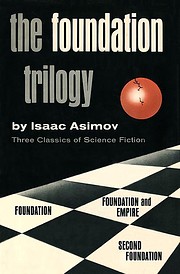
The Foundation Trilogy by Isaac Asimov
Loading...
MembersReviewsPopularityAverage ratingMentions
3,040331,701 (4.28)61
20th century (14) anthology (21) Asimov (73) classic (45) classics (19) collection (21) Easton Press (19) fantasy (13) fiction (319) Folio Society (14) foundation (101) future (15) hardcover (38) literature (17) novel (39) omnibus (63) own (15) psychohistory (31) read (51) science fiction (876) series (27) sf (115) sff (52) signed (14) space (13) space opera (17) speculative fiction (14) to-read (23) trilogy (14) unread (24)
Loading...

Sign up for LibraryThing to find out whether you'll like this book.

English (29)  Italian (1)  Portuguese (Portugal) (1)  Spanish (1)  Dutch (1)  All languages (33)
Showing 1-5 of 29 (next | show all)
I am in the middle of Foundation and Empire and I must say, this old trilogy holds up much better than I thought it would.

I recall Asimov recounting how, as an adult, he went back and re-read Doc Smith's Galactic Patrol and that the sense of loss when he compared it to his childhood experience of the book was ... palpable. I expected much the same thing to happen to me here ... but it hasn't.

Oh, it's dated in places ("in the future everything will be NUCLEAR," and women still seem to be mostly for decoration), but the chief idea is a really really good one, and Asimov makes it utterly engaging. Some of the scenes have been stuck in my memory for decades. And I find that, much as Asimov comes under criticism for not having been a very good writer, the writing is surprisingly good most of the time.

If the trilogy has a major fault, I would say that that fault is talkiness. Asimov's big climactic scenes tend, by and large, to be conversations. You won't find an awful lot of narrated action. This can make for a static, slightly claustrophobic atmosphere.

Still, when he describes his characters stepping outside and seeing the "misty lens" of the Milky Way stretching over them, one really does get the sense of being in a galaxy, and one where momentous things are happening.

Oh, and in the future? Everyone really likes cigars. ;^) ( )
  chexmix | Mar 29, 2013 |
Isaac Asimov è stato il mio "maestro spirituale" della prima adolescenza, leggendo i suoi romanzi (e qualche saggio) ho imparato una certa visione del mondo che vede la fiducia nell'uomo come fulcro. Asimov era un'umanista e questa considerazione non è puramente accessoria nell'affrontare i suoi romanzi.
Quando il giovane Isaac negli anni '40 arriva negli uffici di Astounding Stories, diretto dal mitico John W. Campbell, grazie alla sua novella più famosa, Notturno, si ritrova nell'eccitante ma scomoda posizione di essere tra i favoriti del dispotico editore.
Si trova in sala d'attesa e non sa che progetto presentargli. E' così che ripensando a "Declino e caduta dell'impero romano" di Gibbons (un mattone, che Asimov ha letto ben due volte) gli viene in mente di sviluppare la storia della fine dell'impero galattico e degli sforzi di un'organizzazione, la Fondazione appunto, per scongiurare trentamila anni di medioevo galattico.
Il fulcro della storia è l'immaginaria scienza della psicostoria, capace di prevedere statisticamente i comportamenti delle popolazioni attraverso complicatissime variabili. Altro punto è che la galassia asimoviana è completamente abitata da umani. Il motivo è che per Campbell l'alieno è sempre inferiore all'essere umano, mentre Asimov, che non ne è tanto sicuro, evita elegantemente lo scontro con il suo mentore obliando qualsiasi forma di vita non umana.
La trilogia di fatto non è una trilogia ma una raccolta di nove racconti di lunghezza variabile con continuo cambio di protagonisti lungo circa trecento anni dalla caduta dell'impero in poi. La collocazione in tre volumi è successiva, dovuta alla pubblicazione negli anni '50. In realtà il presente volume della Mondadori restituisce nella sua integrità il nucleo originale delle storie della Fondazione.
La Fondazione è sicuramente un capolavoro della fantascienza e un pilastro della letteratura americana contemporanea, ma non è perfetto. Risente del clima originario dei pulp magazine, non è screvo di ingenuità, soprattutto riguardo all'uso dell'energia atomica.
La costruzione delle trame tuttavia, con personaggi che usano il cervello al posto dei muscoli (famosa ed emblematica la frase "la violenza è l'ultimo rifugio degli incapaci", che dice tutto di Asimov) è notevole, anche se non può essere apprezzata da tutti.
Considero i volumi ulteriori, scritti negli anni '80 come un meraviglioso surplus e approfondimento, raggiungendo spesso vetta proprie della maturità artistica. Non tutti, però, riescono ad apprezzare l'Asimov anziano, prediligendo le trame della giovinezza. Io sono di un partito speciale che preferisce i romanzi maturi, ma è ovvio che l'originaria Trilogia Galattica resti un caposaldo e pietra di paragone essenziale. ( )
  Zeruhur | May 26, 2012 |
Isaac Asimov è stato il mio "maestro spirituale" della prima adolescenza, leggendo i suoi romanzi (e qualche saggio) ho imparato una certa visione del mondo che vede la fiducia nell'uomo come fulcro. Asimov era un'umanista e questa considerazione non è puramente accessoria nell'affrontare i suoi romanzi.
Quando il giovane Isaac negli anni '40 arriva negli uffici di Astounding Stories, diretto dal mitico John W. Campbell, grazie alla sua novella più famosa, Notturno, si ritrova nell'eccitante ma scomoda posizione di essere tra i favoriti del dispotico editore.
Si trova in sala d'attesa e non sa che progetto presentargli. E' così che ripensando a "Declino e caduta dell'impero romano" di Gibbons (un mattone, che Asimov ha letto ben due volte) gli viene in mente di sviluppare la storia della fine dell'impero galattico e degli sforzi di un'organizzazione, la Fondazione appunto, per scongiurare trentamila anni di medioevo galattico.
Il fulcro della storia è l'immaginaria scienza della psicostoria, capace di prevedere statisticamente i comportamenti delle popolazioni attraverso complicatissime variabili. Altro punto è che la galassia asimoviana è completamente abitata da umani. Il motivo è che per Campbell l'alieno è sempre inferiore all'essere umano, mentre Asimov, che non ne è tanto sicuro, evita elegantemente lo scontro con il suo mentore obliando qualsiasi forma di vita non umana.
La trilogia di fatto non è una trilogia ma una raccolta di nove racconti di lunghezza variabile con continuo cambio di protagonisti lungo circa trecento anni dalla caduta dell'impero in poi. La collocazione in tre volumi è successiva, dovuta alla pubblicazione negli anni '50. In realtà il presente volume della Mondadori restituisce nella sua integrità il nucleo originale delle storie della Fondazione.
La Fondazione è sicuramente un capolavoro della fantascienza e un pilastro della letteratura americana contemporanea, ma non è perfetto. Risente del clima originario dei pulp magazine, non è screvo di ingenuità, soprattutto riguardo all'uso dell'energia atomica.
La costruzione delle trame tuttavia, con personaggi che usano il cervello al posto dei muscoli (famosa ed emblematica la frase "la violenza è l'ultimo rifugio degli incapaci", che dice tutto di Asimov) è notevole, anche se non può essere apprezzata da tutti.
Considero i volumi ulteriori, scritti negli anni '80 come un meraviglioso surplus e approfondimento, raggiungendo spesso vetta proprie della maturità artistica. Non tutti, però, riescono ad apprezzare l'Asimov anziano, prediligendo le trame della giovinezza. Io sono di un partito speciale che preferisce i romanzi maturi, ma è ovvio che l'originaria Trilogia Galattica resti un caposaldo e pietra di paragone essenziale. ( )
  Zeruhur | May 26, 2012 |
Last week, I couldn't settle to any of my current public library books for long, so I went looking in my own shelves for something that would hold my interest. The first book that I pulled off the shelf that I got more than a page into before putting it back was The Foundation Trilogy.

It had been decades since I last opened it and I was surprised at how it held my interest. Considering that these books are about 60 years old they hold up pretty well though I did notice that the women were almost absent in Foundation. Not too surprising since the perceived audience for science fiction at that time was mainly teen-aged boys. (I was considered weird for reading such stuff since I was female.) The many references to atomic science were amusing but the social commentary could almost have been written today. Apparently hidebound bureaucracies are similar in any time and place!

I did read all three straight through but they went pretty fast and kept me entertained on a day when I was a bit under the weather. It's nice that others are finding them enjoyable.

Recommended
2 vote hailelib | Mar 25, 2012 |
T his is my first foray into Isaac Asimov and it's been a successful one, this trilogy has made a fan out of me! I love Asimov's writing--his characters are fleshed out and brilliant despite their frequent disappearance over a matter of chapters, sometimes pages, as time passes by fast, the character cast always changing as well as the environment around them.

I really enjoyed Arkady's story, in The Second Foundation. A young teenager, threatened by the idea of an elusive and mysterious "Second Foundation" that can control minds. A position understandable despite my own knowledge (and preference) for the Second Foundation, given the same situation, I would be fairly threatened to believe that my own actions weren't actually my own and being controlled by a force that existed yet I could not find.

Highly recommended to anyone into science fiction, or someone looking for a great epic spanning hundreds of years. ( )
  bacillicide | Feb 3, 2012 |
Showing 1-5 of 29 (next | show all)
no reviews | add a review
You must log in to edit Common Knowledge data.
For more help see the Common Knowledge help page.
Series (with order)
Canonical title
Original title
Alternative titles
Original publication date
People/Characters
Important places
Important events
Related movies
Awards and honors
Epigraph
Dedication
First words
FOUNDATION: Headnote: Hari Seldon -- . . . born in the 11,988th year of the Galactic Era; died 12,069.
FOUNDATION: Text: His name was Gaal Dornick and he was just a country boy who had never seen Trantor before.
FOUNDATION AND EMPIRE: The Galactic Empire Was Falling.
SECOND FOUNDATION: The First Galactic Empire had endured for tens of thousands of years.
Quotations
Last words
(Click to show. Warning: May contain spoilers.)
Disambiguation notice
This omnibus edition includes: Foundation; Foundation and Empire; and Second Foundation. Please do not combine it with any individual work, or with any other combination of titles. Thank you.
Publisher's editors
Blurbers
Publisher series

References to this work on external resources.

Wikipedia in English

None

Book description
Haiku summary

Amazon.com Product Description (ISBN 0739444050, Hardcover)

Author: Isaac Asimov Hardcover: 609 pages Publisher: Science Fiction Book Club Publication Date: 2004 ISBN: 0739444050 Package Length: 8.3 inches Package Width: 5.9 inches Package Height: 1.5 inches Package Weight: 1.55 pounds Average Customer Rating: ***** based on 7 reviews Most Helpful Customer Reviews

(retrieved from Amazon Thu, 14 Feb 2013 13:40:02 -0500)

(see all 7 descriptions)

The Foundation, established after the Old Empire gives way to barbarism, fights against a mutant strain called the Mule and tries to get rid of the Second Foundation after learning it will inherit a future Empire.

» see all 2 descriptions

Quick Links

Swap Ebooks Audio
58 wanted1 pay1 pay

Popular covers

Rating

Average: (4.28)
0.5
1 2
1.5 2
2 9
2.5 6
3 72
3.5 28
4 191
4.5 42
5 282

Audible.com

An edition of this book was published by Audible.com.

See editions

Is this you?

Become a LibraryThing Author.


Help/FAQs | About | Privacy/Terms | Blog | Contact | LibraryThing.com | APIs | WikiThing | Common Knowledge | Legacy Libraries | 81,894,242 books!
