

Alexei Sayle
Author of Barcelona Plates
About the Author
Series
Works by Alexei Sayle
Fast Fiction: A Friendship 1 copy
Associated Works
In●Vision: Revelation of the Daleks (1999) — Contributor "Why I Should be the New Doctor Who: The Case for a Marxist in the TARDIS" — 2 copies
The Secret Policeman's Balls — Actor — 1 copy
Tagged
Common Knowledge
- Legal name
- Sayle, Alexei David
- Birthdate
- 1952-08-07
- Gender
- male
- Occupations
- comedian
actor
writer - Short biography
- Alexei Sayle is a comedian, actor, presenter and writer. His television work as a writer and performer includes ‘The Young Ones,’, ‘Alexei Sayle’s Stuff’ and the ‘All New Alexei Sayle Show.’ He has written for the Observer, Independent, Time Out, Car Magazine and Esquire and has appeared in numerous films including ‘Indiana Jones and the Last Crusade’ and ‘Gorky Park’. He has written 2 short story collections, Barcelona Plates and The Dog Catcher and a novel, Overtaken. Alexei lives in London.
- http://www.bbc.co.uk/endofstory/autho... - Nationality
- UK
- Birthplace
- Anfield, Liverpool, Merseyside, England, UK
- Places of residence
- London, England, UK
- Map Location
- England, UK
Members
Reviews
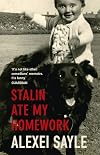
I loved this book. Like (my memories of) Sayle's comedy routines, it takes some unusual routes to explain growing up in Liverpool's Anfield. It made me laugh out loud. Having spent some time in Liverpool some of the comments (hard hippies) made me nod in recognition, and his memories of being a child amongst adults are fascinating. I loved his willingness to mock himself, too. Accounts of trips across Europe and being an angsty teenager in pubs pursued by (more popular) parents were show more highlights for me. show less
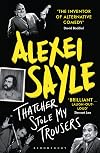
It is 1971 and the invention of modern British comedy is about to begin... So says the Bloomsbury back cover, and that's pretty much it! Godfather of British stand-up Alexei Sayle, a long time favourite, tells the tale of his young adulthood from the art school days, to teaching drama (via many a pointless job) through to his early successes and first tastes of being a recognised comedy hero. With his usual humour he rewards the reader with many first rate anecdotes and recollections that show more place us in the mind's eye of the twenty-something or early thirties Alexei while vividly recreating the world of his 1979 or 1982. (Yes, it's mostly in London!)
Throughout this period Alexei would probably have been very far from what he was about to achieve without his partner Linda helping him at every step along the way. Together, they transition away from their Liverpool brand of anarchist-leftist activism and (via the Civil Service) towards a life in leftist-anarchist 'performancism'. In early Thatcherite Britain, the second seemed the more popular.
One weekend, when she was visiting me in London, Linda and I went to the Odeon in Leicester Square to see the newly released Sylvester Stallone movie Rocky. Before the lights went down I noticed in the audience a few rows behind me a mournful-looking, slightly pop-eyed, balding man with a droopy moustache. I whispered to Linda, 'You see that man in the fifth row, I think it's Walid Jumblatt, leader of the Druze militia from the Chouf Mountains of the Lebanon.'
'You're always saying that,' she replied.
'Yes,' I hissed, 'but this time I'm certain.'
He was right. It was Walid Jumblatt. He thought Rocky was 'all right'.
From his days as a late-70s era impostor Civil Servant, Sayle provides a delightful guided lunch-break tour of London's Piccadilly, his "Boulevard of Broken Dreams". There were the UK head offices of Aeroflot and the tourism boards of war torn Lebanon and Northern Ireland among others.
Next there was my favourite, a shop that formed the sole retail outlet of a government agency named the Egg Information Council, which was tasked with the dissemination of all ovum-related data. In their dusty unwashed window were displayed eggcups and a device popular in the 1960s which consisted of a pin on a spring-loaded plunger rather like the instrument diabetics use to take blood samples. With this contraption you could prick the egg you were boiling so that all its contents leaked out into the pan.
Eventually finding his way to a stage, Alexei stumbles on the medium he's most suited for - stand-up comedy. But wary of "the kind of heavy-handed left-wing 'humour'" he wants to avoid, he strives for something different.
What I wanted was smart relevant popular comedy that paid for itself. I was also certain I didn't want to confirm the opinions of the people in the audience like CAST did, rather I wanted to challenge and mock them. After meeting Roland Muldoon I wrote a bit about agitprop theatre that went, 'People think if you've got baggy trousers and a red nose, you're automatically funny. Didn't work for Mussolini, did it?
Smart and relevant, Sayle has always been. This book is a very enjoyable telling of how he came to be a popular comedian, and how he fitted in at the top of the fast-changing and heady atmosphere of what became known in the UK as 'Alternative Comedy'. show less
Throughout this period Alexei would probably have been very far from what he was about to achieve without his partner Linda helping him at every step along the way. Together, they transition away from their Liverpool brand of anarchist-leftist activism and (via the Civil Service) towards a life in leftist-anarchist 'performancism'. In early Thatcherite Britain, the second seemed the more popular.
One weekend, when she was visiting me in London, Linda and I went to the Odeon in Leicester Square to see the newly released Sylvester Stallone movie Rocky. Before the lights went down I noticed in the audience a few rows behind me a mournful-looking, slightly pop-eyed, balding man with a droopy moustache. I whispered to Linda, 'You see that man in the fifth row, I think it's Walid Jumblatt, leader of the Druze militia from the Chouf Mountains of the Lebanon.'
'You're always saying that,' she replied.
'Yes,' I hissed, 'but this time I'm certain.'
He was right. It was Walid Jumblatt. He thought Rocky was 'all right'.
From his days as a late-70s era impostor Civil Servant, Sayle provides a delightful guided lunch-break tour of London's Piccadilly, his "Boulevard of Broken Dreams". There were the UK head offices of Aeroflot and the tourism boards of war torn Lebanon and Northern Ireland among others.
Next there was my favourite, a shop that formed the sole retail outlet of a government agency named the Egg Information Council, which was tasked with the dissemination of all ovum-related data. In their dusty unwashed window were displayed eggcups and a device popular in the 1960s which consisted of a pin on a spring-loaded plunger rather like the instrument diabetics use to take blood samples. With this contraption you could prick the egg you were boiling so that all its contents leaked out into the pan.
Eventually finding his way to a stage, Alexei stumbles on the medium he's most suited for - stand-up comedy. But wary of "the kind of heavy-handed left-wing 'humour'" he wants to avoid, he strives for something different.
What I wanted was smart relevant popular comedy that paid for itself. I was also certain I didn't want to confirm the opinions of the people in the audience like CAST did, rather I wanted to challenge and mock them. After meeting Roland Muldoon I wrote a bit about agitprop theatre that went, 'People think if you've got baggy trousers and a red nose, you're automatically funny. Didn't work for Mussolini, did it?
Smart and relevant, Sayle has always been. This book is a very enjoyable telling of how he came to be a popular comedian, and how he fitted in at the top of the fast-changing and heady atmosphere of what became known in the UK as 'Alternative Comedy'. show less

The first story in this collection is excellent and all the rest are remarkable. Sayle's trick is to twist his tales in the final sentence. This is the defining characteristic of classic short stories but Sayle takes it to a savage height. The tenor of all the stories here is laden with an alienated irony even though the strange characters are treated sympathetically. The overall effect is thought-provoking and memorable.

My favourite story in this collection is 'Big-Headed Cartoon Animal' which I think may be a mini-masterpiece. It is a really clever commentary on the sterility of 'Disney Land', California and whole of Western consumerism. In fact, the more I think about it the more I realise it has.
The rest of the stories vary in quality, the most successful among them being the ones that allow you to empathise with the main character - no mean feat given that they are all thoroughly unlikeable. What the show more stories have in common is to show the ease with which social conventions are destroyed and the consequences of such actions. They are about revealing the fragility of social order, if it exists (cf: 'Locked Out') . How does a have-a-go hero feel after his moment of heroism? What happens if you cross a dwarf? Actually, 'My Shrinking Circle of Acquantances' is funny and worth a read; 'Minister of Death' and 'Lose Weight, Ask Me How' are rather creepy but also of merit.
'The Last Woman Killed in the War' is as good as Douglas Adams says and, rather like 1984, is a poignant example of the collective amnesia that we all prefer when the 'Zeitgeist' changes. We don't want to admit we have learnt that we were wrong, we prefer to alter history to fit the new policy. show less
The rest of the stories vary in quality, the most successful among them being the ones that allow you to empathise with the main character - no mean feat given that they are all thoroughly unlikeable. What the show more stories have in common is to show the ease with which social conventions are destroyed and the consequences of such actions. They are about revealing the fragility of social order, if it exists (cf: 'Locked Out') . How does a have-a-go hero feel after his moment of heroism? What happens if you cross a dwarf? Actually, 'My Shrinking Circle of Acquantances' is funny and worth a read; 'Minister of Death' and 'Lose Weight, Ask Me How' are rather creepy but also of merit.
'The Last Woman Killed in the War' is as good as Douglas Adams says and, rather like 1984, is a poignant example of the collective amnesia that we all prefer when the 'Zeitgeist' changes. We don't want to admit we have learnt that we were wrong, we prefer to alter history to fit the new policy. show less
Lists
Awards


You May Also Like


Associated Authors
Statistics
- Works
- 15
- Also by
- 10
- Members
- 1,050
- Popularity
- #24,543
- Rating
- 3.6
- Reviews
- 28
- ISBNs
- 38
- Languages
- 1
- Favorited
- 3
