
Robert Polito
Author of Crime Novels: American Noir of the 1930s and 40s
About the Author
Robert Polito is the author of Savage Art: A Biography of Jim Thompson, which won the National Book Critics Circle Award and an Edgar Award. (Bowker Author Biography)
Image credit: Robert Polito (1951- )
Photo by David Shankbone, Aug. 19, 2006,
Bowery Poetry Club, New York City
Photo by David Shankbone, Aug. 19, 2006,
Bowery Poetry Club, New York City
Works by Robert Polito
Farber on Film: The Complete Film Writings of Manny Farber (2009) — Editor; Introduction — 141 copies, 1 review
American Noir: 11 Classic Crime Novels of the 1930s, 40s, & 50s: A Library of America Boxed Set (2012) 66 copies
Crime Novels 1 copy
Associated Works
Tagged
Common Knowledge
- Birthdate
- 1951
- Gender
- male
- Education
- Harvard University (PhD - English and American Language and Literature)
- Occupations
- professor (Writing)
poet
biographer
cultural critic
editor - Organizations
- Poetry Foundation (President, 2013- )
The New School
Harvard University
Wellesley College
New York University - Nationality
- USA
- Birthplace
- Boston, Massachusetts, USA
- Associated Place (for map)
- Massachusetts, USA
Members
Reviews

THE REAL COOL KILLERS | read 2025-03
LOA's marketing copy for Himes's novel warns potential readers of "gritty realism, unrestrained violence and frequently outrageous humour", suggesting this second entry works as an epitome of the Harlem Cycle. While I'm curious whether the earlier A Rage In Harlem includes the episode in which Coffin Ed has acid thrown in his face, I was not won over as a follower of the series, at least not yet. Both Ed and Grave Digger are the most intriguing prospect show more for reading further in the series, especially as they shared comparatively little time together in this story.
The story comes the closest to the stereotype of B-film noir I've read apart from several shorts in The Black Lizard Big Book Of Pulps compilation; and partway through I thought of Samuel Fuller movies, prompting a screening of Underworld USA. Himes's storytelling is stark and more than just thrill-seeking, but I can see how it could be experienced as only that for some readers. The prose is brutally direct and Himes doesn't look away from anything unpleasant. For the most part the story doesn't wear it's heart on its sleeve, either, the closest it comes to moralizing just two snarled retorts from Grave Digger on white people visiting Harlem. Together these characteristics seem to explain the book's reputation for grittiness.
The plot itself is similar to those of Goodis in postulating an exceedingly unlikely scenario, and then proceeding to describe events in a straightforward and realistic manner. For Himes, that means the murder relies upon coincidence for its inherent complexity, with three independent storylines coming together at a very precise time and place and then separating again. But allowing that the coincidence happened, the unravelling of clues and people's behaviour once thrust into that situation were all believable.
That title: the gang featuring in the story is known as the Real Cool Moslems, with only one of them a killer and many other killers (including cops) not part of the gang. Wonder if it was Himes's choice or an editor's.
THE TALENTED MR RIPLEY | read 2022-08
Highsmith achieves a singular tone: Ripley is entitled, contradictory, isolated, and seemingly traumatised from prior social relationships. His sociopathy manifests in a predominant concern for appearances, but not only to fool others -- he displays a consistent preoccupation with personal appearance as a measure of self-worth, in terms of projecting what he wants to be in the world, and how he wants others to value him. In fact, by the end it appears he is an empty shell of a person: no identity, nothing to define him as a person, ever at the whim of events and emotions.
Interestingly, Ripley is neither a sympathetic criminal mastermind nor a figure of fear a la Hannibal Lecter. His plans often do not work, and he is suspected almost from the start with multiple suspicions raised: boat at San Reno, forged signatures, Marge, friends of Dickie. He is both pathetic and pitiful, if not pitiable. Undecided about following along for more adventures at this point, perhaps if the "identity" or "authenticity" theme nags at me.
It's my idea the reader is meant to consider the possibility Ripley is gay, and reflect upon what implications flow from the supposition. I don't think Highsmith has a definitive answer, let alone one the reader is meant to figure out, rather the reader is supposed to consider it. Many suggestions woven into the story: Ripley wanting to get Dickie alone, to have him "like" him, observations on whether Ripley finds various men attractive, only commenting on women if they are linked to one of the men he's dealing with. But much less on direct consequences, either of plot or of character. So the question is left dangling: what would it mean if he were?
A re-read, first read in high school and possibly a bit earlier.
//
to read:
THE KILLER INSIDE ME | J Thompson
DOWN THERE (SHOOT THE PIANO PLAYER) | D Goodis
PICK-UP | C Wileford show less
LOA's marketing copy for Himes's novel warns potential readers of "gritty realism, unrestrained violence and frequently outrageous humour", suggesting this second entry works as an epitome of the Harlem Cycle. While I'm curious whether the earlier A Rage In Harlem includes the episode in which Coffin Ed has acid thrown in his face, I was not won over as a follower of the series, at least not yet. Both Ed and Grave Digger are the most intriguing prospect show more for reading further in the series, especially as they shared comparatively little time together in this story.
The story comes the closest to the stereotype of B-film noir I've read apart from several shorts in The Black Lizard Big Book Of Pulps compilation; and partway through I thought of Samuel Fuller movies, prompting a screening of Underworld USA. Himes's storytelling is stark and more than just thrill-seeking, but I can see how it could be experienced as only that for some readers. The prose is brutally direct and Himes doesn't look away from anything unpleasant. For the most part the story doesn't wear it's heart on its sleeve, either, the closest it comes to moralizing just two snarled retorts from Grave Digger on white people visiting Harlem. Together these characteristics seem to explain the book's reputation for grittiness.
The plot itself is similar to those of Goodis in postulating an exceedingly unlikely scenario, and then proceeding to describe events in a straightforward and realistic manner. For Himes, that means the murder relies upon coincidence for its inherent complexity, with three independent storylines coming together at a very precise time and place and then separating again. But allowing that the coincidence happened, the unravelling of clues and people's behaviour once thrust into that situation were all believable.
That title: the gang featuring in the story is known as the Real Cool Moslems, with only one of them a killer and many other killers (including cops) not part of the gang. Wonder if it was Himes's choice or an editor's.
THE TALENTED MR RIPLEY | read 2022-08
Highsmith achieves a singular tone: Ripley is entitled, contradictory, isolated, and seemingly traumatised from prior social relationships. His sociopathy manifests in a predominant concern for appearances, but not only to fool others -- he displays a consistent preoccupation with personal appearance as a measure of self-worth, in terms of projecting what he wants to be in the world, and how he wants others to value him. In fact, by the end it appears he is an empty shell of a person: no identity, nothing to define him as a person, ever at the whim of events and emotions.
Interestingly, Ripley is neither a sympathetic criminal mastermind nor a figure of fear a la Hannibal Lecter. His plans often do not work, and he is suspected almost from the start with multiple suspicions raised: boat at San Reno, forged signatures, Marge, friends of Dickie. He is both pathetic and pitiful, if not pitiable. Undecided about following along for more adventures at this point, perhaps if the "identity" or "authenticity" theme nags at me.
It's my idea the reader is meant to consider the possibility Ripley is gay, and reflect upon what implications flow from the supposition. I don't think Highsmith has a definitive answer, let alone one the reader is meant to figure out, rather the reader is supposed to consider it. Many suggestions woven into the story: Ripley wanting to get Dickie alone, to have him "like" him, observations on whether Ripley finds various men attractive, only commenting on women if they are linked to one of the men he's dealing with. But much less on direct consequences, either of plot or of character. So the question is left dangling: what would it mean if he were?
A re-read, first read in high school and possibly a bit earlier.
//
to read:
THE KILLER INSIDE ME | J Thompson
DOWN THERE (SHOOT THE PIANO PLAYER) | D Goodis
PICK-UP | C Wileford show less
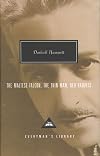
The Maltese Falcon
Sam Spade may appear as crooked as the bent cops and underworld thugs he faces off against, but he’s got a code: when someone kills your partner, you find the killer and turn them in to the police. No matter who that ends up being. And if a far-fetched intrigue involving jewel-encrusted gold falcons dipped in black enamel comes across your path, you don’t let that distract you from your real goal. Here, a great cast of memorable characters — Joel Cairo, Brigid show more O’Shaughnessy, Mr Gutman, and Wilmer — are the jewels enlivening this very dark bird. It’s a non-stop hair-raising tour de force from Dashiell Hammett.
What will strike the reader is how closely, almost scene by scene, and word by word of dialogue, the 1941 film version with Humphrey Bogart matches the novel. It’s clear that John Huston, who wrote the screenplay and directed the film, knew a good thing when he found it. Hammett writes with cinematic clarity. There are no wasted scenes and very little introspection that isn’t immediately called into question as deceitful and thus serve as furtherance to the plot. And that plot is so tightly wound it basically runs itself as soon as Hammett lets it loose.
Hugely enjoyable and highly recommended.
The Thin Man
Nick Charles is no longer a detective. He’s retired and, thanks to a profitable marriage to Nora, a well-off man of business. Enough to spend a few weeks over Christmas in a hotel in New York. Enough to drink pretty much incessantly. With Nora pacing him every step of the way. So it’s a bit rich that everyone keeps treating him like he’s still a detective, demanding he solve their problems, catch murderers, find lost ex-husbands and fathers, and generally serve as daddy to a bunch of spoiled and soiled brats. He’d much rather just have another drink.
The sparkling patter of the opening third of this novel fully establishes the character of Nick and Nora. So much so that six movies were made effectively based on just that. They are a delightful pair. Alas, the middle third of the novel is weighted down with longer chapters dumping back story and red herrings. And though the pace of the final third picks up, it never fully recovers the elan of the scenes that focus on Nick and Nora.
Rest assured that the bad guy gets his comeuppance. But otherwise, not fully satisfying, which echoes the last line in the novel which is spoken by Nora, “…it’s all pretty unsatisfactory.” She doesn’t mean it as harsh as it sounds, and neither do I.
Gently recommended.
Red Harvest
When the otherwise unnamed Continental Op arrives in Personville on a job, he thinks he mishears when someone pronounces it, “Poisonville.” But it doesn’t take long for him to discover that poison is exactly what lives there. Almost every single person he encounters is crooked, or worse than crooked. His initial client turns up dead. He converts the job into a more general clean-up scenario playing on the fears of the wealthy father of his dead client. But cleaning up poison usually means flushing the whole site. And that, effectively, is what he sets about doing. He plays one tough guy off against another and so on until, at some point, everyone is gunning for everyone else and mostly the Continental Op is just trying to avoid stray lead.
This was the first hard-bitten novel from Dashiell Hammett. It entirely justifies his reputation. And although it is somewhat hampered by the serial form of its original publication — it came out in four sections which results in curious lulls and renewals when the sections are brought together as a single whole — it is never less than gripping. No wonder the Continental Op is at risk of going blood-simple. Everything in Personville is rotten to the core. He’s no peach himself, but he’s got a kind of code and if he can keep his wits about him, he might just make it through to the end.
Easily recommended. show less
Sam Spade may appear as crooked as the bent cops and underworld thugs he faces off against, but he’s got a code: when someone kills your partner, you find the killer and turn them in to the police. No matter who that ends up being. And if a far-fetched intrigue involving jewel-encrusted gold falcons dipped in black enamel comes across your path, you don’t let that distract you from your real goal. Here, a great cast of memorable characters — Joel Cairo, Brigid show more O’Shaughnessy, Mr Gutman, and Wilmer — are the jewels enlivening this very dark bird. It’s a non-stop hair-raising tour de force from Dashiell Hammett.
What will strike the reader is how closely, almost scene by scene, and word by word of dialogue, the 1941 film version with Humphrey Bogart matches the novel. It’s clear that John Huston, who wrote the screenplay and directed the film, knew a good thing when he found it. Hammett writes with cinematic clarity. There are no wasted scenes and very little introspection that isn’t immediately called into question as deceitful and thus serve as furtherance to the plot. And that plot is so tightly wound it basically runs itself as soon as Hammett lets it loose.
Hugely enjoyable and highly recommended.
The Thin Man
Nick Charles is no longer a detective. He’s retired and, thanks to a profitable marriage to Nora, a well-off man of business. Enough to spend a few weeks over Christmas in a hotel in New York. Enough to drink pretty much incessantly. With Nora pacing him every step of the way. So it’s a bit rich that everyone keeps treating him like he’s still a detective, demanding he solve their problems, catch murderers, find lost ex-husbands and fathers, and generally serve as daddy to a bunch of spoiled and soiled brats. He’d much rather just have another drink.
The sparkling patter of the opening third of this novel fully establishes the character of Nick and Nora. So much so that six movies were made effectively based on just that. They are a delightful pair. Alas, the middle third of the novel is weighted down with longer chapters dumping back story and red herrings. And though the pace of the final third picks up, it never fully recovers the elan of the scenes that focus on Nick and Nora.
Rest assured that the bad guy gets his comeuppance. But otherwise, not fully satisfying, which echoes the last line in the novel which is spoken by Nora, “…it’s all pretty unsatisfactory.” She doesn’t mean it as harsh as it sounds, and neither do I.
Gently recommended.
Red Harvest
When the otherwise unnamed Continental Op arrives in Personville on a job, he thinks he mishears when someone pronounces it, “Poisonville.” But it doesn’t take long for him to discover that poison is exactly what lives there. Almost every single person he encounters is crooked, or worse than crooked. His initial client turns up dead. He converts the job into a more general clean-up scenario playing on the fears of the wealthy father of his dead client. But cleaning up poison usually means flushing the whole site. And that, effectively, is what he sets about doing. He plays one tough guy off against another and so on until, at some point, everyone is gunning for everyone else and mostly the Continental Op is just trying to avoid stray lead.
This was the first hard-bitten novel from Dashiell Hammett. It entirely justifies his reputation. And although it is somewhat hampered by the serial form of its original publication — it came out in four sections which results in curious lulls and renewals when the sections are brought together as a single whole — it is never less than gripping. No wonder the Continental Op is at risk of going blood-simple. Everything in Personville is rotten to the core. He’s no peach himself, but he’s got a kind of code and if he can keep his wits about him, he might just make it through to the end.
Easily recommended. show less
Crime Novels: American Noir of the 1930s and 40s: The Postman Always Rings Twice (Library of America) (Vol 1) by Robert Polito
Here is the first sentence: "“They threw me off the hay truck about noon” — James M. Cain’s The Postman Always Rings Twice. A fine beginning. But afterwards, perhaps fifty pages in, I was ready for a shower. This is one depraved story about two sociopathic misfits who are made for each other, Frank and Cora. Maybe the two of them do not exactly feel 'love at first sight,' but 'lust' could replace 'love' and the tortured reader, not to mention everyone who comes across this show more star-crossed couple, gets pulled into a vortex of depravity. The story takes place, say, in 1934, the Great Depression, and is located mostly in a greasy-spoon diner on a traveled highway about twenty miles above LA, maybe the Montrose area going into the mountains or the old 101 between Sherman Oaks and Thousand Oaks. And the miscreants and reprobates and grifters who populate its pages, as they lord it over the 'Mexs,' and the 'Wops' and the 'dirty' Greeks, make today's reader realize where our compatriots who wish "to make America great again" want us to return to: a world where brute force and misogyny bully and beat the rest of the populace into its place. There can be no denial, however, that Cain's compelling and terse narrative, without one single wasted word, is masterful. Were the book longer, a back story as to how these two grifters morphed into who they were, would be as gripping as a Dreiser novel; Dreiser would leave no anecdote behind if given the chance to demonstrate why his people would behave as they did. For the rest of us, Thoreau's remark, that "the mass of men live lives of quiet desperation" will have to suffice. Now for a shower! show less
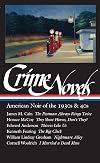
Crime Novels: American Noir of the 1930s & 40s (LOA #94): The Postman Always Rings Twice / They Shoot Horses, Don't They? / Thieves Like Us / The Big Clock / Nightmare Alley / I Married a Dead Man by Robert Polito
What can you say about a book this good? For $25 you get 6, count 'em 6 of the very best classic American noir novels of all time: The Postman Always Rings Twice; They Shoot Horses, Don't They?; Thieves Like Us; The Big Clock; Nightmare Alley; and I Married a Dead Man. All this with a real cloth-bound hardcover, sewn in numbers, headbands, a beautiful book. Author notes, footnotes, chronology.
If you think noir is all about private dicks and dames, well think again, there isn't a detective show more protagonist in the bunch. These novels are more about life in the gritty years of the Great Depression and the effects it had on the physical and psychological conditions of people. Sure there are con men, bank robbers, blackmailers, murderers, prostitutes, but this isn't about psychopaths like a Jim Thompson novel, its about people trying to make it and stay alive when hope is gone. A lot of these writers were just trying to make it themselves, so they know what they are writing about. Some of the prose and writing is quite experimental, not always what you think of in dime crime novels. A lot of times the writing is on edge with the best stuff being written even today. This is classic American literature disguised as pulp crime fiction.
I Married a Dead Man is by Cornell Woolrich one of the greatest character writers of all time. show less
If you think noir is all about private dicks and dames, well think again, there isn't a detective show more protagonist in the bunch. These novels are more about life in the gritty years of the Great Depression and the effects it had on the physical and psychological conditions of people. Sure there are con men, bank robbers, blackmailers, murderers, prostitutes, but this isn't about psychopaths like a Jim Thompson novel, its about people trying to make it and stay alive when hope is gone. A lot of these writers were just trying to make it themselves, so they know what they are writing about. Some of the prose and writing is quite experimental, not always what you think of in dime crime novels. A lot of times the writing is on edge with the best stuff being written even today. This is classic American literature disguised as pulp crime fiction.
I Married a Dead Man is by Cornell Woolrich one of the greatest character writers of all time. show less
Lists
Edgar Award (1)
Awards


You May Also Like


Associated Authors
Statistics
- Works
- 15
- Also by
- 8
- Members
- 2,287
- Popularity
- #11,226
- Rating
- 4.1
- Reviews
- 28
- ISBNs
- 30
- Languages
- 2