
Frances de Pontes Peebles
Author of The Seamstress
About the Author
Works by Frances de Pontes Peebles
Associated Works
Tagged
Common Knowledge
- Canonical name
- Frances de Pontes Peebles
- Birthdate
- unknown
- Gender
- female
- Education
- University of Texas at Austin (BA)
Iowa's Writers Workshop (MFA) - Nationality
- Brazil
- Birthplace
- Recife, Brazil
- Places of residence
- Recife, Pernambuco, Brazil
Miami, Florida, USA
Taquaritinga do Norte, Pernambuco, Brazil - Associated Place (for map)
- Brazil
Members
Reviews
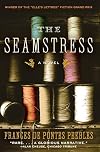
1920's Brazil - remote mountainous region: Two sisters, Emília and Luzia dos Santos, parent-less, have just moved in to live with their seamstress aunt. The aunt teaches them the ways of the trade. Emilia and Luzia are as different as day and night. Beautiful Emília dreams of leaving the small provincial town, reads the fashion/beauty magazine, and designs her own clothing (often to the ridicule of the town's residents. Tall, independent Luzia, with a damaged arm from a childhood accident, show more has never let it stop her from becoming a confident seamstress. She too has dreams even though she knows her damaged arm prevents her from becoming a viable marriageable interest.
The two sister's paths separate though when a group of cangaceiros (bandits), led by the infamous Hawk, converge on the town and take Luzia with them. Emília finds her escape through a hasty marriage to a wealthy doctor's son and moves to the city of Recife. Luzia becomes a well-known cangaceiro nicknamed The Seamstress and Emília becomes a wealthy socialite. However, girlhood dreams are never the same in reality. Emília has to hid her past and association with Luzia and must deal with high society prejudices and a distant husband with a secret. Luzia finds that every day life as a cangaceiro is not as thrilling as one might think. Communication between the sisters is non-existent and the two rely on clipping newspaper stories to keep in touch.
The novel alternates between each sister's viewpoint. At the beginning I loved Luzia's voice and was always impatient to get through Emília's side to get back to Luzia. I just related more to Luzia over Emília's fashionable frippery. But as the story progressed, I fell for Emília's plight and just loved how she evolved. I have to say it did remind me of Isabel Allende but Frances de Pontes Peebles has a voice all her own. It is just vivid and beautiful. Be aware that while the Hawk's group of cangaceiro's often seem like Brazil's Robin Hood or Zorro...there are gruesome atrocities committed as well.
I LOVED this book. I couldn't put it down. I loved Luzia. I love the scenes between Luzia and the Hawk. And Emília evolution from a selfish materialistic girl into the woman in Recife is just beautiful and often heart wrenching to read. Frances de Pontes Peebles depicted the Brazilian landscape and scenes so well that I almost felt like I was watching it. I can still picture in my mind the newspaper clipping and photo depicting the elusive Hawk and Seamstress' band of cangaceiros. The history of the Brazilian land and people is fascinating and I loved finding a book that depicted this unfamiliar time period.
I also stumbled across Frances de Pontes Peebles blog The Art of Waiting and I am addicted. You should check it out. There's an section at the end of the paperback copy that I have which has an interview with Frances regarding her research and travels while writing The Seamstress. She actually went into the remote regions and talked with people in the very places she was writing about. No wonder the imagery is so vivid! And Frances' own ancestral history also takes a part in this story. I want her to write a whole other book/memoir depicting her adventures in writing and researching this book. show less
The two sister's paths separate though when a group of cangaceiros (bandits), led by the infamous Hawk, converge on the town and take Luzia with them. Emília finds her escape through a hasty marriage to a wealthy doctor's son and moves to the city of Recife. Luzia becomes a well-known cangaceiro nicknamed The Seamstress and Emília becomes a wealthy socialite. However, girlhood dreams are never the same in reality. Emília has to hid her past and association with Luzia and must deal with high society prejudices and a distant husband with a secret. Luzia finds that every day life as a cangaceiro is not as thrilling as one might think. Communication between the sisters is non-existent and the two rely on clipping newspaper stories to keep in touch.
The novel alternates between each sister's viewpoint. At the beginning I loved Luzia's voice and was always impatient to get through Emília's side to get back to Luzia. I just related more to Luzia over Emília's fashionable frippery. But as the story progressed, I fell for Emília's plight and just loved how she evolved. I have to say it did remind me of Isabel Allende but Frances de Pontes Peebles has a voice all her own. It is just vivid and beautiful. Be aware that while the Hawk's group of cangaceiro's often seem like Brazil's Robin Hood or Zorro...there are gruesome atrocities committed as well.
I LOVED this book. I couldn't put it down. I loved Luzia. I love the scenes between Luzia and the Hawk. And Emília evolution from a selfish materialistic girl into the woman in Recife is just beautiful and often heart wrenching to read. Frances de Pontes Peebles depicted the Brazilian landscape and scenes so well that I almost felt like I was watching it. I can still picture in my mind the newspaper clipping and photo depicting the elusive Hawk and Seamstress' band of cangaceiros. The history of the Brazilian land and people is fascinating and I loved finding a book that depicted this unfamiliar time period.
I also stumbled across Frances de Pontes Peebles blog The Art of Waiting and I am addicted. You should check it out. There's an section at the end of the paperback copy that I have which has an interview with Frances regarding her research and travels while writing The Seamstress. She actually went into the remote regions and talked with people in the very places she was writing about. No wonder the imagery is so vivid! And Frances' own ancestral history also takes a part in this story. I want her to write a whole other book/memoir depicting her adventures in writing and researching this book. show less

This novel had so much that I love about historical fiction - a setting I don't quite know (Brazil in the 1920s-1940s in this case), ups and downs of fortune for the characters, and vivid passions. This is a story of friendship - an unlikely friendship between two women who grow up together on a Brazilian sugar plantation. Gracia is the daughter of the plantation owner and heiress to what is left of her father's fortune. Dores is an orphaned servant girl. Despite their differences in social show more class, the two become lifelong friends and their relationship defines both of their lives. Both wish to escape the plantation and they eventually do - Gracia becomes a legendary samba singer and even stars in Hollywood movies while Dores becomes her manager, even through she wants to take to the stage herself. A well-written and vivid novel, highly recommended for historical fiction fans. show less

The Air You Breathe- Peebles
4.5 stars
So many good things about this book; beautiful writing, an interesting subculture in a new (for me) literary country. The characters were vibrant and complex. Their relationships were realistically messy. When this author wrote of music, I felt the euphoric high. When she wrote of grief, my heart broke.
I think, I’m withholding the final half point because some of this saga cut too close to the bone. I understand the destructive influence of a show more performer’s narcissism. I’m appalled by the exploitation of the entertainment industry. I detest the casual misuse of drugs. This wasn’t easy reading for me. It left me returning to too many of my own sad memories. show less
4.5 stars
So many good things about this book; beautiful writing, an interesting subculture in a new (for me) literary country. The characters were vibrant and complex. Their relationships were realistically messy. When this author wrote of music, I felt the euphoric high. When she wrote of grief, my heart broke.
I think, I’m withholding the final half point because some of this saga cut too close to the bone. I understand the destructive influence of a show more performer’s narcissism. I’m appalled by the exploitation of the entertainment industry. I detest the casual misuse of drugs. This wasn’t easy reading for me. It left me returning to too many of my own sad memories. show less

This book was a surprise to me. It's a large book with a pretty, but generic cover. I knew it was worthy and historical and set somewhere in South America; all of which were fine things, but not things that called me to read it. So the amount of enjoyment I got from this book, the sheer fun I had reading it, was unexpected. I didn't know beforehand that Frances de Pontes Peebles had written a rip-roaring adventure story that ran the gamut from hardscrabble survival in the Brazilian show more hinterlands to coastal high society to political turmoil to life in an outlaw gang, evading the law and enacting vengeance, all set during the last few years of the 1920s to the first few years of the 1930s.
The Seamstress follows two very different sisters, being raised by their aunt, who teaches them a trade and manners. Emilia longs for a more elegant life, the one depicted in the magazines handed down to her by her employer. She refuses to look at the stolid farmer's sons who would court her, setting her sights on the refined sewing teacher from the capitol. Luiza, tall and with an arm crippled in a fall from a mango tree, has no use for the things Emilia loves. She likes her life in her aunt's house, although she is prickly and rebellious. Circumstances sent one sister to live in luxury in Recife, the provincial capital, while the other joins a band of bandits, led by The Hawk, a feared but canny outlaw. Brazil is changing rapidly, and those changes challenge each woman. Both Luiza and Emilia are complex, interesting and believable characters. They are both strong women, although their strengths fall in different areas.
The book begins slowly, but it wasn't long before I was hauling it around with me to read a few more pages whenever I could. Generally, I only travel with an ereader or a light paperback, but I was willing to lug The Seamstress around with me until, all too quickly, it came to an end. show less
The Seamstress follows two very different sisters, being raised by their aunt, who teaches them a trade and manners. Emilia longs for a more elegant life, the one depicted in the magazines handed down to her by her employer. She refuses to look at the stolid farmer's sons who would court her, setting her sights on the refined sewing teacher from the capitol. Luiza, tall and with an arm crippled in a fall from a mango tree, has no use for the things Emilia loves. She likes her life in her aunt's house, although she is prickly and rebellious. Circumstances sent one sister to live in luxury in Recife, the provincial capital, while the other joins a band of bandits, led by The Hawk, a feared but canny outlaw. Brazil is changing rapidly, and those changes challenge each woman. Both Luiza and Emilia are complex, interesting and believable characters. They are both strong women, although their strengths fall in different areas.
The book begins slowly, but it wasn't long before I was hauling it around with me to read a few more pages whenever I could. Generally, I only travel with an ereader or a light paperback, but I was willing to lug The Seamstress around with me until, all too quickly, it came to an end. show less
Lists
Awards


You May Also Like


Associated Authors
Statistics
- Works
- 6
- Also by
- 1
- Members
- 929
- Popularity
- #27,632
- Rating
- 3.9
- Reviews
- 52
- ISBNs
- 38
- Languages
- 9
- Favorited
- 1