
David Gerrold
Author of The Man Who Folded Himself
About the Author
David Gerrold is one of the most popular science fiction writers working today. His first professional sale, the Star Trek episode "Trouble With Tribbles," won a Hugo Award. He has written for television, published more than forty books, and had columns in six different magazines. In 1995, his show more novelette "The Martian Child" won both the Hugo and Nebula Awards. Gerrold lives in San Fernando, California, and teaches writing at Pepperdine University show less
Series
Works by David Gerrold
Boarding the Enterprise: Transporters, Tribbles, and the Vulcan Death Grip in Gene Roddenberry's Star Trek (2006) — Editor — 91 copies, 5 reviews
The Far Side of the Sky: Jumping off the Planet ; Bouncing off the Moon ; Leaping to the Stars (2002) 37 copies, 2 reviews
Fatal Distractions: 87 Of the Very Best Ways to Get Beaten, Eaten, Maimed, and Mauled on Your Pc/Book and Cd-Rom (1994) 7 copies
Asimov's Science Fiction: Vol. 45, No. 11 & 12 [November/December 2021] (2021) — Contributor — 5 copies
Worldcon 2015 Sampler: A Special Collection Previewing Some of David Gerrold's Most Popular Work 3 copies
Praxis 3 copies
Chester 3 copies
Dancer In The Dark 3 copies
Il giorno della vendetta - parte II 2 copies
A Wish for Smish 2 copies
Il viaggio dello Star Wolf 1 copy
HIl Iritorno degli Chtorr 1 copy
The Man Without a Planet 1 copy
Madam President 1 copy
Sampler 2015 1 copy
The Emperor Redux 1 copy
Hellhole 1 copy
F&SF Mailbag 1 copy
Bubble And Squeak 1 copy
Riding Janis (short story) 1 copy
Ronni and Rod 1 copy
1986 1 copy
Fragments [Kindle Edition] 1 copy
Encontro em Farpoint Livro 1 1 copy
The Patient Dragon 1 copy
Spiderweb 1 copy
Associated Works
Finding Serenity: Anti-Heroes, Lost Shepherds and Space Hookers in Joss Whedon's Firefly (2005) — Contributor — 1,027 copies, 24 reviews
The City on the Edge of Forever: The Original Teleplay that Became the Classic Star Trek Episode (1977) — Afterword, some editions — 590 copies, 17 reviews
The Year's Best Science Fiction: Twenty-Third Annual Collection (2006) — Contributor — 565 copies, 5 reviews
Taking the Red Pill: Science, Philosophy and Religion in The Matrix (2003) — Introduction — 311 copies, 4 reviews
The Year's Best Science Fiction: Thirty-Fourth Annual Collection (2017) — Contributor — 147 copies, 4 reviews
Stepping Through the Stargate: Science, Archaeology and the Military in Stargate SG1 (2004) — Contributor — 106 copies, 1 review
Nebula Awards 30: SFWA's Choices For The Best Science Fiction And Fantasy Of The Year (Nebula Awards Showcase) (1996) — Contributor — 87 copies, 2 reviews
The Year's Best Science Fiction and Fantasy for Teens: First Annual Collection (Year's Best Science Fiction & Fantasy for Teens) (2005) — Contributor — 84 copies, 2 reviews
Baker Street Irregulars: Thirteen Authors With New Takes on Sherlock Holmes (2017) — Contributor — 41 copies, 1 review
Visions of Tomorrow: Science Fiction Predictions that Came True (2010) — Contributor — 40 copies, 1 review
The Magazine of Fantasy and Science Fiction January/February 2013, Vol. 124, Nos. 1 & 2 (2013) — Author — 22 copies, 3 reviews
Kong Unbound: The Cultural Impact, Pop Mythos, and Scientific Plausibility of a Cinematic Legend (2005) — Contributor — 21 copies
King Kong Is Back!: An Unauthorized Look at One Humongous Ape! (Smart Pop series) (2005) — Contributor — 19 copies
The War of the Worlds: Fresh Perspectives on the H. G. Wells Classic (2005) — Contributor — 19 copies
The Magazine of Fantasy and Science Fiction September/October 2016, Vol. 131, Nos. 3 & 4 (2016) — Contributor — 16 copies, 1 review
Alternative Theologies: Parables for a Modern World (Alternatives Book 3) (2018) — Contributor — 13 copies
Asimov's Science Fiction: Vol. 42, No. 5 & 6 [May/June 2018] (2018) — Contributor — 12 copies, 1 review
Asimov's Science Fiction: Vol. 41, No. 7 & 8 [July/August 2017] (2017) — Contributor — 9 copies, 1 review
Tagged
Common Knowledge
- Legal name
- Friedman, Jerrold David (name at birth)
- Birthdate
- 1944-01-24
- Gender
- male
- Education
- San Fernando Valley State College
- Occupations
- science fiction author
screenwriter - Organizations
- Science Fiction and Fantasy Writers of America
Hollywood Science Fiction Museum - Awards and honors
- E.E. Smith Memorial Award for Imaginative Fiction (1979)
Robert A. Heinlein Award (2022) - Nationality
- USA
- Birthplace
- Chicago, Illinois, USA
- Places of residence
- Northridge, California, USA
- Associated Place (for map)
- USA
Members
Discussions
Humans join galactic society; go into debt from library database look-ups? in Name that Book (December 2014)
Reviews
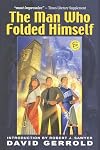
Time-travel is a popular storytelling device; fascinating, flexible and a natural crowd-pleaser. It's quite a feat, then, that in The Man Who Folded Himself author David Gerrold makes it so tedious and joyless. The story itself is a strange one, veering in its prose between trite juvenilia and dry discussion of paradox, but it's also not much of a story at all. The protagonist Daniel inherits a 'time belt' from his uncle, but where this device came from or why is never addressed (the twist show more towards the end is also predictable). Daniel immediately jumps into the back-and-forth of time-travel shenanigans with nary a second thought, and the reader doesn't have time to get on board. When the story ends, having paradoxically felt both hasty and interminable, we have motion-sickness despite not having once been moved.
The haste in the set-up of the premise might be forgivable if something interesting was then done, but the protagonist's time-travel amounts to a few soulless summaries of visiting various historical events (witnessing the Crucifixion, he notes only that Jesus "looked so sad" (pg. 52) – and that is one of the more flavourful examples). Mirroring his protagonist's unwillingness to let alone, the author released an updated version of the book in 2003 (the original was published in 1973). This version mentions things like 9/11 and Apple Computers, but they are only mere mentions – a bit of slapdash colour. When not in these time-travel adventures (which are apparently plentiful, though Gerrold does not grant the reader any taste of them), the protagonist is hyper-analysing the various 'copies' of himself that have been created each time he loops back in time, or travels forward. By the end, there are hundreds of versions of Daniel running around. This, unfortunately, is what Gerrold does submit the reader to.
Those who credit Gerrold's book describe this as a thoughtful and meticulous exploration of the effects of time-travel on our protagonist's sense of identity. My reaction, which appears to be shared by many reviewers, was rather different. It's confusing from the start, with our perhaps-autistic protagonist relentlessly going back to remedy insignificant events of the previous day – "Danny had to go back in time and become Don to his Dan" (pg. 44) is one example of this nonsense. Even the young boy in Bernard's Watch found more interesting things to do with time-travel, such as saving a goal in a football match, and I had hoped Gerrold would soon move on to more interesting time-travel terrain. Unfortunately, he commits to it fully for the rest of the book, stifling at birth anything that would make The Man Who Folded Himself compelling.
Our protagonist could better be described as 'The Man Who Loved Himself', for he immediately has sex with the first copy of himself that he meets in a time loop, and later has gay orgies with multiples of them. This is not done out of boredom or curiosity, but because he is the only person he feels can understand him. Daniel alters time so much he encounters a female version of himself, who he also has sex with. When he gets this copy pregnant, he doesn't feel joy at the child (or even any sort of conflict over its conception), but is instead "bothered that someone else is inside of her, someone other than me" (pg. 90).
The protagonist, dull from the start, reveals more and more his autism and narcissism, retreating deeper and deeper into his own world of copies of himself. The world outside his own mind might as well not exist – but Gerrold does not even appear to register the pathetic tragedy of this. Instead, he presents it as a sort of path to self-actualization, only the result is a rather depraved facsimile of character growth rather than anything genuinely rewarding. Lamenting the end of his relationship with his female copy, Daniel says it was because he could never experience the feelings from her side (pg. 93) because he has not been her in the past, in the way that he has with his male copies. This will be perplexing to any reader of even a basic level of emotional maturity, who don't need a 'time belt' and multiple physical copies of themselves to practice simple empathy in a relationship.
In The Man Who Folded Himself, there's no sense of joy or wonder at life, and the book as a whole feels like a bank accountant minuting his ayahuasca experience. To gift a 'time belt' to the protagonist of this novel feels like a sick joke on the reader, who craves adventure and experience but instead finds themselves locked in a room with a man who has been given the whole world to see – past, present and future – but instead chooses only to gaze in the mirror. show less
The haste in the set-up of the premise might be forgivable if something interesting was then done, but the protagonist's time-travel amounts to a few soulless summaries of visiting various historical events (witnessing the Crucifixion, he notes only that Jesus "looked so sad" (pg. 52) – and that is one of the more flavourful examples). Mirroring his protagonist's unwillingness to let alone, the author released an updated version of the book in 2003 (the original was published in 1973). This version mentions things like 9/11 and Apple Computers, but they are only mere mentions – a bit of slapdash colour. When not in these time-travel adventures (which are apparently plentiful, though Gerrold does not grant the reader any taste of them), the protagonist is hyper-analysing the various 'copies' of himself that have been created each time he loops back in time, or travels forward. By the end, there are hundreds of versions of Daniel running around. This, unfortunately, is what Gerrold does submit the reader to.
Those who credit Gerrold's book describe this as a thoughtful and meticulous exploration of the effects of time-travel on our protagonist's sense of identity. My reaction, which appears to be shared by many reviewers, was rather different. It's confusing from the start, with our perhaps-autistic protagonist relentlessly going back to remedy insignificant events of the previous day – "Danny had to go back in time and become Don to his Dan" (pg. 44) is one example of this nonsense. Even the young boy in Bernard's Watch found more interesting things to do with time-travel, such as saving a goal in a football match, and I had hoped Gerrold would soon move on to more interesting time-travel terrain. Unfortunately, he commits to it fully for the rest of the book, stifling at birth anything that would make The Man Who Folded Himself compelling.
Our protagonist could better be described as 'The Man Who Loved Himself', for he immediately has sex with the first copy of himself that he meets in a time loop, and later has gay orgies with multiples of them. This is not done out of boredom or curiosity, but because he is the only person he feels can understand him. Daniel alters time so much he encounters a female version of himself, who he also has sex with. When he gets this copy pregnant, he doesn't feel joy at the child (or even any sort of conflict over its conception), but is instead "bothered that someone else is inside of her, someone other than me" (pg. 90).
The protagonist, dull from the start, reveals more and more his autism and narcissism, retreating deeper and deeper into his own world of copies of himself. The world outside his own mind might as well not exist – but Gerrold does not even appear to register the pathetic tragedy of this. Instead, he presents it as a sort of path to self-actualization, only the result is a rather depraved facsimile of character growth rather than anything genuinely rewarding. Lamenting the end of his relationship with his female copy, Daniel says it was because he could never experience the feelings from her side (pg. 93) because he has not been her in the past, in the way that he has with his male copies. This will be perplexing to any reader of even a basic level of emotional maturity, who don't need a 'time belt' and multiple physical copies of themselves to practice simple empathy in a relationship.
In The Man Who Folded Himself, there's no sense of joy or wonder at life, and the book as a whole feels like a bank accountant minuting his ayahuasca experience. To gift a 'time belt' to the protagonist of this novel feels like a sick joke on the reader, who craves adventure and experience but instead finds themselves locked in a room with a man who has been given the whole world to see – past, present and future – but instead chooses only to gaze in the mirror. show less

Rating: 4.875* of five
The Book Report: Danny's been livin' the high life, thanks to a bequest from his mysterious old uncle. One day, the gravy train ends, and Danny has to make his own way. With a belt. A very special time-travel-enabling belt.
An exploration of adolescent exceptionalism, a meditation on the establishment, building, and defense of identity, and an astonishingly rare representation of gay maleness in science fiction. The author, who penned "The Trouble with Tribbles" for the show more original "Star Trek" series, tackles all this heaviness in less than 200pp, and never makes it feel like any tackling is being done.
My Review: Deft and timely even now. Gerrold's unapologetically gay Danny is mildly surprising even in the modern SFnal world. The ewww-ick-they-do-WHAT? homophobes need fear nothing, there's no raunch in Danny's journey of self-discovery (of a sort I've never seen again!).
For my teenaged self, this book blew into my life at a time when I was under emotional siege from the forces of Jesus. It was a lifeline thrown from a grown person to my too-young-to-run self. If he could write this book, there was a world that didn't loathe me, because here was something written, published, and sold with me in it! I endured many a screaming, hectoring, sermonizing hour thinking that thought.
If you suspect some youth of your acquaintance might be struggling to think positively of himself because he's probably gay, think about giving him this book. It can't hurt, and it might do him a world of good. show less
The Book Report: Danny's been livin' the high life, thanks to a bequest from his mysterious old uncle. One day, the gravy train ends, and Danny has to make his own way. With a belt. A very special time-travel-enabling belt.
An exploration of adolescent exceptionalism, a meditation on the establishment, building, and defense of identity, and an astonishingly rare representation of gay maleness in science fiction. The author, who penned "The Trouble with Tribbles" for the show more original "Star Trek" series, tackles all this heaviness in less than 200pp, and never makes it feel like any tackling is being done.
My Review: Deft and timely even now. Gerrold's unapologetically gay Danny is mildly surprising even in the modern SFnal world. The ewww-ick-they-do-WHAT? homophobes need fear nothing, there's no raunch in Danny's journey of self-discovery (of a sort I've never seen again!).
For my teenaged self, this book blew into my life at a time when I was under emotional siege from the forces of Jesus. It was a lifeline thrown from a grown person to my too-young-to-run self. If he could write this book, there was a world that didn't loathe me, because here was something written, published, and sold with me in it! I endured many a screaming, hectoring, sermonizing hour thinking that thought.
If you suspect some youth of your acquaintance might be struggling to think positively of himself because he's probably gay, think about giving him this book. It can't hurt, and it might do him a world of good. show less

Fermi was wrong. The stars are crowded with sapient aliens, and we are the new kids on the block, or more precisely, the new chumps in the game.
Most of the aliens are insectoid and reptilian. A few are microscopic hive minds. Don’t mess with them. Our monkey ancestors got a chance when the dinos got wiped out, but that did not happen in most star systems. In most of the galaxy, critters like us are stupid prey animals.
A new space-faring species like ours inevitably incurs big debts by show more downloading stuff from the galactic library. But smiling aliens will assume the debt for a price. Our babies are tasty morsels, after all.
Gerrold is the guy who gave us The Trouble with Tribbles, so be ready for the twists. show less
Most of the aliens are insectoid and reptilian. A few are microscopic hive minds. Don’t mess with them. Our monkey ancestors got a chance when the dinos got wiped out, but that did not happen in most star systems. In most of the galaxy, critters like us are stupid prey animals.
A new space-faring species like ours inevitably incurs big debts by show more downloading stuff from the galactic library. But smiling aliens will assume the debt for a price. Our babies are tasty morsels, after all.
Gerrold is the guy who gave us The Trouble with Tribbles, so be ready for the twists. show less
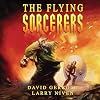
In 1970, when The Flying Sorcerers was serialized as "The Misspelled Magician" in The Worlds of If, Larry Niven was months away from hitting it big with Ringworld. His co-author, David Gerrold, had already written the short stories he would combine into When H.A.R.L.I.E. Was One, the novel that would earn his first Hugo and Nebula nominations. As far as I know, The Flying Sorcerers is their only collaboration, which is a shame because their talents mesh well. Niven is a genius at building show more new worlds with plausible physics and engineering. Gerrold combines acerbic social satire with believable characters. Sorcerers provides an early example of the sort of tongue-in-cheek sci-fi fantasy that would define the careers of Robert Asprin, Douglas Adams, and Terry Pratchett.
A scientist-explorer lands on a planet inhabited by furry humanoids, close enough to human that the women can do what they call “the family-making thing” with the scientist. Each village has a resident magician, and much of the humor comes from the three-way debate between the practical head man, the stubborn scientist, and the hard-headed magician.
The satire has the subtlety of a slap-in-the face. The village women are hobbled, have no names, have sister wives, and are treated like beasts of burden. The industrial revolution the scientist inspires will give them names and make their labor valuable. They are amazed that they can sit down to spin thread.
And there are puns, shameless anachronistic puns. We have two brothers building a flying machine. Their names, of course, are Wilville and Orbur. The best (or worst) of the puns involves the scientist's name. The villagers call him Purple because, he says, “the translator makes two-language puns! As a color, shade of purple-gray! As a mauve. Oh, how delightful.”
I know, but science fiction fans will get it. show less
A scientist-explorer lands on a planet inhabited by furry humanoids, close enough to human that the women can do what they call “the family-making thing” with the scientist. Each village has a resident magician, and much of the humor comes from the three-way debate between the practical head man, the stubborn scientist, and the hard-headed magician.
The satire has the subtlety of a slap-in-the face. The village women are hobbled, have no names, have sister wives, and are treated like beasts of burden. The industrial revolution the scientist inspires will give them names and make their labor valuable. They are amazed that they can sit down to spin thread.
And there are puns, shameless anachronistic puns. We have two brothers building a flying machine. Their names, of course, are Wilville and Orbur. The best (or worst) of the puns involves the scientist's name. The villagers call him Purple because, he says, “the translator makes two-language puns! As a color, shade of purple-gray! As a mauve. Oh, how delightful.”
I know, but science fiction fans will get it. show less
Lists
Awards


You May Also Like


Associated Authors
Statistics
- Works
- 138
- Also by
- 88
- Members
- 12,229
- Popularity
- #1,916
- Rating
- 3.7
- Reviews
- 213
- ISBNs
- 262
- Languages
- 9
- Favorited
- 24