
Perumal Murugan
Author of One Part Woman
About the Author
Perumal Murugan is an author, scholar and literary chronicler who writes novels in Tamil. C.S. Lakshmi (Ambai) is a renowned author of literary fiction in Tamil and scholar of women's studies.
Works by Perumal Murugan
One Part Woman Box Set 2 copies
Rogo (Italian Edition) 1 copy
பெருமாள்முருகன் சிறுகதைகள் (1988 - 2015) (Perumalmurugan Sirukathaigal (1988-2015)) (ShortStories) (Tamil Edition) (2019) 1 copy
Ardhanareeswaran 1 copy
Nilavil 1 copy
Tagged
Common Knowledge
- Other names
- Perumāḷmurukan̲
Murugan, P. - Birthdate
- 1966
- Gender
- male
- Education
- Erode District, Tamil Nadu, India (undergraduate ∙ Tamil Literature)
Coimbatore, Tamil Nadu, India (postgraduate ∙ Tamil Literature)
Madras University (PhD|Tamil studies) - Occupations
- writer
poet
college professor
scholar of Tamil literature - Organizations
- NKR Government Arts College for Women [Namakkal, Tamil Nadu, India]
Presidency College [Chennai, Tamil Nadu, India]
Arignar Anna Arts College [Attur, Tamil Nadu, India] - Nationality
- India
- Birthplace
- Thiruchengode, Tamil Nadu, India
- Associated Place (for map)
- Tamil Nadu, India
Members
Reviews
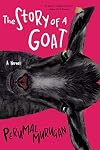
Reread: July 2022.
“Once, in a village, there was a goat. No one knew where she was born. The birth of an ordinary life never leaves a trace, does it?”
This beginning hints at what you will get from this book. It is the story of an ordinary goat, or is it?
Poonachi is a little black goat who lands up at the house of a poor old couple. Her life isn’t a cakewalk, but Poonachi seems to win against the struggles that routinely come her way. Can life ever be straightforward though? With a show more hegemonic government, poor rains, and lack of resources, life begins revealing its darker shades. Only time will tell if Poonachi will thrive or wither with the change of circumstances.
Murugan shows us that great storytelling doesn’t need to be jazzy storytelling. The language in the book is simple and straightforward, yet used to great effect. There is a subtle hint of magical realism, but most of the content is socio-cultural fiction. The book is short and quick-paced, so you can complete it within 2-3 hours.
The content isn’t as direct as the language. Allegorical in its essence, the book is a medley of political satire and social commentary, while being a reflection on how simple minds also have corrupted thinking. It is somewhat reminiscent of ‘Animal Farm’, though, in this case, it is the humans who are “beings more equal than others.”
The book also spotlights how humans treat animals utterly selfishly. As one line in the book goes,
“No matter how much you give to this heart, it will never be enough.”
We grab and we grab and we grab, until there’s nothing left for anyone, including ourselves. Some of these scenes hit hard and make for very uncomfortable reading; go into the book with a strong heart and stomach.
I liked the first half more that the second half, possibly because it appealed more to my personal taste and my current mood, with Poonachi’s innocence and resilience shining through. The second half is more despondent and depressing, and doesn’t stop the sense of impending doom right till the end, which is exactly as you would assume but not what you would want.
The book was originally written in Tamil. The English translation by N. Kalyan Raman seems to capture the spirit of the book well. It doesn’t make the writing flowery, nor does it wash out the essence of the original language, with a few Tamil colloquialisms retained even in the translation.
Poonachi’s story is a metaphorical ode to greed and this is something common to most people and all governments. Thus it ought to work well with anyone looking for a quirky tale with unusual characters but facing realistic problems. Let me quote a line from the translator’s note:
“Through a feat of storytelling that is both masterly and nuanced, Murugan makes us reflect on our own responses to hegemony and enslavement, selflessness and appetite, resistance and resignation, living and dying.”
Recommended for sure, though it is not for everyone. Given a choice between reading the likes of Alka Joshi/Thrity Umrigar and Perumal Murugan, I would go for the latter without even blinking my eyes.
3.75 stars. (Same feelings as earlier, but was distracted easily this time. Plus, I am a stingy rater nowadays.)
*****************************
1st read: July 2020.
Rating: 4.25 stars.
———————————————
Connect with me through:
My Blog | The StoryGraph | Facebook | Twitter show less
“Once, in a village, there was a goat. No one knew where she was born. The birth of an ordinary life never leaves a trace, does it?”
This beginning hints at what you will get from this book. It is the story of an ordinary goat, or is it?
Poonachi is a little black goat who lands up at the house of a poor old couple. Her life isn’t a cakewalk, but Poonachi seems to win against the struggles that routinely come her way. Can life ever be straightforward though? With a show more hegemonic government, poor rains, and lack of resources, life begins revealing its darker shades. Only time will tell if Poonachi will thrive or wither with the change of circumstances.
Murugan shows us that great storytelling doesn’t need to be jazzy storytelling. The language in the book is simple and straightforward, yet used to great effect. There is a subtle hint of magical realism, but most of the content is socio-cultural fiction. The book is short and quick-paced, so you can complete it within 2-3 hours.
The content isn’t as direct as the language. Allegorical in its essence, the book is a medley of political satire and social commentary, while being a reflection on how simple minds also have corrupted thinking. It is somewhat reminiscent of ‘Animal Farm’, though, in this case, it is the humans who are “beings more equal than others.”
The book also spotlights how humans treat animals utterly selfishly. As one line in the book goes,
“No matter how much you give to this heart, it will never be enough.”
We grab and we grab and we grab, until there’s nothing left for anyone, including ourselves. Some of these scenes hit hard and make for very uncomfortable reading; go into the book with a strong heart and stomach.
I liked the first half more that the second half, possibly because it appealed more to my personal taste and my current mood, with Poonachi’s innocence and resilience shining through. The second half is more despondent and depressing, and doesn’t stop the sense of impending doom right till the end, which is exactly as you would assume but not what you would want.
The book was originally written in Tamil. The English translation by N. Kalyan Raman seems to capture the spirit of the book well. It doesn’t make the writing flowery, nor does it wash out the essence of the original language, with a few Tamil colloquialisms retained even in the translation.
Poonachi’s story is a metaphorical ode to greed and this is something common to most people and all governments. Thus it ought to work well with anyone looking for a quirky tale with unusual characters but facing realistic problems. Let me quote a line from the translator’s note:
“Through a feat of storytelling that is both masterly and nuanced, Murugan makes us reflect on our own responses to hegemony and enslavement, selflessness and appetite, resistance and resignation, living and dying.”
Recommended for sure, though it is not for everyone. Given a choice between reading the likes of Alka Joshi/Thrity Umrigar and Perumal Murugan, I would go for the latter without even blinking my eyes.
3.75 stars. (Same feelings as earlier, but was distracted easily this time. Plus, I am a stingy rater nowadays.)
*****************************
1st read: July 2020.
Rating: 4.25 stars.
———————————————
Connect with me through:
My Blog | The StoryGraph | Facebook | Twitter show less

The story of a group of chakkili (“untouchable”) children in rural Tamil Nadu in the 1960s. Their parents have hired them out to Gounder farmers to work off debts which only seem to get bigger as the years go by. They watch over the goats day and night and do low-level domestic and farm work, and occasionally get a moment or two to indulge in normal childish play together or with the children of their masters, but always knowing that if anything goes wrong it will be their fault, and show more probably get their parents into even deeper financial trouble too. And that when they are too big to watch goats they will only have to move on to other kinds of endless, underpaid agricultural work.
Murugan mixes his account of the children’s hopeless situation and their stolen small pleasures with lyrical descriptions of the passage of the seasons in the countryside where he grew up himself, giving a bit of a Thomas Hardy quality to it all. Beautiful, but very dark. show less
Murugan mixes his account of the children’s hopeless situation and their stolen small pleasures with lyrical descriptions of the passage of the seasons in the countryside where he grew up himself, giving a bit of a Thomas Hardy quality to it all. Beautiful, but very dark. show less
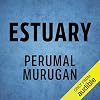
Where the River Meets the Sea
Translated by Nandini Krishnan
Read by: Suki
Length: 7 hrs and 55 mins
‘Kumarasurar is a government servant who upholds a higher moral standard possibly because he was “assigned to a department with no scope for bribery.” He belongs to a generation of men derisively called Boomer uncles for their resistance to change. He believes in making safe, standard choices because “the last person to finish a task never got into trouble.” This made him a tech show more Luddite.’ - Saudamini Jain, Hindustan Times.
Estuary is about the life crisis of a middle-aged middle-class bureaucrat. Unlike Murugan‘s other books Estuary has an urban setting. It takes place in mythical Asurapur, a place not much different than now. The people and the institutions are exaggerated versions of our own. But rarely does the book feel dystopian. It’s a hair’s breadth of being believable.
An example: colleges have cut-off points for entry. They start with a cut-off score of whatever is the highest score. So that if the first batch of entrants produces highest scores of 99%, then 99% becomes the cut-off. And so on, with the cut-off gradually lowering till the quota is filled and the college administrators boast their cut-off of whatever.
Kumarasurar works for the government Department of Statistics. He has nothing to do and when a computer arrives he puts it in a closet and forgets about it.
His wife Mangasuri is a traditionalist, wanting only for the success of their only child, a son Meghas.
Kumarasurar‘s life crisis is brought about by his son asking for an expensive smartphone. Kumarasurar cannot understand why such a thing is necessary, but with Meghas now claiming to need it for success at college, and with Mangasuri always siding with his son, Kumarasurar, a born worrier finds his inner-life thrown into turmoil.
Kumarasurar is no dullard. His sarcasm is as smart as it comes. And although his premises are off, his logic is impeccable. He’s unintentionally witty and no one in his sphere understands his humor. By the end of the novel I loved the man.
There are some endearing scenes - scenes which we can see coming. Such as when Meghas who has left for college dressed traditionally, arrives home in Western teenage-type clothes, his hair cropped. Kumarasurar can only stare in horror.
I can’t do justice to this novel, so I’ll stop now. All I can say is “read it!” show less
Translated by Nandini Krishnan
Read by: Suki
Length: 7 hrs and 55 mins
‘Kumarasurar is a government servant who upholds a higher moral standard possibly because he was “assigned to a department with no scope for bribery.” He belongs to a generation of men derisively called Boomer uncles for their resistance to change. He believes in making safe, standard choices because “the last person to finish a task never got into trouble.” This made him a tech show more Luddite.’ - Saudamini Jain, Hindustan Times.
Estuary is about the life crisis of a middle-aged middle-class bureaucrat. Unlike Murugan‘s other books Estuary has an urban setting. It takes place in mythical Asurapur, a place not much different than now. The people and the institutions are exaggerated versions of our own. But rarely does the book feel dystopian. It’s a hair’s breadth of being believable.
An example: colleges have cut-off points for entry. They start with a cut-off score of whatever is the highest score. So that if the first batch of entrants produces highest scores of 99%, then 99% becomes the cut-off. And so on, with the cut-off gradually lowering till the quota is filled and the college administrators boast their cut-off of whatever.
Kumarasurar works for the government Department of Statistics. He has nothing to do and when a computer arrives he puts it in a closet and forgets about it.
His wife Mangasuri is a traditionalist, wanting only for the success of their only child, a son Meghas.
Kumarasurar‘s life crisis is brought about by his son asking for an expensive smartphone. Kumarasurar cannot understand why such a thing is necessary, but with Meghas now claiming to need it for success at college, and with Mangasuri always siding with his son, Kumarasurar, a born worrier finds his inner-life thrown into turmoil.
Kumarasurar is no dullard. His sarcasm is as smart as it comes. And although his premises are off, his logic is impeccable. He’s unintentionally witty and no one in his sphere understands his humor. By the end of the novel I loved the man.
There are some endearing scenes - scenes which we can see coming. Such as when Meghas who has left for college dressed traditionally, arrives home in Western teenage-type clothes, his hair cropped. Kumarasurar can only stare in horror.
I can’t do justice to this novel, so I’ll stop now. All I can say is “read it!” show less
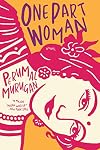
This novel of unresolved tensions due to societal pressures to produce children is an eye-opening look at rural life during the colonial period in Tamil Nadu, southern India. In a culture where the need for a successor generation is so critical that a lack of pregnancy in the first month of marriage is cause for consternation, a loving couple, farmers Kali and Ponna, are on the verge of having their happy marriage torn apart by infertility. Kali’s refusal to take a second wife, and their show more tenderness and care of each other, are brilliantly portrayed. The climax of the tale is Ponna’s attendance at an annual religious celebration offering the chance for barren women to become pregnant by other men outside of marriage. Although the novel ends before Ponna makes a life-altering decision on the last night of the chariot festival, the bonds of caste and family loyalty are seemingly stretched beyond repair.
The lack of access to medical assistance to resolve the issue (not knowing if the technology was even available at the time), and at what might have been an insurmountable financial cost, is surprising and tragic to a modern reader. To ponder also: is the lack of a child still seen as ruination in a rural society where many hands are required for sustenance, or has technology has reduced the hardship?
This book, which had been published years earlier, came to the attention of right wing religious circles when the conservative Modi administration came to power. As a result of the descriptions of the licentious actions of men and women in the novel, and the negative view of the half-male, half-female god celebrated at the festival, the author was forced to denounce his own work and stop writing, due to threats of violence by religious extremists. For a time, he became a Salman Rushdie in his own state. Later, courts ruled that Murugan was free to write on whatever topic he chose, and he rejoined the literary world. show less
The lack of access to medical assistance to resolve the issue (not knowing if the technology was even available at the time), and at what might have been an insurmountable financial cost, is surprising and tragic to a modern reader. To ponder also: is the lack of a child still seen as ruination in a rural society where many hands are required for sustenance, or has technology has reduced the hardship?
This book, which had been published years earlier, came to the attention of right wing religious circles when the conservative Modi administration came to power. As a result of the descriptions of the licentious actions of men and women in the novel, and the negative view of the half-male, half-female god celebrated at the festival, the author was forced to denounce his own work and stop writing, due to threats of violence by religious extremists. For a time, he became a Salman Rushdie in his own state. Later, courts ruled that Murugan was free to write on whatever topic he chose, and he rejoined the literary world. show less
Lists
Awards


You May Also Like


Associated Authors
Statistics
- Works
- 41
- Members
- 777
- Popularity
- #32,751
- Rating
- 3.6
- Reviews
- 28
- ISBNs
- 72
- Languages
- 8