
Susanna De Vries
Author of Heroic Australian Women of War
About the Author
Works by Susanna De Vries
Blue Ribbons Bitter Bread : The Life of Joice Nankivell Loch, Australia's Most Decorated Woman (2000) 34 copies
The complete book of Great Australian women : thirty-six women who changed the course of Australia (2003) 28 copies
The Complete Book of Heroic Australian Women: Twenty-One Pioneering Women Whose Stories Changed History (2010) 11 copies, 1 review
Strength of Purpose: Australian Women of Achievement from Federation to the Mid-20th Century (1998) 6 copies
Royal Marriages: Diana, Camilla, Kate & Meghan - And Princesses Who Did Not Live Happily Ever After (2018) 2 copies
Associated Works
Tagged
Common Knowledge
- Legal name
- De Vries, Susanne
- Other names
- Evans, Susanna
- Birthdate
- 1935
- Gender
- female
- Nationality
- Australia
- Associated Place (for map)
- Australia
Members
Reviews
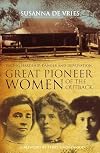
I only read the first chapter, which covers quite lengthily the life of Georgina Malloy. The author's beautiful and warm writing painted Georgina's life with such intimacy that I felt like I was reading about a dear friend. I cheered at her every success, worried at her every challenge, empathised with her mother's heart and the griefs and pain she
So as much as I loved reading about this beautiful woman, who died 170 years ago, I find myself unable to continue. However I would encourage anyone with less sensitivity than I to read this book. The author has a remarkable gift of collating the many facts of a person's life, and then transforming those facts into life. She doesn't hide any of the darkness of the life of the pioneer, and that includes the notorious maltreatment of the Aboriginal people. (Something I'm happy to say Georgina was never guilty of, but which certainly made me want to go back in time and slap some sense into other early settlers) But neither is it all grim, with the beauty of the Australian bush, the love of family, the gift of children, and the gutsy determination of brave pioneers.
3.5 - 4 stars
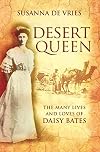
Although I initially didn't really care for Daisy Bates, I must admit she was a colourful character and one gutsy woman. A lot of this biography is supposition - I've never seen so many if, maybe, perhaps and possibly in the space of one book, but then Daisy covered her tracks well and created her own legend; digging up the true story would be very difficult and I think the author made a valiant effort.
Daisy Bates was the daughter of poor Irish Catholic parents, her father was show more an alcoholic and her mother died early of tubercolosis. As a teenager, she re-invents herself as a semi-aristocratic heiress and governess, travels to Australia, marries three times in less than two years (without bothering to divorce anyone) and returns to England, presumably to extort money from the family of her last husband. Bates returns to Australia at the age of 40 and becomes the champion for Aboriginal welfare (at a time when nobody wanted to hear about that) and spends more or less the rest of her life trekking across the Australian outback living in a tent, recording Aboriginal legends, customs and language, all the while maintaining stict Victorian dress if not morals. She was not the most likable woman, but she certainly was tough and determined and it was a most interesting read. show less
Although I initially didn't really care for Daisy Bates, I must admit she was a colourful character and one gutsy woman. A lot of this biography is supposition - I've never seen so many if, maybe, perhaps and possibly in the space of one book, but then Daisy covered her tracks well and created her own legend; digging up the true story would be very difficult and I think the author made a valiant effort.
Daisy Bates was the daughter of poor Irish Catholic parents, her father was show more an alcoholic and her mother died early of tubercolosis. As a teenager, she re-invents herself as a semi-aristocratic heiress and governess, travels to Australia, marries three times in less than two years (without bothering to divorce anyone) and returns to England, presumably to extort money from the family of her last husband. Bates returns to Australia at the age of 40 and becomes the champion for Aboriginal welfare (at a time when nobody wanted to hear about that) and spends more or less the rest of her life trekking across the Australian outback living in a tent, recording Aboriginal legends, customs and language, all the while maintaining stict Victorian dress if not morals. She was not the most likable woman, but she certainly was tough and determined and it was a most interesting read. show less
The Complete Book of Heroic Australian Women: Twenty-One Pioneering Women Whose Stories Changed History by Susanna De Vries
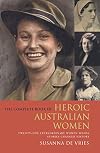
I only read the first section on Australian pioneering women owing to time constraints and it being a book club book.
The book gives a vivid idea of what those pioneering women faced, the hardships, desolation, and unbelievable deprivations they faced. My admiration for those women has increased fourfold.
I was encouraged to read that in their interactions with the Aborigines, they treated them as equals and gained their respect.
Well researched and written.
The book gives a vivid idea of what those pioneering women faced, the hardships, desolation, and unbelievable deprivations they faced. My admiration for those women has increased fourfold.
I was encouraged to read that in their interactions with the Aborigines, they treated them as equals and gained their respect.
Well researched and written.

Don’t you hate it when a publisher re-publishes a book with a different title so that you unwittingly buy the same book twice? That’s what happened to me with Great Pioneer Women of the Outback which I bought when it was released in 2005. It was then rebadged in 2010 as The Complete Book of Heroic Australian Women, which is a compilation of Great Pioneer Women and another previously published book called Heroic Australian Women In War. But there’s nothing about this Complete Book being show more a compilation on the Harper Collins website nor on the cover of the book – this IMO rather important information is tucked away on the verso page. I didn’t discover it until I’d finished the book and then scoured the TBR for the ‘other’ book about pioneer Aussie women that I knew had somewhere. I was not best pleased to discover then that I’d already just read it!
I wouldn’t have minded so much if I’d enjoyed the book. It took me ages to read it, plodding dutifully through it over breakfast for what seemed like forever. It felt like a book that had been commissioned for the school market to redress a gender imbalance rather than a book written from the heart. I bet that great slabs of it feature in earnest essays about ‘The Role of Women in Early Settlement’, and ‘The Role of Women in War’.
The first half of the book is about 10 Australian pioneer women, whose stories are known from their letters, journals and books. Georgiana Molloy, Fanny Bussell and Jeannie a.k.a. Mrs Aeneas Gunn, and more. The story of Georgiana Molloy was quite interesting – but that might have been because she was first in the book. Tough as it undoubtedly was for these women, there’s a limit to how much you want to read about tedious journeys over appalling roads, outback isolation, cursed weather, primitive facilities and 19th century childbirth or premature death.
(And if this book is used as a resource in schools, I hope that teachers also give due consideration to the challenges faced by lower-class urban women, not to mention the dreadful suffering of Aboriginal women dispossessed by these pioneers.
To read the rest of my review which is about Pt 2 of the book about heroic women in war, please visit https://anzlitlovers.com/2012/06/14/the-complete-book-of-heroic-australian-women... show less
I wouldn’t have minded so much if I’d enjoyed the book. It took me ages to read it, plodding dutifully through it over breakfast for what seemed like forever. It felt like a book that had been commissioned for the school market to redress a gender imbalance rather than a book written from the heart. I bet that great slabs of it feature in earnest essays about ‘The Role of Women in Early Settlement’, and ‘The Role of Women in War’.
The first half of the book is about 10 Australian pioneer women, whose stories are known from their letters, journals and books. Georgiana Molloy, Fanny Bussell and Jeannie a.k.a. Mrs Aeneas Gunn, and more. The story of Georgiana Molloy was quite interesting – but that might have been because she was first in the book. Tough as it undoubtedly was for these women, there’s a limit to how much you want to read about tedious journeys over appalling roads, outback isolation, cursed weather, primitive facilities and 19th century childbirth or premature death.
(And if this book is used as a resource in schools, I hope that teachers also give due consideration to the challenges faced by lower-class urban women, not to mention the dreadful suffering of Aboriginal women dispossessed by these pioneers.
To read the rest of my review which is about Pt 2 of the book about heroic women in war, please visit https://anzlitlovers.com/2012/06/14/the-complete-book-of-heroic-australian-women... show less
Lists
You May Also Like


Associated Authors
Statistics
- Works
- 33
- Also by
- 1
- Members
- 452
- Popularity
- #54,271
- Rating
- 4.0
- Reviews
- 6
- ISBNs
- 92