
Brian Stelfreeze
Author of Black Panther Book 01: A Nation Under Our Feet Part 01
Works by Brian Stelfreeze
Black Panther Book 01: A Nation Under Our Feet Part 01 (2016) — Illustrator — 1,134 copies, 39 reviews
Black Panther [2016] #01 - A Nation Under Our Feet, Part 01 (2019) — Illustrator — 148 copies, 8 reviews
Black Panther [2016] #02 - A Nation Under Our Feet, Part 02 (2019) — Illustrator — 53 copies, 1 review
Day Men #1 1 copy
Day Men Vol. 1 1 copy
Associated Works
Black Panther Book 02: A Nation Under Our Feet Part 02 (2017) — Cover artist, interior sketches — 408 copies, 15 reviews
9-11: The World's Finest Comic Book Writers & Artists Tell Stories to Remember (2002) — Illustrator — 256 copies, 1 review
Black Panther Book 09: The Intergalactic Empire of Wakanda Part 04 (2020) — Illustrator — 40 copies, 1 review
Black Panther [2016] #05 - A Nation Under Our Feet, Part 05 (2019) — Cover artist, some editions — 37 copies
Black Panther [2016] #06 - A Nation Under Our Feet, Part 06 (2019) — Cover artist, some editions — 34 copies
Batman: Shadow of the Bat Vol. 1 (2016) — Original Series Cover Artist, Collection Cover Artist — 32 copies
Heroes: The World's Greatest Super Hero Creators Honor The World's Greatest Heroes 9-11-2001 (2001) — Illustrator — 25 copies, 1 review
Black Panther [2016] #10 - A Nation Under Our Feet, Part 10 (2020) — Cover artist, some editions — 23 copies
Black Panther [2016] #08 - A Nation Under Our Feet, Part 08 (2020) — Cover artist, some editions — 22 copies
Black Panther [2016] #15 - Avengers of the New World, Part 03 (2017) — Cover artist, some editions — 21 copies, 1 review
Black Panther [2016] #07 - A Nation Under Our Feet, Part 07 (2016) — Cover artist, some editions — 19 copies
Black Panther [2016] #168 - Avengers of the New World, Part 09 (2017) — Cover artist, some editions — 19 copies
Black Panther [2016] #14 - Avengers of the New World, Part 02 (2017) — Cover artist, some editions — 17 copies, 1 review
Black Panther [2016] #18 - Avengers of the New World, Part 06 (2017) — Cover artist, some editions — 17 copies, 1 review
Black Panther [2016] #171 - Avengers of the New World, Part 12 (2018) — Cover artist, some editions — 17 copies
Black Panther [2016] #16 - Avengers of the New World, Part 04 (2017) — Cover artist, some editions — 17 copies, 1 review
Black Panther [2016] #167 - Avengers of the New World, Part 08 (2017) — Cover artist, some editions — 17 copies
Black Panther [2016] #166 - Avengers of the New World, Part 07 (2017) — Cover artist, some editions — 16 copies
Black Panther [2016] #13 - Avengers of the New World, Part 01 (2017) — Cover artist, some editions — 15 copies, 1 review
Black Panther [2016] #11 - A Nation Under Our Feet, Part 11 (2017) — Cover artist, some editions — 15 copies
Black Panther [2016] #169 - Avengers of the New World, Part 10 (2018) — Cover artist, some editions — 15 copies
Black Panther [2016] #17 - Avengers of the New World, Part 05 (2017) — Cover artist, some editions — 11 copies
The Batman Chronicles #3 — Artist, some editions — 5 copies
Batman: Shadow of the Bat Annual # 2 (1994) — Artist, Penciler, Inker, Colorist, Cover, some editions — 4 copies
Wonder Woman, Vol. 2 #200 — Illustrator — 3 copies
Tagged
Common Knowledge
Members
Discussions
Black Panther in Folio Society Devotees (November 2022)
Reviews
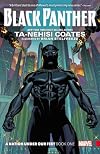
Afro-futurism is on the rise, and this polished, stylish meditation on personal and political power and responsibility as a strong and stable country is left reeling in the wake of a series of disasters feels like the complex SF/superhero saga you've been waiting for. Perhaps too thoughtful and careful to start off with? It can seem a little slow at times, even though it deals economically with complex situations and moral questions. A force is on the rise turning Wakandan people against show more their King, while two of his elite bodyguard go rogue after one of them is condemned for killing a corrupt and sexually-exploitative chief. T'Challa himself is beset by doubts at his own failures to protect his people and his sister, and his seeming inability to grapple with the growing chaos. This is a far cry from Christopher Priest's supremely confident strategist and tactician five steps ahead of friend and foe alike, and all the more likeable for it. (Must reread that run, it was a good one.)
The writing is polished, the art is incredible, the ideas and conflicts engaging, and yet somehow it feels oddly low-key, as if we're jumping into the latest chapter of an ongoing story written by someone who wants you to take the ideas seriously between bouts of fighting and fisticuffs - more of a political drama than a superhero action comic, such that some of the best and most engaging scenes are those quiet one that involve people talking - the two rogue bodyguards or T'Challa and his mother, primarily. show less
The writing is polished, the art is incredible, the ideas and conflicts engaging, and yet somehow it feels oddly low-key, as if we're jumping into the latest chapter of an ongoing story written by someone who wants you to take the ideas seriously between bouts of fighting and fisticuffs - more of a political drama than a superhero action comic, such that some of the best and most engaging scenes are those quiet one that involve people talking - the two rogue bodyguards or T'Challa and his mother, primarily. show less

This is clearly the prologue to a larger story, but while it succeeds in creating a sense of intrigue and drama, it doesn't quite manage to give the reader a sense of what was going on. Were there things I was missing because I'm only familiar with the Black Panther character from the Marvel movies? Because I was missing a specific story arc from the comics? Or because Ta-Nehisi Coates was deliberately trying to drop the reader in to an ongoing sweep of narrative but didn't quite manage to show more pull it off? I did like Coates' emphasis on Wakanda as a non-monolithic place, and the fact that two of the main characters are lesbians, but I think he was struggling to convey a complex story in a medium that can give very little space to text. There are too many subplots, all of which crowd out the issue that Coates seems primarily interested in: what does it mean to be a hereditary ruler with a superpowered, mystical connection to the land, in a modern world in which your people want a democratic say in the governance of their country. show less
In May, I finished Book One of Black Panther: A Nation Under Our Feet by Ta-Nehisi Coates. The comic is a rich and contemplative look at Wakanda, a fictional African nation in political turmoil thanks to the uprising of a terrorist group called The People.
Book One is a bit of a slow burn. And though there are a handful of actions scenes to carry you through, the quiet moments often say more about our characters than panels of ass-kicking. In one panel, T’Challah and his step-mother are show more discussing the political unrest of their country, how to appeal to his disillusioned people and what it means to be a leader. All while eating breakfast in what appears to be a completely open-air, banister-free balcony about 100 floors up a skyscraper. T’Challah (chill af) calmly walks up to the precipice, looks out on to the city skyline, at the edge of certain death while his step-mom eats freakin’ avocado toast like a bawse.
Later, when T’Challah’s stepmother revisits with an old friend in an appeal for support, they exchange intellectual observations:
“Wakanda has all the intelligence that any advanced society would want, and none of the wisdom that any society needs.”
Boom, mic drop.
I’ll admit, this is not the best title for new Black Panther readers, or even Marvel newbs. There’s no origin story and not a lot of clear exposition to explain the country, who’s who and what’s what. For a proper introduction, I’d actually recommend the 2010 animated mini-series expertly voiced by actors like Djimon Hounsou, Alfre Scott and Kerry Washington.
I think this was a comic made for readers and after an interesting, albeit sluggish start, I’m hopeful for a big pay-off. show less
Book One is a bit of a slow burn. And though there are a handful of actions scenes to carry you through, the quiet moments often say more about our characters than panels of ass-kicking. In one panel, T’Challah and his step-mother are show more discussing the political unrest of their country, how to appeal to his disillusioned people and what it means to be a leader. All while eating breakfast in what appears to be a completely open-air, banister-free balcony about 100 floors up a skyscraper. T’Challah (chill af) calmly walks up to the precipice, looks out on to the city skyline, at the edge of certain death while his step-mom eats freakin’ avocado toast like a bawse.
Later, when T’Challah’s stepmother revisits with an old friend in an appeal for support, they exchange intellectual observations:
“Wakanda has all the intelligence that any advanced society would want, and none of the wisdom that any society needs.”
Boom, mic drop.
I’ll admit, this is not the best title for new Black Panther readers, or even Marvel newbs. There’s no origin story and not a lot of clear exposition to explain the country, who’s who and what’s what. For a proper introduction, I’d actually recommend the 2010 animated mini-series expertly voiced by actors like Djimon Hounsou, Alfre Scott and Kerry Washington.
I think this was a comic made for readers and after an interesting, albeit sluggish start, I’m hopeful for a big pay-off. show less
Sometimes an author tries to do something truly ambitious. Sometimes their efforts pay off, and the resulting work is a brilliant and masterful piece. Sometimes they aren't able to realize their ambition and the result is vaguely disappointing, but one can appreciate the intentions behind the piece. In Black Panther: A Nation Under Our Feet, Ta-Nehisi Coates attempts a story that is clearly quite ambitious in scope, and while it doesn't quite fire on all cylinders, the end result is an show more examination of power, responsibility, authority, and self-determination that is at turns fascinating, tantalizing, and intensely frustrating.
The character Black Panther was created in the 1960s, and although his powers have fluctuated somewhat over the years, his backstory, and the political apparatus that goes with it has remained mostly constant. Black Panther is the title given to the chief of the Panther Tribe in the isolated and secretive African nation of Wakanda, who also happens to be that nations' hereditary ruler and protector. The current Black Panther is T'Challa, who arose to the position after his father T'Chaka was killed by Ulysses Klaw, prompting T'Challa to undergo the trials and training needed in a quest for revenge. Wakanda itself is wealthy due to a deposit of the valuable metal vibranium, and T'Challa has used this wealth to transform the nation into a high-tech powerhouse. Much of this background more or less draws upon the traditional popular conception of Africa - a society run by tribes and chiefs, exotic and mysterious, with the "twist" being that the nation boasts advanced technology that would put many "civilized" nations to shame.
This vision of Africa was never truly accurate, and as time has passed has become increasingly anachronistic in even the small details that were close to reality. Many African nations are poor, but like any nation, prosperity is not evenly distributed and most boast large cities, with some rivaling the large metropolises of the northern hemisphere. They have universities, research labs, and all of the other elements of modern society, which makes Wakanda much less of an outlier in this regard than it might have been thought of when it was first conceived. More notably, the notion that a nation could be ruled by a hereditary monarch (albeit an ostensibly benevolent one) seems increasingly out of step with the African experience when more and more nations of the continent have shed rule by dictators and strongmen in favor of more representative governments. The Africa of Black Panther's creation was built on a collection of stereotypes and myths, and now, even those stereotypes and myths are becoming more than a bit worn at the edges.
This background is necessary to understand what it appears that Coates is attempting to do with A Nation Under Our Feet which amounts to nothing short of calling into question the very heroic nature of the Black Panther. In the opening pages of the book, T'Challa is attacked by angry workers at the nation's vibranium mine and forced to defend himself - but this scene of the super-powered protector of the nation turning against his own people does not play well with the public, causing further resentment within the populace. The strict application of Wakandan law turns Ayo and Akena, a pair of the dora milaje, against T'Challa's regime. They take their advanced weaponry with them and carve out a mini-state of their own within the borders of Wakanda. On another front, the Shaman Tetu aided by an enchantress who can shape other's minds and possibly supported (or merely manipulated) by the Nigandans has formed an army to fight against T'Challa. Against these foes, T'Challa and his stepmother Ramonda struggle to hold their nation together, and preserve the traditional society of which they are part. Unfortunately, it seems that almost every decision they make is the wrong one. It is Ramonda's inflexibility that leads to Ayo and Aneka's revolt. It is T'Challa's attempts to protect his people that serve to drive them away from him, illustrated in one of the pivotal scenes in the book when he takes on a band of Tetu's rebels near the Nigandan border. After he has defeated them, he turns to the women and children promising the men will be brought to justice and that their king will provide for them. One woman gathers her children, gestures around her and says simply "These men were providing for us".
But for all that, this volume is severely flawed. First, there are really too many moving parts for its length, as Coates tries to cram in a lot more wrinkles into the story than it can comfortably hold. There are three main factions, each with their own storyline; four if you count the Nigandans as their own faction; five if you count the philosopher Changamire as one as well. In addition, there is a side diversion in which the comatose Shuri ventures into the realm of memory. The result is a disjointed, often confusing narrative in which none of the actors are ever fully developed, and there isn't really much to do but watch as Coates moves them about like wooden chess pieces. The story seems like it has tremendous potential in its conception, but that the potential simply isn't realized in the execution. The character of Changamire exemplifies this to a certain extent: He is a dissident who advocates for a more representative version of government, comparing the rulers of the country to a "big thief" who serves to stop the "little thieves", asking how the weak should marshal justice against the powerful. But this is never really followed-up upon, and in fact, none of the factions vying for power give any reason for choosing their side in the struggle more compelling than "I'll be a better strongman than my rivals". If T'Challa is just a ruling strongman who is only differentiated from his political rivals by the fact that he is "legitimate" and they are not, is he truly heroic, or even good?
The book is simply crammed full of so much intrigue and activity that there isn't really room to explore the notions that it seems Coates really wants to get at - specifically the anachronistic nature of having a hereditary king rule over a modern nation. Even the unrest among the populace seems forced - the unnamed with that Tetu has enlisted to his side is credited with fomenting discord among the Wakandan people, using her mystical powers to cause them to rise up against T'Challa. The reader is left wondering if the discord is because the Wakandans are actually dissatisfied, or just because super-villain magic made them so, and as a result, the book loses a lot of the power it could have had. If there was not a super-villain using mind-magic to foment discord, would the populace of Wakanda be satisfied with being ruled by a hereditary king, or do they have legitimate political grievances that T'Challa should address? Given that this is a super-hero story, one does have to make some concessions to the genre, and a witch who can manipulate minds is perfectly in keeping with that, but in this case this element detracts from the story. On the flip side, the actual super-heroic elements are pretty sparse in this volume - T'Challa has a few scenes in which he tangles with some soldiers, and Ayo and Akena apparently take on and defeat the gorilla warrior Mandla, but their fight takes place almost entirely off-stage. The end result is a story that skimps on the philosophy and character development on the one hand, and gives a short shrift to the super-heroic punching on the other, yielding a whole that is disappointing on all fronts.
The volume also includes a reprint of the original Fantastic Four story in which the character of T'Challa was first introduced. In the story, T'Challa entices the quartet with the gift of an advanced aircraft, which they immediately hop into for a joyride. This turns out to be a trap, as the vehicle jets them to Wakanda where the Black Panther has decided to take them all on, defeating the foursome one after the other. A not-unpredictable twist turns the tables and the Fantastic Four rally, use a little teamwork, and get the upper hand before T'Challa reveals his true identity and offers to explain himself, at which point the story ends. Written by Stan Lee and illustrated by Jack Kirby, the story is bold, bright, glorious, and incredibly goofy in the way that only comics from the 1960s really can be. There isn't anything deep and meaningful in it beyond "teamwork is good" and "don't overlook ordinary people", but it is a quick and fun little romp.
In the end, A Nation Under Our Feet just misses the mark. That's not really as big a criticism as one might think, as it aimed quite high, and when it comes down to it, I'd usually rather see a work aim high and miss than a work opt for a more comfortable story and hit the mark. The problem with this volume is that there is simply too much story to fit inside the amount of space that Coates had to work with. The end result is a story that just doesn't have enough time to develop the characters, the politics, or the plot that the book relies upon and the very tropes of the super-hero genre get in the way of the story at times. The resulting product is an effort that is noble in intent, and generally pretty good, but just doesn't quite live up to the promise it held.
This review has also been posted to my blog Dreaming About Other Worlds. show less
The character Black Panther was created in the 1960s, and although his powers have fluctuated somewhat over the years, his backstory, and the political apparatus that goes with it has remained mostly constant. Black Panther is the title given to the chief of the Panther Tribe in the isolated and secretive African nation of Wakanda, who also happens to be that nations' hereditary ruler and protector. The current Black Panther is T'Challa, who arose to the position after his father T'Chaka was killed by Ulysses Klaw, prompting T'Challa to undergo the trials and training needed in a quest for revenge. Wakanda itself is wealthy due to a deposit of the valuable metal vibranium, and T'Challa has used this wealth to transform the nation into a high-tech powerhouse. Much of this background more or less draws upon the traditional popular conception of Africa - a society run by tribes and chiefs, exotic and mysterious, with the "twist" being that the nation boasts advanced technology that would put many "civilized" nations to shame.
This vision of Africa was never truly accurate, and as time has passed has become increasingly anachronistic in even the small details that were close to reality. Many African nations are poor, but like any nation, prosperity is not evenly distributed and most boast large cities, with some rivaling the large metropolises of the northern hemisphere. They have universities, research labs, and all of the other elements of modern society, which makes Wakanda much less of an outlier in this regard than it might have been thought of when it was first conceived. More notably, the notion that a nation could be ruled by a hereditary monarch (albeit an ostensibly benevolent one) seems increasingly out of step with the African experience when more and more nations of the continent have shed rule by dictators and strongmen in favor of more representative governments. The Africa of Black Panther's creation was built on a collection of stereotypes and myths, and now, even those stereotypes and myths are becoming more than a bit worn at the edges.
This background is necessary to understand what it appears that Coates is attempting to do with A Nation Under Our Feet which amounts to nothing short of calling into question the very heroic nature of the Black Panther. In the opening pages of the book, T'Challa is attacked by angry workers at the nation's vibranium mine and forced to defend himself - but this scene of the super-powered protector of the nation turning against his own people does not play well with the public, causing further resentment within the populace. The strict application of Wakandan law turns Ayo and Akena, a pair of the dora milaje, against T'Challa's regime. They take their advanced weaponry with them and carve out a mini-state of their own within the borders of Wakanda. On another front, the Shaman Tetu aided by an enchantress who can shape other's minds and possibly supported (or merely manipulated) by the Nigandans has formed an army to fight against T'Challa. Against these foes, T'Challa and his stepmother Ramonda struggle to hold their nation together, and preserve the traditional society of which they are part. Unfortunately, it seems that almost every decision they make is the wrong one. It is Ramonda's inflexibility that leads to Ayo and Aneka's revolt. It is T'Challa's attempts to protect his people that serve to drive them away from him, illustrated in one of the pivotal scenes in the book when he takes on a band of Tetu's rebels near the Nigandan border. After he has defeated them, he turns to the women and children promising the men will be brought to justice and that their king will provide for them. One woman gathers her children, gestures around her and says simply "These men were providing for us".
But for all that, this volume is severely flawed. First, there are really too many moving parts for its length, as Coates tries to cram in a lot more wrinkles into the story than it can comfortably hold. There are three main factions, each with their own storyline; four if you count the Nigandans as their own faction; five if you count the philosopher Changamire as one as well. In addition, there is a side diversion in which the comatose Shuri ventures into the realm of memory. The result is a disjointed, often confusing narrative in which none of the actors are ever fully developed, and there isn't really much to do but watch as Coates moves them about like wooden chess pieces. The story seems like it has tremendous potential in its conception, but that the potential simply isn't realized in the execution. The character of Changamire exemplifies this to a certain extent: He is a dissident who advocates for a more representative version of government, comparing the rulers of the country to a "big thief" who serves to stop the "little thieves", asking how the weak should marshal justice against the powerful. But this is never really followed-up upon, and in fact, none of the factions vying for power give any reason for choosing their side in the struggle more compelling than "I'll be a better strongman than my rivals". If T'Challa is just a ruling strongman who is only differentiated from his political rivals by the fact that he is "legitimate" and they are not, is he truly heroic, or even good?
The book is simply crammed full of so much intrigue and activity that there isn't really room to explore the notions that it seems Coates really wants to get at - specifically the anachronistic nature of having a hereditary king rule over a modern nation. Even the unrest among the populace seems forced - the unnamed with that Tetu has enlisted to his side is credited with fomenting discord among the Wakandan people, using her mystical powers to cause them to rise up against T'Challa. The reader is left wondering if the discord is because the Wakandans are actually dissatisfied, or just because super-villain magic made them so, and as a result, the book loses a lot of the power it could have had. If there was not a super-villain using mind-magic to foment discord, would the populace of Wakanda be satisfied with being ruled by a hereditary king, or do they have legitimate political grievances that T'Challa should address? Given that this is a super-hero story, one does have to make some concessions to the genre, and a witch who can manipulate minds is perfectly in keeping with that, but in this case this element detracts from the story. On the flip side, the actual super-heroic elements are pretty sparse in this volume - T'Challa has a few scenes in which he tangles with some soldiers, and Ayo and Akena apparently take on and defeat the gorilla warrior Mandla, but their fight takes place almost entirely off-stage. The end result is a story that skimps on the philosophy and character development on the one hand, and gives a short shrift to the super-heroic punching on the other, yielding a whole that is disappointing on all fronts.
The volume also includes a reprint of the original Fantastic Four story in which the character of T'Challa was first introduced. In the story, T'Challa entices the quartet with the gift of an advanced aircraft, which they immediately hop into for a joyride. This turns out to be a trap, as the vehicle jets them to Wakanda where the Black Panther has decided to take them all on, defeating the foursome one after the other. A not-unpredictable twist turns the tables and the Fantastic Four rally, use a little teamwork, and get the upper hand before T'Challa reveals his true identity and offers to explain himself, at which point the story ends. Written by Stan Lee and illustrated by Jack Kirby, the story is bold, bright, glorious, and incredibly goofy in the way that only comics from the 1960s really can be. There isn't anything deep and meaningful in it beyond "teamwork is good" and "don't overlook ordinary people", but it is a quick and fun little romp.
In the end, A Nation Under Our Feet just misses the mark. That's not really as big a criticism as one might think, as it aimed quite high, and when it comes down to it, I'd usually rather see a work aim high and miss than a work opt for a more comfortable story and hit the mark. The problem with this volume is that there is simply too much story to fit inside the amount of space that Coates had to work with. The end result is a story that just doesn't have enough time to develop the characters, the politics, or the plot that the book relies upon and the very tropes of the super-hero genre get in the way of the story at times. The resulting product is an effort that is noble in intent, and generally pretty good, but just doesn't quite live up to the promise it held.
This review has also been posted to my blog Dreaming About Other Worlds. show less
Lists
Awards


You May Also Like


Associated Authors
Statistics
- Works
- 12
- Also by
- 54
- Members
- 1,489
- Popularity
- #17,247
- Rating
- 3.6
- Reviews
- 52
- ISBNs
- 27
- Languages
- 4
- Favorited
- 1
