
Chris Abani
Author of Graceland
About the Author
Chris Abani is an associate professor at the University of California, Riverside.
Image credit: photo by Gregg Chadwick
Series
Works by Chris Abani
New-Generation African Poets: A Chapbook Box Set (Tano) (African Poetry Book Fund) (2018) — Editor — 29 copies
Toward a Living Archive of African Poetry : Kwame Dawes and Chris Abani on the New-Generation African Poets Chapbook Series (2025) 22 copies, 13 reviews
ABIGAÍL 1 copy
Associated Works
African American Poetry: 250 Years of Struggle and Song (2020) — Contributor — 232 copies, 4 reviews
This Is the Honey: An Anthology of Contemporary Black Poets (2024) — Contributor — 66 copies, 1 review
Caravans of Gold, Fragments in Time: Art, Culture, and Exchange across Medieval Saharan Africa (2019) — Contributor — 52 copies, 1 review
So Much Things to Say: 100 Poets from the First Ten Years of the Calabash International Literary Festival (2010) — Contributor — 26 copies, 1 review
And We Came Outside and Saw the Stars Again: Writers from Around the World on the COVID-19 Pandemic (2020) — Contributor — 16 copies
Tagged
Common Knowledge
- Canonical name
- Abani, Chris
- Legal name
- Abani, Christopher
- Birthdate
- 1966-12-27
- Gender
- male
- Education
- University of Southern California (MA, PhD - Literature and Creative Writing)
University of London (Birkbeck College)
Nigeria (BA - English) - Occupations
- professor
author
poet - Organizations
- University of California, Riverside
- Awards and honors
- Lannan Literary Fellowship (2003)
- Short biography
- Christopher Abani (or Chris Abani) (born December 27, 1966) is a Nigerian author. Abani's first novel, Masters of the Board, was about a Neo-Nazi takeover of Nigeria. The book earned one reviewer to praise Abani as "Africa's answer to Frederick Forsyth." The Nigerian government, however, believed the book to be a blueprint for an actual coup, and sent the 18-year-old Abani to prison in 1985. After serving six months in jail, he was released, but he went on to perform in a guerilla theatre group. This action led to his arrest and imprisonment at Kiri Kiri, a notorious prison. He was released again, but after writing his play Song of a Broken Flute he was arrested for a third time, sentenced to death, and sent to the Kalakuta Prison, where he was jailed with other political prisoners and inmates on death row. His father is Igbo, while his mother was English born. He spent some of his prison time in solitary confinement, but was freed in 1991. He lived in exile in London until a friend was murdered there in 1999; he then fled to the United States. He is a Professor at the University of California, Riverside. His most recent book of poetry, Sanctificum (Copper Canyon Press, 2010), is a book-length sequence of linked poems, bringing together religious ritual, the Igbo language of his Nigerian homeland, and reggae rhythms in a postracial, liturgical love song. Chris was recently hospitalized in Los Angeles for food poisoning, on the same day he was scheduled to speak at the Central Library in that city.
- Nationality
- Nigeria
- Birthplace
- Afikpo, Nigeria
- Places of residence
- Los Angeles, California, USA
London, England, UK
Afikpo, Nigeria - Associated Place (for map)
- Afikpo, Nigeria
Members
Reviews
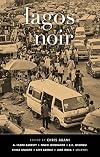
Lagos Noir is the noir armchair traveler’s guide to Lagos, the largest city in Nigeria and in Africa. I have been pronounced it wrong my entire life, it’s not a homonym for the Spanish lake, but for the Danish toy that 10 million parents have stepped on in the middle of the night. Speaking of the middle of the night, there is far more danger in the dark in Lagos than stray pieces of pointy plastic.
There are thirteen stories in Lagos Noir that are presented in three sections. The first is show more “Cops & Robbers” and the stories are far from the traditional procedurals. Nnedi Okorafor’s “Showlogo” is masterful magic realism and Jude Dibia’s “What They Did That Night” captures the futility of honesty in a corrupt system. The next section, “In a Family Way” gets at the more personal noir, the family conflicts and struggles. “Joy” by Wale Lawal sets two women against each other in one house. The last section is “Arrivals and Departures” and has Nigerians interacting with refugees from Liberia and with White ex-pats, which prompts the question, are ex-pats just privileged refugees? Leye Adenle’s “Uncle Sam” is a brilliant play on the Nigerian email scam.
I thoroughly enjoyed Lagos Noir and think editor Chris Abani did a masterful job of collecting writers and stories for this edition. I am glad Abani stuck to short stories. When editors add poetry and drama, I get this feeling that they think noir is just a bit downmarket. I feel no shame for my love of noir or of genre fiction and while I can understand the desire to show the noir sensibility is other kinds of writing, I love it when editors fully embrace the sublime art of the short story.
I defy anyone to read Chika Unigwe’s “Heaven’s Gate” or Onyinye Ihezukwu’s “For Baby, For Three” without being shaken to the core. These are powerful and moving stories of family and society trying to survive where the margin for error is narrow and unforgiving. It’s harrowing and painful and reminds us how unjust the world can be. That is what literature is supposed to do.
Lagos Noir will be released June 5th. I received an e-galley from the publisher through Edelweiss.
Lagos Noir at Akashic Books
Akashic Noir series
Chris Abani author site
https://tonstantweaderreviews.wordpress.com/2018/05/12/lagos-noir-by-chris-abani... show less
There are thirteen stories in Lagos Noir that are presented in three sections. The first is show more “Cops & Robbers” and the stories are far from the traditional procedurals. Nnedi Okorafor’s “Showlogo” is masterful magic realism and Jude Dibia’s “What They Did That Night” captures the futility of honesty in a corrupt system. The next section, “In a Family Way” gets at the more personal noir, the family conflicts and struggles. “Joy” by Wale Lawal sets two women against each other in one house. The last section is “Arrivals and Departures” and has Nigerians interacting with refugees from Liberia and with White ex-pats, which prompts the question, are ex-pats just privileged refugees? Leye Adenle’s “Uncle Sam” is a brilliant play on the Nigerian email scam.
I thoroughly enjoyed Lagos Noir and think editor Chris Abani did a masterful job of collecting writers and stories for this edition. I am glad Abani stuck to short stories. When editors add poetry and drama, I get this feeling that they think noir is just a bit downmarket. I feel no shame for my love of noir or of genre fiction and while I can understand the desire to show the noir sensibility is other kinds of writing, I love it when editors fully embrace the sublime art of the short story.
I defy anyone to read Chika Unigwe’s “Heaven’s Gate” or Onyinye Ihezukwu’s “For Baby, For Three” without being shaken to the core. These are powerful and moving stories of family and society trying to survive where the margin for error is narrow and unforgiving. It’s harrowing and painful and reminds us how unjust the world can be. That is what literature is supposed to do.
Lagos Noir will be released June 5th. I received an e-galley from the publisher through Edelweiss.
Lagos Noir at Akashic Books
Akashic Noir series
Chris Abani author site
https://tonstantweaderreviews.wordpress.com/2018/05/12/lagos-noir-by-chris-abani... show less
I've read a number of the Akashic Noir books, and while some of them have been hit and miss, this is one I'm certainly glad to have read. The trick is this: although the stories here are more varied than those I've seen in some of the other anthologies, some of them also aren't quite as traditionally noir as a reader might expect. I'm happy to have that trade-off, though. The beauty of these books is how they bring location to life and let a reader fall into the space, and where some of the show more others have fallen slightly flat for me has been in the stories all striking too much of the same note. Here, the variety of the stories and voices is fantastic, and I was consistently surprised (in a good way) by each successive story. Many of the authors I've read here are ones who I'd never heard of, but who I'll now be looking up in order to read more. I don't know of a higher compliment I could give an anthology when it comes right down to it. show less
 This review was written for LibraryThing Early Reviewers.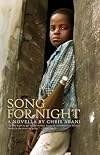
I don't feel up to the task of reviewing this book. Maybe not 'up to the task' but rather 'worthy'. The subject matter alone (child soldiers in Africa) is enough to turn away many a seasoned reader, and I must admit that despite my having read a good number of dark and 'heavy' novels (the most immediate and relevant that comes to mind is Kozinski's "The Painted Bird which one of the review blurbs adroitly points out) I wasn't quite prepared for this.
Coming from a secular and very western show more cultural mindset, the back cover of this book broke the knees of my senses of comfort and security. And the opening lines and prefatory descriptions of protagonist 'My Luck' and his world similarly cut me down and bludgeoned me into something else, something ready to at least be told about the horrors of this setting.
And horrible it all is. Going into this book please bear in mind that very little in the way of taboo is left untouched or unmentioned. The atrocities of war, the ease of violating any and all inherent morality by way of 'just following orders' or simply abandoning oneself to the bacchanalian insanity of wartime savagery (rape, brutalizing, cannibalization) are put on full display in sparse un-ornamented prose that lays bare the true hell this all is.
Very much in keeping with the tradition of "The Painted Bird" the entirety of this novella is told from the perspective of a young child, the aforementioned 'My Luck'. But unlike that equally brilliant classic also about the horror of humanity and the incredible potential and ability to survive of that classic, here, the child protagonist is not only victim but perpetrator, literal killer the figuratively killed. An interesting continuation and even revising of something I've come to call 'trauma literature'.
But there's more to this story than just its base depictions of rank barbarism and inhumanity. There's a beauty that intertwines itself with all this madness. Some context: I read this book in one sitting (as part of the syllabus for a seminar in narrative I'm taking towards my masters) and while I read the book I listened, as I often do, to music. The specific music I listened to was Hans Zimmer's beautiful score for the Terrence Malick film 'The Thin Red Line'. With those gorgeously haunting notes, including the Melanasian choir voices towards the end, humming and rising me, crashing me down with each subsequent track, I felt less and less inured and comfortable as I read the story. Less and less I was in a comfortable den in Marina del Rey, California, reading a great book to great music while taking sips from a cool drink as a late fall breeze kicked up the star light dappled waters of the nearby waterway. I was stripped bare with each page, each line, each paragraph of this story, the layers of comfort and stability, of warmth, and hope, and assurance, all peeled back in rapid succession leaving behind a growing and desperately ravenous anxiety that quickened my breathing, softened the sharpness of my vision and made more and more difficult the act of reading.
However, though all this was happening, and the task of reading was difficult, the act of comprehending was not. I absorbed each word, devoured each word like a gift of water in an arid desert. 'My Luck's' journey to find his lost unit of land mine disarming, and eventual (spoiler) apparent crossing over into the realm of the dead, a realm different from the promised ones of the received wisdom of his imam father and catholic mother, and actually, as depicted, far more ancient, unnerved me in such a way that could only be described as a proxy version of beatification through suffering (if you'll forgive the borrowing of a Catholic term for this Secular Jew's review. There's a beauty in the small moments of humanity depicted that allow My Luck, and by extension we the readers, respite from the horrors around him. Small moments that show that beneath the horrific exteriors of most there might, just might, beat human hearts capable of love, morality, and sustaining life rather than ending it.
Read this book. It's a harrowing and destructive, but ultimately redemptive kind of necessary. This is fiction at its most diamond hard and cuttingly beautiful. show less
Coming from a secular and very western show more cultural mindset, the back cover of this book broke the knees of my senses of comfort and security. And the opening lines and prefatory descriptions of protagonist 'My Luck' and his world similarly cut me down and bludgeoned me into something else, something ready to at least be told about the horrors of this setting.
And horrible it all is. Going into this book please bear in mind that very little in the way of taboo is left untouched or unmentioned. The atrocities of war, the ease of violating any and all inherent morality by way of 'just following orders' or simply abandoning oneself to the bacchanalian insanity of wartime savagery (rape, brutalizing, cannibalization) are put on full display in sparse un-ornamented prose that lays bare the true hell this all is.
Very much in keeping with the tradition of "The Painted Bird" the entirety of this novella is told from the perspective of a young child, the aforementioned 'My Luck'. But unlike that equally brilliant classic also about the horror of humanity and the incredible potential and ability to survive of that classic, here, the child protagonist is not only victim but perpetrator, literal killer the figuratively killed. An interesting continuation and even revising of something I've come to call 'trauma literature'.
But there's more to this story than just its base depictions of rank barbarism and inhumanity. There's a beauty that intertwines itself with all this madness. Some context: I read this book in one sitting (as part of the syllabus for a seminar in narrative I'm taking towards my masters) and while I read the book I listened, as I often do, to music. The specific music I listened to was Hans Zimmer's beautiful score for the Terrence Malick film 'The Thin Red Line'. With those gorgeously haunting notes, including the Melanasian choir voices towards the end, humming and rising me, crashing me down with each subsequent track, I felt less and less inured and comfortable as I read the story. Less and less I was in a comfortable den in Marina del Rey, California, reading a great book to great music while taking sips from a cool drink as a late fall breeze kicked up the star light dappled waters of the nearby waterway. I was stripped bare with each page, each line, each paragraph of this story, the layers of comfort and stability, of warmth, and hope, and assurance, all peeled back in rapid succession leaving behind a growing and desperately ravenous anxiety that quickened my breathing, softened the sharpness of my vision and made more and more difficult the act of reading.
However, though all this was happening, and the task of reading was difficult, the act of comprehending was not. I absorbed each word, devoured each word like a gift of water in an arid desert. 'My Luck's' journey to find his lost unit of land mine disarming, and eventual (spoiler) apparent crossing over into the realm of the dead, a realm different from the promised ones of the received wisdom of his imam father and catholic mother, and actually, as depicted, far more ancient, unnerved me in such a way that could only be described as a proxy version of beatification through suffering (if you'll forgive the borrowing of a Catholic term for this Secular Jew's review. There's a beauty in the small moments of humanity depicted that allow My Luck, and by extension we the readers, respite from the horrors around him. Small moments that show that beneath the horrific exteriors of most there might, just might, beat human hearts capable of love, morality, and sustaining life rather than ending it.
Read this book. It's a harrowing and destructive, but ultimately redemptive kind of necessary. This is fiction at its most diamond hard and cuttingly beautiful. show less
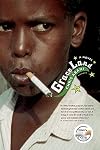
It's hard to be a man, Elvis Oké's father tells him. The measure of a man used to be his good name, and he has to be prepared to defend that name - his honour - against anything, from outside or inside.
Names play a part in this, yes. Elvis father is named Sunday, his best friend is named Redemption, and Elvis himself is of course named Elvis. That's about all they have left, it seems; they live in a shanty town in Lagos, Nigeria, and if there's any meaning to the fact that Sunday is a drunk show more to whom every day is a day of rest, Redemption is a small-time bandit, and Elvis himself a failed dancer, it's nothing they try to think about: names, today, are just words. Sure, Elvis tries to make a living as an Elvis impersonator, dance and smile for the rich white tourists, but nobody wants a 16-year-old black (and tonedeaf) king of rock'n'roll. And so instead, having to make a living somehow, he gets pulled into both criminal and political conflicts - which, in a military dictatorship (the book is set in 1983, with flashbacks to Elvis' childhood) is often the same thing.
In a lot of ways, Graceland is an impressive novel, both playful and harshly realistic in its depiction of life at the (not quite but almost) bottom. Abani has his characters reference both Nigerian (Achebe, Soyinka) and Western (Ellison, Dostoevsky, Marley) writers to create a picture of a world that's become an interconnected web long before modern communications made it obvious; the characters rarely set foot outside their own city, yet thanks to the cultural, commercial and political revolutions of the past centuries they very much live in the Big World Outside. Starting from a, to be honest, fairly cliched story - a young man trying to find his place in a world that doesn't want him - Abani weaves a character piece where the details get to show how it all hangs together, from kingdoms to dictatorship, from Las Vegas to Lagos, where everything you're promised by your name or your background turns to bitter (though often laugh-out-loud funny) irony. A land of grace, as in spending your life at the mercy of someone else's good graces. Abani tackles politics without bashing us over the head with it; things are as they are, men and women do what they do to survive until they leave the building. At best, they get to choose their own encore.
Some people name their children after saints or forefathers in the hope that they will be, well, graced with their good sides. Others are named after rock stars, which may be the modern equivalent. According to some doctors, Elvis - the original one, Presley, that is - died of poverty. Not in 1977, obese and trapped in the Graceland that was to be his palace but got turned into his mausoleum, but when he was young. After growing up poor and undernourished, his body couldn't handle the comfort food and the drugs he could suddenly afford (after growing rich off cover versions of black artists, heh). He was pretty much screwed from the beginning, if poverty didn't kill him, success would; an irony as bitter as the situation in what could have been one of the richest countries in Africa. But great music was always born from the blues. Graceland isn't quite up there, it's a little too self-conscious and meandering for that, but it's a very good read nonetheless.
...That is, I assume that it is if you read it in the original English. Because unfortunately, I read a poor Swedish translation of it. And when you take characters who speak English like Nigerian street kids (it's part of the theme, too) and translate it into Swedish, it ends up sounding like an old 50s comedy half the time. show less
Names play a part in this, yes. Elvis father is named Sunday, his best friend is named Redemption, and Elvis himself is of course named Elvis. That's about all they have left, it seems; they live in a shanty town in Lagos, Nigeria, and if there's any meaning to the fact that Sunday is a drunk show more to whom every day is a day of rest, Redemption is a small-time bandit, and Elvis himself a failed dancer, it's nothing they try to think about: names, today, are just words. Sure, Elvis tries to make a living as an Elvis impersonator, dance and smile for the rich white tourists, but nobody wants a 16-year-old black (and tonedeaf) king of rock'n'roll. And so instead, having to make a living somehow, he gets pulled into both criminal and political conflicts - which, in a military dictatorship (the book is set in 1983, with flashbacks to Elvis' childhood) is often the same thing.
In a lot of ways, Graceland is an impressive novel, both playful and harshly realistic in its depiction of life at the (not quite but almost) bottom. Abani has his characters reference both Nigerian (Achebe, Soyinka) and Western (Ellison, Dostoevsky, Marley) writers to create a picture of a world that's become an interconnected web long before modern communications made it obvious; the characters rarely set foot outside their own city, yet thanks to the cultural, commercial and political revolutions of the past centuries they very much live in the Big World Outside. Starting from a, to be honest, fairly cliched story - a young man trying to find his place in a world that doesn't want him - Abani weaves a character piece where the details get to show how it all hangs together, from kingdoms to dictatorship, from Las Vegas to Lagos, where everything you're promised by your name or your background turns to bitter (though often laugh-out-loud funny) irony. A land of grace, as in spending your life at the mercy of someone else's good graces. Abani tackles politics without bashing us over the head with it; things are as they are, men and women do what they do to survive until they leave the building. At best, they get to choose their own encore.
Some people name their children after saints or forefathers in the hope that they will be, well, graced with their good sides. Others are named after rock stars, which may be the modern equivalent. According to some doctors, Elvis - the original one, Presley, that is - died of poverty. Not in 1977, obese and trapped in the Graceland that was to be his palace but got turned into his mausoleum, but when he was young. After growing up poor and undernourished, his body couldn't handle the comfort food and the drugs he could suddenly afford (after growing rich off cover versions of black artists, heh). He was pretty much screwed from the beginning, if poverty didn't kill him, success would; an irony as bitter as the situation in what could have been one of the richest countries in Africa. But great music was always born from the blues. Graceland isn't quite up there, it's a little too self-conscious and meandering for that, but it's a very good read nonetheless.
...That is, I assume that it is if you read it in the original English. Because unfortunately, I read a poor Swedish translation of it. And when you take characters who speak English like Nigerian street kids (it's part of the theme, too) and translate it into Swedish, it ends up sounding like an old 50s comedy half the time. show less
Lists
Awards


You May Also Like


Associated Authors
Statistics
- Works
- 31
- Also by
- 24
- Members
- 1,644
- Popularity
- #15,623
- Rating
- 3.9
- Reviews
- 67
- ISBNs
- 96
- Languages
- 6
- Favorited
- 1


