
Stephanie Burt
Author of Don't Read Poetry: A Book About How to Read Poems
About the Author
Image credit: Harvard University Department of English
Works by Stephanie Burt
Associated Works
You Don't Have to Be Everything: Poems for Girls Becoming Themselves (2021) — Contributor — 85 copies, 2 reviews
Pretty Bitches: On Being Called Crazy, Angry, Bossy, Frumpy, Feisty, and All the Other Words That Are Used to Undermine Women (2020) — Contributor — 82 copies, 2 reviews
Climbing Lightly Through Forests: A Poetry Anthology Honoring Ursula K. Le Guin (2021) — Contributor — 4 copies
Tagged
Common Knowledge
- Other names
- Burt, Steph
Burt, Stephen (former name) - Birthdate
- 1971
- Gender
- female
- Education
- Harvard University
Yale University (PhD) - Occupations
- literary critic
poet
professor - Nationality
- USA
- Places of residence
- Washington, D.C., USA
Boston, Massachusetts, USA - Associated Place (for map)
- USA
Members
Reviews
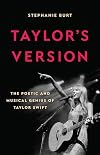
Burt (disclosure: personal friend whose class I’ve visited) teaches a class on Taylor Swift at Harvard. Swift, Burt argues, is both relatable and aspirational—a good girl who can’t stop working, who can’t stop wanting us to like her. Her privileges (wealth, whiteness, attractiveness) combined with her talent at melding lyrics with strong melodies. Burt reads Swift’s beginning with country as like using the pastoral literary mode—rather than writing country because that was her show more own background, Swift used the medium to imagine a “happy escape” and access useful metaphors. She took from country “tools, and tropes, and sounds” but then sang “about popularity and unpopularity, about frustration and ambition, about romance and alienation, in the lives of suburban and exurban teenage girls.”
Moving to 1989, the songs there, “self-consciously artificial from their slick surfaces to their digital cores, promised that you too could move to the city, reinvent yourself, and go out on the town with your new best friends.” That is, they appealed to a fantasy that more money and more access the privileges of whiteness would also make things better for the listener.
Then, Burt says, Reputation “almost demands that we think about Blackness and whiteness, even if some of us find the result hard to take.” Swift created distance from her earlier personae “by embracing the powers of Black pop, by letting alert listeners notice her whiteness, and trying to reject, musically and lyrically, the powers and limits, the blamelessness and childlikeness, that American white girlhood has long implied.” Burt’s (partial) defense of this is that, “[l]ike every other product of white America, she must learn to listen to Black culture and Black-coded art forms so that she can recognize, and honor, the rejected, ignored, suppressed, bracketed parts of herself.” Another interpretation is that Reputation is about “context collapse”: “How does an international pop star who’s also an all-American country star who’s also a self-conscious role model for teens who’s also on the town in New York City who’s also a constant target for paparazzi who’s also on tour (and not used to dancing in skimpy, shiny outfits) sort it all out?”
Relatedly, “Swift’s strongest political songs speak to social problems she has personally experienced: online bullying, but not homophobia; social exclusion and body-shaming, but not class prejudice; casual contempt for successful women, especially from powerful men who assume that men are, or should be, in charge.” Burt summarizes: “You can be Taylor Swift and succeed. But you can’t be Taylor Swift and feel secure. And you shouldn’t have to be Taylor Swift in order to succeed as a woman in a male-dominated world.”
I also liked her discussion of “Swift’s no-win situation. Once people start alleging that you’re fake, or constructed, or calculating, or artificial, there’s no way to prove otherwise. Anything you do to show that you’re real, that you make decisions against your own interest, that you’re vulnerable or messy, can look to hostile observers like just another calculation. At some point, if you can (a big if), you have to stop caring what they think.” To me, this description also fits the classic model of accusations of homosexuality: once raised, the topic is impossible to dispel, since anything up to and including heterosexual reproduction can be explained as an effect of the closet. Though Burt thinks the most likely ground truth is that Swift is sexually attracted to men, Gaylors are reading the texts for clues the way she’s asked them to do with respect to other topics.
I loved the reading of the literal crowd shouting “More!” in “I Can Do It with a Broken Heart”: “Swift—who famously encourages fans to buy more and more records—comes across as an engine of capitalism, and as its creation, and also as its victim. Her participation in the world economy, her ability to give us product—to produce the feelings we demand—becomes the most stable part of her identity.”
Burt argues for Swift as a genius, but not a modernist genius, that is, one who expects society “to catch up, aesthetically or politically, to writing that it by and large didn’t read and couldn’t understand.” She’s also not a Romantic genius, “the spirit to whom great art just comes naturally.” She could never be The Man, so why not show herself trying? That’s why it’s important to call her a genius, in the sense of “a great artist.” Songwriting isn’t poetry, but “Swift’s powers let her do some things that, in past societies, poets have done: She holds up a mirror (or a mirrorball), gives shape to shared experience, takes us for an emotional ride, and represents large groups, generations, or nations.” show less
Moving to 1989, the songs there, “self-consciously artificial from their slick surfaces to their digital cores, promised that you too could move to the city, reinvent yourself, and go out on the town with your new best friends.” That is, they appealed to a fantasy that more money and more access the privileges of whiteness would also make things better for the listener.
Then, Burt says, Reputation “almost demands that we think about Blackness and whiteness, even if some of us find the result hard to take.” Swift created distance from her earlier personae “by embracing the powers of Black pop, by letting alert listeners notice her whiteness, and trying to reject, musically and lyrically, the powers and limits, the blamelessness and childlikeness, that American white girlhood has long implied.” Burt’s (partial) defense of this is that, “[l]ike every other product of white America, she must learn to listen to Black culture and Black-coded art forms so that she can recognize, and honor, the rejected, ignored, suppressed, bracketed parts of herself.” Another interpretation is that Reputation is about “context collapse”: “How does an international pop star who’s also an all-American country star who’s also a self-conscious role model for teens who’s also on the town in New York City who’s also a constant target for paparazzi who’s also on tour (and not used to dancing in skimpy, shiny outfits) sort it all out?”
Relatedly, “Swift’s strongest political songs speak to social problems she has personally experienced: online bullying, but not homophobia; social exclusion and body-shaming, but not class prejudice; casual contempt for successful women, especially from powerful men who assume that men are, or should be, in charge.” Burt summarizes: “You can be Taylor Swift and succeed. But you can’t be Taylor Swift and feel secure. And you shouldn’t have to be Taylor Swift in order to succeed as a woman in a male-dominated world.”
I also liked her discussion of “Swift’s no-win situation. Once people start alleging that you’re fake, or constructed, or calculating, or artificial, there’s no way to prove otherwise. Anything you do to show that you’re real, that you make decisions against your own interest, that you’re vulnerable or messy, can look to hostile observers like just another calculation. At some point, if you can (a big if), you have to stop caring what they think.” To me, this description also fits the classic model of accusations of homosexuality: once raised, the topic is impossible to dispel, since anything up to and including heterosexual reproduction can be explained as an effect of the closet. Though Burt thinks the most likely ground truth is that Swift is sexually attracted to men, Gaylors are reading the texts for clues the way she’s asked them to do with respect to other topics.
I loved the reading of the literal crowd shouting “More!” in “I Can Do It with a Broken Heart”: “Swift—who famously encourages fans to buy more and more records—comes across as an engine of capitalism, and as its creation, and also as its victim. Her participation in the world economy, her ability to give us product—to produce the feelings we demand—becomes the most stable part of her identity.”
Burt argues for Swift as a genius, but not a modernist genius, that is, one who expects society “to catch up, aesthetically or politically, to writing that it by and large didn’t read and couldn’t understand.” She’s also not a Romantic genius, “the spirit to whom great art just comes naturally.” She could never be The Man, so why not show herself trying? That’s why it’s important to call her a genius, in the sense of “a great artist.” Songwriting isn’t poetry, but “Swift’s powers let her do some things that, in past societies, poets have done: She holds up a mirror (or a mirrorball), gives shape to shared experience, takes us for an emotional ride, and represents large groups, generations, or nations.” show less
Disclosure: Stephanie is a good friend and one of the smartest people I know. The conceit of the title is: don’t read poetry, read poems, which “are like pieces of music: by definition they all have something in common, but they vary widely in how they work, where they come from, and what they try to do.” One thing vital to the poetic project is the arrangement of language “to convey, share, or provoke emotions,” along with whatever else a poem does. Poems can also introduce us to show more characters, interest us with the play of their technique, and/or teach wisdom; Burt argues that you should look for poems that you find interesting, or beautiful, or provocative, or whatever. So, for example, lyric poems are about communicating across the divide of personhood: as Hera Lindsay Bird writes, a lyric poem can say “There is something wrong with you that is also wrong with me.” Lyric poems are the realm of mirrors, and windows, and both at once: they’re about seeing “both outside yourself and into yourself.”
By (partial) contrast, poems of character “are like people we could meet, and so it is no wonder that they so often compare themselves to portraits, photographs, paintings.” Poems as technique/form are “games that poets can play.” Understanding when and why the poet succeeds at her game (what Burt describes as “formal excellence combined with creativity”) is aided by recognizing how rhyme and rhyme-like euphonies work, but rhyme doesn’t have to be a part of it. Burt defends poems that don’t make consistent sense: “opaque or resistant language can instruct and delight, and … some non-or anti-sense in poetry can help us spot nonsense, or hypocrisy, or lies, in the rest of the world, outside poems.” This is one way that poems may share wisdom with us: calling us to recognize “either the injustice or the beauty that we would otherwise overlook. The goal of making the world weird again, either to like it more or to help it change,” can itself be wisdom, along with more conventional show less
By (partial) contrast, poems of character “are like people we could meet, and so it is no wonder that they so often compare themselves to portraits, photographs, paintings.” Poems as technique/form are “games that poets can play.” Understanding when and why the poet succeeds at her game (what Burt describes as “formal excellence combined with creativity”) is aided by recognizing how rhyme and rhyme-like euphonies work, but rhyme doesn’t have to be a part of it. Burt defends poems that don’t make consistent sense: “opaque or resistant language can instruct and delight, and … some non-or anti-sense in poetry can help us spot nonsense, or hypocrisy, or lies, in the rest of the world, outside poems.” This is one way that poems may share wisdom with us: calling us to recognize “either the injustice or the beauty that we would otherwise overlook. The goal of making the world weird again, either to like it more or to help it change,” can itself be wisdom, along with more conventional show less
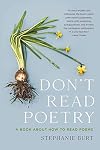
Don't Read Poetry is an excellent book! It's the perfect guide for someone wanting to learn more about poetry, what poetry consists of and how it is created and reimagined. I gained so much knowledge about poetry from reading this book. It also didn't take me long to learn that I was completely uneducated about poetry; stunningly ignorant about it, in fact! That surprised me because I had a standard English class education and produced decent essays and business correspondence.
But I was show more never fond of poetry and hence avoided it nearly completely. Now I found, decades later, that I was entering virgin territory for me. Those broken lines that always looked like gibberish to me apparently have a much deeper meaning and are constructing using forms involving technical jargon such as tetrameter, etc. This was eye opening for me.
Ms. Burt's book consists of six chapters, each outlining a different aspect of poetry, familiarizing us with the rudimetary building blocks of poetry and giving us samples from some of the author's chosen poets from both past and present.
The book is very well written. I love the author's writing style--clear and concise, yet not at all mechanical. Her writing has its own sing-song tone of beautifully written English, sometimes seeming to sound poetical though she is not writing poetry here. Her sentences oftentimes have paranthetical expressions in the middle and that works so well for getting her concepts to stick in your mind. It makes her writing soothing, almost. They did for me, anyway.
I have gained alot from reading this volume. While it didn't make me love poetry (I don't think I ever will); it DID help me understand it better. In particular, it caused me to respect poets and poetry much more. It seemed to me like the forms and structures they are sometimes bound to follow are every bit as hard as mathematical formulas (a hard subject for me). As a matter of fact, there is alot of math involved in those poems' construction!
I highly recommend this book for poetry enthusiasts, but in particular; for poetry non-enthusiasts! show less
But I was show more never fond of poetry and hence avoided it nearly completely. Now I found, decades later, that I was entering virgin territory for me. Those broken lines that always looked like gibberish to me apparently have a much deeper meaning and are constructing using forms involving technical jargon such as tetrameter, etc. This was eye opening for me.
Ms. Burt's book consists of six chapters, each outlining a different aspect of poetry, familiarizing us with the rudimetary building blocks of poetry and giving us samples from some of the author's chosen poets from both past and present.
The book is very well written. I love the author's writing style--clear and concise, yet not at all mechanical. Her writing has its own sing-song tone of beautifully written English, sometimes seeming to sound poetical though she is not writing poetry here. Her sentences oftentimes have paranthetical expressions in the middle and that works so well for getting her concepts to stick in your mind. It makes her writing soothing, almost. They did for me, anyway.
I have gained alot from reading this volume. While it didn't make me love poetry (I don't think I ever will); it DID help me understand it better. In particular, it caused me to respect poets and poetry much more. It seemed to me like the forms and structures they are sometimes bound to follow are every bit as hard as mathematical formulas (a hard subject for me). As a matter of fact, there is alot of math involved in those poems' construction!
I highly recommend this book for poetry enthusiasts, but in particular; for poetry non-enthusiasts! show less
Burt provides an intriguing primer on poetry for those who are just discovering the art. She states that this is not a book for those looking for justification of popular poetry, but it is a book that helps one navigate through the many types of poetry. Burt uses well-known poets of different eras like O'Hara, Shelly, Byron, and Frost as well as a host of other lesser known poets. The exploration of poetry leads to the (human) commonality of many types and eras as well as differences in show more style.
It's not uncommon to like on poet and not another even if they are in the same period and style. It can go even farther, for example, I like Shelly's lyrical poems but don't care much for his narrative ones. Even in the different styles of poetry that confine its structure, there are variations that poets use to construct their writing. Langston Hughes reinvented the folk quatrain. Phillis Wheatley, the first published African- American poet in the late 18th century, reinvented the freestanding couplet. Both took the rules and made them their own.
Poetry also teaches about the poets. The example of Willam Wordsworth and his sister Dorothy are used as an example (and sheds some light on the cover art of this book). Many times poets are thought to be stiff and formal, but poets like Byron shatter that idea with the epic poem Don Juan. One of my favorite lines from the poem:
In the case our Lord the King should go to war again,
He learned the arts of riding, fencing, gunnery,
And how to scale a fortress—or a nunnery
Byron keeps to a rhyme scheme and even included an ottava rima, a complex structure used originally in heroic Italian poems, but here it is used for a different sort of "hero." Byron uses the strict form to create a farce of ivory tower poetry.
Poetry ranges from the easy to understand to the very difficult. Tiny Buttons by Gertrude Stein is used as a popular example. There is so much that a collection, of seemingly incoherent words, can build. Other poets are even more complicated. It took me over a year to get through and somewhat understand Eric Linsker's La Far.
Burt writes for those who have seen a spark of poetry -- maybe a quote in a movie, or a bit of Walt Whitman in a Levis commercial, or even a poster on a commuter train. Something that grabbed a person's attention and left him or her wanting more. Burt will be the curious readers Virgil through the levels of poetry.
____________________________________________________________
Stephanie Burt is a poet, literary critic, and professor. In 2012, the New York Times called Burt “one of the most influential poetry critics of [her] generation.” Burt grew up around Washington, DC and earned a BA from Harvard and PhD from Yale. She has published four collections of poems: Advice from the Lights (2017), Belmont (2013), Parallel Play (2006), and Popular Music (1999). show less
It's not uncommon to like on poet and not another even if they are in the same period and style. It can go even farther, for example, I like Shelly's lyrical poems but don't care much for his narrative ones. Even in the different styles of poetry that confine its structure, there are variations that poets use to construct their writing. Langston Hughes reinvented the folk quatrain. Phillis Wheatley, the first published African- American poet in the late 18th century, reinvented the freestanding couplet. Both took the rules and made them their own.
Poetry also teaches about the poets. The example of Willam Wordsworth and his sister Dorothy are used as an example (and sheds some light on the cover art of this book). Many times poets are thought to be stiff and formal, but poets like Byron shatter that idea with the epic poem Don Juan. One of my favorite lines from the poem:
In the case our Lord the King should go to war again,
He learned the arts of riding, fencing, gunnery,
And how to scale a fortress—or a nunnery
Byron keeps to a rhyme scheme and even included an ottava rima, a complex structure used originally in heroic Italian poems, but here it is used for a different sort of "hero." Byron uses the strict form to create a farce of ivory tower poetry.
Poetry ranges from the easy to understand to the very difficult. Tiny Buttons by Gertrude Stein is used as a popular example. There is so much that a collection, of seemingly incoherent words, can build. Other poets are even more complicated. It took me over a year to get through and somewhat understand Eric Linsker's La Far.
Burt writes for those who have seen a spark of poetry -- maybe a quote in a movie, or a bit of Walt Whitman in a Levis commercial, or even a poster on a commuter train. Something that grabbed a person's attention and left him or her wanting more. Burt will be the curious readers Virgil through the levels of poetry.
____________________________________________________________
Stephanie Burt is a poet, literary critic, and professor. In 2012, the New York Times called Burt “one of the most influential poetry critics of [her] generation.” Burt grew up around Washington, DC and earned a BA from Harvard and PhD from Yale. She has published four collections of poems: Advice from the Lights (2017), Belmont (2013), Parallel Play (2006), and Popular Music (1999). show less
Lists
99 (1)
Awards


You May Also Like


Associated Authors
Statistics
- Works
- 21
- Also by
- 12
- Members
- 665
- Popularity
- #37,922
- Rating
- 3.8
- Reviews
- 11
- ISBNs
- 42
- Favorited
- 1