
Kieran Setiya
Author of Midlife: A Philosophical Guide
About the Author
Kieran Setiya is professor of philosophy at the Massachusetts Institute of Technology.
Works by Kieran Setiya
Associated Works
Tagged
Common Knowledge
- Gender
- male
- Occupations
- Professor of Philosophy, MIT
Members
Reviews
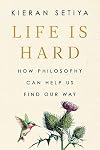
To quote the title, life is hard, and Kieran Setiya tackles the subject of living philosophically with ferocious interrogations into the meaning of existence. He recommends a guide to human satisfaction: enjoy living well, as opposed to chasing ideal happiness or attaining perfection. Exploring universal questions through famous works of literature and personal imprints of being, Setiya examines how we can endure adversity by setting new expectations for our inner ambitions.
In analyzing the show more philosophical topics expounded upon in this book, I was dissatisfied with the results. Setiya seems to be advocating for settling, going quietly about our lives without dreaming, without wanting something better than a life considered to be good enough. He asks that we be satisfied with decency, as opposed to striving for happiness or perfection. While attempting to work through these conundrums, he cites the work of philosophers and writers such as Aristotle, Virginia Woolf, and Fyodor Dostoevsky. He argues with all of them, and does not budge on his own opinions of their work, stating them as fact. He consistently uses generalization, and offers a bleak vision of the world that is crowded with adversity and absurdity. The most difficult part of the book is the language, which often contradicts itself, and is not accessibly written for the average reader. Setiya is at his most eloquent when meditating upon grief, but fails to truly capture the heart of human consciousness as a whole. Instead of accepting our lot as he suggests, we must allow ourselves to dream of a better future. show less
In analyzing the show more philosophical topics expounded upon in this book, I was dissatisfied with the results. Setiya seems to be advocating for settling, going quietly about our lives without dreaming, without wanting something better than a life considered to be good enough. He asks that we be satisfied with decency, as opposed to striving for happiness or perfection. While attempting to work through these conundrums, he cites the work of philosophers and writers such as Aristotle, Virginia Woolf, and Fyodor Dostoevsky. He argues with all of them, and does not budge on his own opinions of their work, stating them as fact. He consistently uses generalization, and offers a bleak vision of the world that is crowded with adversity and absurdity. The most difficult part of the book is the language, which often contradicts itself, and is not accessibly written for the average reader. Setiya is at his most eloquent when meditating upon grief, but fails to truly capture the heart of human consciousness as a whole. Instead of accepting our lot as he suggests, we must allow ourselves to dream of a better future. show less

I was solidly at the beginning of midlife just as the 2020 coronavirus pandemic blew up. The result was I couldn't tell where my so-called midlife crisis stopped and the global crisis began. My struggles were both private and internationally shared by many. I got to be overly dramatic and pretend my problems were bigger than me and during this particular moment in history it was true. It's quite funny actually, in a dark comedy kind of way.
This book, Midlife, brought the whole near-mythic show more notion of the midlife crisis down to earth for a refreshingly honest take. I'll start with what I heard a few years ago from my father-in-law, long before I ever heard of the book or its author. My father-in-law said, "It's not a crisis, it's a renaissance." I liked that summary. Without knowing what to expect exactly, and also aware that the experience is different for many, it seemed like it would be reasonably true for me.
My favorite takeaway from this book is that the 'crisis' part has been common throughout history and across genders, and it's caused by your mind coming to terms with all the life choices that are quickly slipping away and/or are closed forever. Simply put another way, and this made more sense to me, starting from birth you have many choices in life but only every choose one in any given moment, but many of those other choices linger because why shouldn't they? You have the rest of your left ahead of you...
...until you don't. Midlife is when the math of your finite existence shifts from you being in the first half to you realizing you're now in the second. Astronaut, NBA star, President... those dreams aren't happening and you know it. But it's not sports cars or affairs either, not for most people. I think my father-in-law was mostly right. It's a crisis... and then a renaissance. it's another journey on the road of life. show less
This book, Midlife, brought the whole near-mythic show more notion of the midlife crisis down to earth for a refreshingly honest take. I'll start with what I heard a few years ago from my father-in-law, long before I ever heard of the book or its author. My father-in-law said, "It's not a crisis, it's a renaissance." I liked that summary. Without knowing what to expect exactly, and also aware that the experience is different for many, it seemed like it would be reasonably true for me.
My favorite takeaway from this book is that the 'crisis' part has been common throughout history and across genders, and it's caused by your mind coming to terms with all the life choices that are quickly slipping away and/or are closed forever. Simply put another way, and this made more sense to me, starting from birth you have many choices in life but only every choose one in any given moment, but many of those other choices linger because why shouldn't they? You have the rest of your left ahead of you...
...until you don't. Midlife is when the math of your finite existence shifts from you being in the first half to you realizing you're now in the second. Astronaut, NBA star, President... those dreams aren't happening and you know it. But it's not sports cars or affairs either, not for most people. I think my father-in-law was mostly right. It's a crisis... and then a renaissance. it's another journey on the road of life. show less
If the asymmetry problem — that is, the fact that we often display contrasting responses to our pre-natal non-existence and our non-existence subsequent to our death — captures the frame or extent of our lives, then, I suppose, all of our life is effectively midlife. Here, philosopher Kieran Setiya narrows his focus to what 20th century psychologists and popular imagination identify as the midlife crisis, which typically occurs some time after one’s 35th year. Whether it is induced by show more an anxiety about the future (Is that all there is?) or regret about the past, whether actions or choices, Setiya argues that the midlife crisis is a real phenomenon. It is, he confesses, one that he faces himself. Fortunately Setiya has access to a philosophical tradition, practice, and insight that, he thinks, will help him deal with this potentially egoistical problem.
Setiya writes with confidence and clarity. Whenever he restricts himself to philosophical matters, I find him clear headed and persuasive. Unfortunately, his goal here lies outside philosophy. What he really wants is to write a self-help book. In the latter portions of the book he repeatedly misapplies the phrase “philosophical therapy” treating it as a synonym for psychological therapy. But traditionally (as least in the anglo-analytic tradition) philosophy serves as a cure for specifically philosophical conundrums. To assuage one’s anxiety, it is generally thought more efficacious to partake of pharmaceuticals or to watch cricket. Thus what starts out as an interesting discussion of a collection of related philosophical problems degenerates into handwaving fluff and adjurements to live in the moment and transform one’s telic activities into atelic practices. Sigh.
What disappoints most of all is that this book is published by Princeton University Press and labelled as “Philosophy” on its back cover. Yes, philosophy, not self-help, self-improvement, or pop psychology.
It’s entirely possible that some readers will find this book helpful. But, I would argue, that it’s also entirely possible they might get just as much (and much the same kind of ) help by watching cricket.
Not recommended. show less
Setiya writes with confidence and clarity. Whenever he restricts himself to philosophical matters, I find him clear headed and persuasive. Unfortunately, his goal here lies outside philosophy. What he really wants is to write a self-help book. In the latter portions of the book he repeatedly misapplies the phrase “philosophical therapy” treating it as a synonym for psychological therapy. But traditionally (as least in the anglo-analytic tradition) philosophy serves as a cure for specifically philosophical conundrums. To assuage one’s anxiety, it is generally thought more efficacious to partake of pharmaceuticals or to watch cricket. Thus what starts out as an interesting discussion of a collection of related philosophical problems degenerates into handwaving fluff and adjurements to live in the moment and transform one’s telic activities into atelic practices. Sigh.
What disappoints most of all is that this book is published by Princeton University Press and labelled as “Philosophy” on its back cover. Yes, philosophy, not self-help, self-improvement, or pop psychology.
It’s entirely possible that some readers will find this book helpful. But, I would argue, that it’s also entirely possible they might get just as much (and much the same kind of ) help by watching cricket.
Not recommended. show less
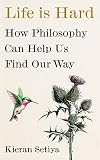
Talks about the always uncomfortable topics of human existence: grief, injustice, failure and absurdity but it ends with the topic of hope. I like that it refers to hope in a realistic way.
Author emphasizes the importance of giving back and getting involved with causes that we relate to or that are important to us in the search of meaning.
This book does not offer answers but a discussion.
Author emphasizes the importance of giving back and getting involved with causes that we relate to or that are important to us in the search of meaning.
This book does not offer answers but a discussion.
Awards


You May Also Like


Associated Authors
Statistics
- Works
- 9
- Also by
- 1
- Members
- 495
- Popularity
- #49,935
- Rating
- 3.4
- Reviews
- 15
- ISBNs
- 36
- Languages
- 4