
Libby Koponen
Author of The House Baba Built: An Artist's Childhood in China
About the Author
Image credit: Sara Crowe, Literary Agent
Works by Libby Koponen
Tagged
Common Knowledge
- Gender
- female
Members
Reviews

I had the misfortune to lose my father, roughly one month ago, after a protracted illness - a reality that I am still struggling to assimilate - and stories about the role that fathers play, in a child's life, about the houses they build, whether real or figurative, for their families, are especially poignant for me right now. So it is that The House Baba Built, a picture-book memoir about the youth of celebrated children's artist and author Ed Young - whose Lon Po Po was a Caldecott show more Medal-winner, in 1990 - and a tribute to his beloved father, moved me to tears this morning, and it was only by the strongest efforts at self-control that I avoided breaking down altogether on the train. I am, as it happens, having trouble writing this review without tears.
Leaving aside this coincidence of timing, and the fact that my visceral emotional reaction to the book has as much to do with the events of my own life, as with the ones depicted here, I believe I can truthfully say that this is an outstanding title, one with immense visual and narrative appeal. Young, assisted by Libby Koponen, sets out the tale of his boyhood in Shanghai, and of the extraordinary house that his architect father constructed for the family, which initially included Young himself, his parents, and his four siblings, but eventually grew, during the years of World War II, to include extended family, fled from Japanese-occupied Nanking, and a refugee family (the Luedeckes), fled all the way from Germany. The artwork, done in mixed-media that includes photographs of all the people depicted, is incredibly engrossing, suiting each passage to a tee, while the book's design itself - the occasional fold-out page, the arrangement of the type on different parts of the page - is creative, and adds to the reader's sense of being drawn in, and enfolded by the story - enfolded by the house that Ed Young's Baba built.
Most moving of all, however, is the sense that Baba's house, as depicted here, is more than just a structure, built of double-tiered brick walls and eighteen-inch thick concrete slabs (in order to withstand bombing), but also a feeling of family, a sense of security, and a way of living. Baba's house, as exemplified in the letter he wrote to his children, after they had spread to the far corners of the world, was something they took with them:
"Dear Children, ... You may put down as rule No. 1 that life is not rich not real unless your partake life with your fellow man. A successful life and a happy life is one measured by how much you have accomplished for others and not one as measured by how much you've done for yourself. love Dad"
Clearly, Baba's House is one worth living in, and I finished this book with a renewed appreciation, not just for Ed Young, and his family's story, but for the reality that we all of us, in some sense, live in the houses built by our parents. show less
Leaving aside this coincidence of timing, and the fact that my visceral emotional reaction to the book has as much to do with the events of my own life, as with the ones depicted here, I believe I can truthfully say that this is an outstanding title, one with immense visual and narrative appeal. Young, assisted by Libby Koponen, sets out the tale of his boyhood in Shanghai, and of the extraordinary house that his architect father constructed for the family, which initially included Young himself, his parents, and his four siblings, but eventually grew, during the years of World War II, to include extended family, fled from Japanese-occupied Nanking, and a refugee family (the Luedeckes), fled all the way from Germany. The artwork, done in mixed-media that includes photographs of all the people depicted, is incredibly engrossing, suiting each passage to a tee, while the book's design itself - the occasional fold-out page, the arrangement of the type on different parts of the page - is creative, and adds to the reader's sense of being drawn in, and enfolded by the story - enfolded by the house that Ed Young's Baba built.
Most moving of all, however, is the sense that Baba's house, as depicted here, is more than just a structure, built of double-tiered brick walls and eighteen-inch thick concrete slabs (in order to withstand bombing), but also a feeling of family, a sense of security, and a way of living. Baba's house, as exemplified in the letter he wrote to his children, after they had spread to the far corners of the world, was something they took with them:
"Dear Children, ... You may put down as rule No. 1 that life is not rich not real unless your partake life with your fellow man. A successful life and a happy life is one measured by how much you have accomplished for others and not one as measured by how much you've done for yourself. love Dad"
Clearly, Baba's House is one worth living in, and I finished this book with a renewed appreciation, not just for Ed Young, and his family's story, but for the reality that we all of us, in some sense, live in the houses built by our parents. show less
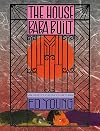
Ed Young can make torn paper look like lightning. Perhaps it is because of his equally magical childhood in Shanghai.
There his family sheltered from World War II in a seemingly massive amusement park of a house, lovingly recalled in "The House Baba Built."
Interspersed with family photographs (some of which Young amusingly completed by extending the edges to include missing feet), the book is in some ways similar to Allen Say's "Drawing From Memory." Each book is a tribute to the artist's show more father, or father figure. But Young's ends with this honest note:
"...I hve also learned to come to terms with the limits of human efforts in re-creating reality -- any human creation, no matter its completeness or point of view, is at best a mere fragment of life itself." show less
There his family sheltered from World War II in a seemingly massive amusement park of a house, lovingly recalled in "The House Baba Built."
Interspersed with family photographs (some of which Young amusingly completed by extending the edges to include missing feet), the book is in some ways similar to Allen Say's "Drawing From Memory." Each book is a tribute to the artist's show more father, or father figure. But Young's ends with this honest note:
"...I hve also learned to come to terms with the limits of human efforts in re-creating reality -- any human creation, no matter its completeness or point of view, is at best a mere fragment of life itself." show less
The House Baba Built: An Artist's Childhood in China by Ed Young with Libby Koponen
The Text and Illustrations: The story and illustrations in this book simply cannot be separated; they are completely interwoven in an intimate portrait of Ed Young's childhood before and during World War II in the house his father built in Shanghai. Photographs, paintings, line drawings, collage, cut paper, and more are used to tell the story of the house built by Ed Young's father, which became home not only show more to their family, but also to relatives and refugees. We see the war as it impacts a child; brief glimpses of rationing, a few moments of fear, thoughts about their refugee neighbors. Young simply presents his memories in a simple kaleidoscope; celebrating the New Year, raising silk worms, fighting crickets, swimming, roller skating, reading adventure stories, and struggling through Japanese lessons. Every page is a work of art, a symphony of colors, shapes, and language. In his author's note, Ed Young explains his struggle to write the book coherently and how it came to it's present shape; gives photos, maps, and timelines, and shows blueprints of the house Baba built.
Verdict: This won't be an instant popular bestseller, but every child and adult who pulls it off the shelf, intrigued by the elaborate cover, will be drawn into the story and memories and will leave the book a little richer in mind than they came to it.
ISBN: 978-0316076289; Published October 2011 by Little, Brown; Borrowed from the library show less
The Text and Illustrations: The story and illustrations in this book simply cannot be separated; they are completely interwoven in an intimate portrait of Ed Young's childhood before and during World War II in the house his father built in Shanghai. Photographs, paintings, line drawings, collage, cut paper, and more are used to tell the story of the house built by Ed Young's father, which became home not only show more to their family, but also to relatives and refugees. We see the war as it impacts a child; brief glimpses of rationing, a few moments of fear, thoughts about their refugee neighbors. Young simply presents his memories in a simple kaleidoscope; celebrating the New Year, raising silk worms, fighting crickets, swimming, roller skating, reading adventure stories, and struggling through Japanese lessons. Every page is a work of art, a symphony of colors, shapes, and language. In his author's note, Ed Young explains his struggle to write the book coherently and how it came to it's present shape; gives photos, maps, and timelines, and shows blueprints of the house Baba built.
Verdict: This won't be an instant popular bestseller, but every child and adult who pulls it off the shelf, intrigued by the elaborate cover, will be drawn into the story and memories and will leave the book a little richer in mind than they came to it.
ISBN: 978-0316076289; Published October 2011 by Little, Brown; Borrowed from the library show less
Gorgeous! Ed Young's childhood in China, in a house that was added onto as more relatives or friends came seeking refuge from WWII. Lovely collage and mixed media illustrations and a great tale of generosity and family. Winner of 2012 Norman A. Sugarman Children's Biography Award.
Lists
Awards


You May Also Like


Statistics
- Works
- 9
- Members
- 584
- Popularity
- #42,937
- Rating
- 3.9
- Reviews
- 16
- ISBNs
- 31
- Favorited
- 1